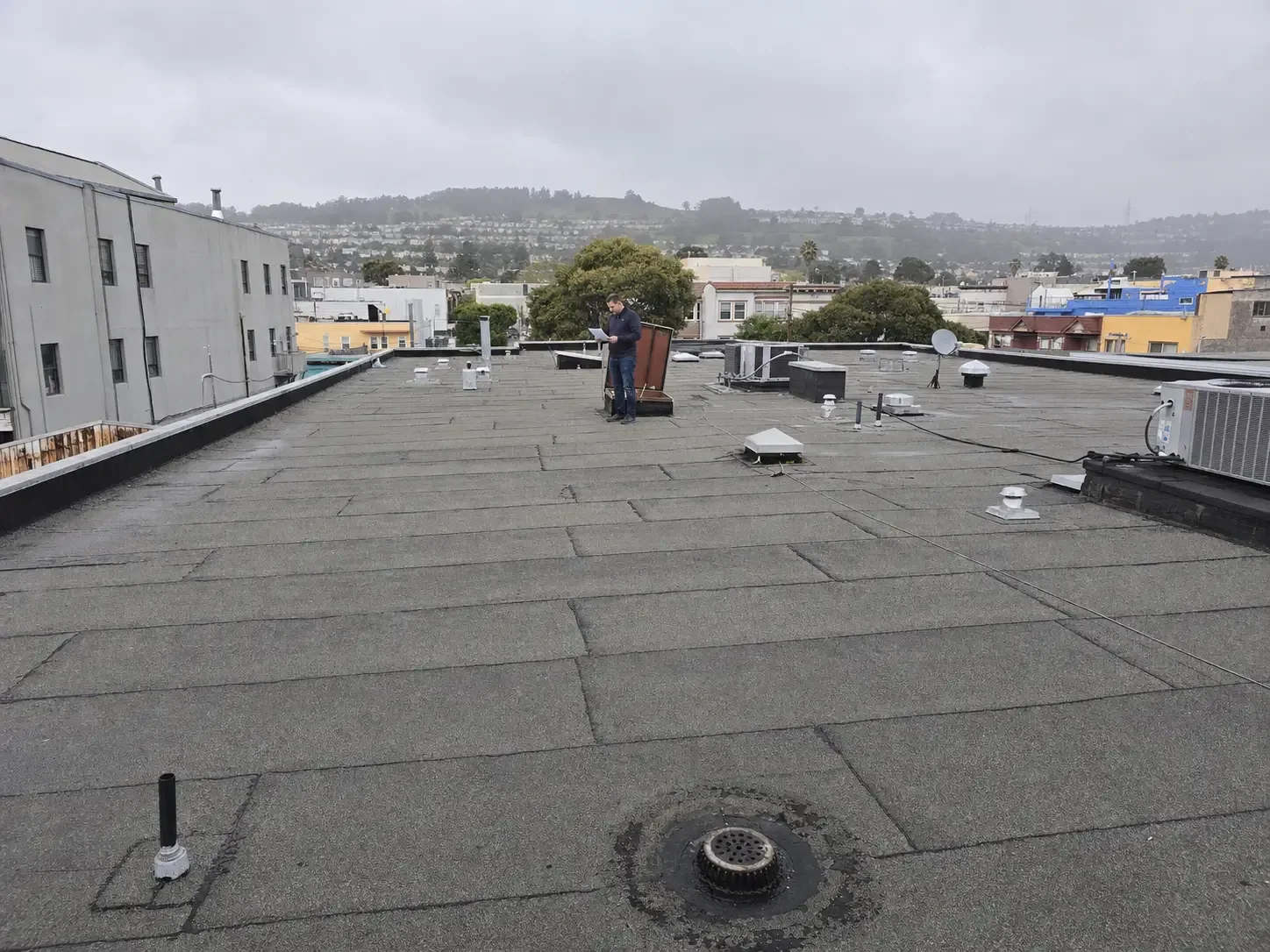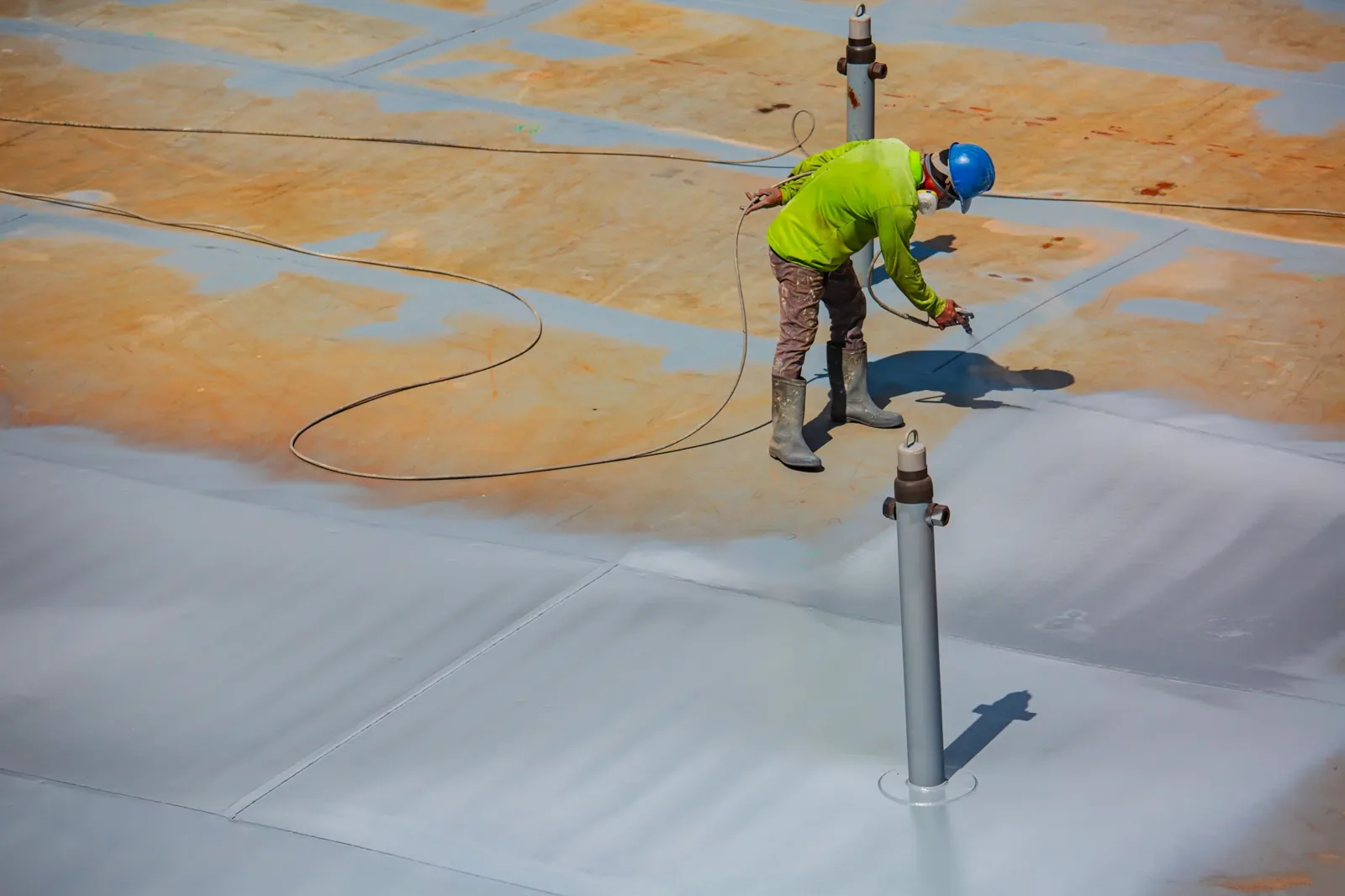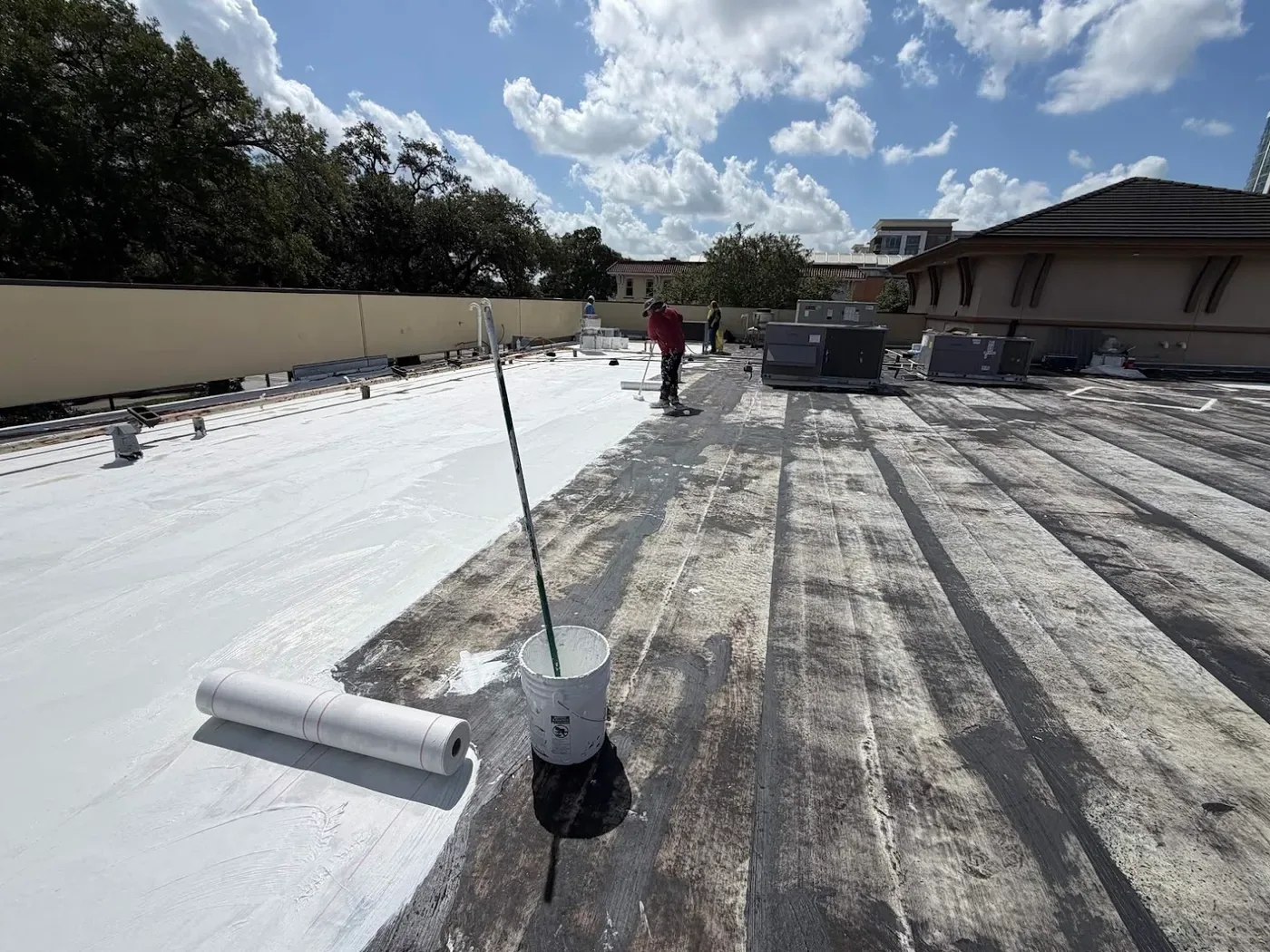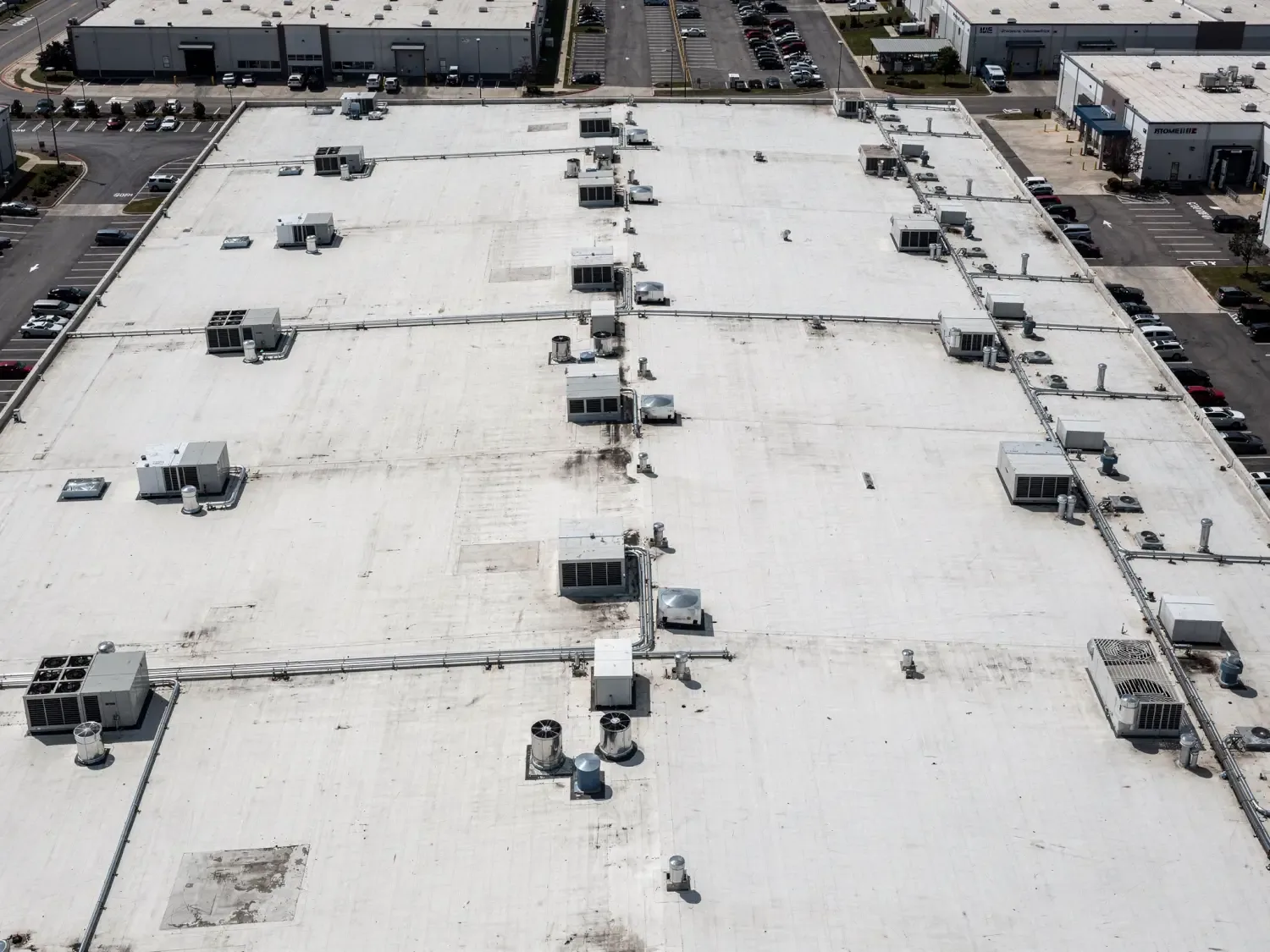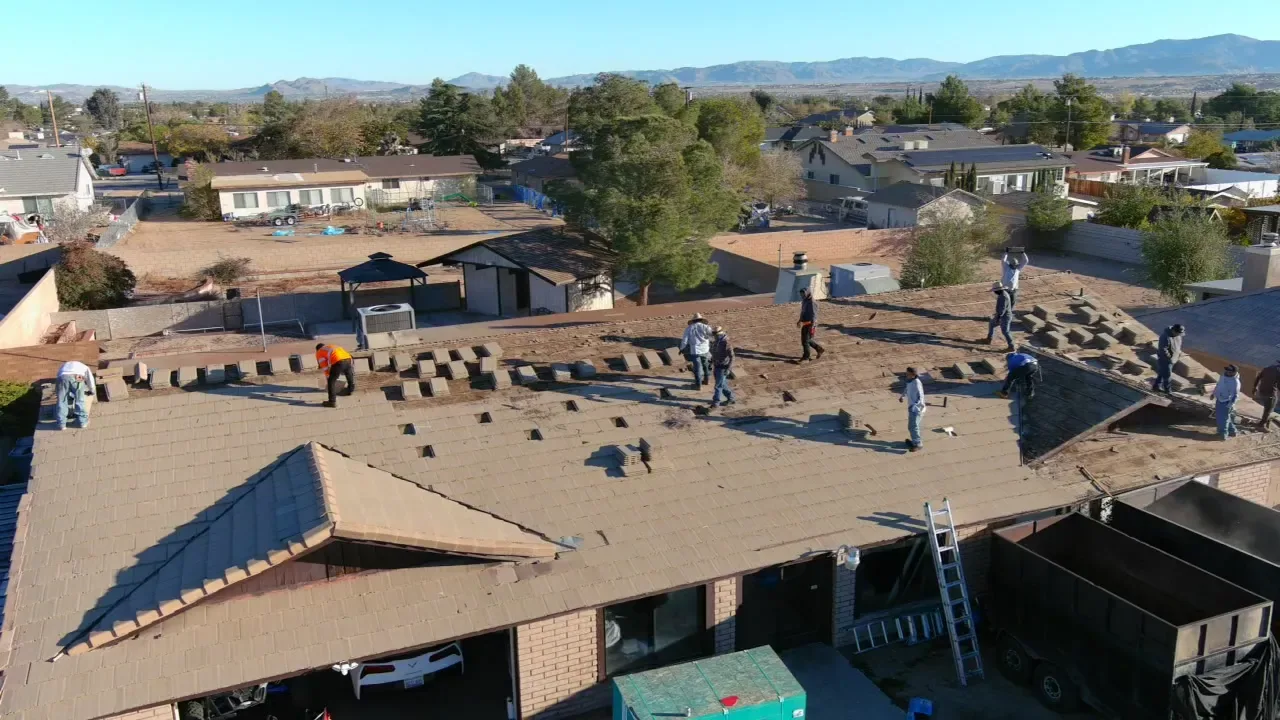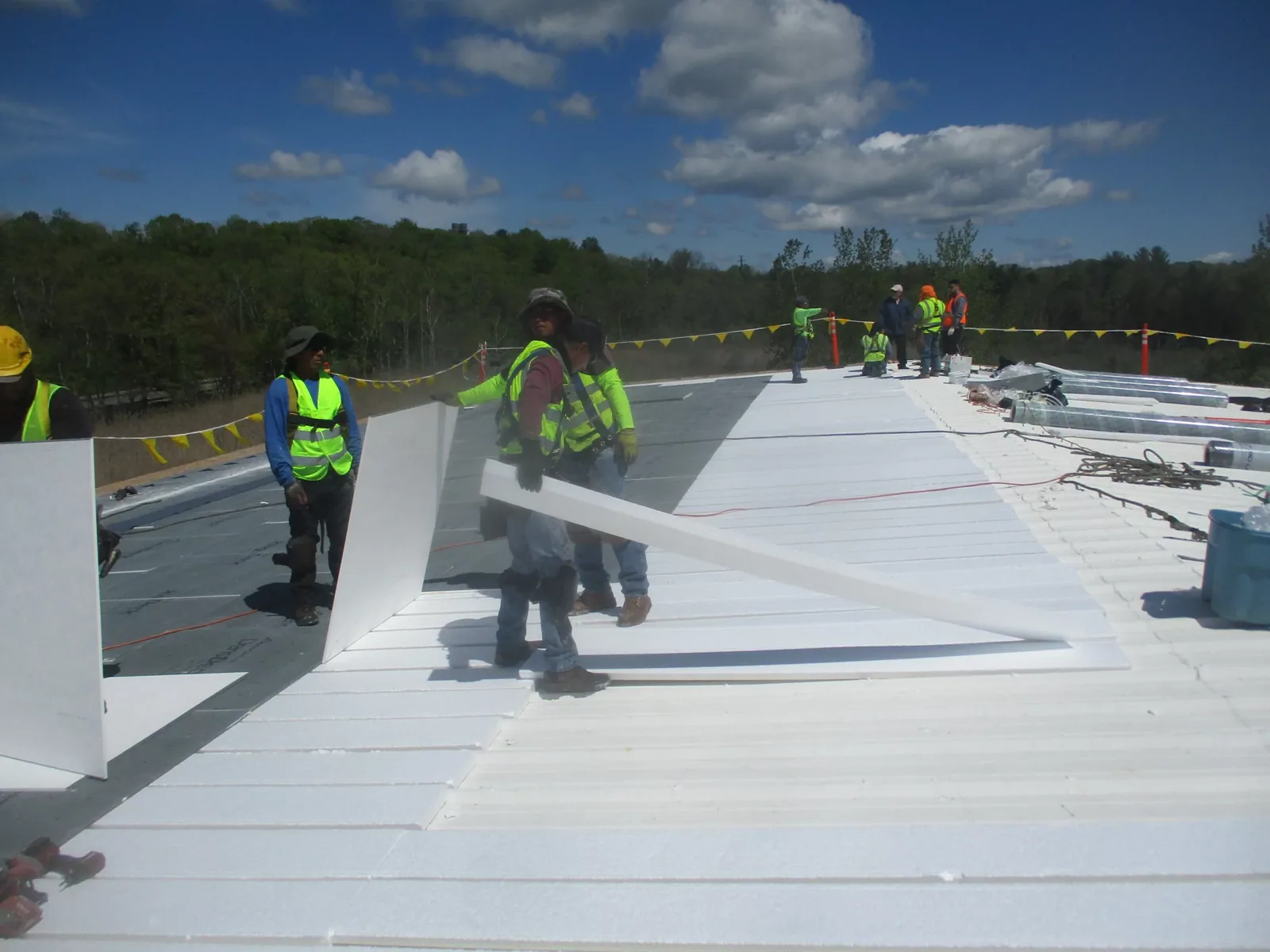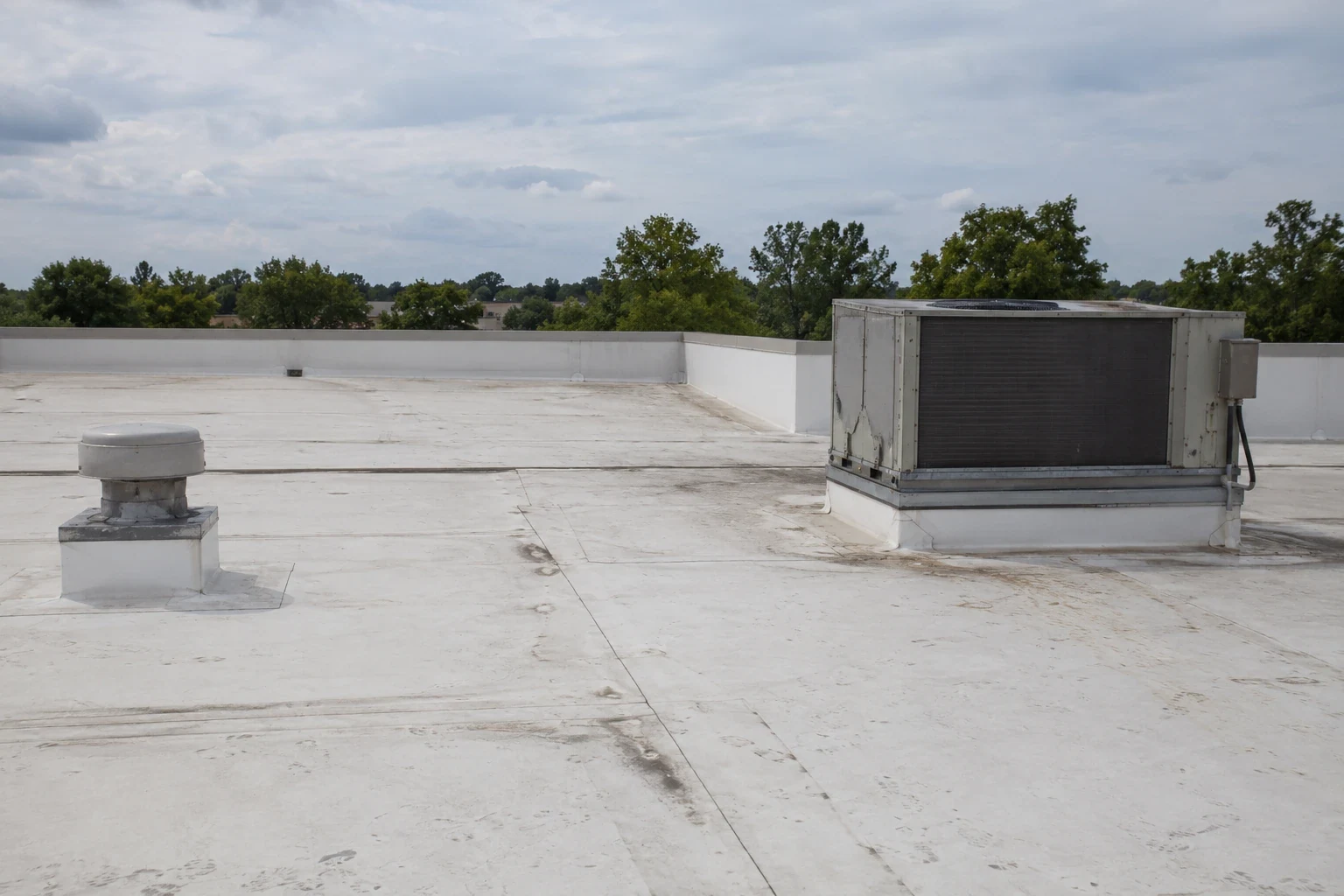
A worn coating over spray foam can expose the surface to water and sunlight. We inspect coating thickness, splits, blisters, and drain transitions before calling for another layer. The roof map identifies each test area and any soft or wet location. That keeps restoration tied to the foam condition below.
Georgetown's summer heat is a real application constraint. Recent Georgetown summer days have exceeded 100 degrees Fahrenheit, after common summer highs in the 90s. We check surface temperature, wind, humidity, and product limits before spraying or recoating. A safe work window and a dry substrate control the sequence.
Spray polyurethane foam creates a continuous insulation layer when installed over a suitable substrate. A protective coating shields that foam from ultraviolet exposure and weather. The system needs both layers to remain continuous. We look for coating erosion, open splits, exposed foam, impact marks, and areas where water remains after drainage.
Foam can be shaped to improve slope, but the roof still needs clear outlets and maintained drains. We trace low points and inspect transitions at curbs, penetrations, and parapets. A coating patch over wet or degraded foam does not correct the underlying condition. If a test cut is required, the project approves the location and dry-in procedure first.
Georgetown's industrial growth includes NorthPark35 and Georgetown Logistics Park, where utility work is planned to support additional business and industrial activity. Those broad areas do not establish that foam is installed on a particular building. The roof walk confirms the actual assembly, coating, and prior repair history before a scope is prepared.
We remove loose coating only where the repair requires a sound edge. The foam is checked for adhesion, moisture, and damage before it is patched or built back. A compatible coating is applied at the specified thickness and carried past the prepared boundary. Curing time and weather limits govern when the next layer can proceed.
At penetrations, the coating must continue around the base without leaving thin corners. Drain bowls and scuppers need a clean transition that does not block the outlet. Equipment traffic can cut the surface, so we identify walking routes and service paths during the inspection.
Where coating loss appears across several roof zones, we compare spot repair with broader restoration. We check the underlying foam before recommending another coating pass. Coating restoration may work where the substrate remains sound. A replacement plan may be needed where foam has widespread moisture or separation.
UV exposure degrades unprotected foam and coating over time. Georgetown's high summer temperatures also affect the work window and cure. We compare exposed areas with the coating thickness and product requirements. The application window depends on roof-surface conditions and product limits, not season alone. Field observations establish the maintenance boundary.
Hail can fracture coating or dent metal flashings. Wind and tornado conditions can damage edge details or move rooftop equipment. Hail affects the Austin forecast area, while tornadoes have crossed Williamson County. After severe weather, we photograph cracks and impact separately from normal coating erosion. A hail assessment can document that distinction.
Water may enter through a coating split, an unsealed penetration, or a detail outside the foam field. We trace the path from the roof feature to the interior report. We do not treat a surface crack as the only possible source. Moisture mapping can identify zones for closer review, followed by a test opening when needed.
Before restoration, we inspect adhesion, moisture, coating condition, and attachment to the deck. A new layer adds material but cannot stabilize a separated substrate. We identify which areas are sound and which need removal or repair. The boundary should follow the condition evidence, not just a convenient roof grid.
A recovery decision also accounts for drainage, roof height at edges, equipment bases, and existing layers. A recoverability review can compare the assembly with replacement. Other systems, including TPO or silicone coating, may be evaluated when substrate and specification permit. Each option has separate preparation, detail, and maintenance requirements.
Cost and timing depend on how much coating is removed, foam repairs, access, lift needs, cure conditions, and drain changes. We list those factors in the scope. If a test area uncovers wet foam, the general contractor receives a hold point before that material is covered. The written boundary lets the owner compare restoration with replacement using the same assumptions.
Before spraying, we confirm substrate dryness, masking, ventilation, wind limits, and protection for equipment and adjacent surfaces. The crew applies foam and coating in controlled passes. Thickness is checked as the work proceeds. If conditions exceed the product range, the operation pauses before an inconsistent layer is installed.
FM 971 connects Georgetown's I-35 and SH 130 routes and serves commercial areas as well as housing, schools, and a regional park. Delivery planning can use the corridor, while the site contact confirms staging and access. Spray equipment, material storage, and roof entry are coordinated with the general contractor before mobilization.
On an occupied building, we protect intakes and coordinate noise, odor, and access conditions. Each shift closes exposed foam and checks temporary tie-ins. A phased roof schedule can separate occupied zones and application days. A temporary cover can protect an active opening while the permanent foam repair is planned.
Closeout identifies repaired foam, coating limits, thickness checks, and areas that remain outside the scope. Photos show drains, edges, penetrations, and any test locations. The roof map gives maintenance staff a route for later inspection. It also marks areas where rooftop traffic needs protection.
For buildings near Berry Creek Business Park, keep each roof's records distinct. Berry Creek has multiple industrial buildings in the Georgetown market, while FM 971 connects commercial areas across the city. Neither location changes the need to verify the foam and coating at each property.
Send the existing roof plan, coating records, known leaks, and access period. We can inspect the substrate and set a repair or restoration boundary. Active leaks can be reported at any hour, including holidays. The completed record states what is protected and which follow-up remains. Later checks should note foot traffic, coating wear, water flow, and any work performed by rooftop trades. Those details can help isolate a newly reported cut from a previous surface repair.
Only after the existing coating, foam adhesion, and moisture condition are checked. We prepare a test area when the bond or product compatibility needs confirmation.
We review visible conditions and may use moisture mapping or an approved test opening. Each method identifies a different level of detail, which we note in the report.
Not always. We inspect the foam beneath the split and the surrounding coating. Sound material may take a localized repair; widespread separation changes the scope.
The surface, wind, humidity, and product limits determine the work window. We check those conditions and pause when the application range is exceeded.
The record should identify repaired areas, coating limits, test locations, and drainage details. Photos and a roof map make later checks specific.