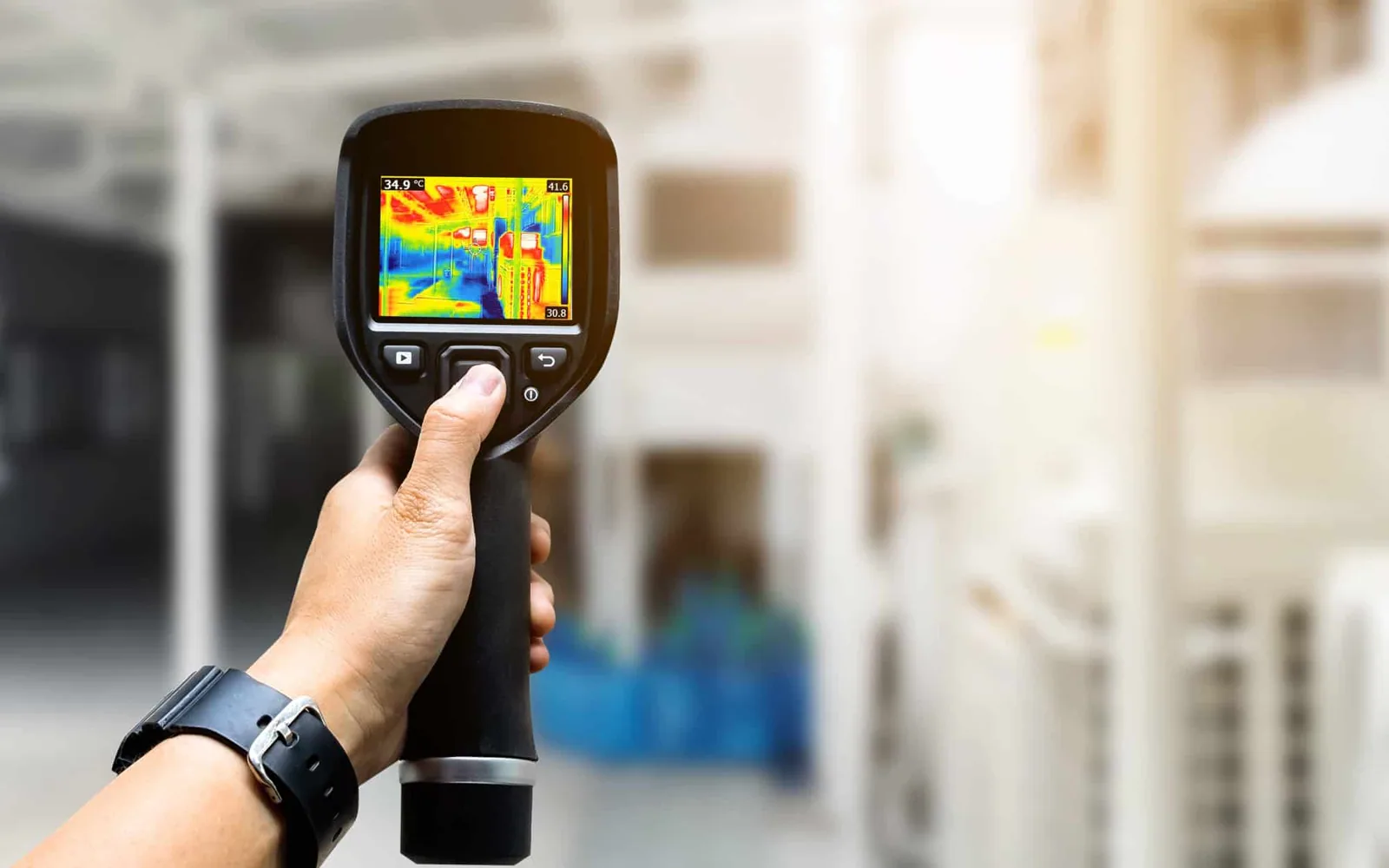
An infrared scan can identify roof areas that release heat differently from nearby surfaces. That pattern may point to retained moisture. But it is not proof by itself. We review the roof assembly, weather, surface conditions, and scan timing. We then mark areas that need confirmation. The result is a targeted testing plan, not a moisture diagnosis based on color alone.
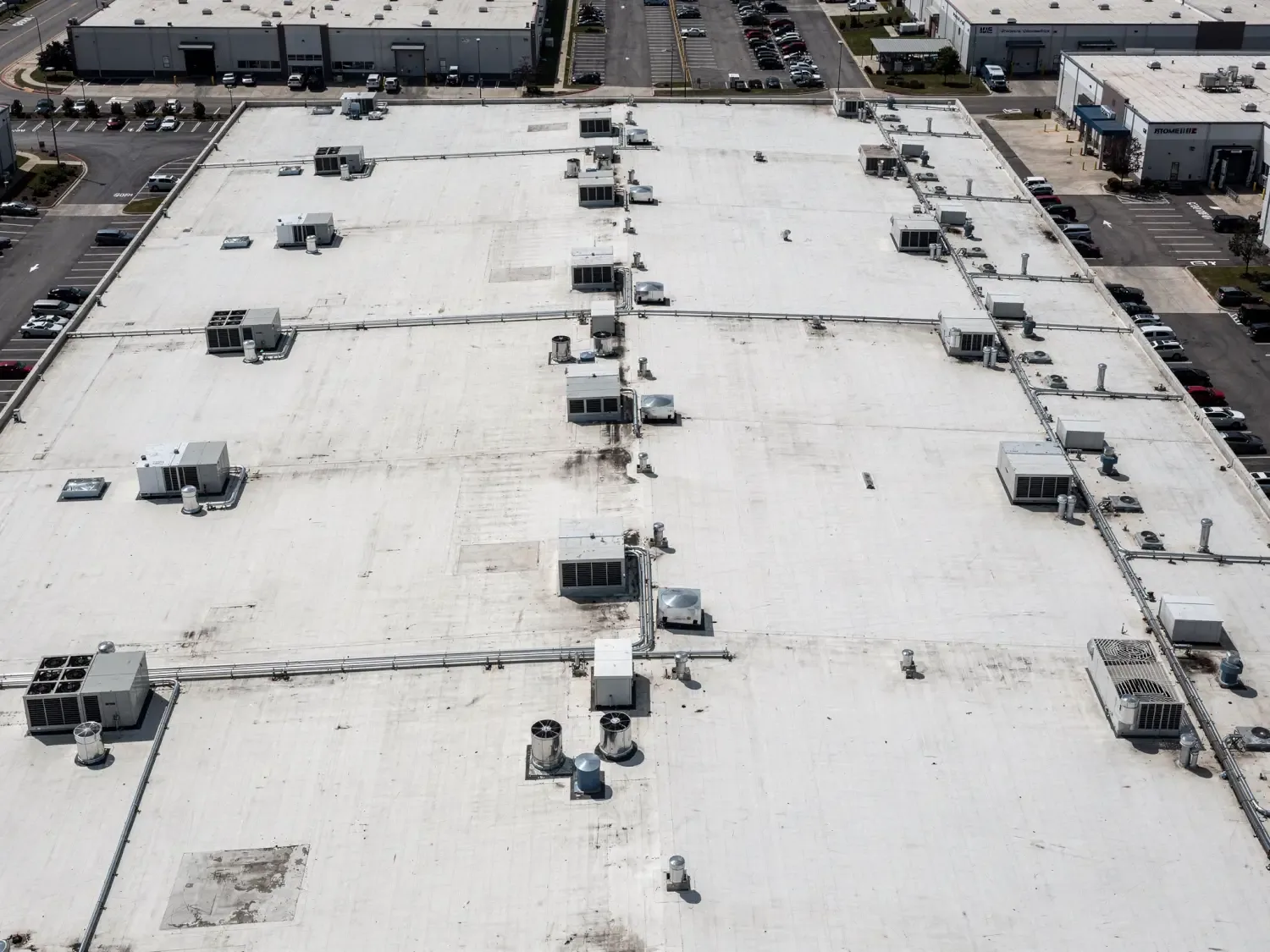
For a facility in Georgetown, TX, the survey begins with the roof system and the decision the owner needs to make. A broad scan may help prioritize repair investigation or inform a replacement discussion. NorthPark35 and the Georgetown Logistics Park are part of the city’s industrial pipeline, where larger roofs can include distinct sections and operating zones. We map those zones before interpreting the readings.
Infrared works only when surface and environmental conditions create a useful temperature contrast. We review the roof type, insulation and deck information if available, prior repairs, recent weather, cloud cover, wind, and the planned survey window. Wet surfaces, heavy shading, rooftop exhaust, stored materials, and unusual heat sources can distort a pattern or block a reliable view.
Georgetown summers bring substantial heat, which affects both roof surfaces and the timing of a scan. We consider how the roof has warmed and cooled before interpreting a difference. If conditions do not support a useful scan, we explain the limit and discuss another method or time.
We also confirm access and roof boundaries. A large facility may have several membrane types or installation phases. We mark included areas and list inaccessible sections, dense equipment zones, or unsafe views as exclusions.
The survey pairs thermal observations with visible roof context. We capture each suspect pattern alongside a reference image. We note the section, nearby details, and conditions that could affect the reading. A thermal image without a clear location or corresponding surface view is difficult for a repair crew to use. The record ties each marked area to a roof plan or field reference.
Drainage paths, curbs, parapets, repairs, and equipment can all affect surface temperature. We compare an unusual pattern with nearby areas and look for a consistent boundary. A temperature difference may come from construction, shade, air movement, or surface condition. We note factors that affect confidence.
The scan is not a test of seam strength, attachment, deck condition, or the full roof assembly. It also cannot identify the source of an interior leak without other evidence. When the question concerns an active entry, a leak tracing visit can inspect the opening and nearby transitions directly.
Thermal patterns that merit action are marked for confirmation. We may recommend a core cut, probe, or other authorized test to check the insulation and deck below the surface. The number and location of test openings depend on the roof system and pattern. We cut no core without approval and a restoration plan.
Confirmed wet insulation can affect repair boundaries and material decisions. A small isolated area may support a localized repair. At the same time, a broader distribution may call for a larger scope or replacement review. We document the test result and distinguish it from surrounding areas that were not opened. If a core reveals deck damage or multiple roof layers, that finding can change the next step.
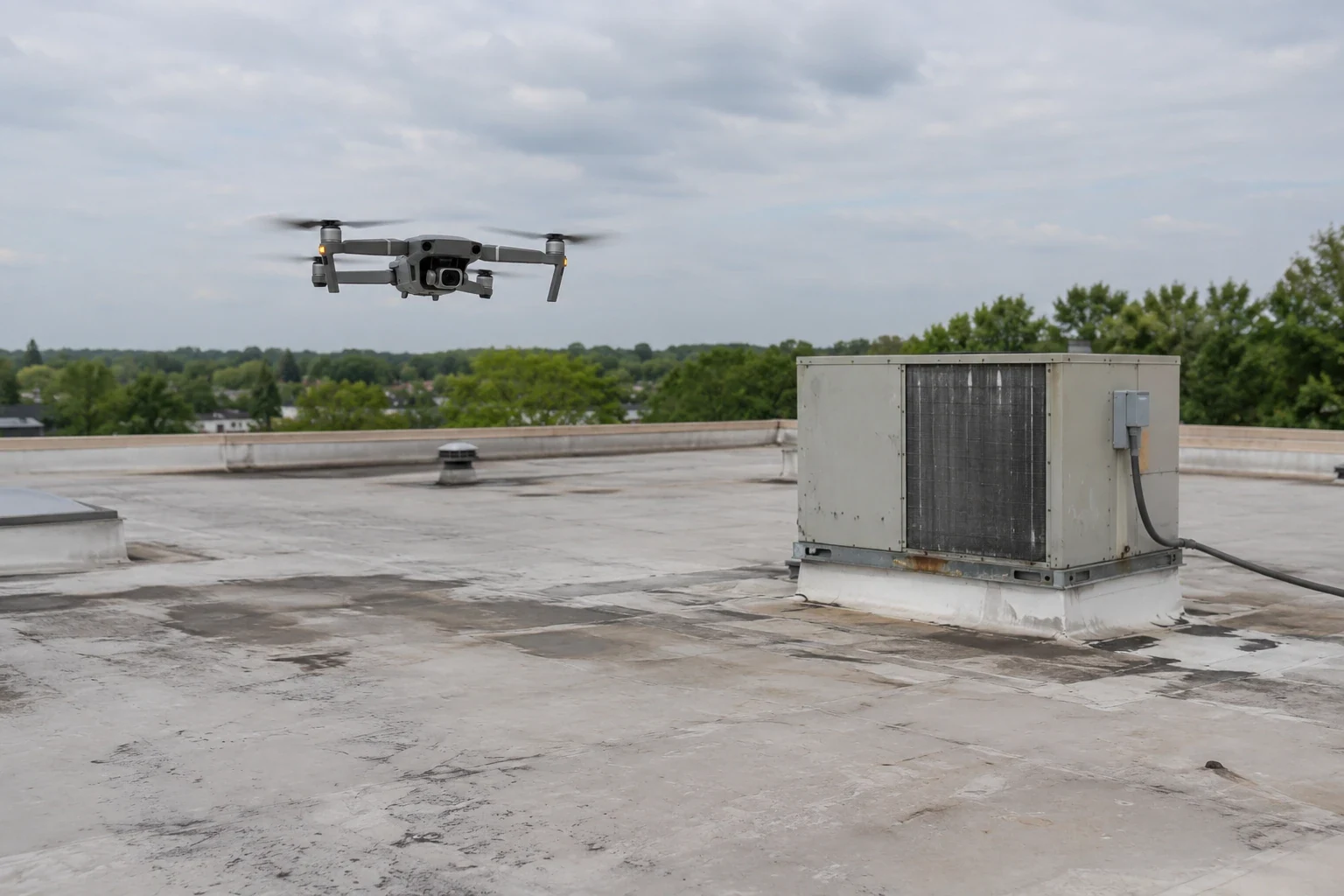
A hands-on commercial roof inspection can review the surface details around a flagged area. Where the pattern spans a broad or difficult-to-access roof, a drone image set may help map visible features. But it does not verify moisture. Each method answers a different question, and the scope should say which evidence supports the recommendation.
The roof plan matters as much as the thermal image. Georgetown's industrial growth areas near FM 971, I-35, and SH 130 can include distinct roof sections and equipment zones. We label each scan area against a drain, curb, expansion joint, or other fixed reference so a test result guides the field check.
In the 40-block downtown district, commercial, residential, county, and municipal uses occupy a compact mixed-use area around the courthouse square. A survey there may need careful coordination for access, occupancy, and the ground area below the roof. We ask the building contact to identify operating limits and any interior concern before the visit. We record the actual conditions encountered.
Severe-weather history gives owners a reason to preserve dated roof records. NWS reporting includes hail across the wider Austin and San Antonio area, and a 2022 tornado track crossed Williamson County from near Round Rock toward Granger. Those events do not prove moisture or storm damage on a specific roof. The survey records current patterns and directs testing where the evidence supports it.
The report identifies the survey date, roof areas scanned, method, environmental conditions, and access limits. It includes thermal and matching visual references for suspect zones, with a clear location label and recommended confirmation. Any area affected by shade, equipment discharge, standing water, or an incomplete view is marked as uncertain or excluded.
Findings are grouped by action: areas proposed for confirmation, visible conditions needing repair review, and sections with no unusual pattern under the survey conditions. A normal reading does not establish that the entire assembly is dry. Concealed moisture outside the scan boundary or without a useful thermal contrast may not appear. The report states those limits to guide any added testing.
A roof condition report can bring the images, test locations, and repair priorities into one record for the facility team. We review what is confirmed, what remains uncertain, and the next decision with the designated contact.
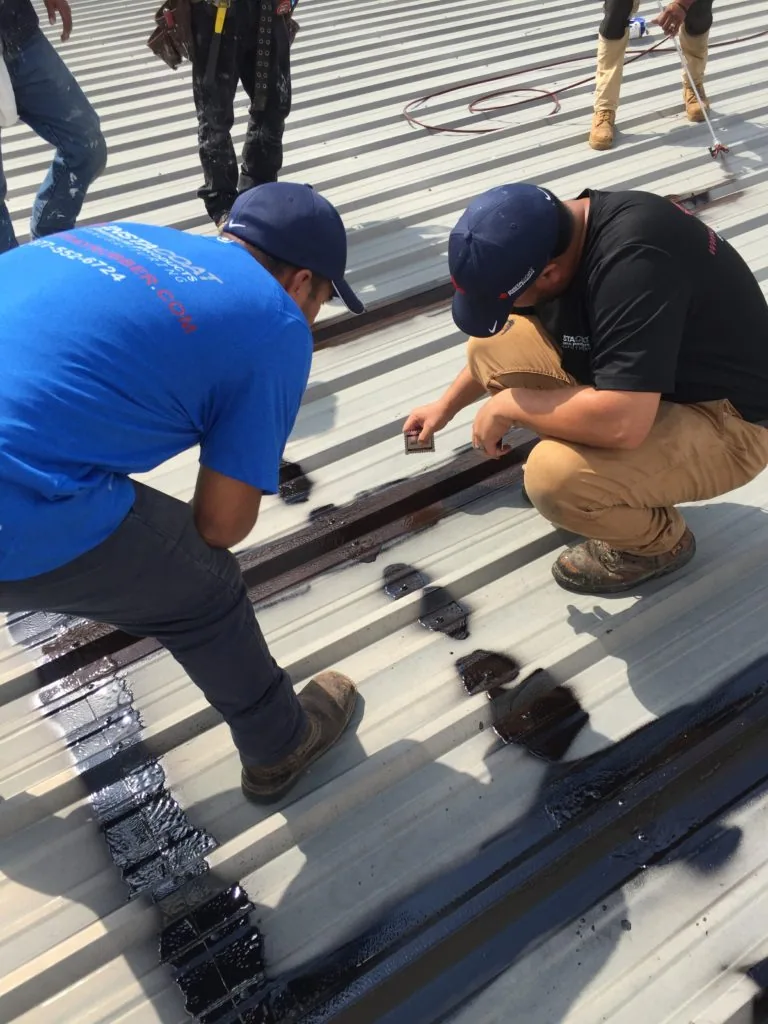
Once suspect areas are verified, we compare them with the roof’s visible condition and the owner’s project goals. A targeted repair should address the confirmed wet area and restore the tested opening. A broader repair scope may need to account for adjacent seams, drainage, flashing, and the path water could take across the assembly. We describe the limits and sequence before work begins.
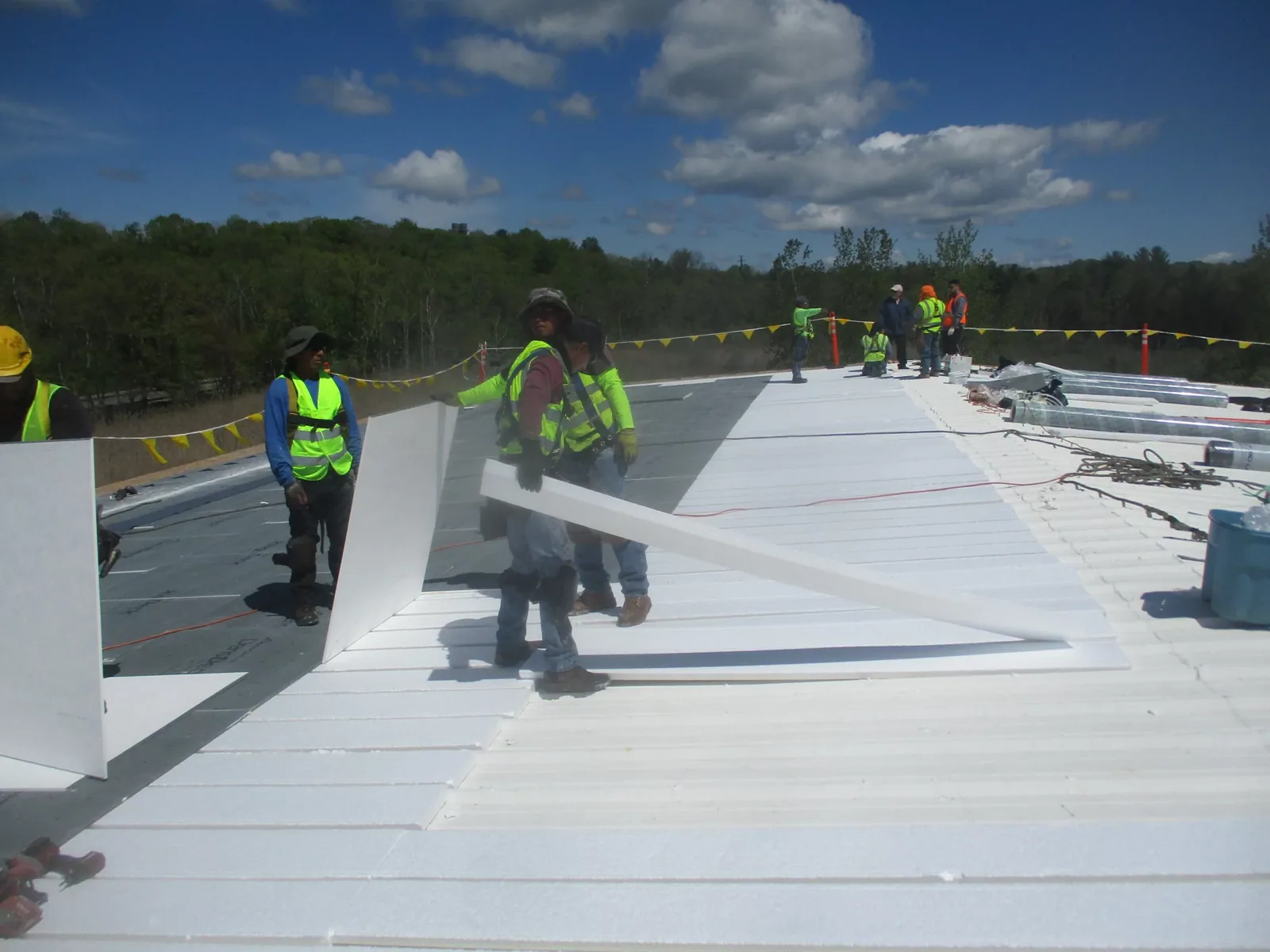
If testing shows widespread moisture, repeated repairs, or an assembly that cannot support another layer, a replacement evaluation may be more practical than continuing isolated patches. Where the existing roof remains suitable and code and moisture conditions allow, a recover review can consider another roof layer. Each option depends on verified conditions, assembly details, and project requirements.
After hail or tornado reports, thermal data can support a broader condition review when combined with visible inspection and targeted confirmation. A hail damage assessment can record related roof conditions. The survey does not establish the cause, date, or coverage of a loss; it supplies evidence about the roof areas tested.
No. A thermal pattern identifies an area for review. But several surface or environmental conditions can create a temperature difference. We confirm suspect areas with an appropriate test before treating moisture as established.
Roof surface, recent weather, cloud cover, wind, shade, equipment exhaust, and scan timing can affect the reading. We review those conditions before the visit and state any limitation in the report.
The scan itself does not require a core cut. If a thermal pattern needs confirmation, we identify a test location and explain the opening and restoration plan. Testing proceeds only after the owner authorizes that step.
It can help map suspect moisture. But the decision also depends on confirmed test results, roof condition, assembly layers, drainage, and project requirements. We use the survey as one part of that review.
Start with areas marked for confirmation. Then review the recommended tests with the person responsible for the roof. The report links each pattern to a location and states what remains uncertain. So repair planning can use the evidence without assuming every scanned area has the same condition.