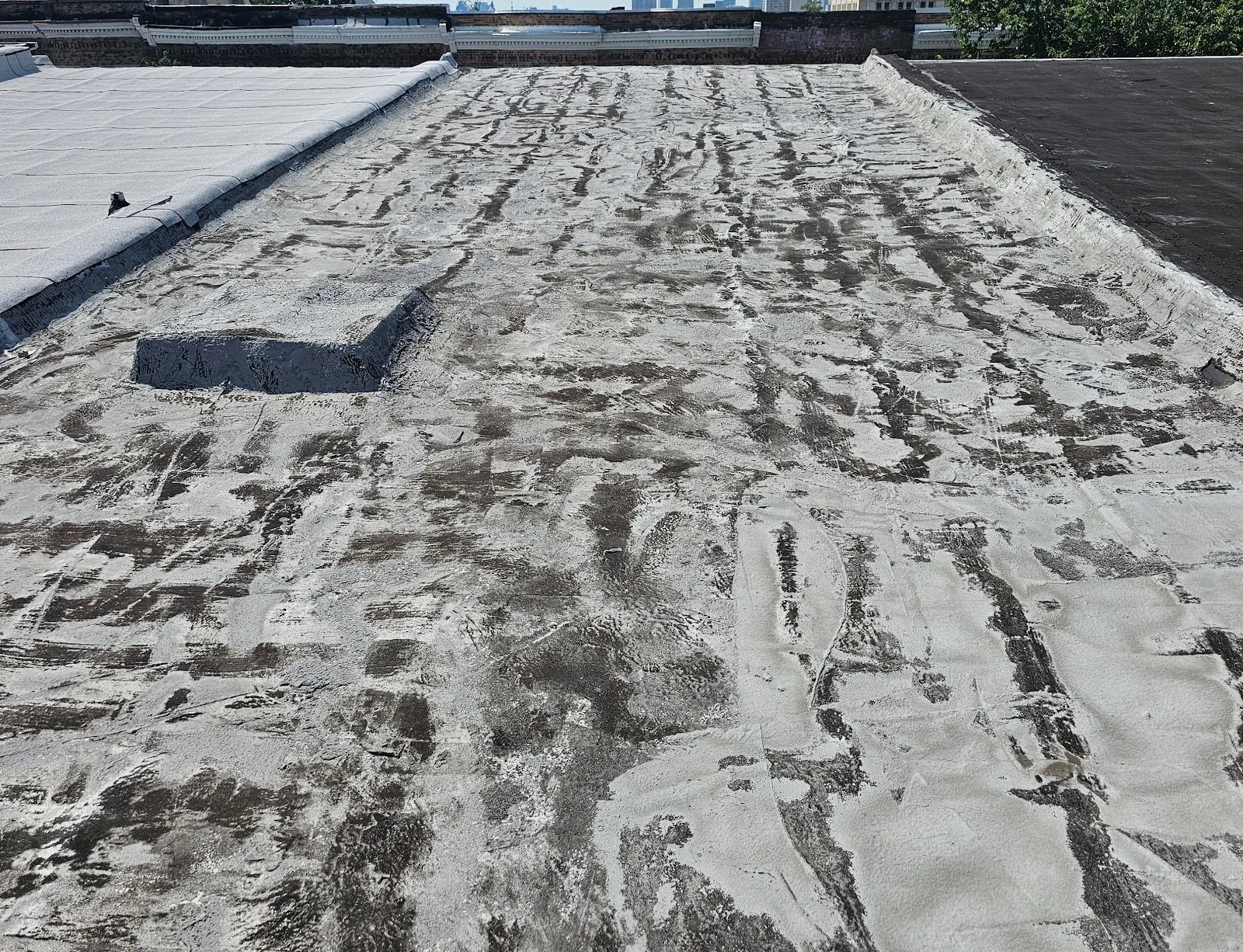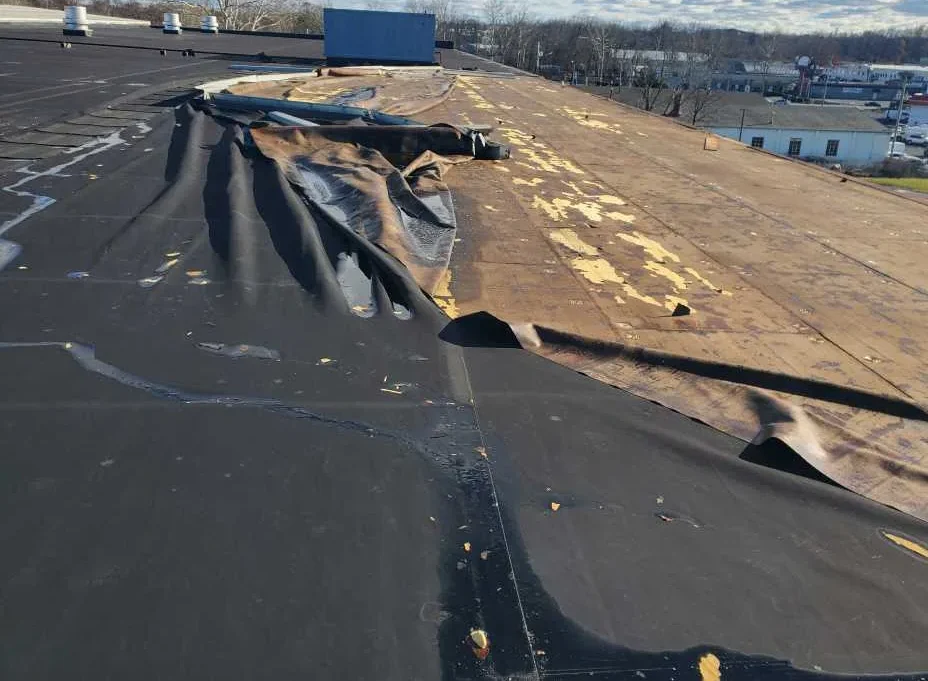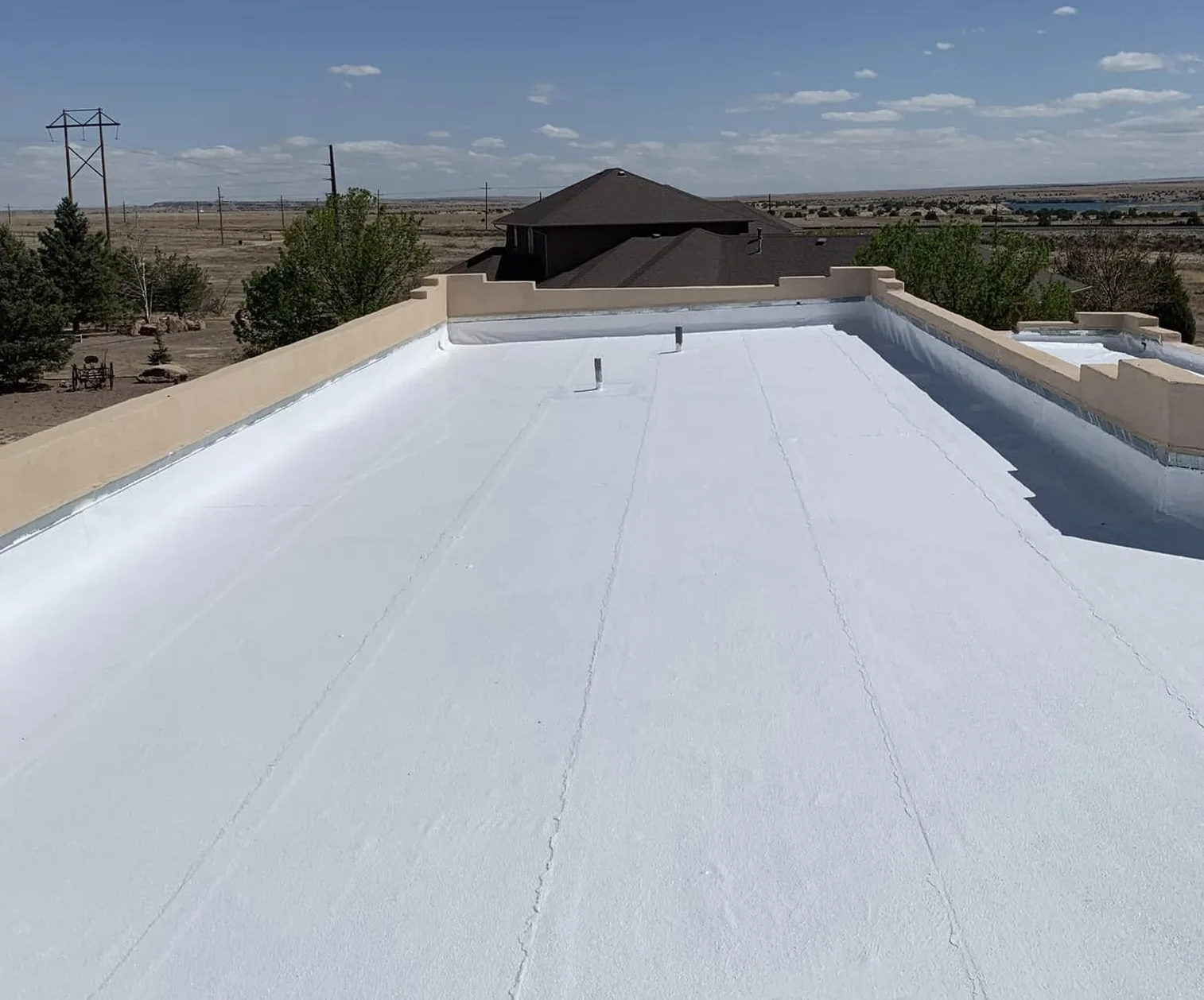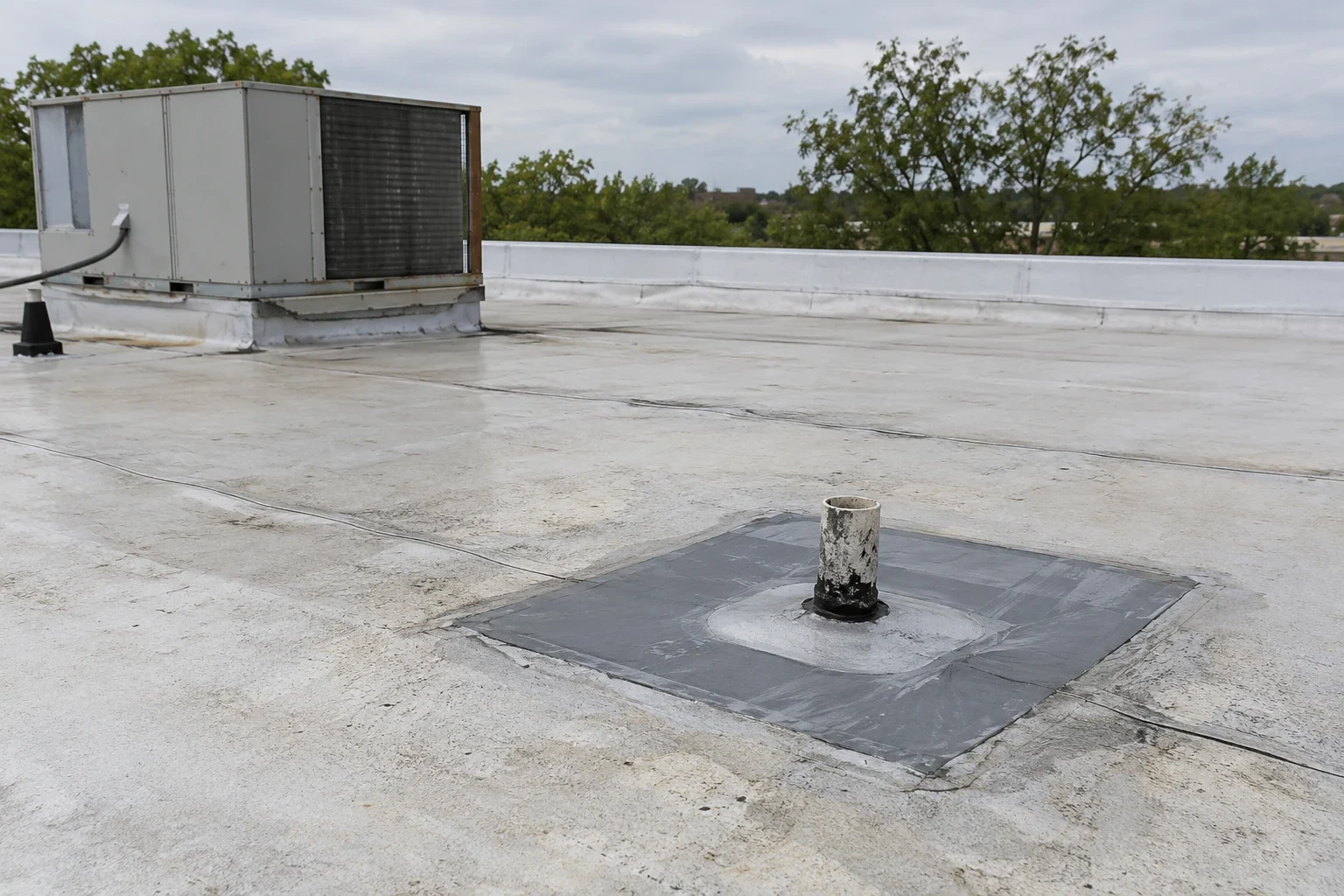
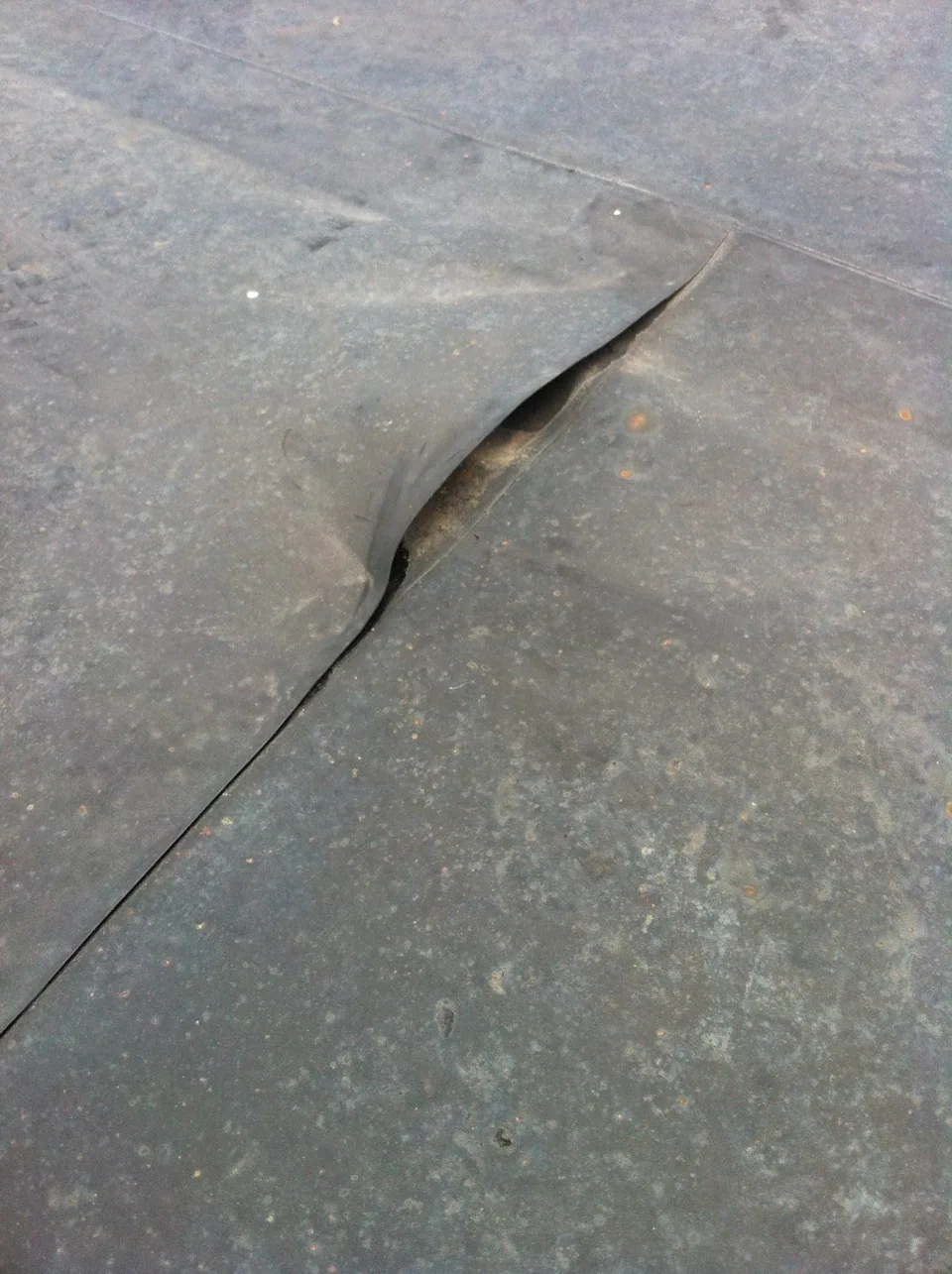
A lifted lap at a T-joint gives the first field check. We inspect the seam width, weld or adhesive line, nearby fasteners, and the membrane beyond the visible opening. An open seam can admit water, but the full repair length depends on how far the bond has failed. We mark the start and stop points before removing material.
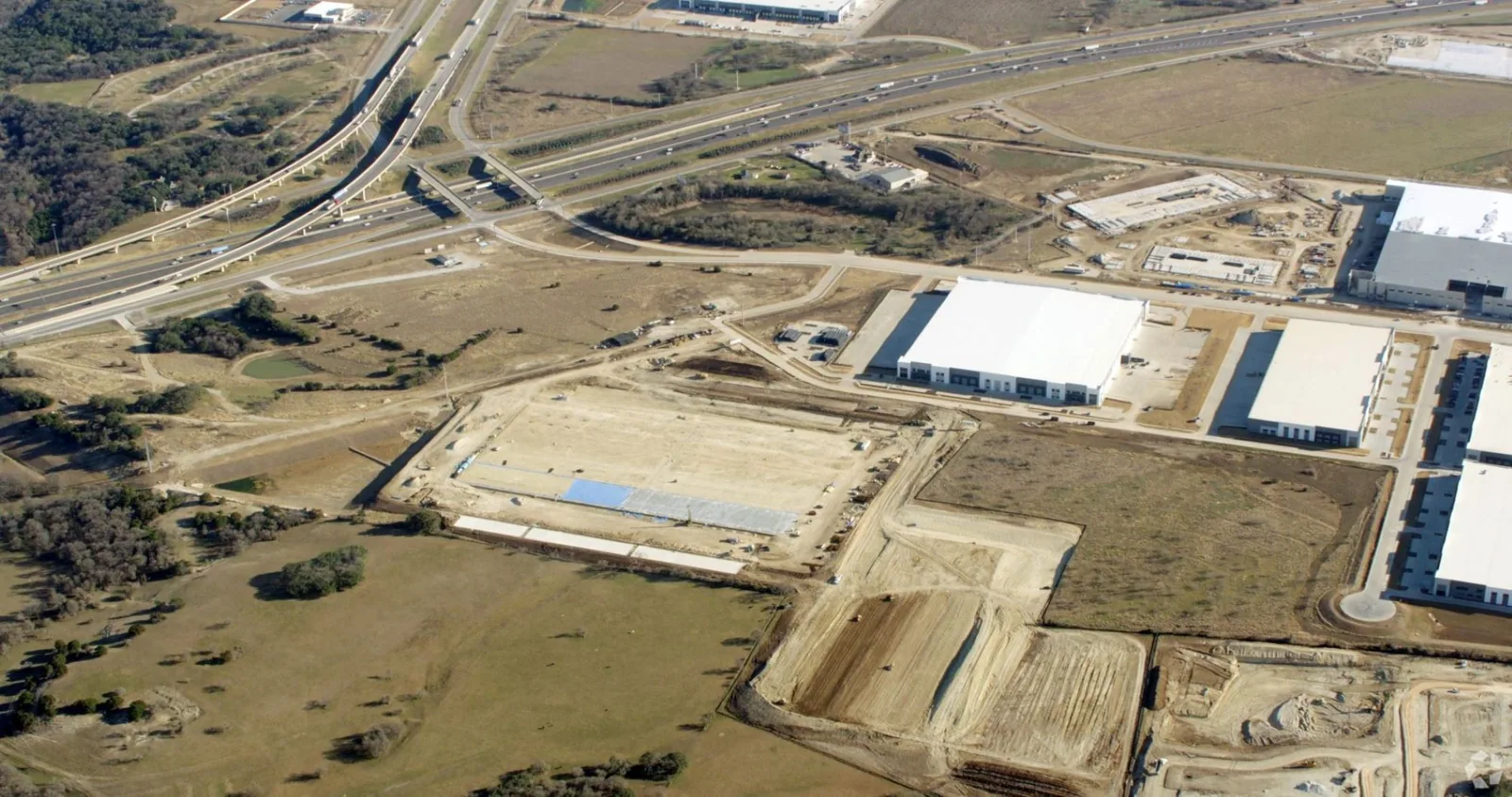
Georgetown's NorthPark35 and Georgetown Logistics Park are industrial development areas served by I-35 and SH 130. That industrial context can inform staging questions, but it does not confirm the assembly or condition of a specific roof. We inspect the building before setting the seam repair boundary.
We distinguish a short fishmouth, an open lap, a failed splice, and a broader bond loss. On thermoplastic membrane, we examine the weld and test the adjacent seam where conditions allow. On EPDM, we look at adhesive, tape, contamination, and movement at the splice. On modified-bitumen roofs, we check lap adhesion and surfacing. The repair material and preparation follow the installed system.
A visible opening may end where the material looks intact, but concealed separation can continue past that point. We test carefully and extend inspection only where evidence supports it. If the seam sits beside a curb, wall, drain, or metal transition, we inspect that connection too. A flashing-failure review may address a separate transition; it should not be folded into the seam quantity without confirmation.
Interior water reports help locate the affected zone but do not identify the seam by themselves. Water may travel under the membrane or across a deck. We compare stains and drips with roof plans, seams, drains, and penetrations. Where moisture beneath the field could change the patch size, we define a test opening and record the question it will answer. The owner approves removal beyond the seam check.
Surface preparation controls bond. We remove loose material and contamination without damaging sound membrane, then use a compatible patch, splice, or weld detail. A patch must extend onto material that can accept the new bond. We check corners and terminations so the repair does not leave a narrow channel at the edge. Photos capture the open seam before, during, and after the tie-in.
Temperature, moisture, dust, and roof traffic affect the repair window. Recent Georgetown summer observations include several days over 100 degrees Fahrenheit. The crew checks material requirements and substrate conditions before welding or applying adhesive. If surface heat or a wet deck prevents a sound bond, we stop and protect the opening until conditions allow the approved repair.
Equipment access can create recurring seam stress. Carts, sharp tool edges, service traffic, and unsupported lines may abrade the membrane. We identify the cause only when the field evidence supports it. A puncture inspection can be scoped separately if a seam opening is accompanied by a distinct impact defect.
We check how the repair meets an existing field seam and avoid placing a new lap where runoff, equipment traffic, or a sharp change in height concentrates stress. The patch perimeter must be wide enough to bond without bridging unsupported material. We note nearby walkway pads and service routes that could expose the repair to foot traffic. Those observations help the facility team protect the area until the material reaches its required service condition.
Central Texas severe weather can expose existing seam weakness. A tornado outbreak crossed portions of Williamson County in 2022. That regional event does not determine whether a particular seam was damaged. We document present separation, displacement, impact, and wear at the roof. A wind-damage assessment can cover perimeter movement if the inspection finds more than a failed lap.
Georgetown's courthouse-square district includes county, civic, business, and residential buildings in a compact area. Access for a roof repair above public or occupied space may require a different lift location and interior route than work in an industrial area. The building contact confirms the path. We record the schedule and work boundary before staging.
A seam can reopen if the substrate moves or the patch crosses onto contaminated material. We check adjacent attachment, insulation condition where accessible, and the roof's movement points. If deck deflection or widespread moisture is suspected, that becomes a hold point for additional review. A narrow patch is not a substitute for a structural or system correction.
The estimate identifies the seam location, measured length, patch or splice method, and any adjoining detail included. It also names the roof areas not reached. A short opening with sound material on both sides can remain local. Multiple failed seams, recurring splits, or wet insulation may need testing or broader work before quantities are fixed.
Before proposing a new roof layer, we verify that the current assembly is dry, secured, and able to drain at the finished perimeter. If the deck or insulation cannot support the repair, removal may be needed. A commercial repair scope lists the confirmed work; a recover evaluation considers whether an overlay is appropriate across the larger assembly.
Price and timing depend on access, seam length, system type, preparation, material cure or cool-down, and whether nearby operations can be kept clear. If the seam extends beneath equipment or a wall counterflashing, another trade or approved access may be required. We state assumptions. If removal reveals hidden damage, work pauses at the boundary for owner direction.
We inspect the finished lap and adjacent membrane, then document the repair method, date, material, and measured length. Any water or bond check follows the system and product requirements. The closeout notes nearby conditions that were outside the authorized scope. At shift end, the patch is protected from foot traffic until it is ready for service.
Sites near NorthPark35 or along the Williams Drive corridor may have different delivery windows and rooftop access. The site contact sets the actual route. Send a roof plan, seam location, leak history, and access rules before the inspection so the crew can find the right zone.
A follow-up inspection can check the repaired lap at the next maintenance visit. The roof map keeps the seam location available for the next contractor or facility manager without implying that every splice was tested.
When the work is part of a larger roof program, the location is recorded by building, section, and seam line. That reference lets maintenance staff compare later observations from the same direction. We also record the material batch when available and any weather condition relevant to application. A clear record makes the next decision about maintenance or replacement more direct.
We test along the separation and continue only to sound, bondable material. The measured repair length and any inaccessible segment go into the scope.
Often, if the assembly and adjacent membrane allow a compatible patch or weld. Contamination, wet insulation, movement, or separation under another detail can change the method.
It may if the seam is the confirmed entry point. Water can travel beneath the membrane or deck, so we compare the interior location with drains, curbs, and nearby laps before closing the diagnosis.
No. We inspect the roof for current openings, displaced material, and impact. Regional weather records provide context, not a repair quantity.
Movement, poor substrate condition, contamination, incompatible materials, or traffic can affect the bond. We check the adjacent assembly and note any factor the repair cannot correct.