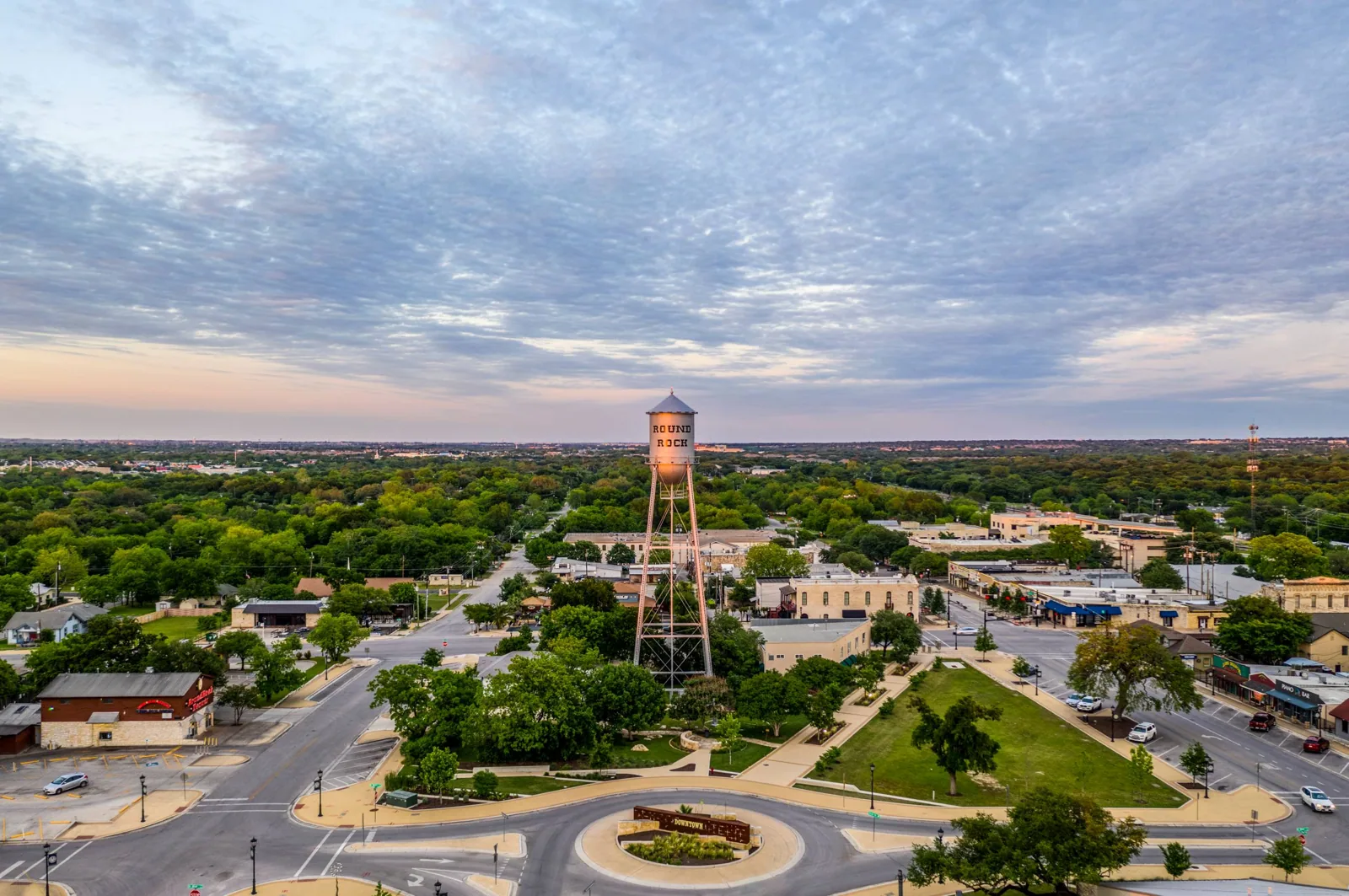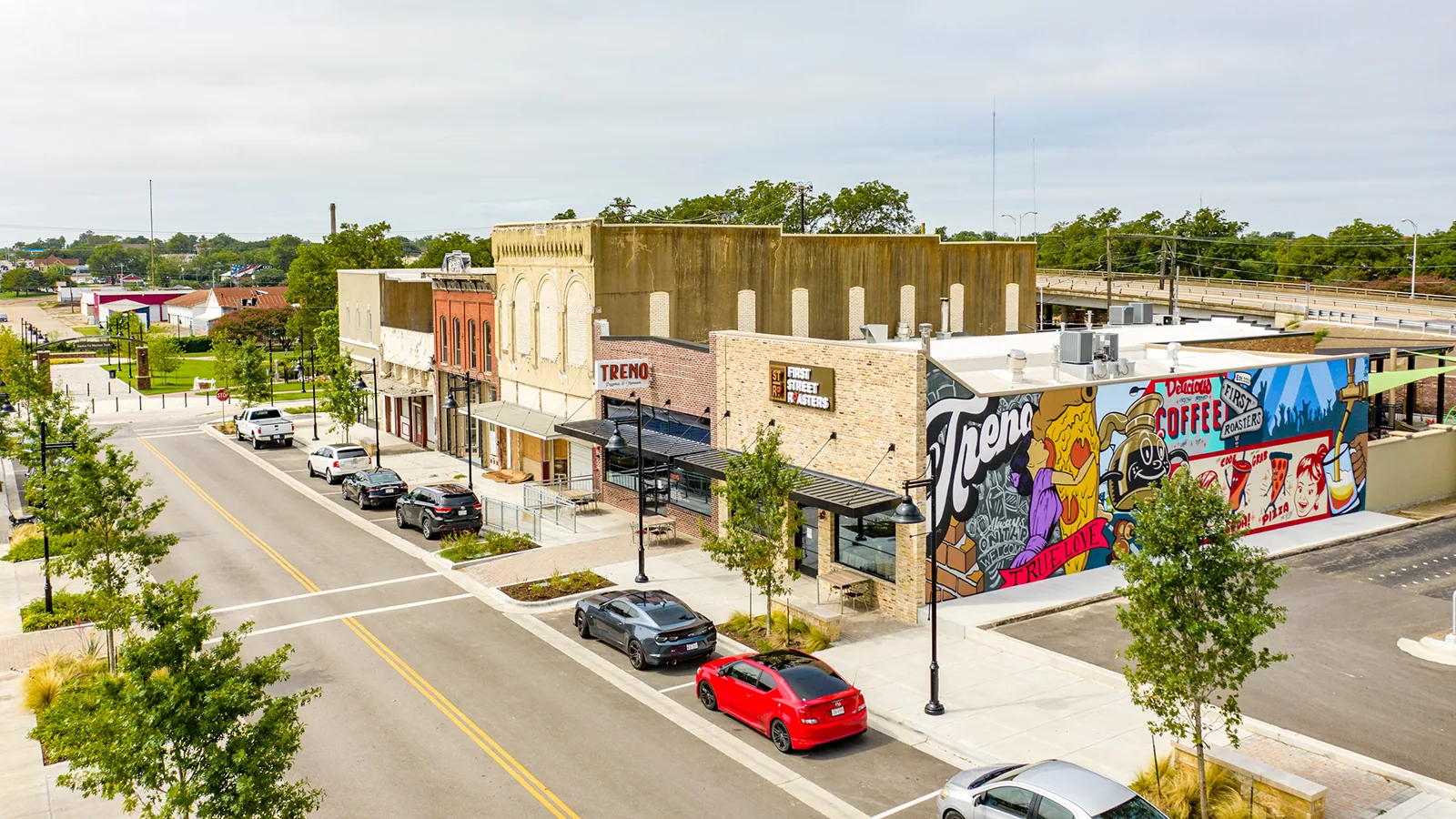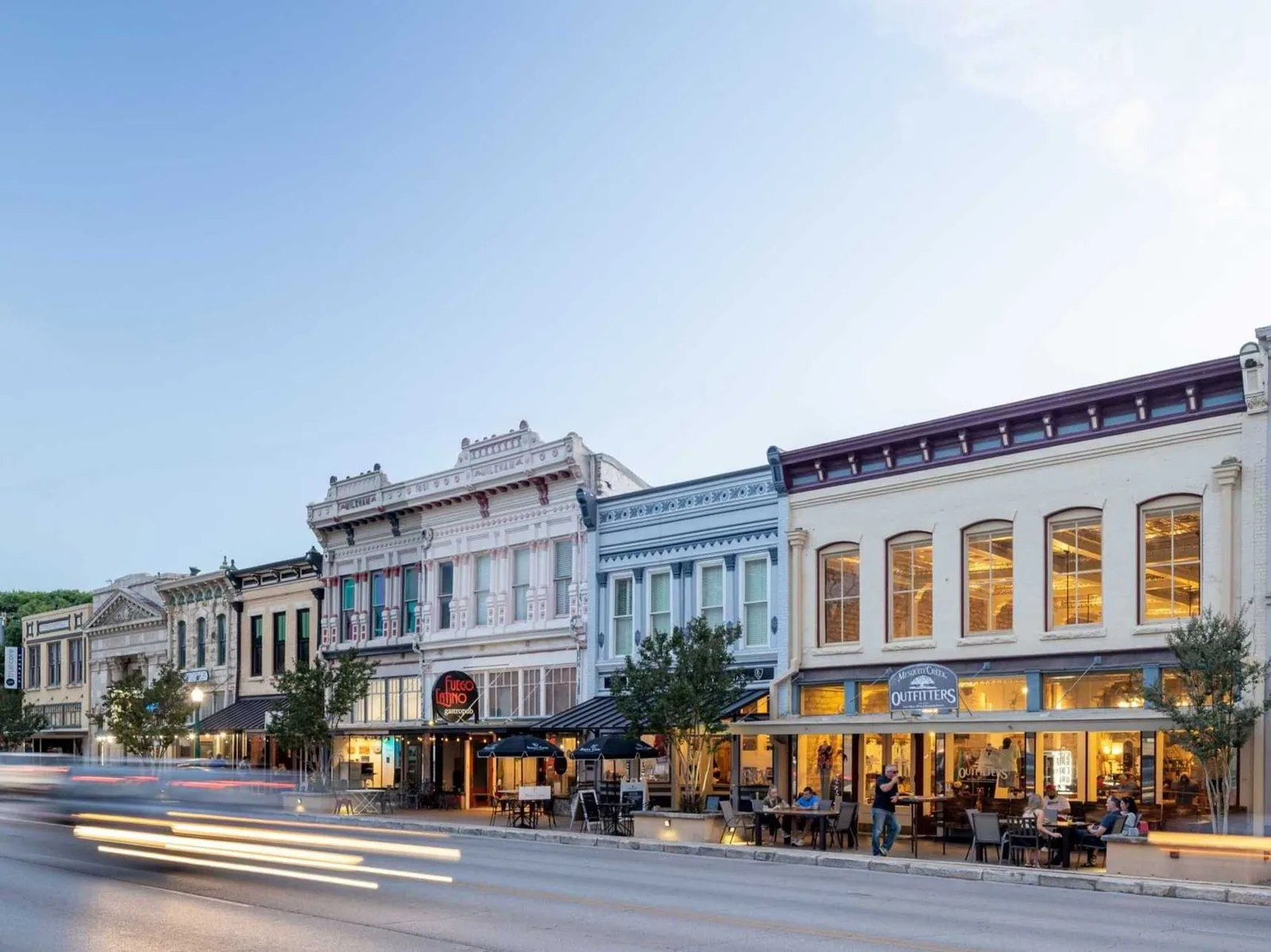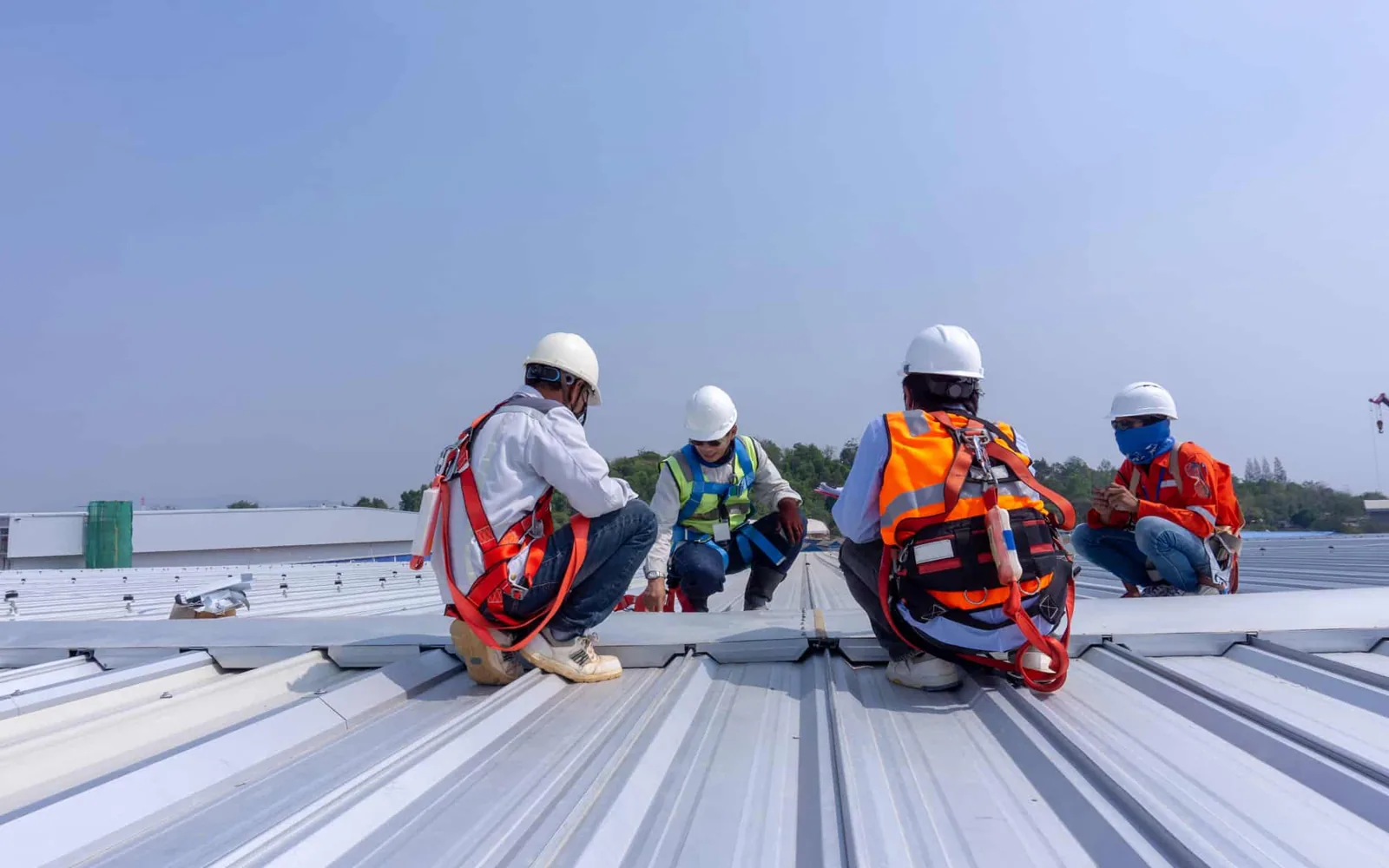
A loose coping cap above an active storefront deserves a close look before the next rain. We check the cap, wall transition, and roof edge, then mark the inspected area. Downtown Georgetown spans about 40 blocks of business, civic, county, and residential uses around the courthouse square. The courthouse square gives the area a clear center, but each roof still needs its own work boundary. Our service area also includes commercial buildings across Georgetown.
Historic commercial architecture and a walkable business core bring access and sequencing into the roofing scope. We plan the roof walk around entrances, deliveries, tenant hours, and the approved staging location. At a district property, a commercial roof inspection records the roof condition without assuming what sits above the visible ceiling or historic facade.
The district's historic overlay includes contributing structures and design review for changes. That context can affect how exterior work is coordinated. We identify roof-level details, document visible conditions, and flag any scope that may change the exterior appearance for the owner's review process. We can repair, replace, recover, restore, and maintain low-slope or metal commercial roofs. Emergency response remains available around the clock, including holidays.
On a parapet, we inspect coping joints, terminations, corners, and the membrane turn-up. A gap may admit water behind the wall finish or into the roof assembly. We follow the detail to the adjacent seam and check for movement, wet material, and past patching. Photos show each condition at both close range and roof-map location.
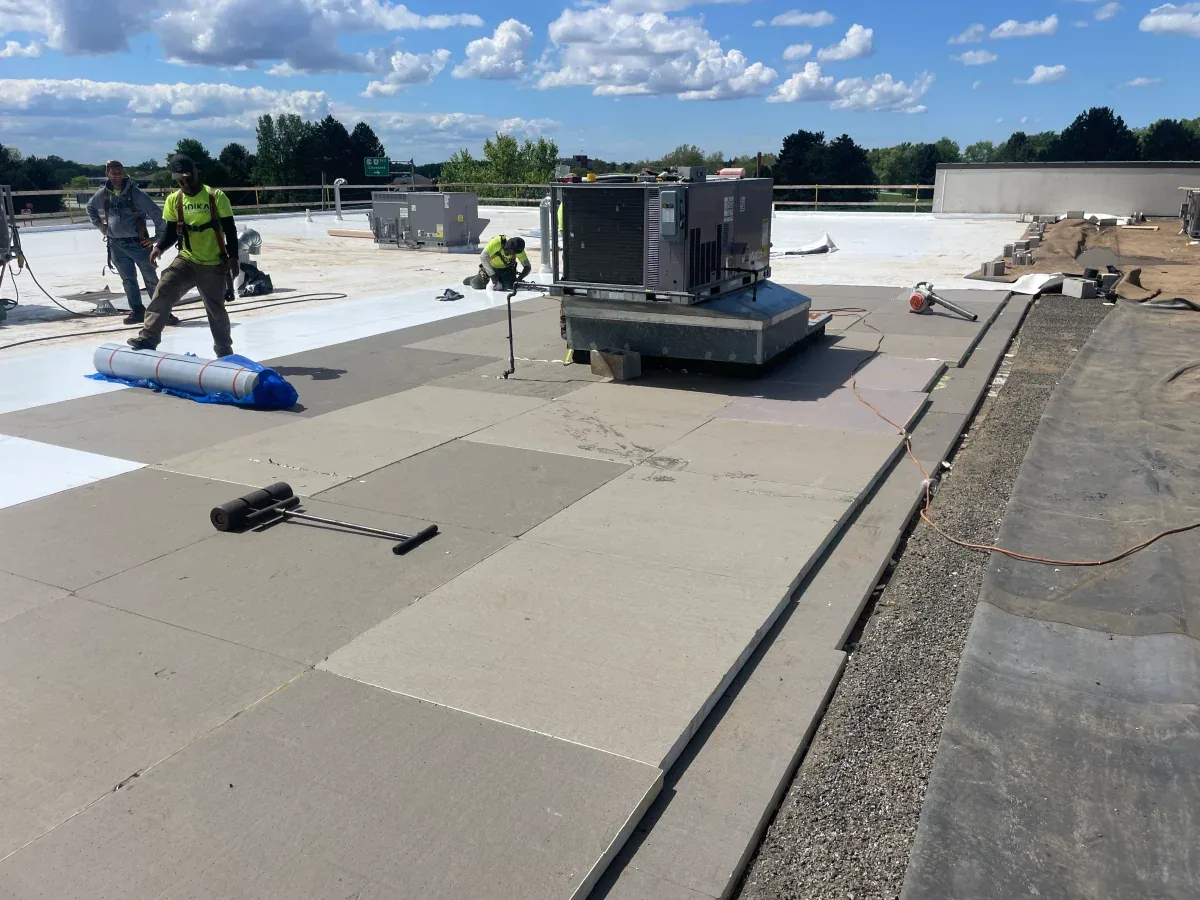
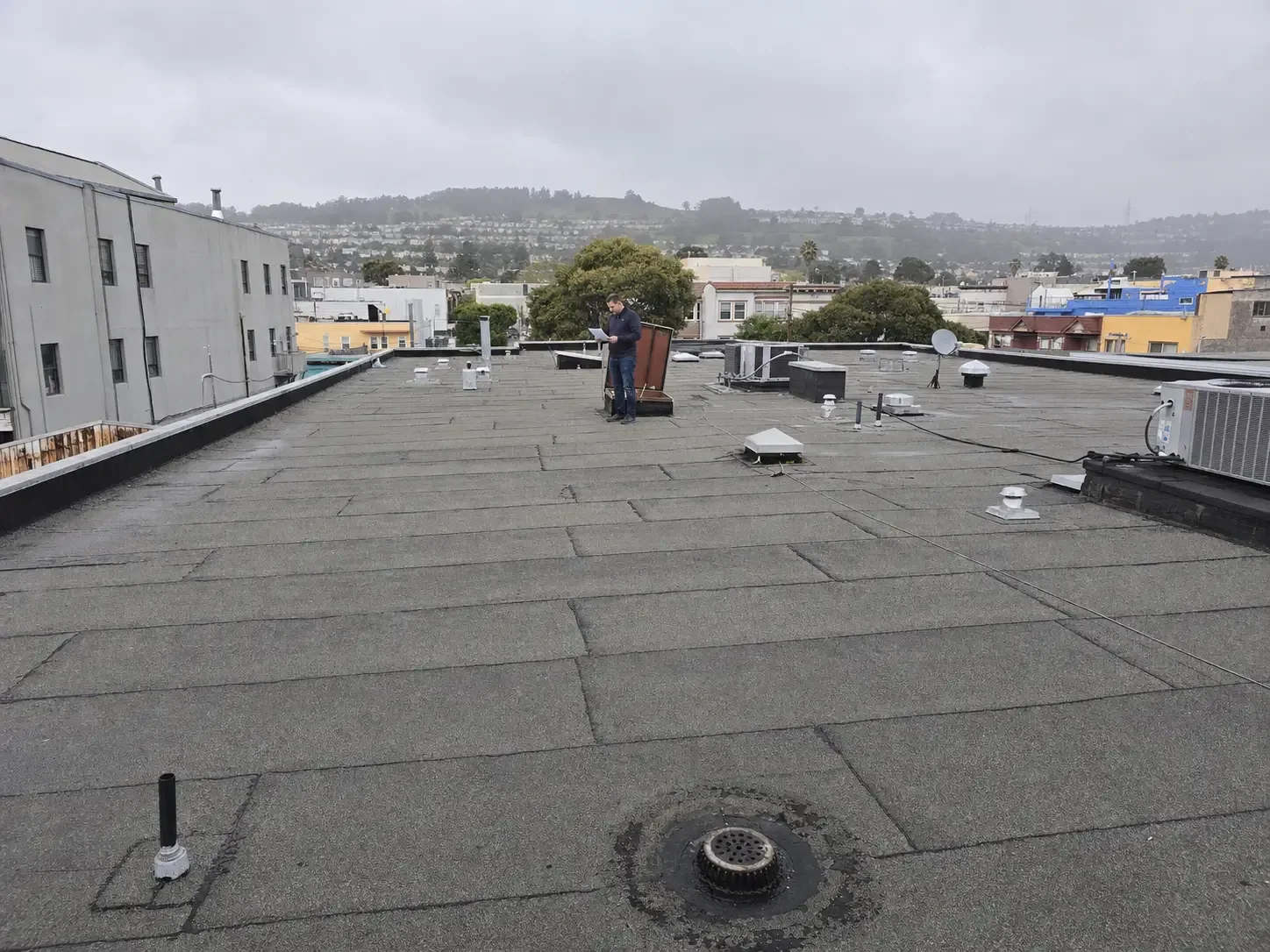
At a curb, we check flashing corners, sealant, and the way the membrane meets the equipment base. At a drain, we inspect the bowl, ring, and approach from nearby roof areas. Water can travel before it reaches an interior stain, so the reported room is a starting clue rather than a repair boundary. We document the path supported by the field evidence.
Historic character does not identify the hidden roof system. We verify the surface and detail where accessible, then note uncertainty instead of assigning an age or material by appearance. Downtown includes commercial, residential, county, and municipal activity. Those uses can place different demands on access and building operations, so the inspection marks occupied areas and restricted routes before work starts.
A compact business core can have limited loading windows and active pedestrian entries. We need the building contact, roof access point, work hours, and proposed staging area before setting the sequence. The crew route should not cross an entrance or delivery path without coordination. We mark protection needs and keep a clear handoff with the general contractor.
When a roof borders a shared wall or adjoining property, the work limit should be explicit. We identify the parapet, drain, and flashing details in scope, then coordinate where temporary protection ends. Historic overlay review can apply to changes in the district. The owner should confirm review needs before a visible exterior alteration is scheduled.
Occupied work can be divided into roof sections, with temporary dry-in held before moving to the next area. We identify equipment that must remain operational and protect surfaces below active work. Weather, material delivery, hidden substrate conditions, and review timing can move the schedule. A written sequence makes those dependencies visible to the owner and other trades.
We group observations by roof area, not by the room where water appeared. The map can show an open seam, failed flashing, damaged membrane, blocked drain, or surface that needs further testing. Each item receives a photo, location, and recommended action. The owner can separate urgent water control from maintenance and capital decisions.
Downtown roofs face Georgetown's long hot season. Summer days in Georgetown often reach the 90s, and recent years have included highs beyond 100 degrees Fahrenheit. On an exposed roof, heat can stress sealants, membrane laps, and flashing as materials expand and contract. We look for separation and brittleness, then check whether the detail remains bonded and watertight.
Severe weather adds a reason to check the perimeter and rooftop accessories. The 2022 tornado track began near Round Rock's I-35 and TX 45 interchange and crossed Williamson County toward Granger. That event does not prove damage to a downtown property. After a nearby storm, we inspect the roof itself for displaced metal, punctures, impact marks, loosened equipment supports, and open seams before assigning a repair.
A localized opening with sound material around it may call for a patch or flashing repair. We prepare the surface, make the tie-in, and inspect the finished edge. A repeated leak or broad deterioration calls for a larger diagnostic area. The repair scope names what is included and where additional testing remains open.
For aging but serviceable roofs, coating or restoration may be an option after compatibility and moisture checks. We inspect adhesion, drainage, seams, and details that a coating would cover. A restoration review should identify any repairs required first and any areas that cannot receive the proposed system. No coating makes wet insulation disappear.
Replacement planning includes removal or approved recover preparation, deck review, insulation, cover board, drainage, membrane attachment, and flashing details. TPO, PVC, EPDM, modified bitumen, built-up, standing seam metal, and other systems serve different conditions. We choose by assembly requirements and design, not by the district's architectural label. A modified-bitumen assembly or PVC system needs its own seam, flashing, and transition details.
Before opening a roof, we define the day's work area and the dry-in hold point. Materials, debris, and tools stay within the agreed staging plan. If concealed damage appears, the crew protects the opening and pauses at the agreed boundary while the owner reviews the finding. That keeps a small repair from becoming an unapproved district-wide scope.
For occupied commercial space, we coordinate noise, odors, access, and temporary closures with the building contact. The exact plan depends on the work method and the property. A curb replacement may need equipment coordination; a membrane repair may need a short protected area. We confirm the sequence before mobilization and communicate changes while the roof is still protected.
A roof map and dated photos support later maintenance. We record completed repairs, open questions, and any area that was inaccessible. Preventive visits can focus on drains, edge details, sealants, and previous repair locations. A maintenance program gives the owner a record of condition changes without promising that routine visits prevent every leak.
At completion, we inspect the repair boundary, check flashing and seams, remove loose material, and note work that remains. The closeout identifies the completed area and any follow-up item. If an opening was made for investigation, the record shows how it was closed and what was observed beneath it.
For larger work, the handoff can include substrate findings, insulation changes, drain adjustments, and roof-system details. A condition report preserves the baseline. For multiple Georgetown properties, roof asset records help keep inspection dates and open repairs tied to the right building.
Historic district context, a visible roof defect, and the approved access window all affect how we set the sequence. We also schedule work along the Williams Drive Corridor. Send the property location, roof area, available access times, and general-contractor contact to arrange an inspection walk. For active water entry, call any hour, including weekends and holidays.
Visible coping, edge metal, or drainage work can change appearance. We flag those items so the owner can coordinate any needed historic review.
We inspect the roof above and around the reported room, tracing seams, curbs, walls, and drains. The repair limit follows confirmed evidence.
Yes. We confirm roof access, loading windows, entrances, and disruptive steps, then set the sequence with the building contact.
Close inspection separates dents, surface marks, punctures, and open seams. We document whether the affected detail can pass water.
Review timing, delivery, access, weather, and hidden deck or insulation conditions can shift the sequence. We flag hold points before opening the roof.