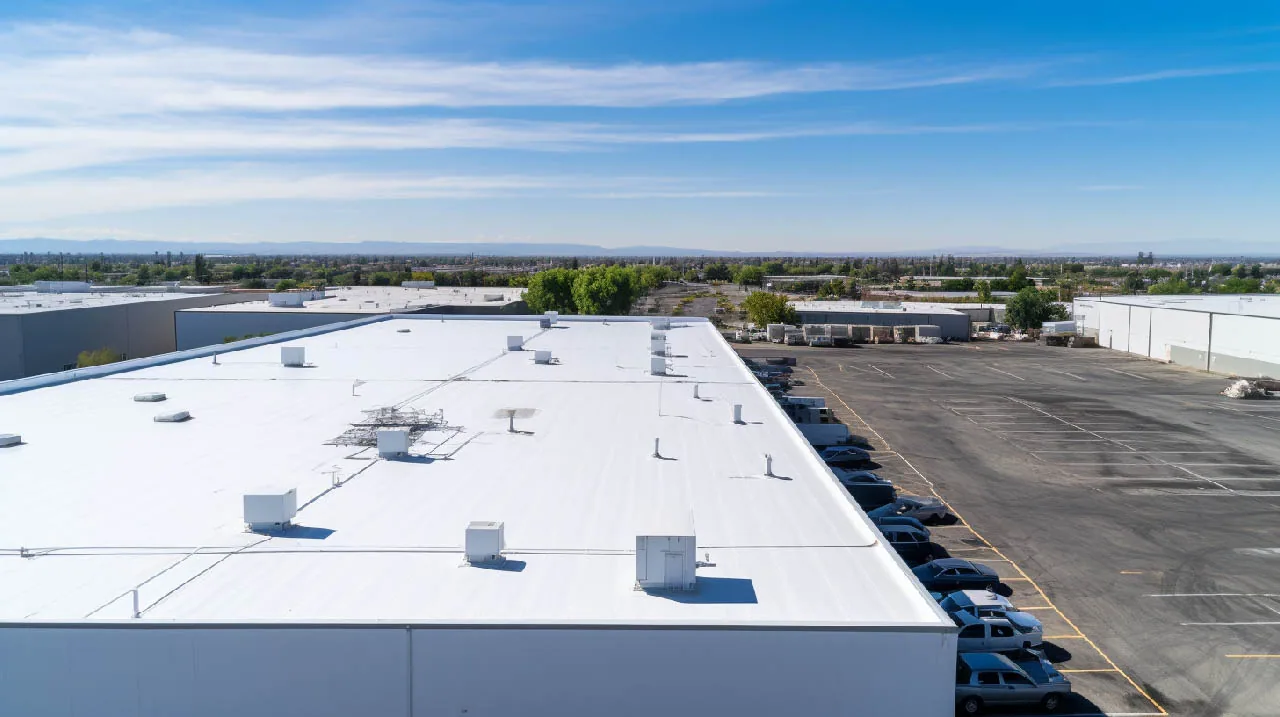
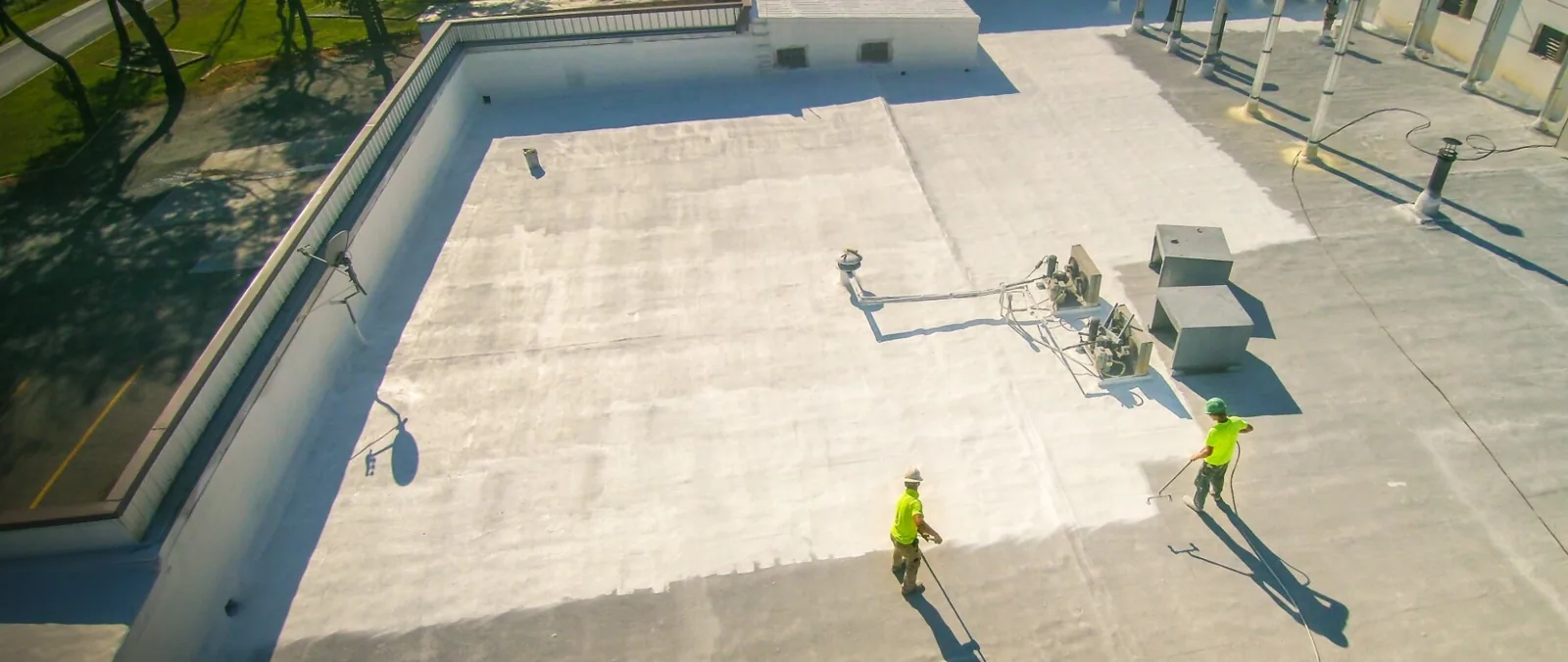
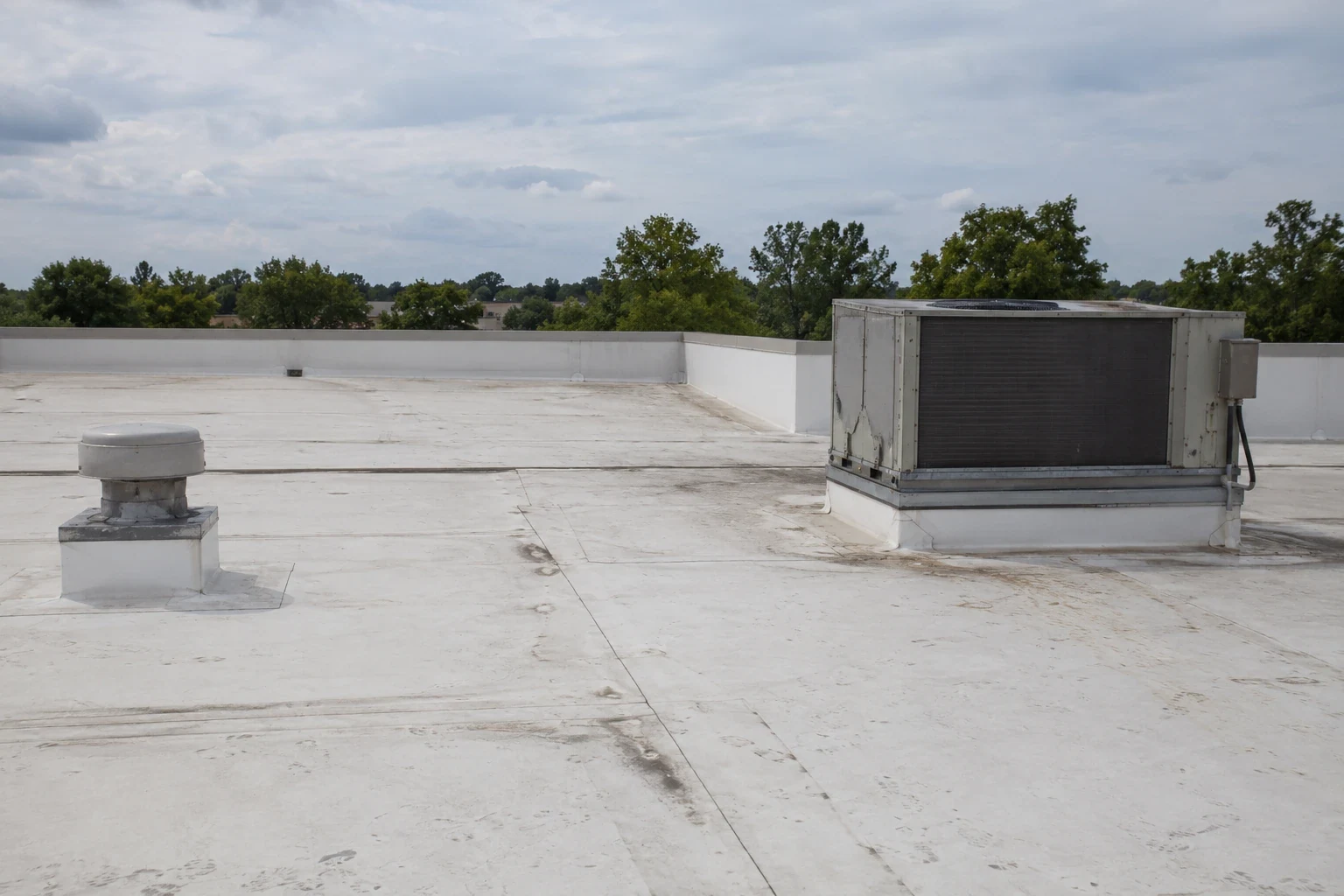
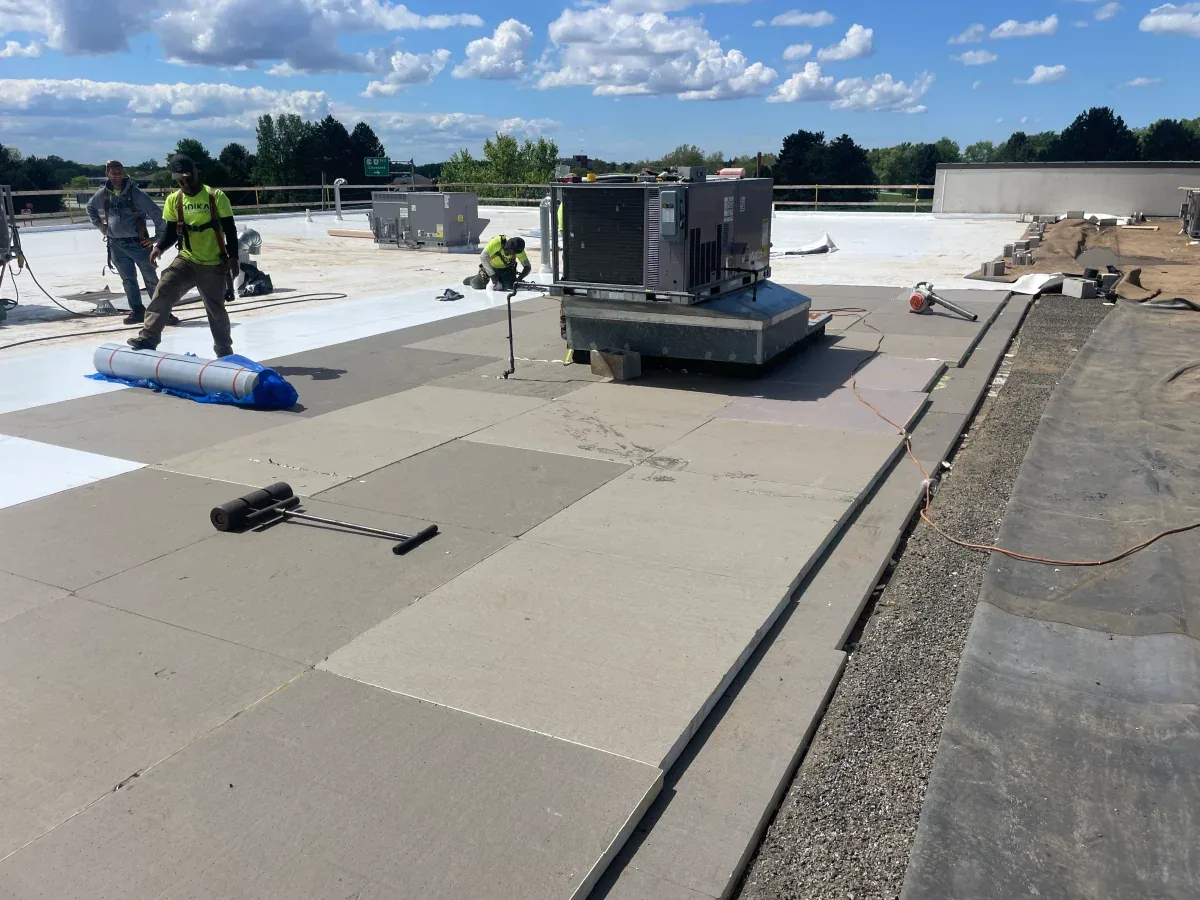
A lifted TPO lap at a curb can admit water before the ceiling shows a mark. We start by tracing the seam and checking the flashing. The roof map records the affected field, nearby drains, and any earlier repair. That boundary keeps a local weld from turning into an assumed full-roof scope.
Georgetown summers bring high heat, and exposed roof surfaces can run hotter than the air. The temperature matters during inspection and repair. We check the membrane, seam condition, and manufacturer instructions before choosing a repair method. The same walk checks whether hail or wind left a separate impact that needs its own record.
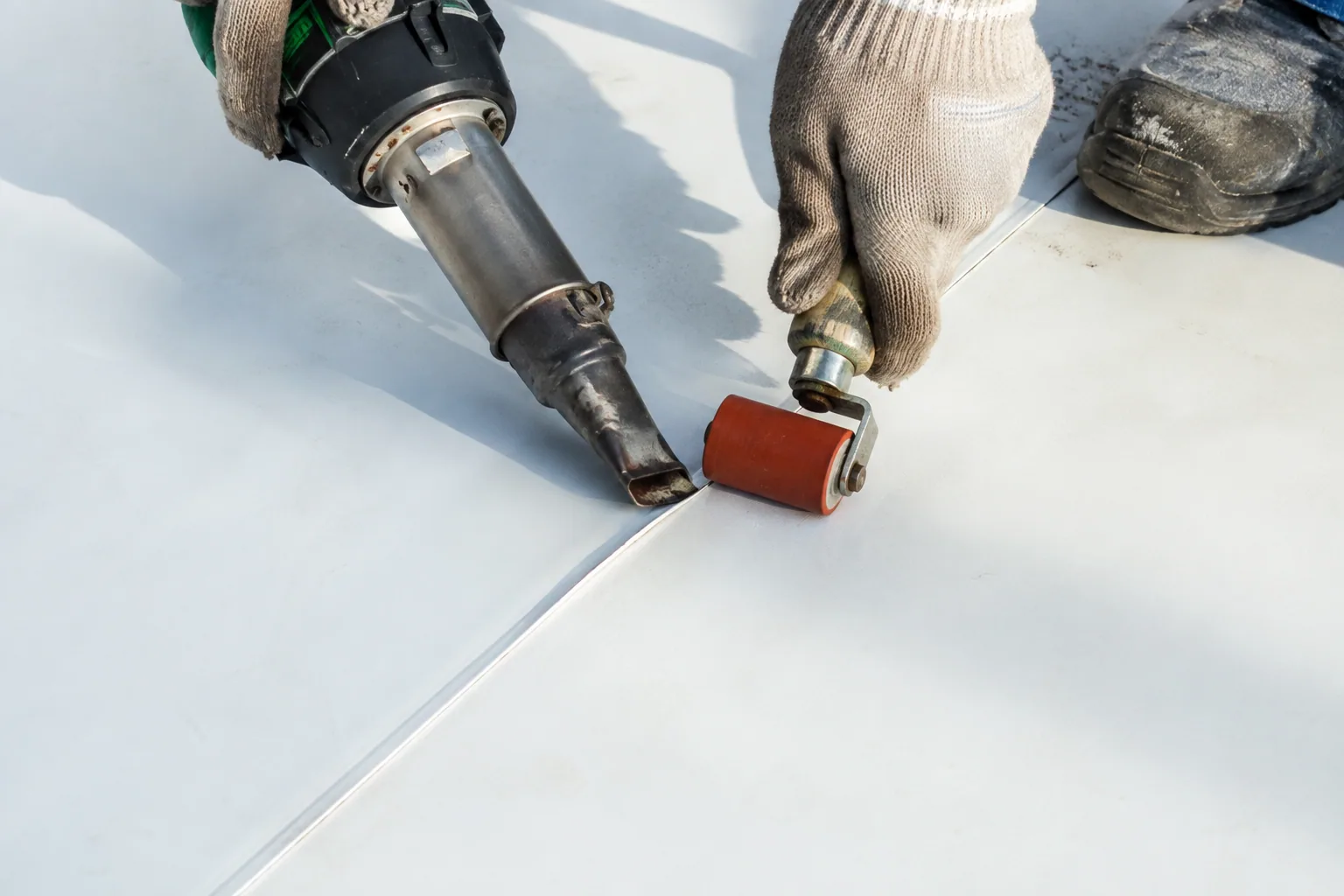
TPO is a thermoplastic single-ply membrane. Field sheets are joined with hot-air welds, while flashing transitions cover curbs, pipes, drains, and perimeter edges. A sound seam has a consistent weld and does not peel open under careful probing. We inspect those laps with the surrounding membrane, because a narrow split can sit beside a broader area of wear.
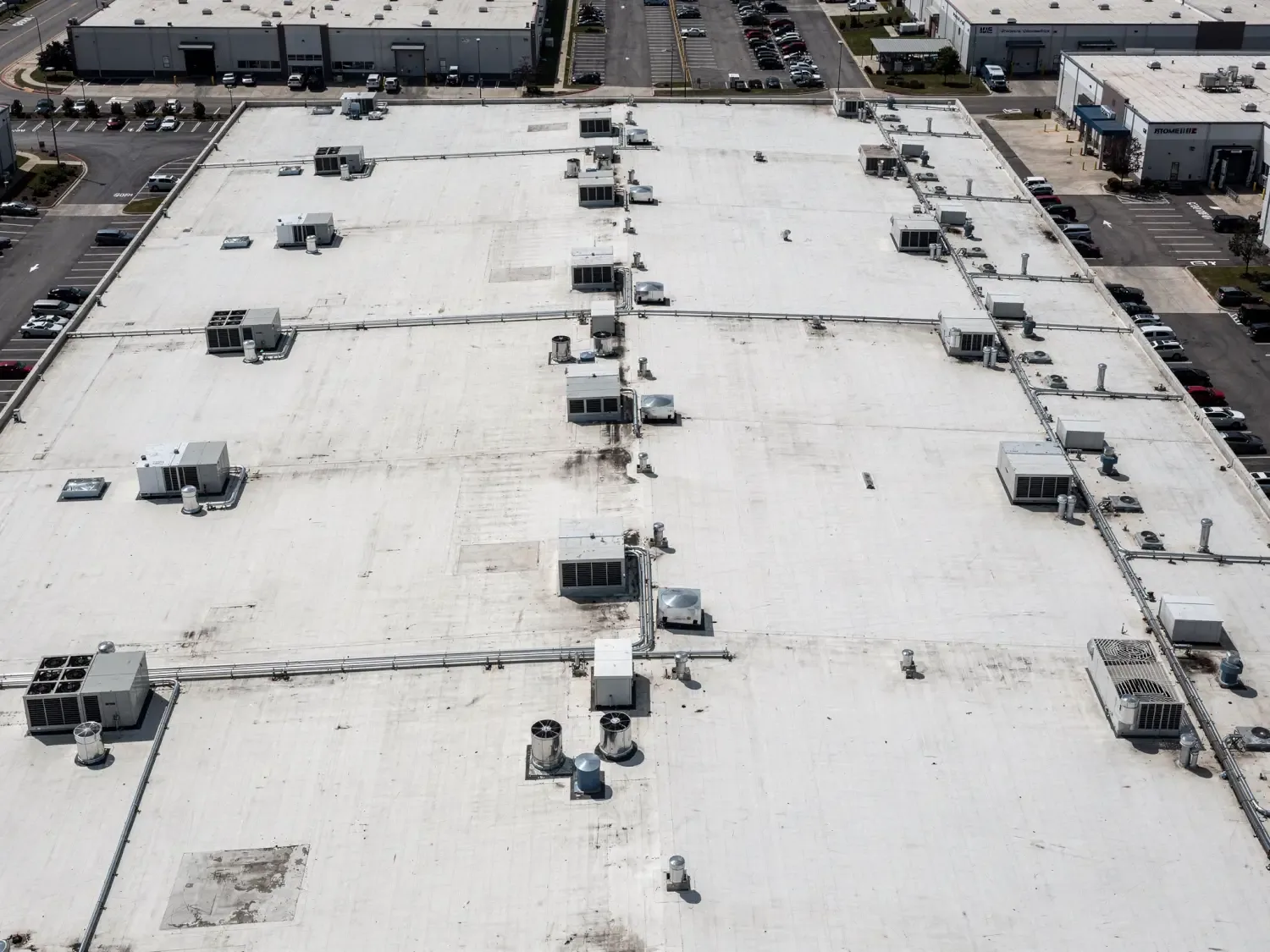
Surface dirt can hide a small puncture or a previous patch. We clean only the area needed to see the condition, then check the edge of each repair for separation. At Berry Creek Business Park, multiple industrial buildings sit near I-35 and SH 130. The location supports a regional industrial context, but every roof needs its own membrane and attachment check before scope is set.
We also look at sheet movement, wrinkles, fishmouths, and open corners. A wrinkle alone does not prove failure. Its position at a seam, drain, curb, or change in plane tells us what to test next. Photos show the defect with a roof-zone reference. That record helps the general contractor match the repair to the right work area.
A cut, puncture, or failed weld may take a localized patch when the surrounding membrane remains sound. We prepare the surface, remove loose material where needed, and weld a compatible patch with rounded corners. The patch extends beyond the defect and receives a probe check after cooling. If a previous coating or contaminant prevents a reliable weld, we stop and confirm the surface condition first.
At a drain, a membrane patch must tie into the drain bowl or clamping detail correctly. At a curb, the flashing height, corner folds, and termination all matter. A repair that seals the visible opening but misses the water path leaves the defect unresolved. We map any wet insulation or damaged substrate discovered during an authorized opening and set a hold point before covering it.
When several seams fail across separate roof zones, repeated patches may not be the best scope. We compare the repair pattern, membrane flexibility, attachment, and insulation condition. A targeted repair plan can address isolated defects. Widespread deterioration may call for replacement or a technically suitable recovery, after assembly checks.
Heat affects work timing, adhesive behavior, and safe handling on exposed roof areas. We follow the selected system instructions and record the conditions that control welding or flashing work. Georgetown summer readings include days above 100 degrees Fahrenheit. We monitor the surface and keep material staged out of unnecessary direct exposure. A pause is part of the sequence when conditions move outside product limits.
Hail can bruise, cut, or puncture a membrane, while wind can lift perimeter details and expose laps. The Austin forecast region sees hail. A 2022 tornado also passed through Williamson County on a path from near Round Rock to Granger. After a storm, we check this roof's membrane, seams, and perimeter attachment, then record visible impact or opened details. A hail inspection records visible impact separately from ordinary aging.
After a storm, we check the roof edge, penetrations, seams, and drainage path before writing repair limits. An interior stain can help narrow the search but does not identify the roof opening by itself. We trace the water path and note where the inspection stopped. For an active opening, temporary dry-in work can protect the building while permanent details are evaluated.
A TPO roof may sit over insulation and cover board on metal or concrete deck. We identify visible layers, attachment, and previous repairs before recommending another layer. A recover can add weight and cover defects that still need correction. If moisture is present or the deck is unstable, the project may need removal in affected areas or broader replacement. We do not set that boundary from membrane color alone.
We check the perimeter, penetrations, drains, and expansion details as one assembly. A field sheet can look intact while a curb corner has opened. Conversely, a damaged flashing may be repaired without replacing sound field membrane. A PVC membrane or EPDM system may also be evaluated where the project design calls for another membrane type. Compatibility and detailing control the selection.
Owners often ask whether a new TPO layer will address recurring leaks. We compare leak locations with seams, penetrations, drainage, and repair history. If water enters at one transition, correcting that detail may be sufficient. If wet insulation appears across connected sections, a broader scope may be needed. We document the evidence, options, and limits before work proceeds.
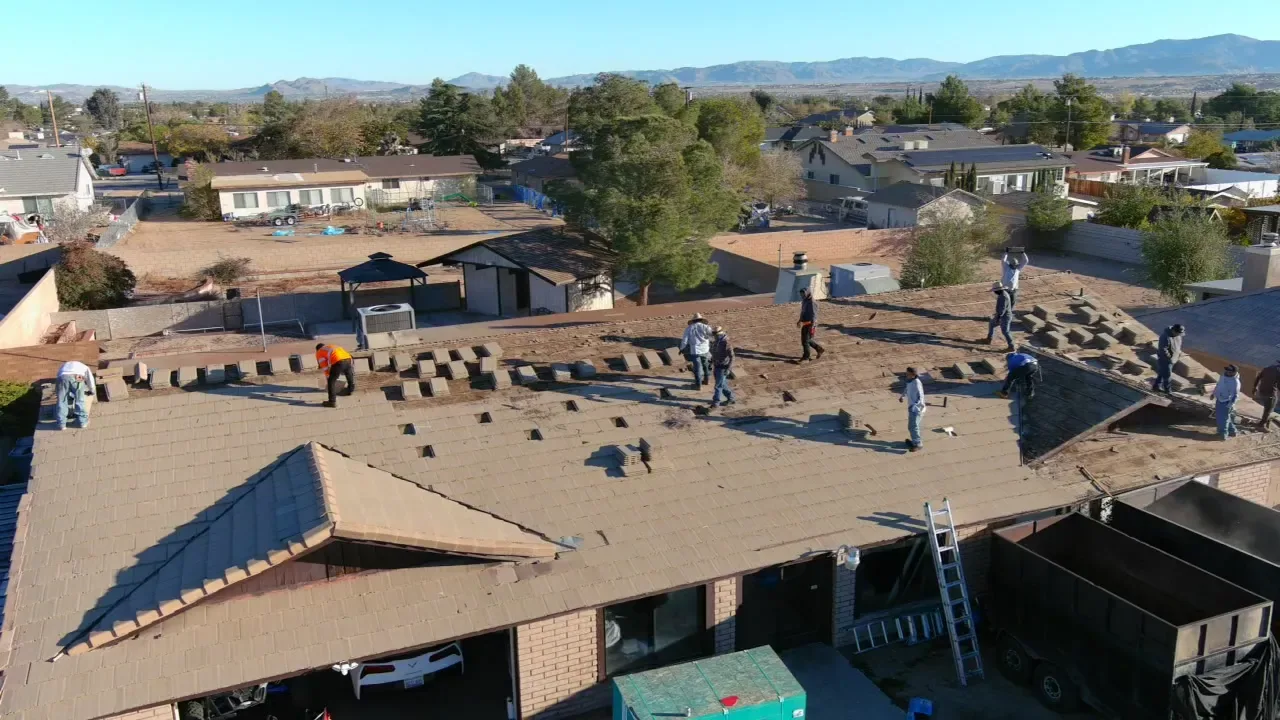
Replacement begins with access, staging, and protection of equipment and occupied areas. We remove the planned section, inspect the deck, and correct substrate issues included in the approved scope. Insulation and cover board are placed to the assembly requirements. The crew then positions membrane, sets seams, and completes penetrations before moving the work boundary.
FM 971 connects Georgetown's I-35 and SH 130 corridors and serves commercial areas, schools, housing, and a regional park. That roadway context can help with delivery planning, while each property's gate, loading window, and lift location must be confirmed directly. We coordinate those details with the general contractor before a membrane roll arrives.
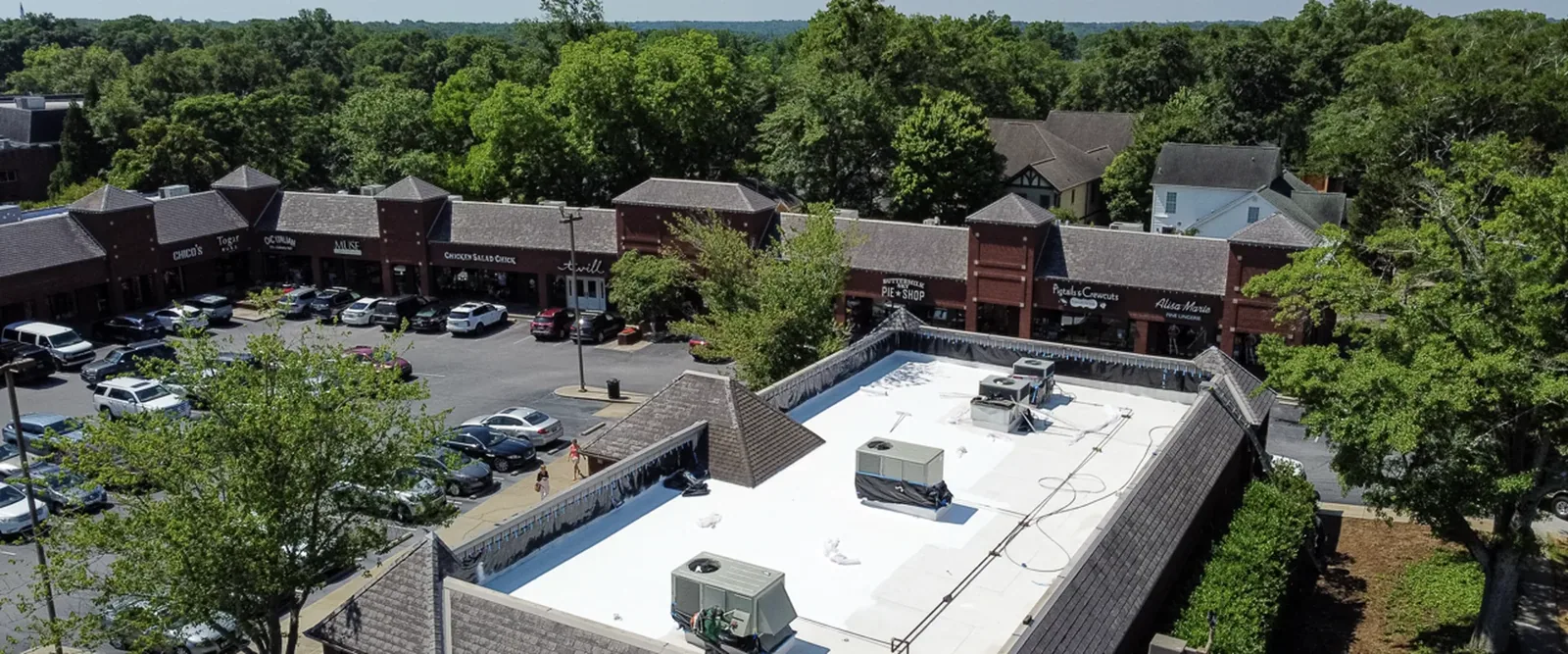
For an occupied building, sections are sequenced so drainage remains controlled and temporary tie-ins can be checked each shift. The crew keeps walk paths clear and protects units from debris. A phased reroof plan can account for tenant access and daily dry-in.
Closeout photographs completed seams, flashing, drains, edges, and any repair area that remains outside replacement. The roof map identifies the installed system and work boundary. We record field changes and open items so another trade does not assume a detail is complete when it remains pending. That record gives the property contact a clear starting point for maintenance.
For buildings near NorthPark35 or Georgetown Logistics Park, plans may cover more than one roof. We label each building and section separately. A recurring maintenance visit can check seams, terminations, drains, and equipment traffic before a small opening spreads.
Send the current roof plan, access window, known leak locations, and general-contractor contact. We can inspect the membrane and set the work boundary before mobilization. Active water entry can be reported around the clock, including weekends and holidays. The permanent repair remains tied to the condition confirmed on the roof.
We probe the weld and inspect nearby membrane, flashing, and substrate. A single open lap with sound material may allow a local patch. Repeated failures or wet insulation can change the scope.
Only after we identify the patch material and confirm a clean, compatible weld surface. Contamination, coatings, or incompatible repair products can prevent a dependable tie-in.
Surface and ambient conditions affect safe access and product handling. We check the installation instructions and roof temperature, then set the work window around those limits.
We inspect seams, punctures, flashing, edges, and rooftop equipment. The weather report guides the reason for a visit, while roof observations determine the repair boundary.
Record roof zones, seam repairs, penetrations, drains, and any areas excluded from the scope. Photos and a marked roof plan help the next service visit find each condition.