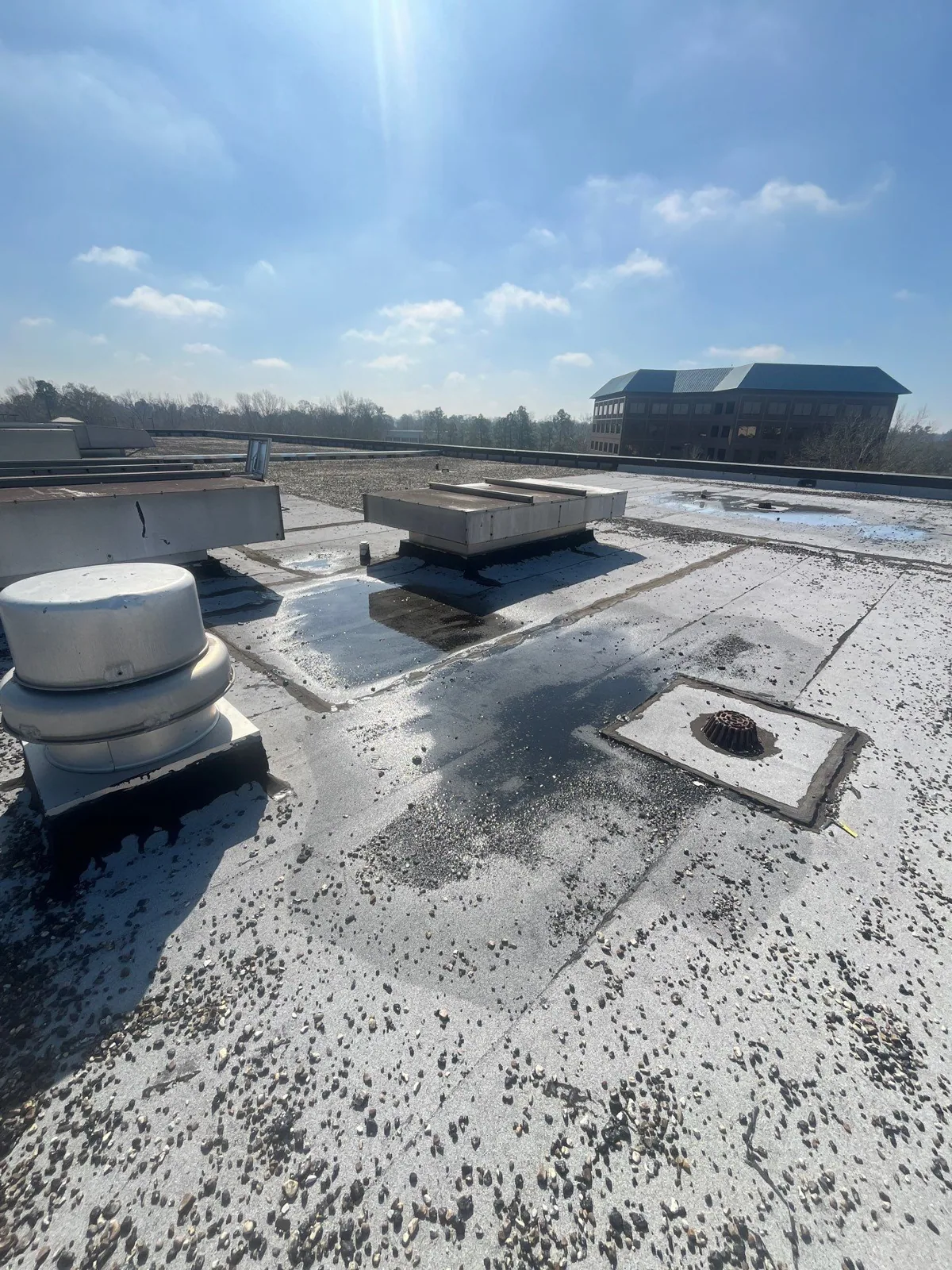
A dark water line still visible after the roof dries gives the first measurement point. We mark the low area, check the nearest drain or scupper, and trace the path feeding it. A puddle alone does not say whether the outlet is blocked, the membrane has settled, or the deck has moved. We record depth, spread, and nearby transitions before proposing a correction.
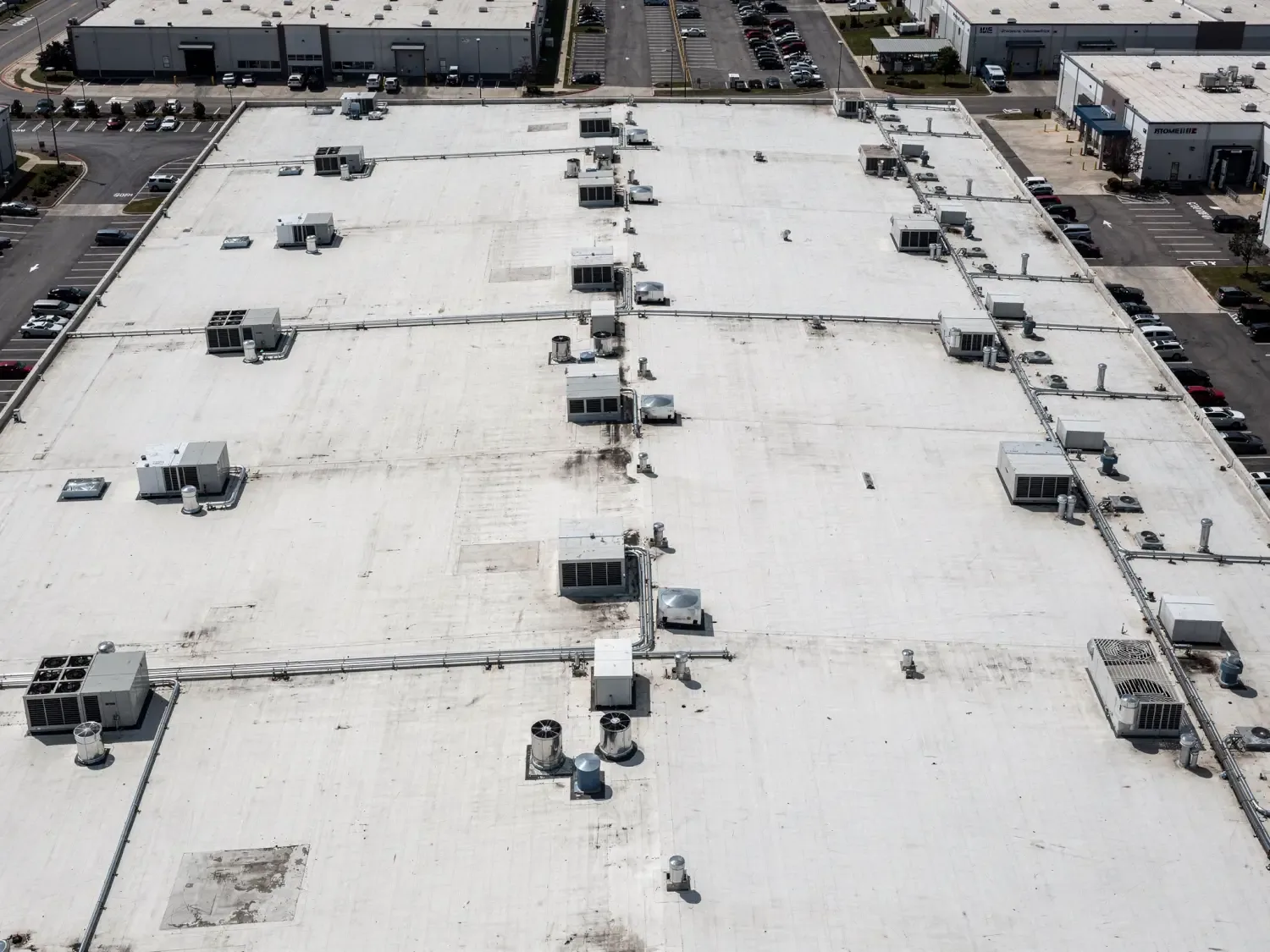
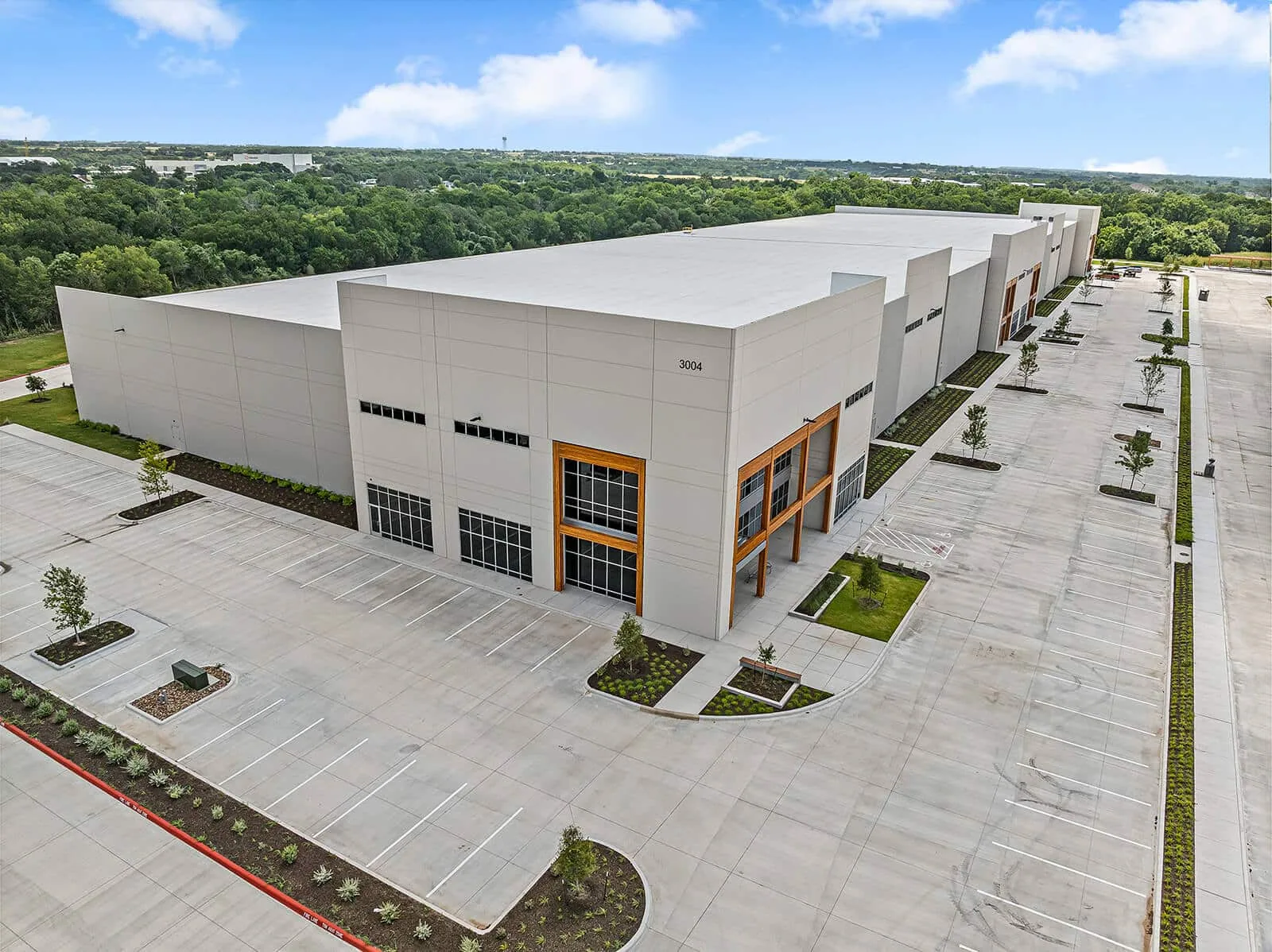
Georgetown's industrial districts include Berry Creek Business Park near I-35 and SH 130 and the newer NorthPark35 area. Large roof sections in any market can have long travel paths to a limited number of outlets. Local geography informs access and delivery. The roof's drainage layout and observed condition control the work.
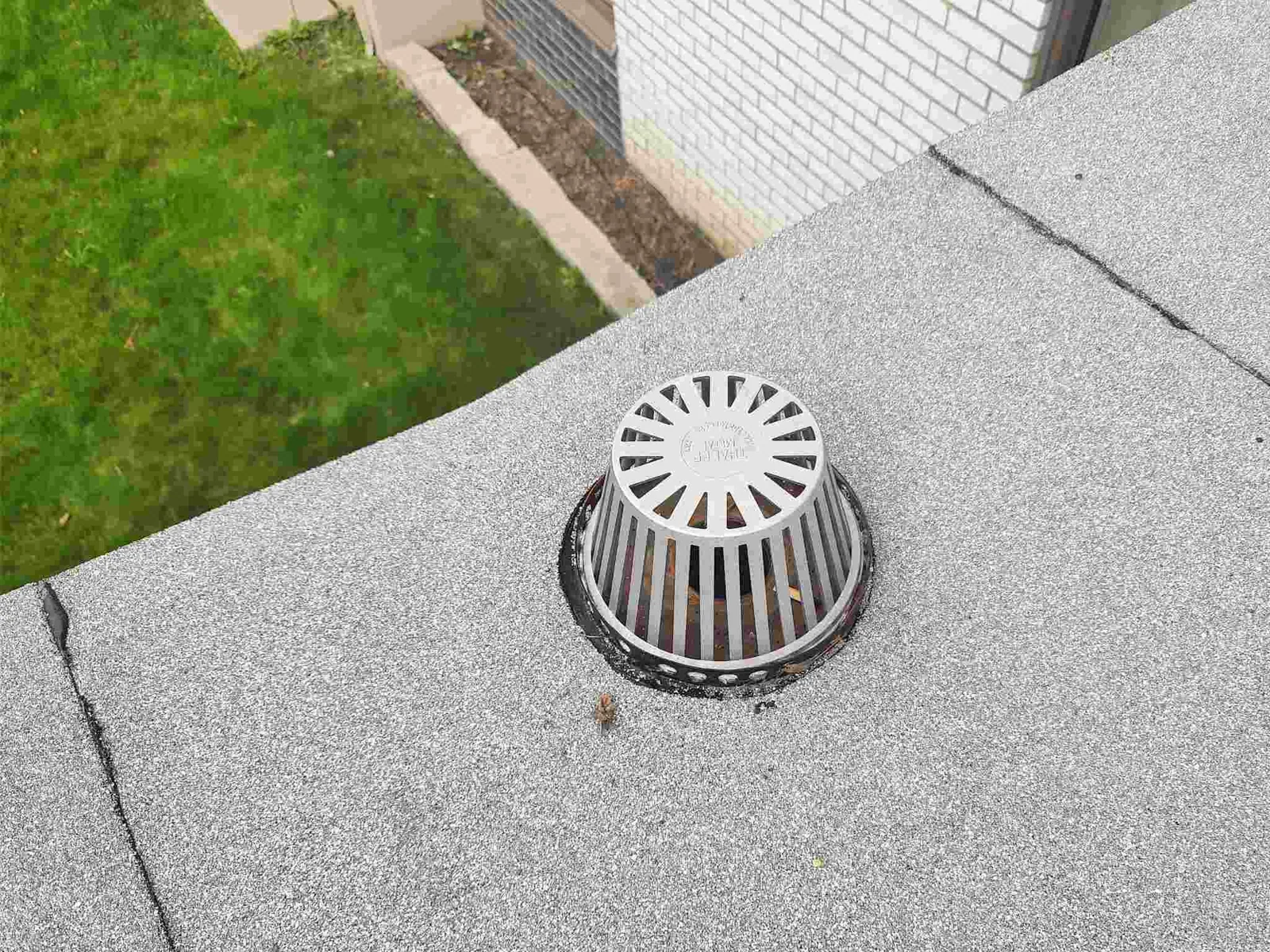
We inspect the drain bowl, strainer, sump, leader, and surrounding flashing. Leaves or construction debris can slow flow, but clearing the bowl will not fix a crushed leader or a low sump. Scuppers and gutters get a similar review at their opening and downstream path. We note whether water is moving, trapped, or leaving a residue line after a prior event.
On a roof with multiple zones, we trace each low point separately. A drain serving one section may sit near a wall or equipment curb that diverts water. The roof map records outlet identity and adjacent details. A drain and scupper service can clear or repair an outlet; any larger slope or deck issue needs its own scope.
Georgetown's courthouse-square district combines civic, county, commercial, and residential uses in a compact area. At a downtown building, an outlet can discharge near a public walk or lower roof. We check the visible drainage route and coordinate ground access with the facility contact. We do not assume the interior stain below is directly under the pond.
After the outlet check, we inspect the roof surface for depressions, displaced insulation, soft areas, deck movement, and signs that the low point is changing. Persistent water adds load and can accelerate membrane aging, but the roof assembly and structure determine the response. If the surface appears to deflect, we stop and recommend review by the responsible design professional before changing slope or adding material.
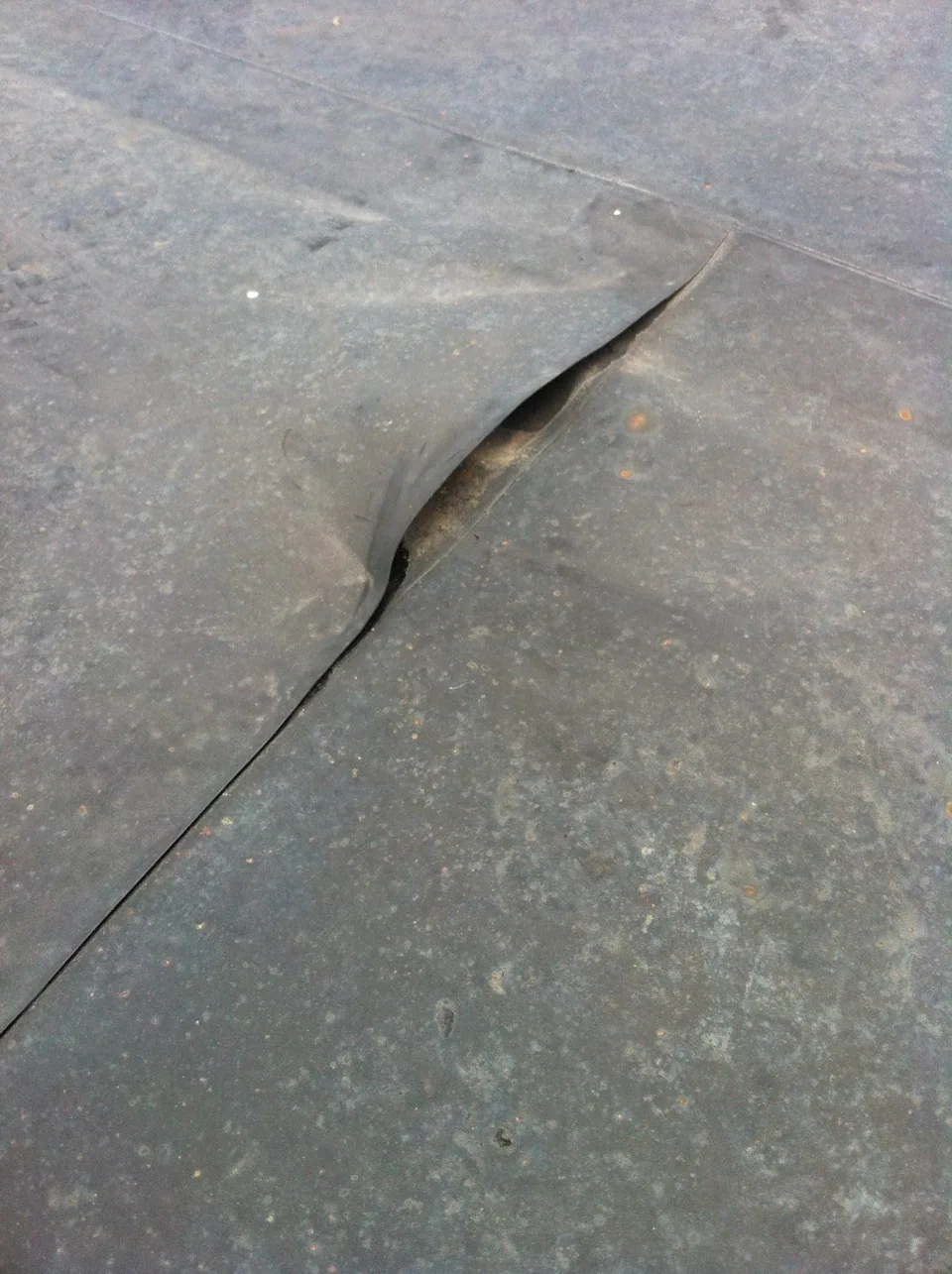
We compare the water line with seams, laps, wall transitions, penetrations, and earlier patches. A seam submerged for long periods may fail differently from a blocked drain. Moisture beneath the membrane can also extend past the visible water. We identify a test area and explain which layer it should confirm before removal. A moisture survey can help target investigation, but a scan is not proof of saturated insulation.
A small isolated depression may be corrected with compatible tapered insulation or another designed method if the substrate and attachment support it. Broad ponding, repeated drainage failures, or structural movement can require broader work. We document the measured condition and avoid promising that a surface patch will eliminate water if the cause is not confirmed.
We also compare the water line with roof access points and service records. A drain that clogs after each maintenance visit may need a different basket or recurring cleaning interval; a low point that remains after debris is removed points to a surface or structural question. The maintenance note records which condition was confirmed and who owns the next check.
Summer afternoons in Georgetown often reach the 90s, and recent years have brought days above 100 degrees Fahrenheit. Water held in a low area can combine with intense heat and accelerate wear at seams or surfacing. We inspect the surrounding membrane for splits, blisters, open laps, and brittle flashing. Those conditions are documented separately from the standing water itself.
Stormwater volume can expose a drainage problem that was not obvious in dry weather. A tornado crossed Williamson County in March 2022, and hail remains a Central Texas exposure. Neither changes the drainage diagnosis: we inspect the outlets, low areas, edge conditions, and membrane at the property. A hail-damage review may address impact findings, while this repair visit remains focused on drainage and water retention.
If water is entering, we identify the safe temporary step and the permanent correction separately. A temporary cover can protect an interior area while a drain or low point is evaluated. It does not correct slope or a structural problem. We record the area protected, remaining risk, and next test required.
When debris is the only confirmed obstruction, clearing and checking the outlet may restore flow. A damaged drain flange, split flashing, or disconnected leader requires repair at that detail. If the low area is caused by insulation compression or a failed sump, removal may be needed to rebuild the drainage plane. The proposal names the verified cause and any assumption that remains open.
Recover is considered only after checking attachment, moisture, existing layers, outlet height, and the final discharge path. Added roofing cannot be allowed to bury a drain or create a new dam at a wall. A recover assessment compares those constraints with the existing assembly. Where the deck or insulation must be exposed, a replacement plan may better address slope, cover board, membrane, metal, and drains together.
Cost and timing depend on outlet count, access, roof layers, disposal, taper design, structural review, and whether the building can release a work zone. We identify the drainage test or observation used to check the repair. If the result points to deck movement, the crew holds for direction rather than adding fill material without a design basis.
After the correction, we check the outlet and surrounding field, remove debris, and document the water path. Where weather permits, a controlled flow check can confirm that water reaches the drain. It does not replace structural review or a long-term performance observation. The closeout includes photos, roof-zone references, work materials, test results, and any area still outside the inspection boundary.
For sites near Berry Creek Business Park or NorthPark35, freight access and lift placement may need coordination with active operations. The property contact supplies the roof plan, outlet map, reported interior locations, and safe roof route before mobilization. We return a clear status for each affected zone.
A seam-failure repair may be a separate scope if standing water has exposed an open lap. A later roof inspection can check the repaired drainage detail and update the condition record.
Not by itself. We check how deep and widespread the water is, whether it drains, and what the membrane, insulation, outlet, and deck show. A recurring low area needs a cause-based review.
It can if debris is the confirmed obstruction. A damaged bowl, low sump, compressed insulation, or deck movement calls for a different correction. We inspect the outlet and surrounding plane before choosing the work.
Possibly, after attachment, layers, moisture, drain height, edge details, and structural limits are checked. The design must preserve water flow and avoid raising the finished surface above flashings or outlets.
A scan can identify candidate zones for closer testing. It does not prove moisture by itself. We explain the test opening and the layer it is intended to confirm before removal.
We inspect the repaired area and outlet, document the slope and flow path, and use a controlled flow check when conditions allow. The closeout distinguishes that check from long-term observation.