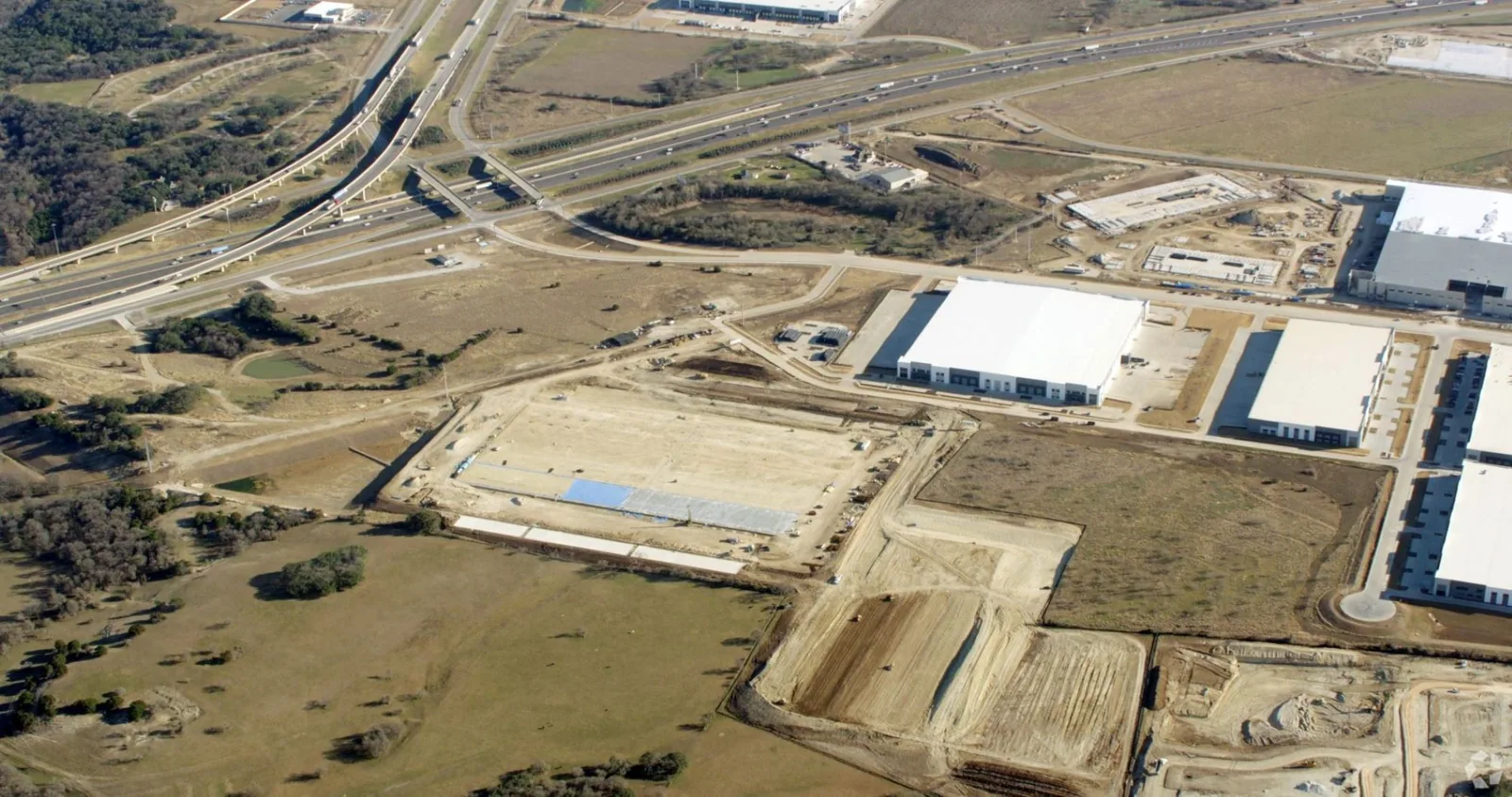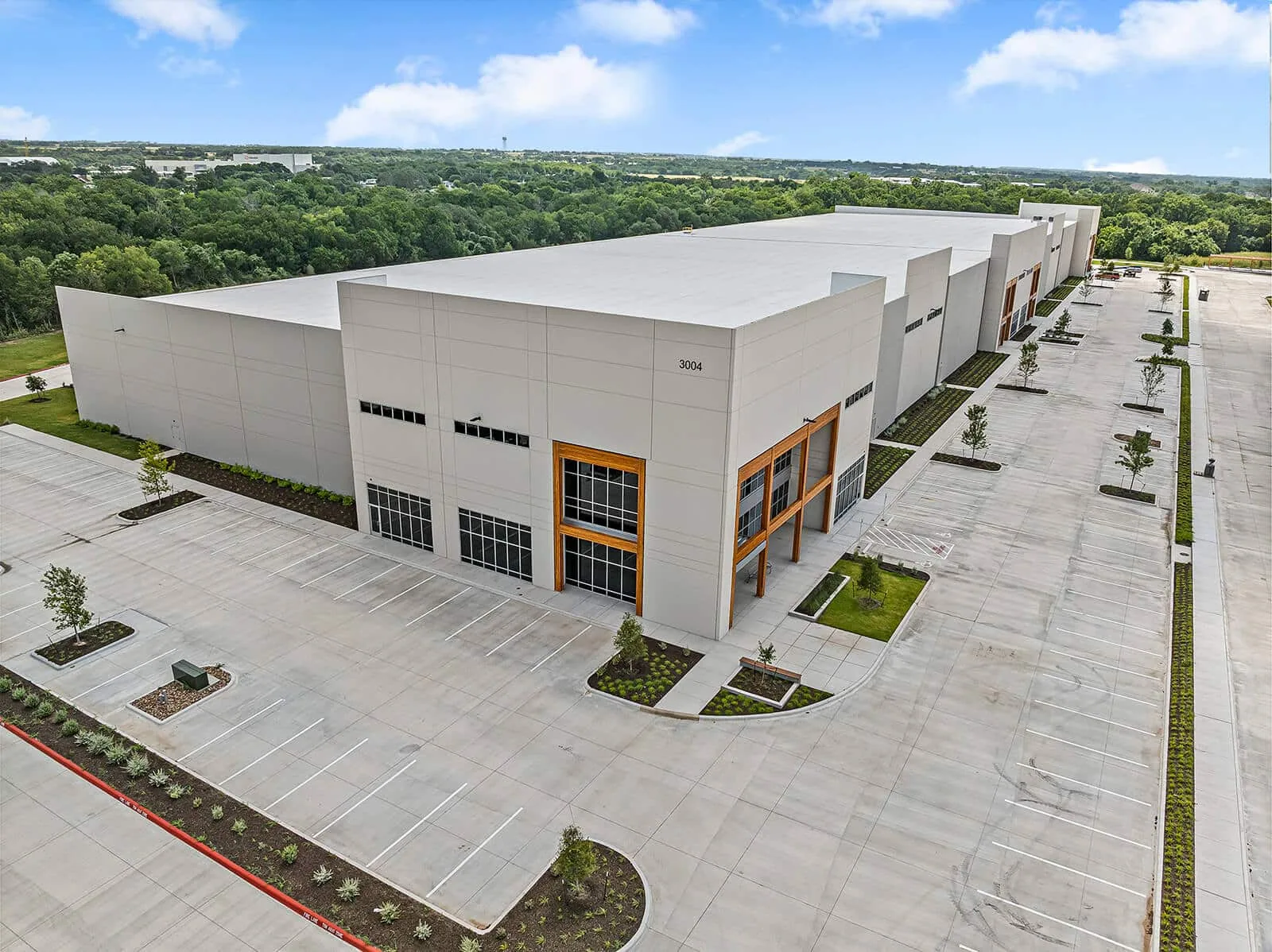
A loose lap near a loading-side edge can put an industrial schedule at risk. We start at the edge, trace the seam, and mark the inspected roof area before setting a repair boundary. Berry Creek Business Park is a three-building Class A industrial development near I-35 and SH 130 serving Georgetown. Each building still needs an individual roof assessment.
One shared park name does not tell us whether the three roofs use the same assembly, access route, or repair history. We record system type where visible, note uncertain details, and map drains, curbs, edges, seams, and prior patches. The first inspection gives the owner a useful baseline without treating one building's finding as a condition across the park.
Our Georgetown crews handle inspection, leak repair, restoration, and full roof replacement for low-slope and metal systems. Industrial access often depends on loading activity, equipment clearances, and the owner's operating windows. A Georgetown roof walk can be planned around the actual building contact and approved route. For active leaks, emergency response is available all day, every day, including holidays.
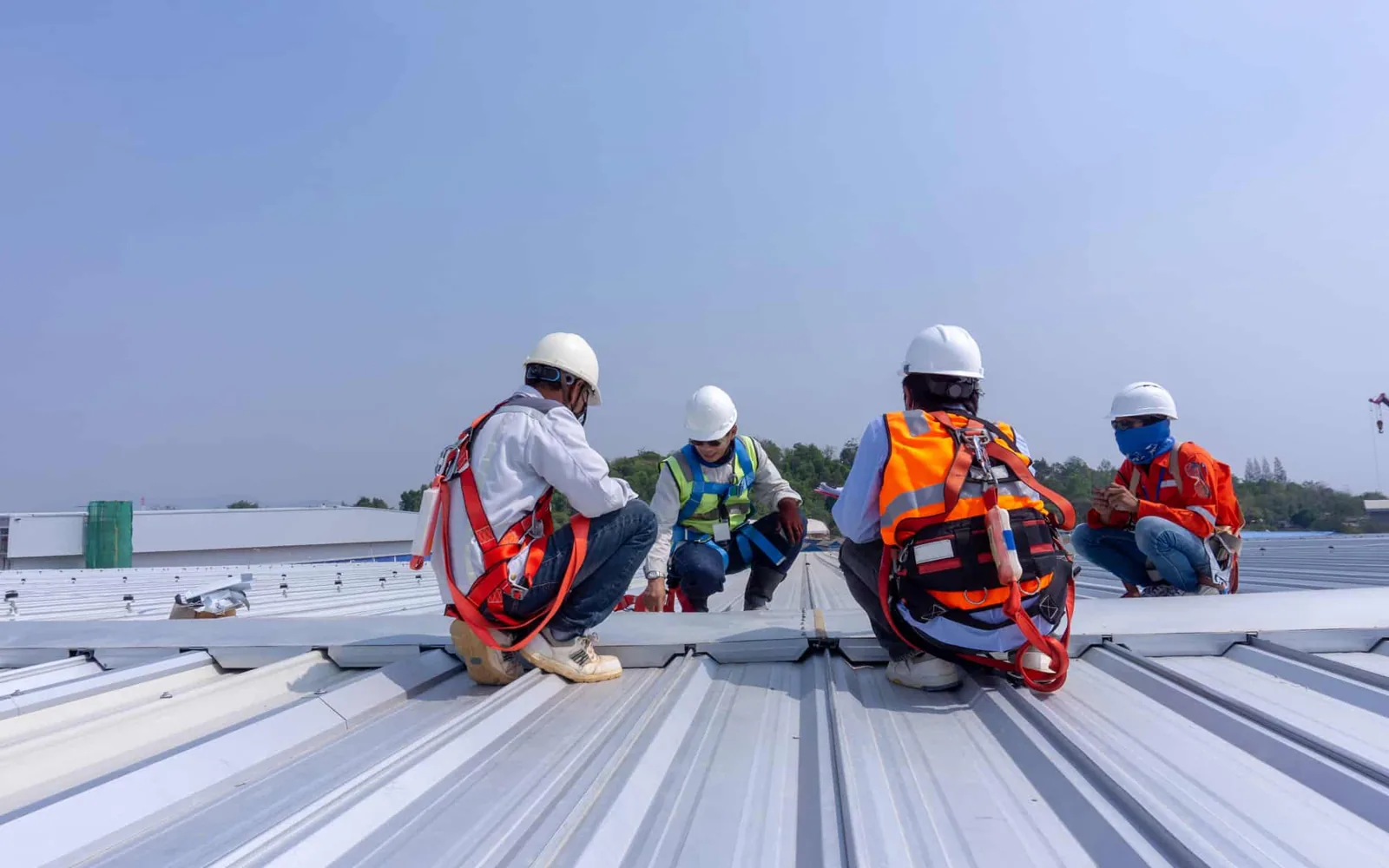
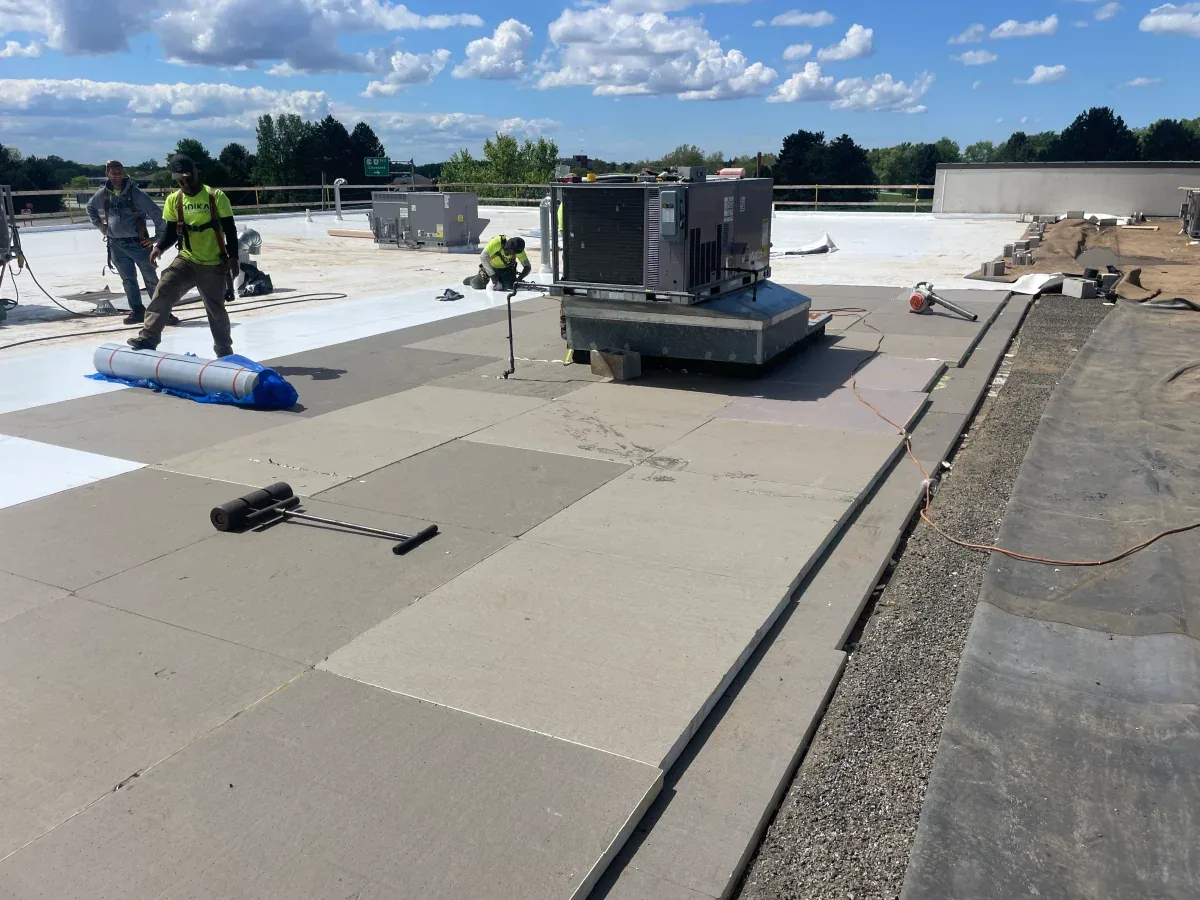
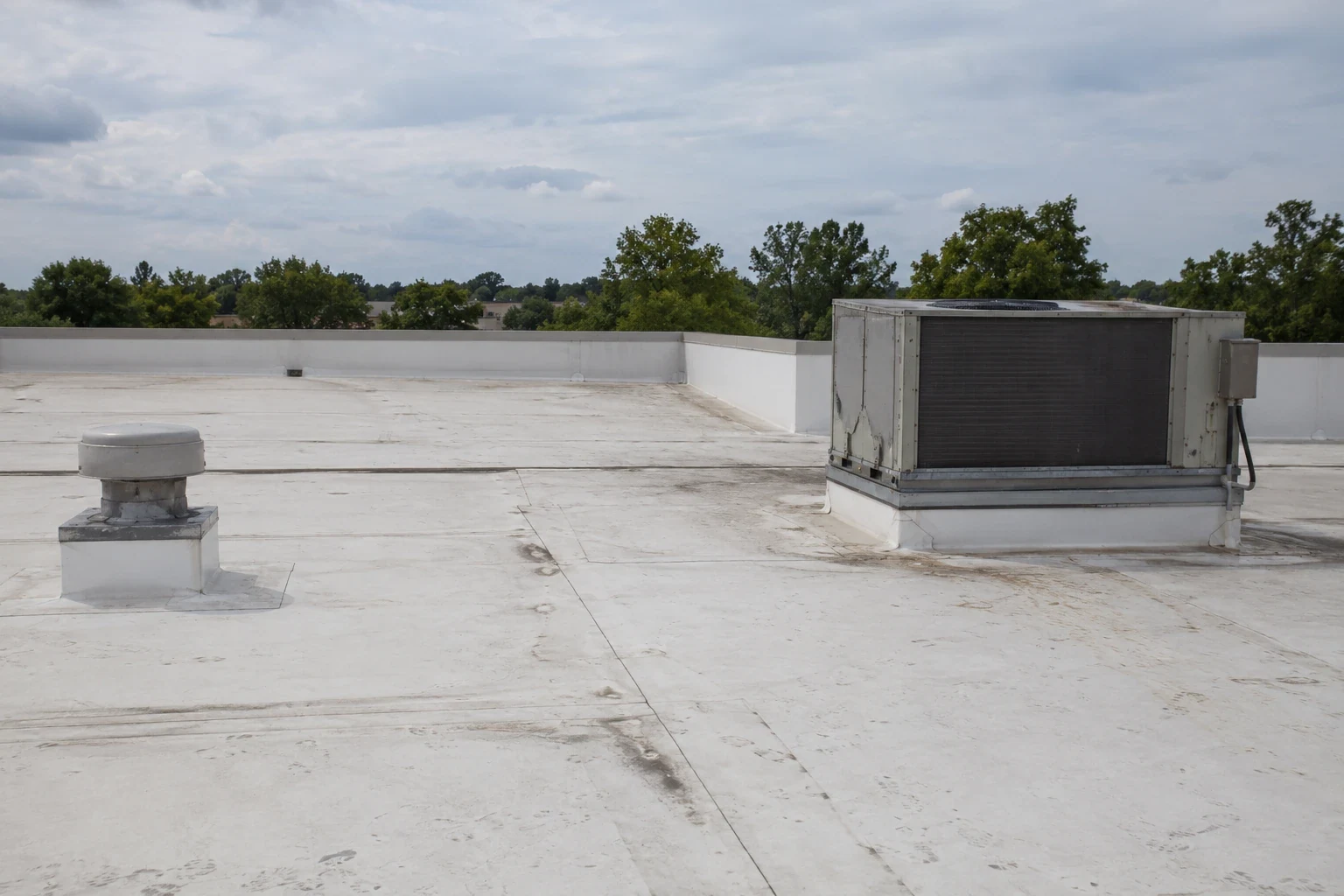
We check the first roof by section, then keep that record attached to its building. At a seam, we look for separation, fishmouths, open laps, and patches that no longer bond. At a curb, we inspect corners and flashing transitions. At the perimeter, we check metal attachment and membrane termination.
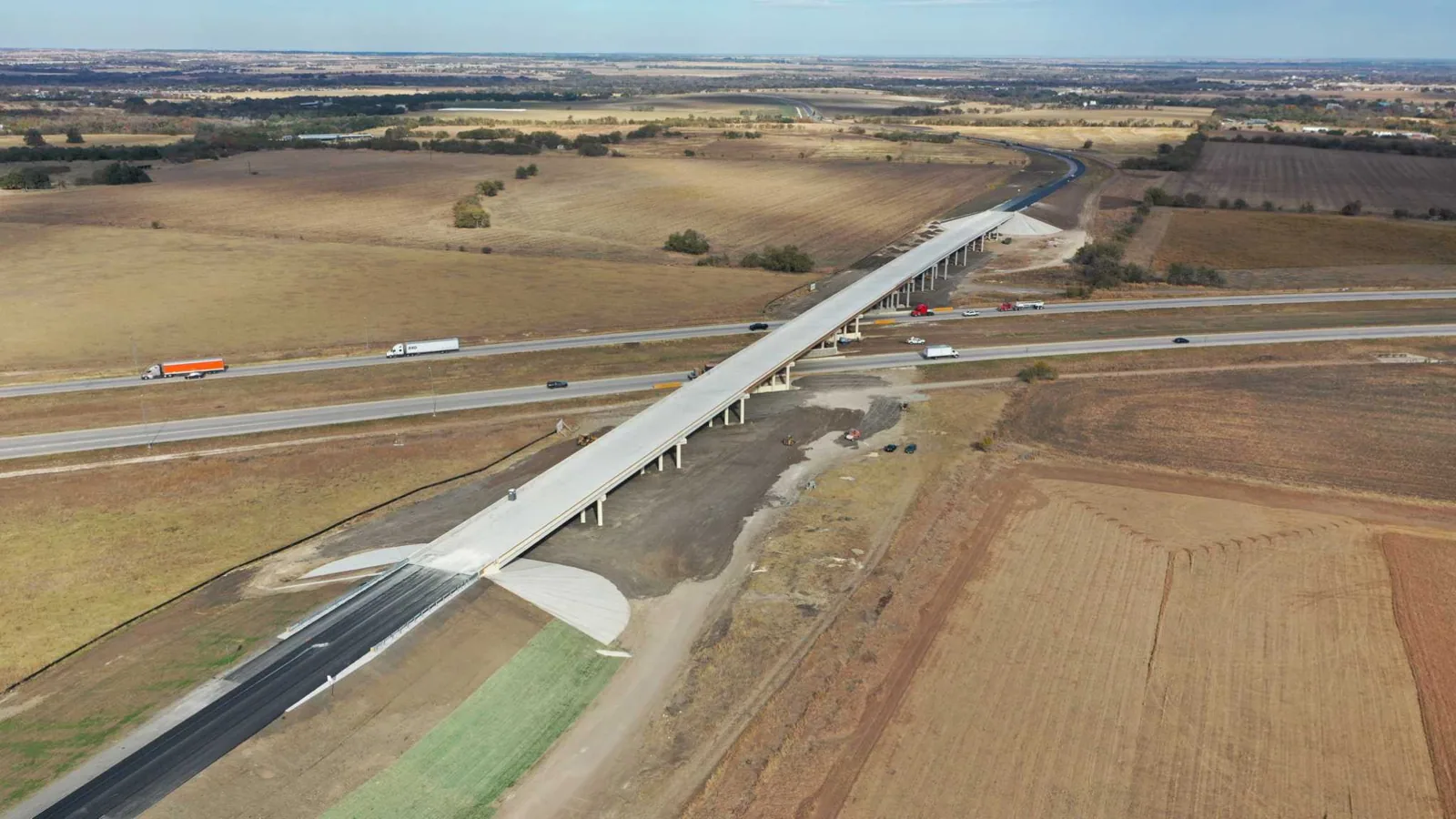
Berry Creek's setting near I-35 and SH 130 connects it to north-south regional freight routes. The roads inform regional logistics, but site access remains a property-level question. We confirm the gate, loading windows, lift location, and path to roof access with the facility contact. A route that works for one building may not be suitable for another.
If the leak appears away from the roof entry, we trace the path from the interior report to likely roof details. Water may travel along a deck or insulation before it becomes visible inside. We check uphill seams, penetrations, wall transitions, and drains. A leak repair stays limited to confirmed damage unless further testing supports a broader opening.
Georgetown's summer heat can push daily highs into the 90s, and recent National Weather Service station records include days above 100 degrees Fahrenheit. On the roof, heat can stress exposed sealants and membrane laps. We inspect for brittle flashing, open seams, surface wear, and material that has lost flexibility. The condition found on each building guides the repair decision.
A post-storm walk starts with the affected building, not the regional report. We inspect exposed corners, edge metal, roof penetrations, and supports for movement. The National Weather Service also records hail events in the Austin forecast area, including Round Rock. That context guides the inspection, while the roof surface determines whether any repair is needed.
Hail is another reason to separate visible marks from functional damage. A dented metal accessory, a membrane puncture, and a surface scuff call for different responses. We photograph the specific condition and test the affected area as appropriate. If a claim is under review, photos and notes identify the inspected roof and work boundary rather than assuming a loss based on the storm date.
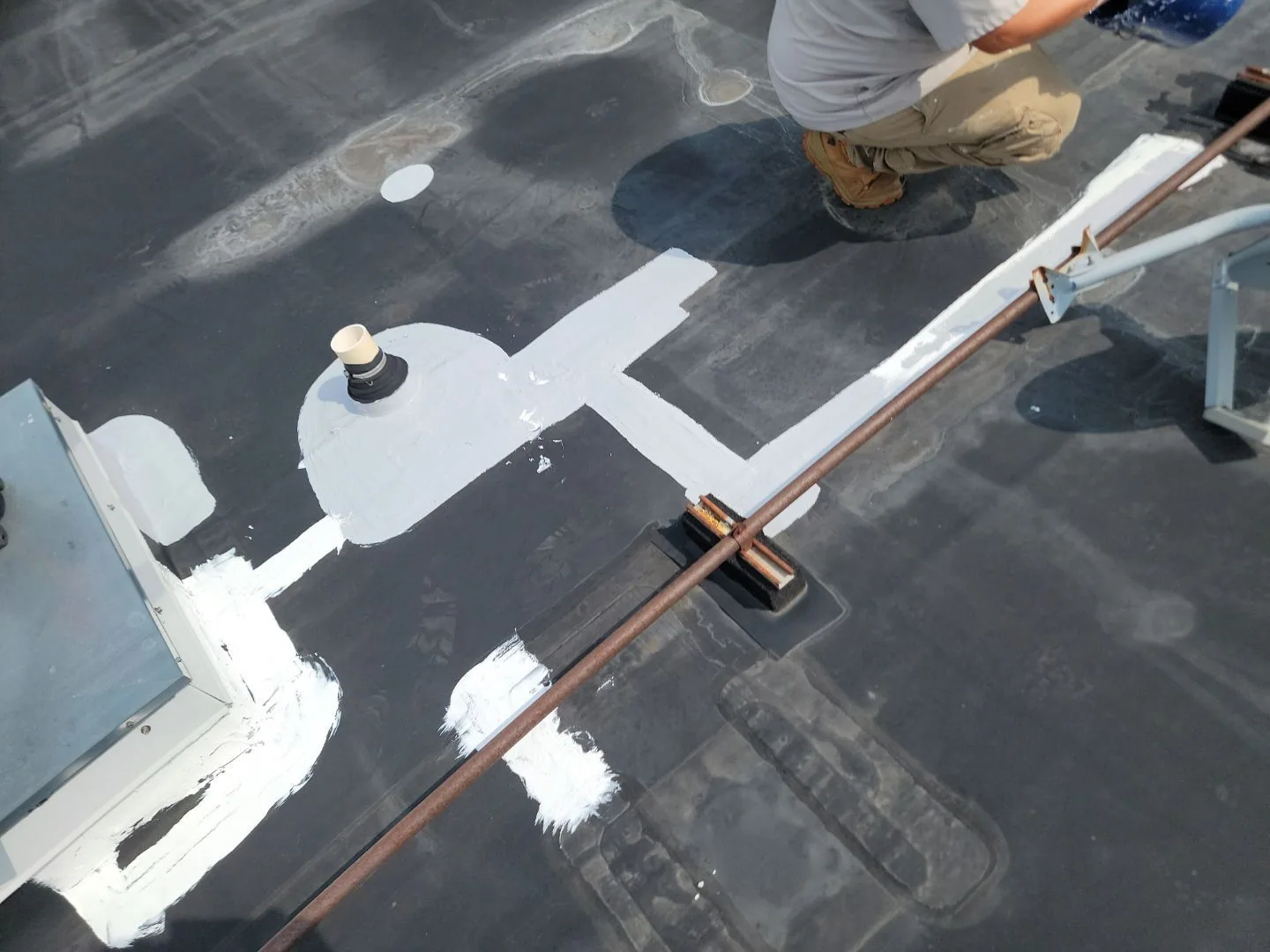
A single split seam surrounded by dry, stable membrane can support a localized repair. We prepare the surface, make the repair, and inspect the tie-in. If multiple seams or details have failed, we map the pattern before selecting a larger scope. The repair plan separates immediate water control from additional investigation.
A recover may fit when the current assembly is suitable and the underlying roof is dry and sound. Before covering it, we inspect moisture, attachment, drainage, and details that will become inaccessible. Wet insulation or weak decking changes the decision. The recover assessment states the conditions required before installation.
Replacement planning addresses tear-off, substrate review, insulation, cover board, drainage, attachment, and flashing. TPO, PVC, EPDM, modified bitumen, built-up, and metal systems each have distinct details. We match the assembly to the building conditions and project requirements. A TPO system or standing-seam metal roof is only as dependable as its perimeter, curb, and transition work.
A three-building park needs a separate roof record for each structure. We map its seams, drains, curbs, and edge details, then note any area needing a test opening. The owner can compare reports in one budget review while keeping every repair tied to the condition found on its own building.
We need the building contact, roof access point, work window, and staging plan before mobilization. Berry Creek's proximity to I-35 and SH 130 supports regional access, but it does not establish where materials may be unloaded or stored. We confirm the loading approach and keep the crew path separate from active vehicle movement where the site allows.
Industrial work can involve deliveries, equipment, or multiple trades sharing the roof. We mark what must remain in service and define who handles disconnects or relocation. For occupied operations, the work can be divided into sections with a dry-in point before the crew moves forward. A hidden deck condition or weather shift can change the sequence, so we identify a hold point before opening more roof.
For a portfolio walk, NorthPark35 is another Georgetown industrial area in the broader market. Work at either location starts with its own roof access and field condition. We can coordinate inspection dates around contact availability, then report findings building by building.
For replacement, closeout follows the assembly through substrate review, insulation, membrane, flashing, and final tie-ins. We record changes found in the field and any item left for another trade. If a roof section was inaccessible, the report marks that limit rather than treating it as inspected.
Recurring maintenance can focus on drains, edge details, penetrations, and earlier repair points. A planned maintenance visit creates a dated condition record and a list of open work. It does not remove the need to respond to new damage. The owner can use the roof map to assign follow-up and compare later inspections.
When more than one Berry Creek building is in scope, we keep each map, photo set, and work record with the specific building. The site team receives a boundary it can use for staging and closeout.
At the end of the repair, we inspect the completed tie-in, check the surrounding details, and remove roofing debris. The handoff identifies the completed area, any remaining hold point, and the next action. If the scope uncovered wet material or damaged substrate, we document what was opened and how the roof was protected.
A baseline condition report gives each building a starting record. Later inspections can compare the same drains, seams, curbs, and edges. For work across Georgetown, Georgetown Logistics Park is another distinct area, but its findings remain separate from Berry Creek's.
Send the building or roof area, available access window, and general-contractor contact to schedule a walk. We will confirm the route and work limit before setting the sequence. If water is entering now, call any time, day or night, including holidays.
No. Each building receives its own roof map, findings, photos, and work boundary. A shared park location does not establish the same roof assembly or condition.
The facility contact, roof access point, loading window, equipment restrictions, and staging area. We confirm these before moving materials or setting a crew route.
Yes. We set the work area, dry-in point, and daily handoff for the building in scope, then coordinate any shared access or operating limits with the site contact.
No. We inspect the roof for actual punctures, displaced metal, open seams, and flashing damage, then document each observed condition.
Wet insulation, unstable attachment, poor drainage, or weak substrate can rule out covering the existing assembly. We check those conditions before pricing the recover scope.