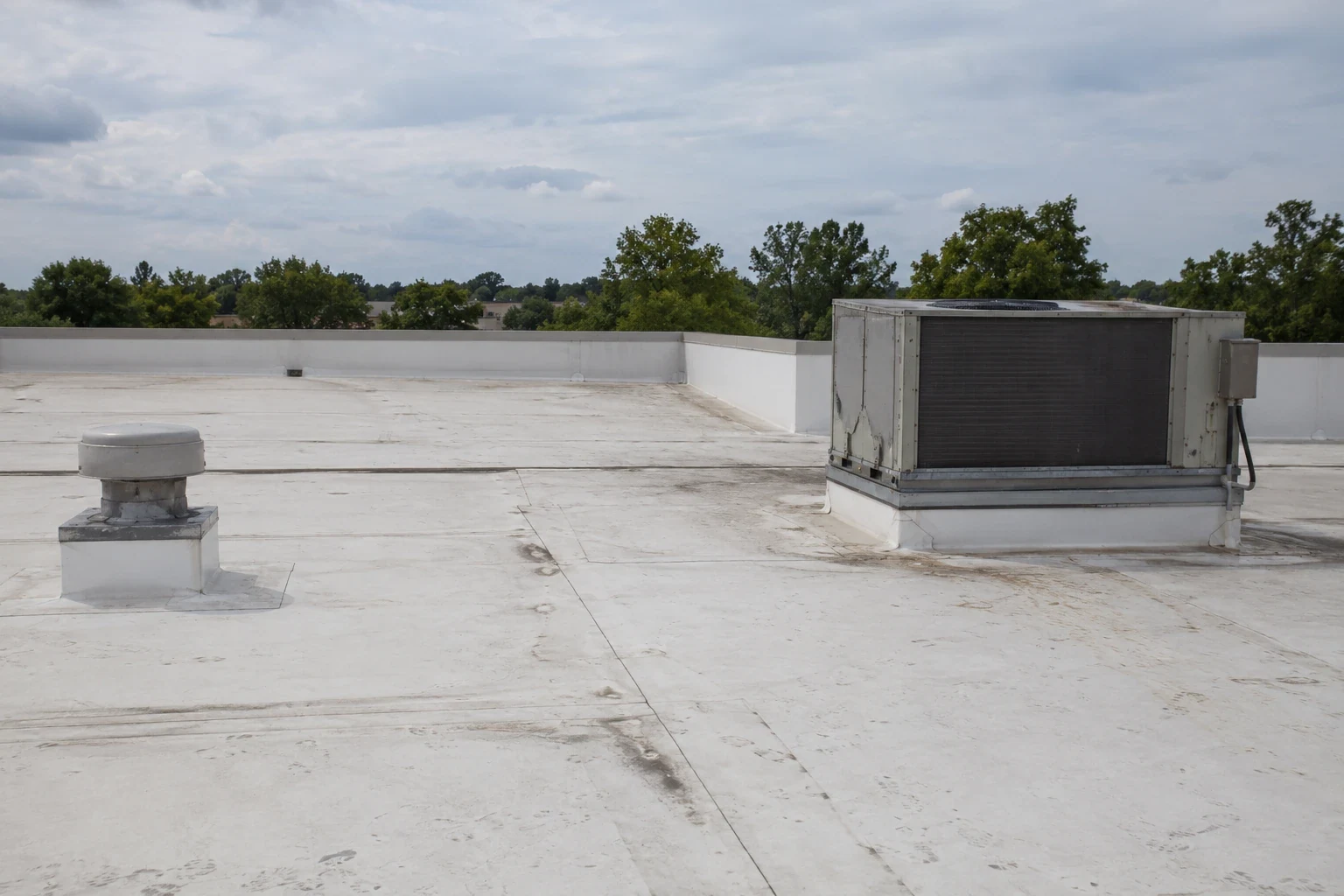
A loose edge along the field can let wind and water work beneath a membrane before a leak appears inside. We inspect the termination, fasteners, flashing, and nearby seams before choosing a repair. Georgetown heat can stress exposed sealants. At the same time, hail and severe storms make edge and seam checks useful after weather passes. The repair scope names the defect and its boundary so the crew does not patch beyond the evidence.
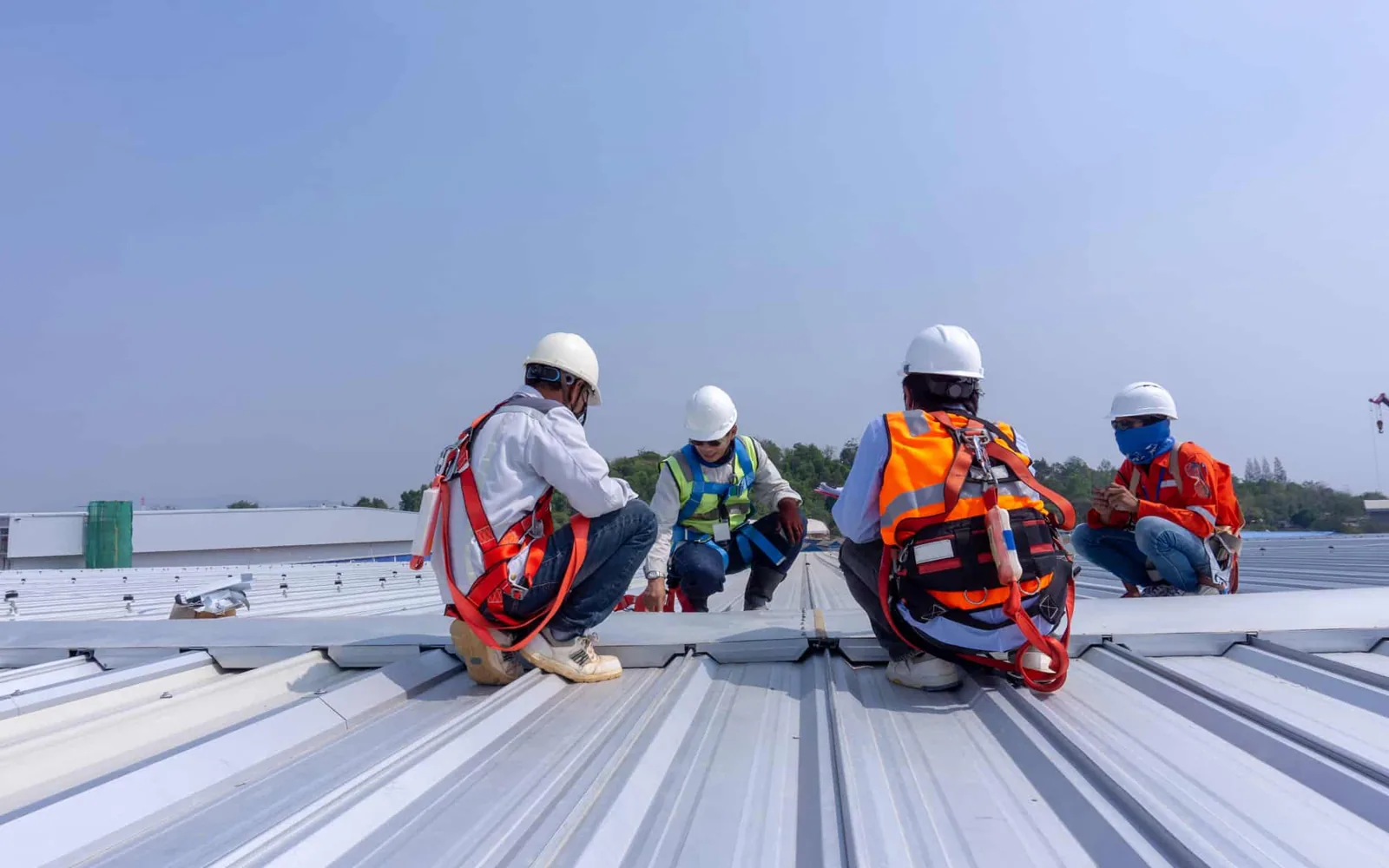
We repair commercial membrane, flashing, seams, penetrations, and related details. We start with a safe roof walk. A property near FM 971 may have different access needs from a building near Westinghouse Road. But the repair method still follows the assembly and damage found on that roof.
We mark each split, puncture, lifted edge, open seam, failed flashing, or displaced fastener on a roof map. We check the surrounding surface for movement, trapped moisture, and prior patches. A repair is only useful when the substrate will hold the new detail and the material is compatible with the existing system. If the defect reaches beyond the visible opening, the map expands only after inspection supports the added area.
The work boundary also records nearby conditions that could affect the repair. A drain blocked by debris, a loose curb counterflashing, or an edge that has lost attachment can create a second path for water. We describe those findings separately and identify what is included. The general contractor can then approve a defined correction rather than a vague instruction to seal the roof.
At industrial sites, we coordinate the roof walk with loading activity. We confirm the lift location, travel path, and work window before bringing tools to the roof.
The leak location inside may sit well away from the roof opening. Water can move along a deck flute, insulation joint, conduit, or structural member before it reaches a ceiling. We start at the reported area. We follow the roof slope and details toward a drain, wall, curb, or seam. The inspection record separates the interior symptom from the exterior defect so the repair addresses the entry point.
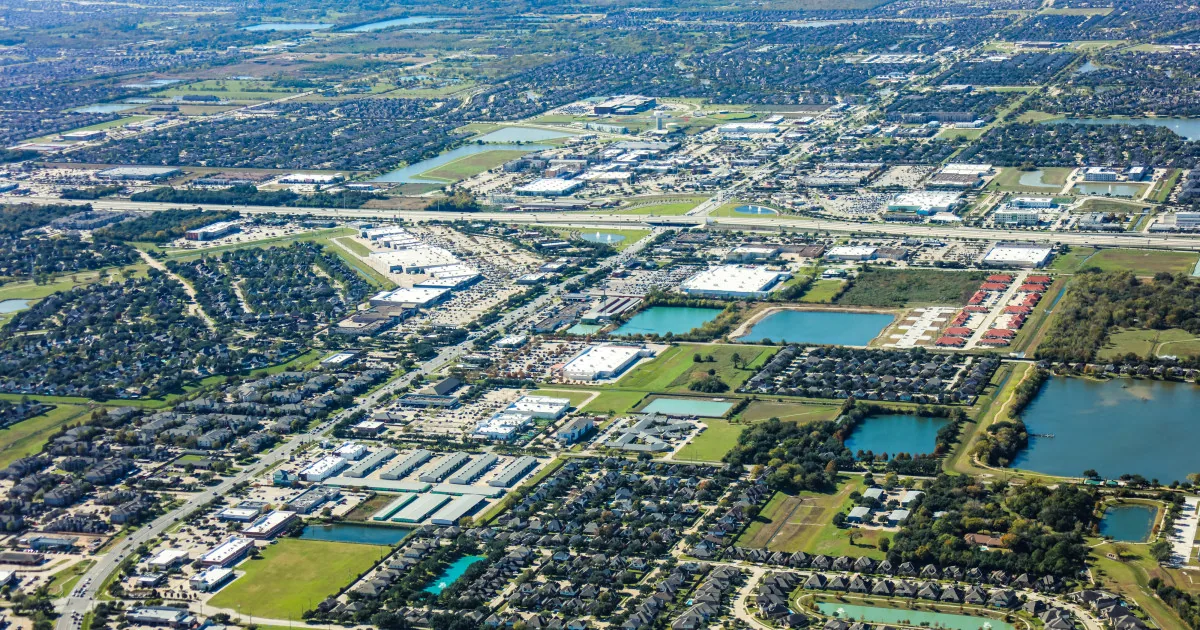
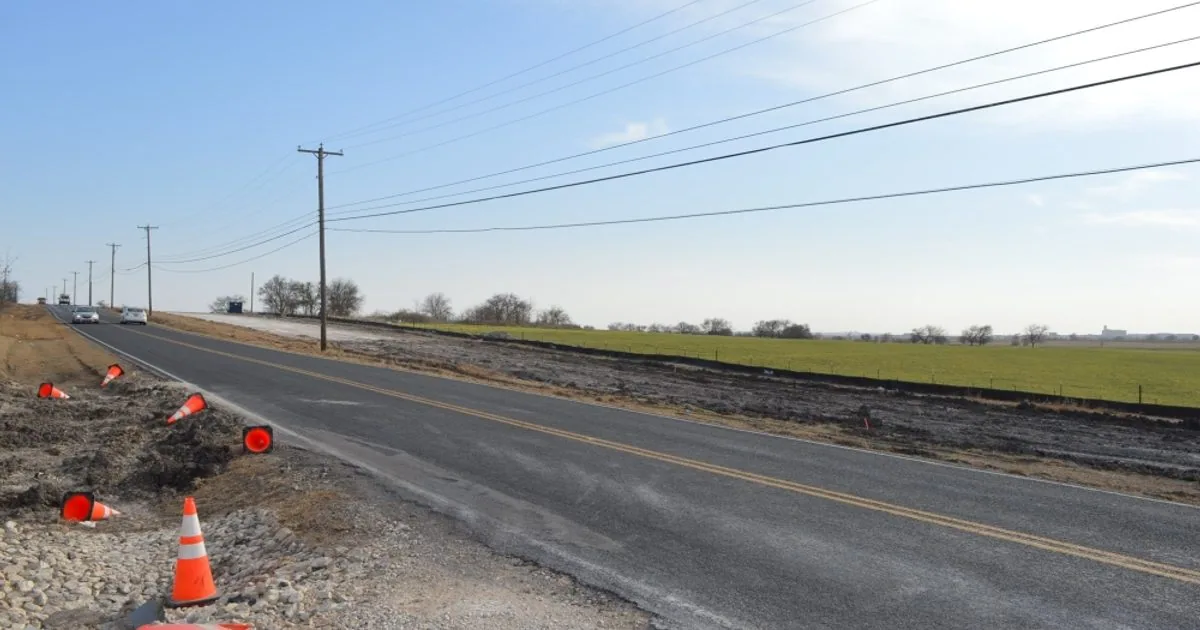
FM 971 connects I-35 to SH 130 and serves commercial activity, housing, schools, and a regional park. We still trace each building’s own water path, surface, and drainage before selecting a patch.
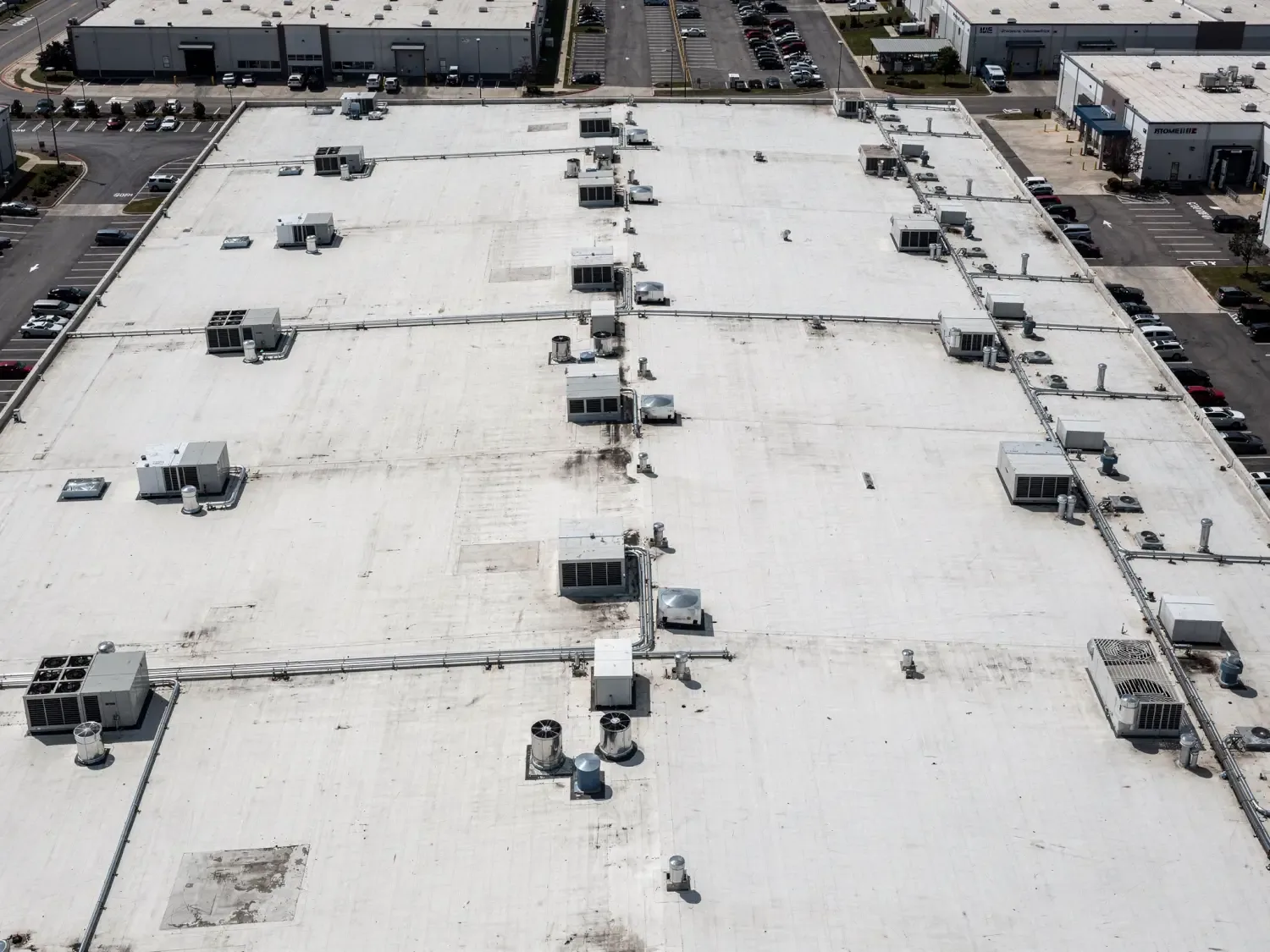
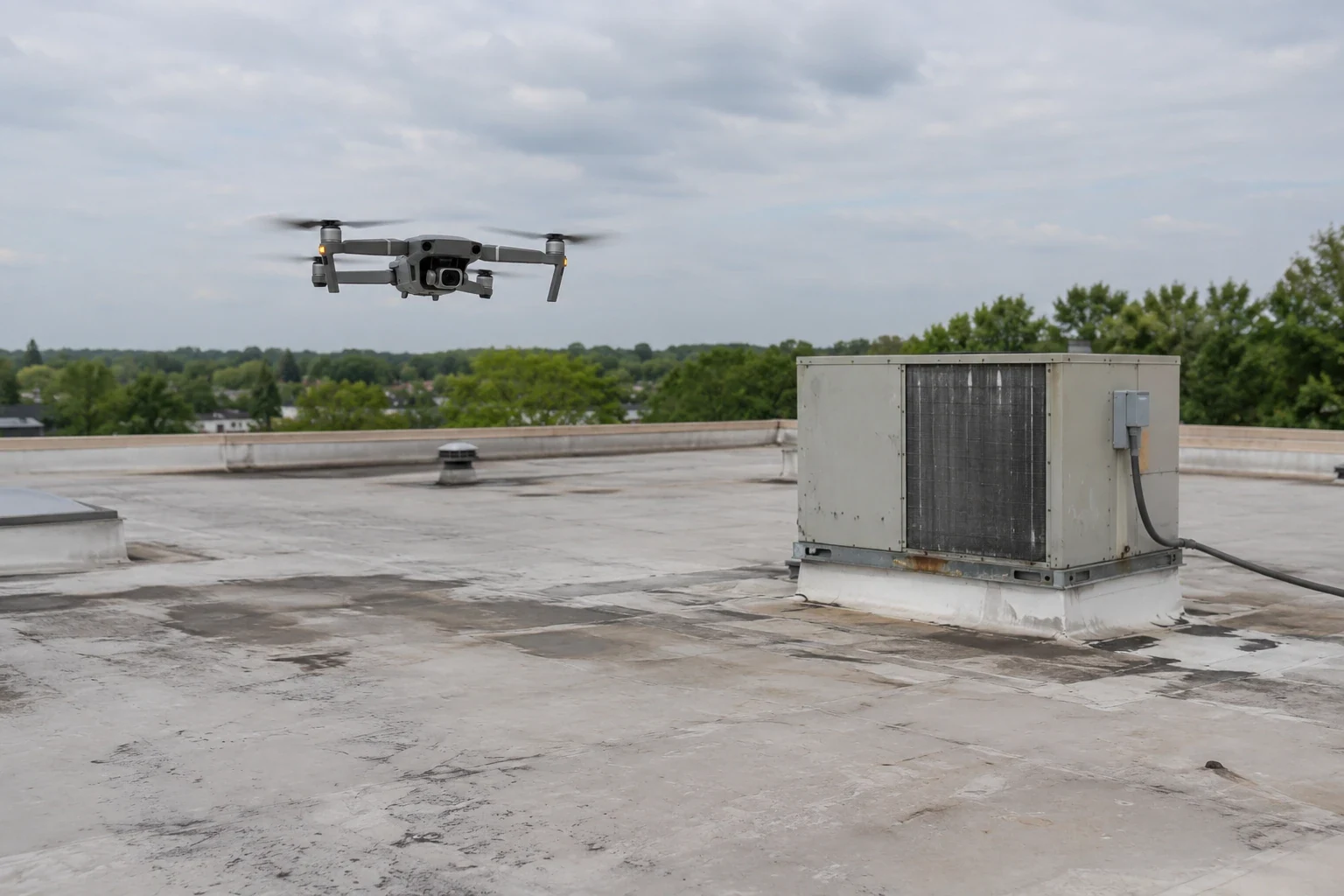
When the entry point remains uncertain, we use controlled testing rather than sealant across several details. A condition inspection can include photos and marked locations. A drone survey can review a large surface. But close inspection confirms the seam or flashing repair.
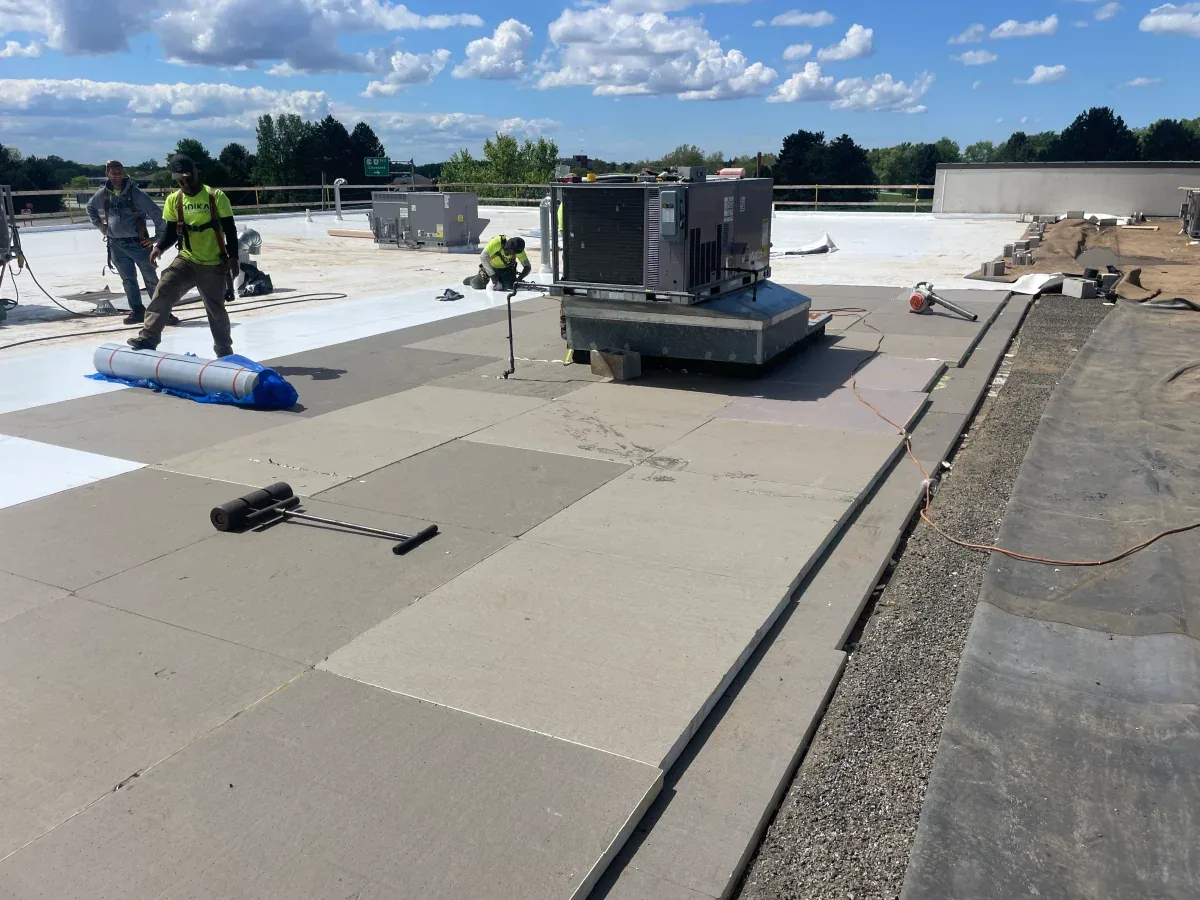
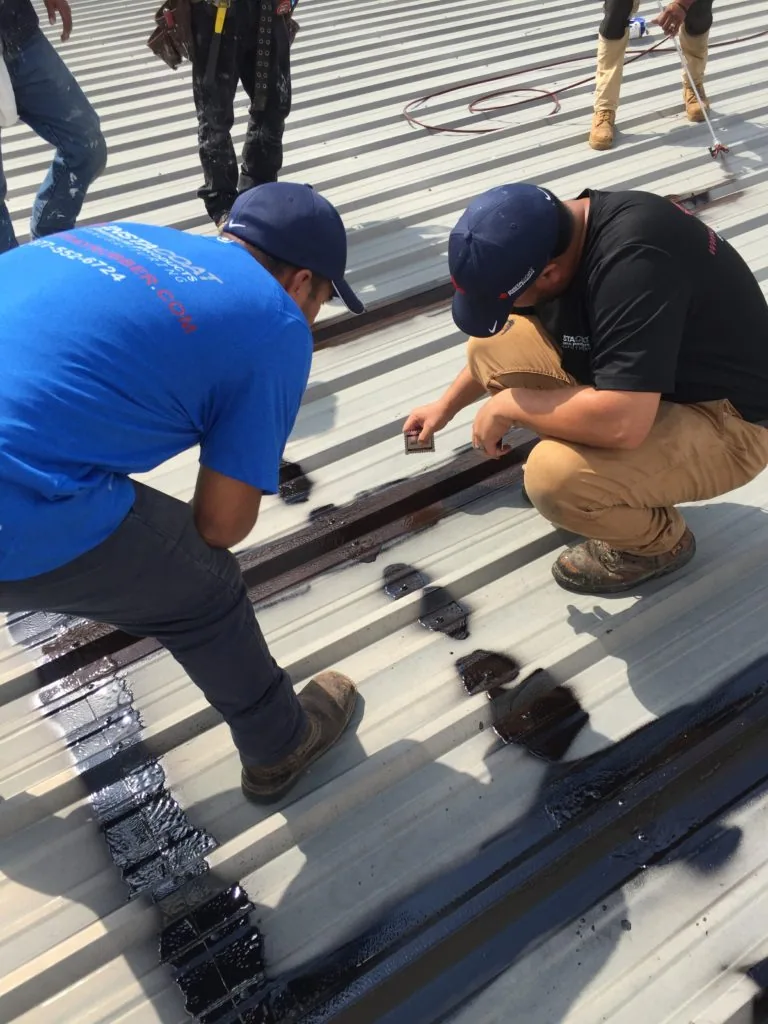
A repair material must work with the roof membrane and the condition around it. We clean and prepare the surface, remove loose or failed material, and install a compatible patch or flashing detail. The repair may need new membrane, reinforcing fabric, mechanical attachment, or replacement metal. A bead of sealant alone will not correct movement, a failed lap, or an edge that has lost securement.
For thermoplastic roofs, heat-welded patching may be appropriate when the membrane and conditions support it. An existing TPO assembly and a PVC roof require system-specific preparation and seam work. Modified bitumen, EPDM, built-up, and metal roofs call for different materials and details. We identify what is installed before ordering supplies or setting the repair method.
Drainage defects can require more than a membrane patch. We check drains, scuppers, slope, and debris that may hold water near the defect. A failed flashing or drain detail becomes its own repair target, with larger work listed separately for approval.
Repair work can often be separated from normal building activity. But roof access still crosses active property. We agree on the access route, fall-protection setup, staging area, and material handling before mobilization. The plan accounts for occupants below, nearby rooftop equipment, and any other trade scheduled in the same area. A marked work boundary helps everyone see where tools, open materials, and temporary protection will be located.
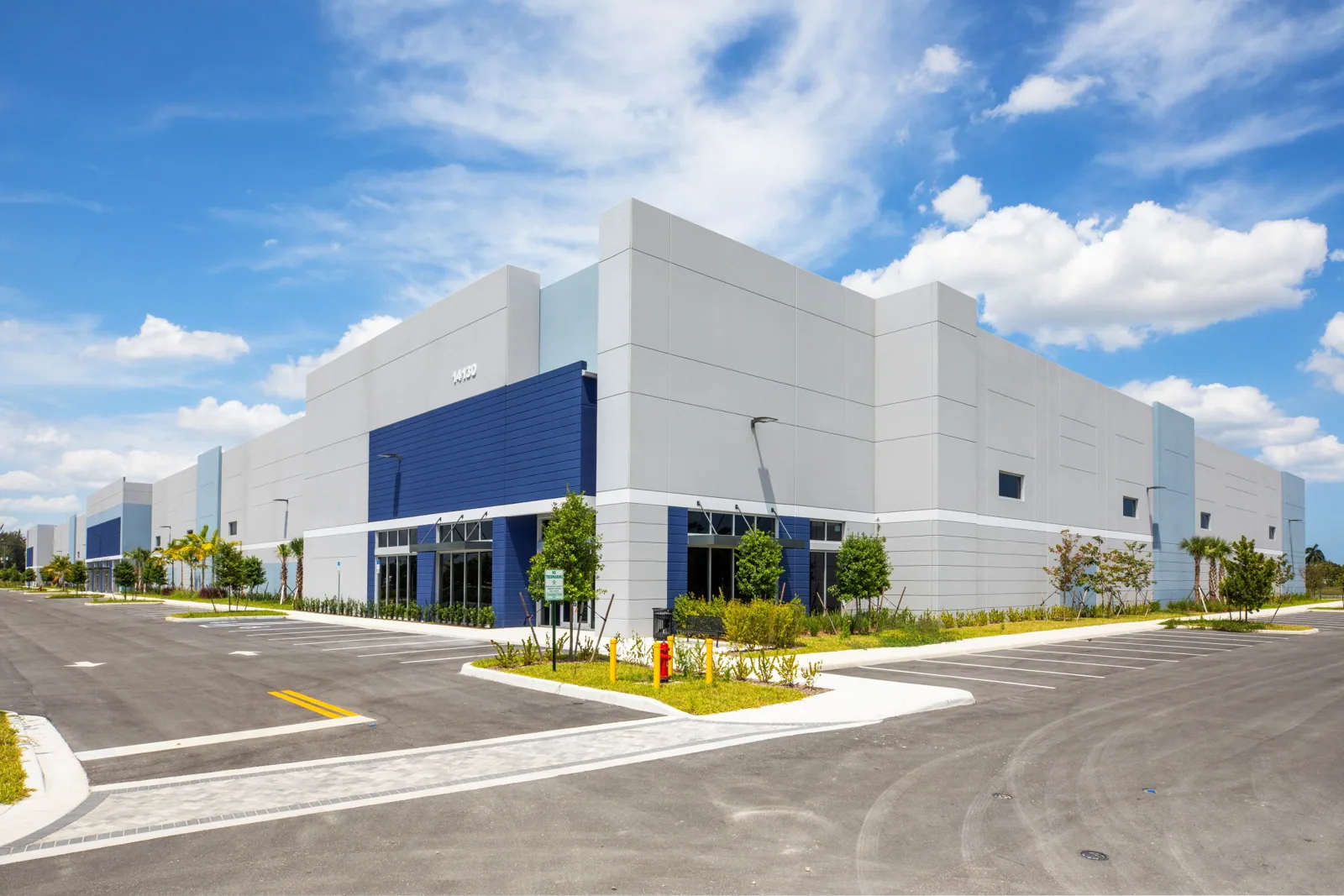
NorthPark35 and Georgetown Logistics Park are named industrial growth areas. We coordinate delivery timing and vehicle paths with the site contact. We clear the agreed route at shift end.
If another crew is working near the same curb, we set a hold point before either scope covers it. The teams confirm protection, opening time, and the final tie-in handoff.
Hail reports span the Austin forecast area, including Round Rock. In 2022, a tornado crossed Williamson County after forming near Round Rock. Those events inform inspection of seams, edges, metal, and penetrations. A regional report can guide inspection timing; the roof condition at the property sets the repair line. We record only conditions found on the roof.
Heat changes how repair materials are handled and how exposed sealants perform. We check the surface temperature and the product requirements before preparing a bond area. Many patch methods need a dry, clean surface. If rain or wind makes the work unsafe, we protect the opening and set a return window.
For a sudden opening or water entry, a permanent repair may not be the first move. We can stabilize the area with a temporary dry-in. We return to complete the specified repair when the surface and weather allow. That sequence protects the building while keeping temporary measures distinct from the final scope.
At completion, we photograph the detail and mark it on the roof map. The record notes material, preparation, seam or attachment method, and any separate condition left outside the work boundary.
The handoff helps the building team compare later leaks and gives another trade a tie-in point if equipment or flashing changes. We can prepare a condition report when the project needs a broader record of the roof field and related details. For work across multiple properties, a general-contractor coordination plan can align access windows and approvals across the sites.
Send the roof area, reported symptom, access window, and site contact. We can set the walk, mark the repair zone, and agree on the hold point before the crew starts. For active water entry outside normal hours, our response is available every day, including weekends and holidays.
A local seam repair can work when the surrounding membrane is sound, cleanable, and compatible with the repair method. We inspect adjacent laps and attachment first. If the seam keeps opening because the assembly is moving or wet, the scope needs to address that condition instead of repeating a surface patch.
Water can travel across insulation or along deck flutes before it reaches the interior. We trace the path from the reported area to the nearest roof details and drainage route. The repair targets the confirmed entry point, not only the visible ceiling mark.
The proposal should identify the defect, preparation, repair material, access plan, and work boundary. Photos and a roof-map mark help the general contractor verify the detail.
A permanent patch needs a safe, dry surface and conditions that meet the material requirements. If water enters before that window opens, we protect the area and schedule the repair when conditions permit.
We confirm access, staging, and deliveries with the site contact. The crew stays within the approved boundary and resolves trade conflicts before opening the roof.