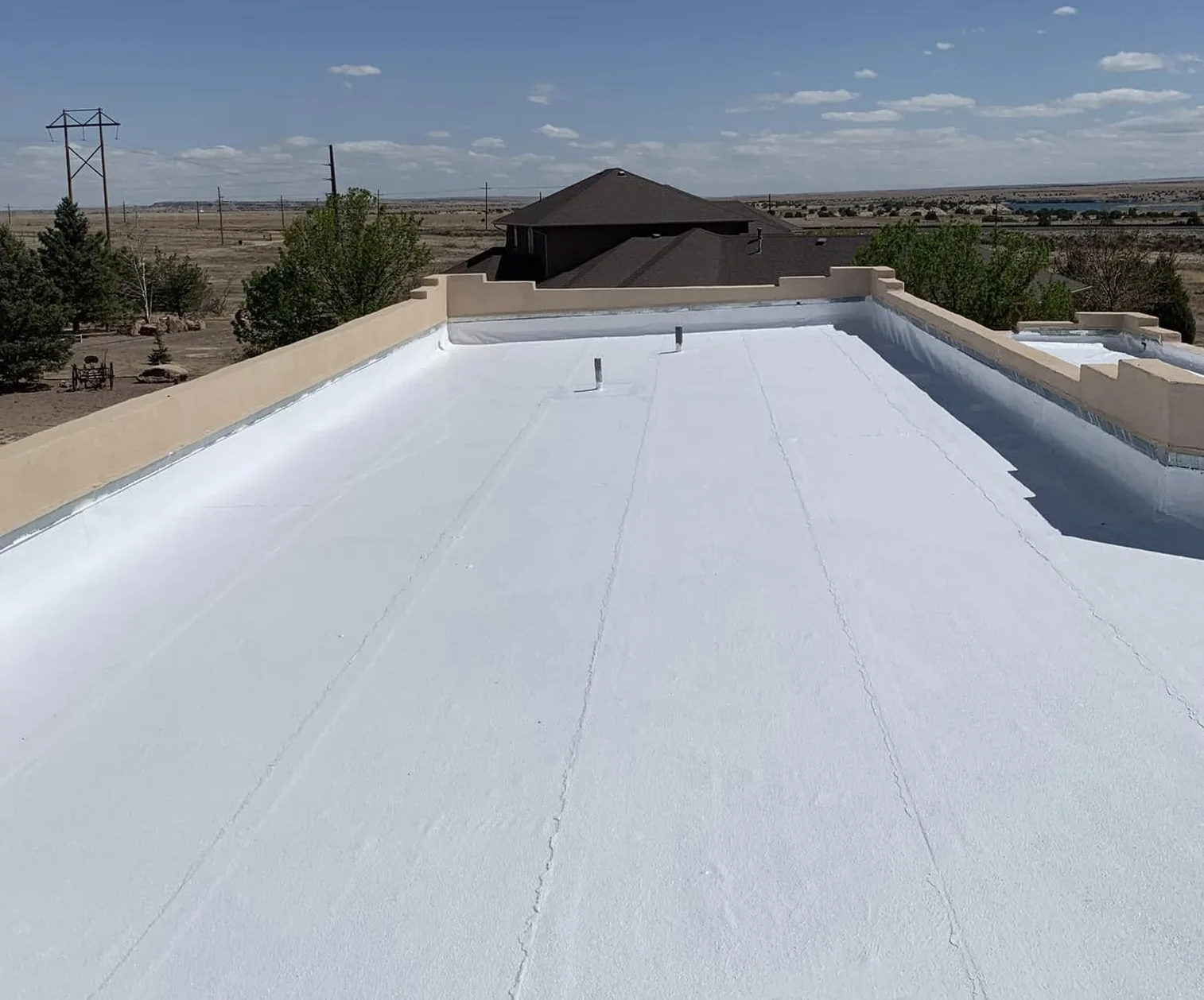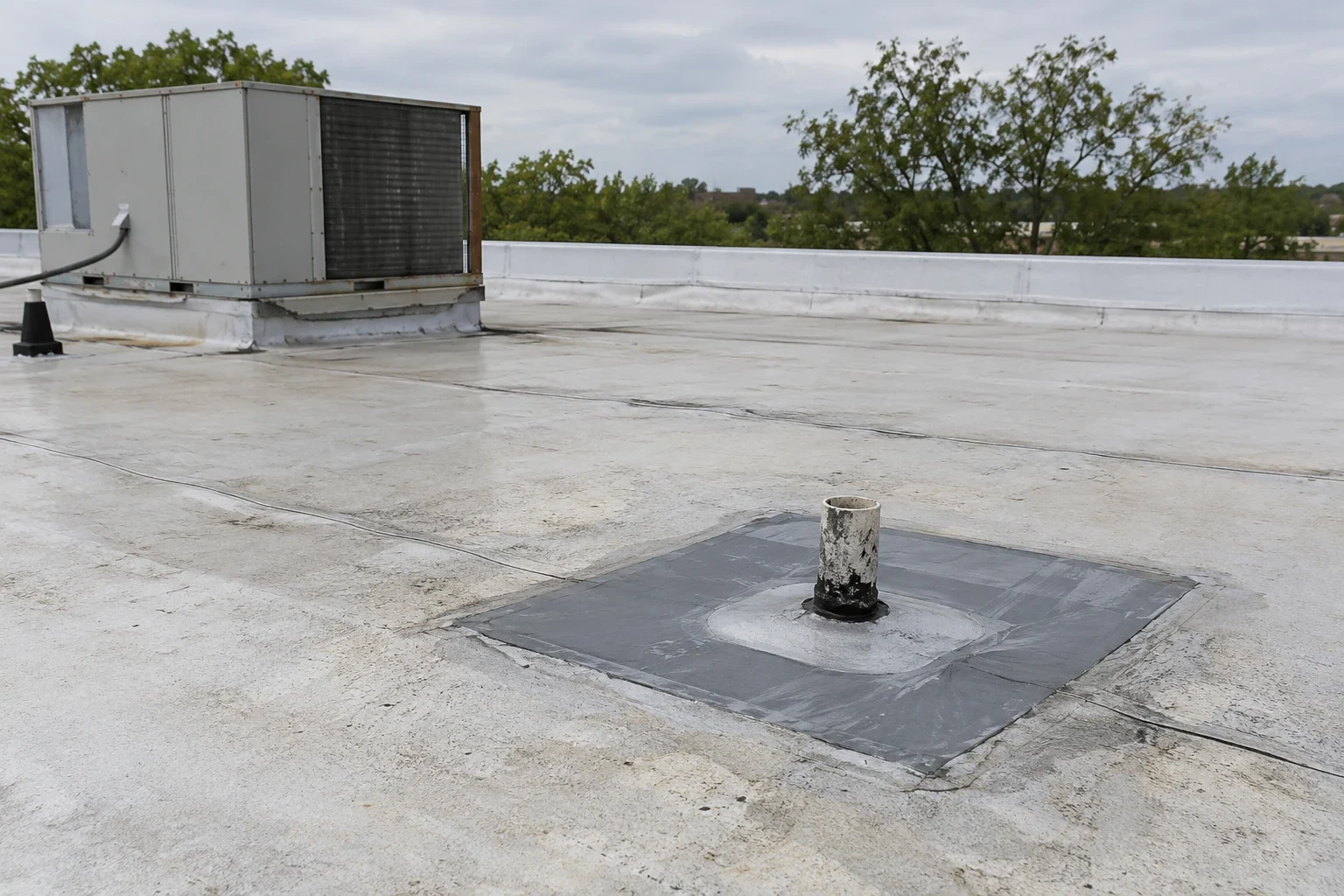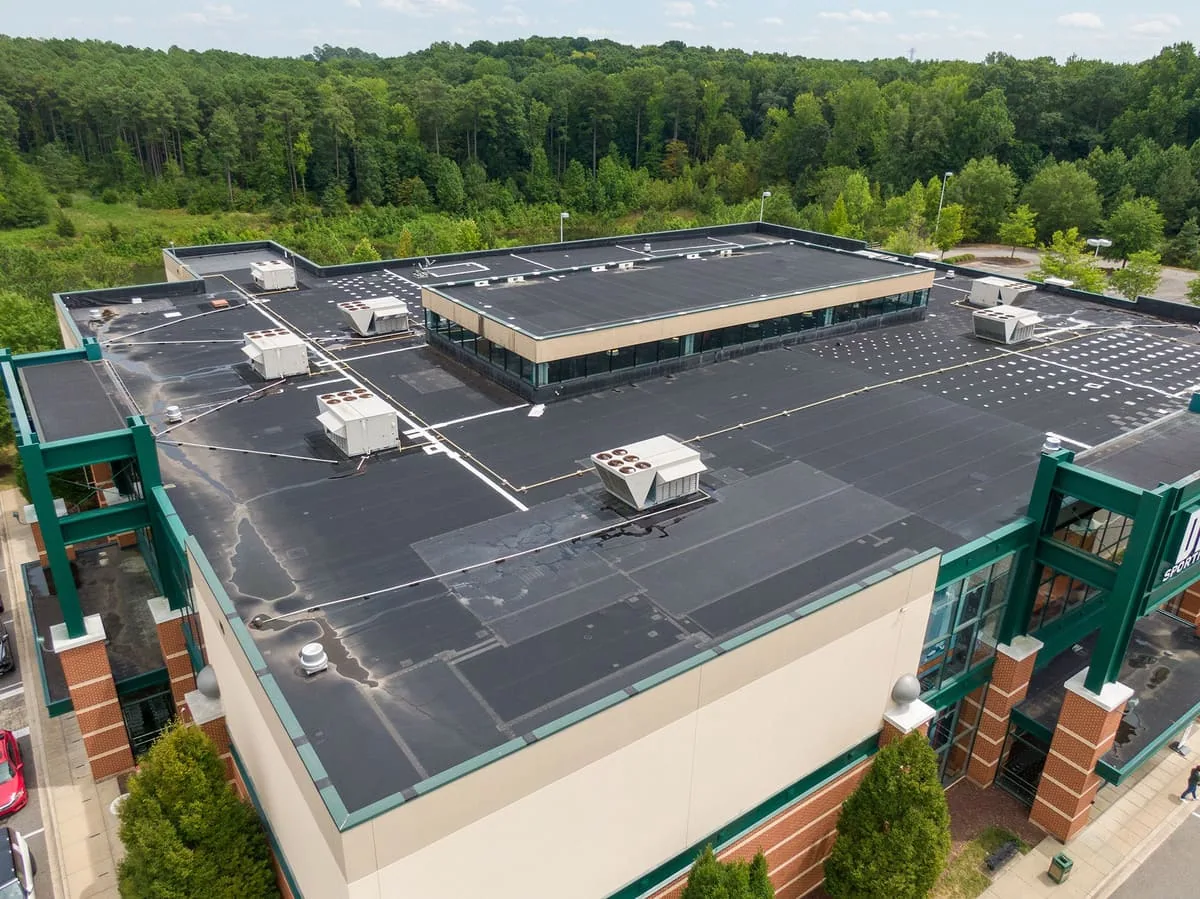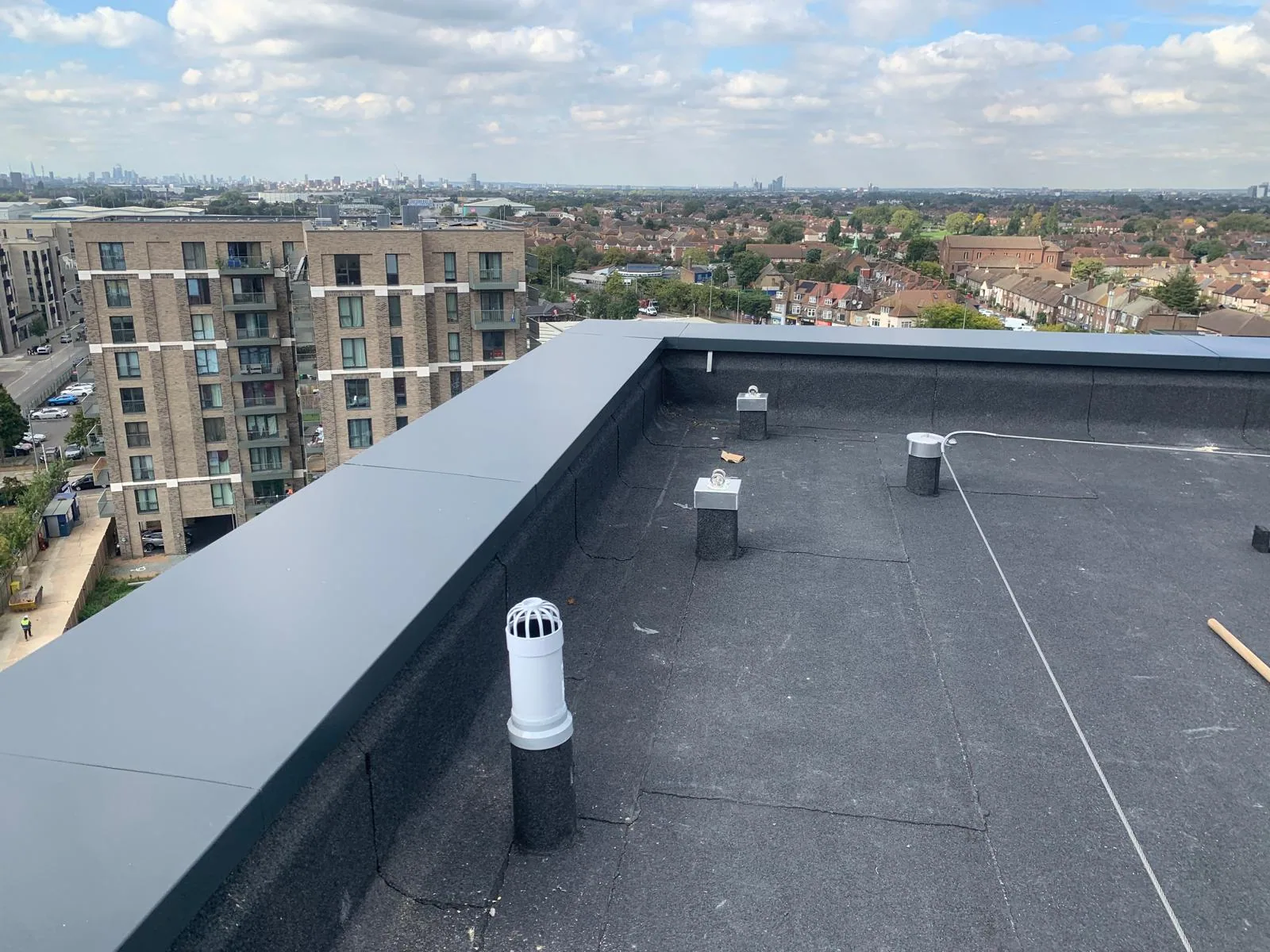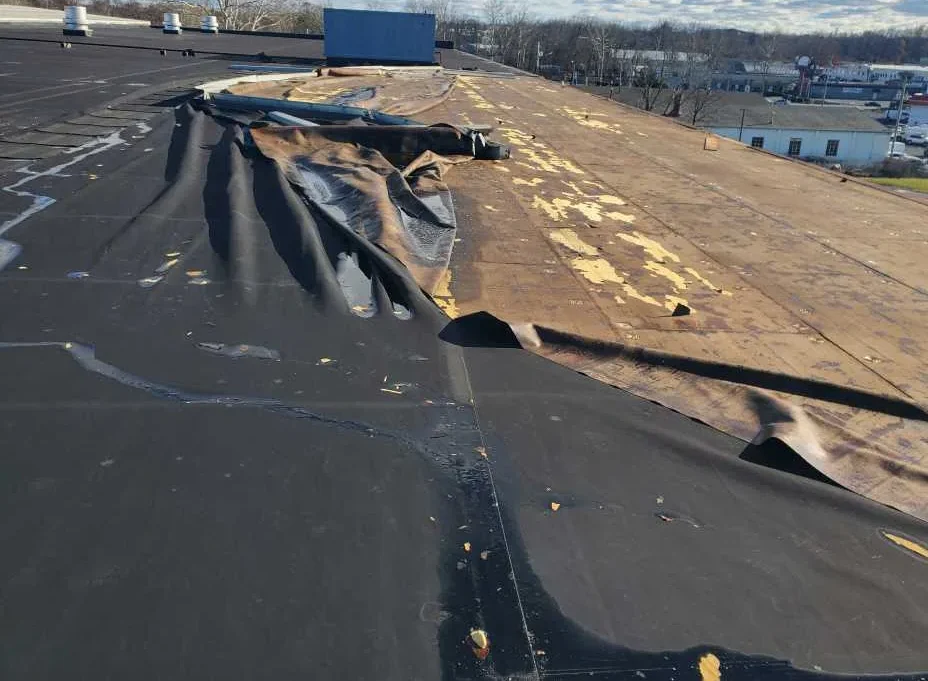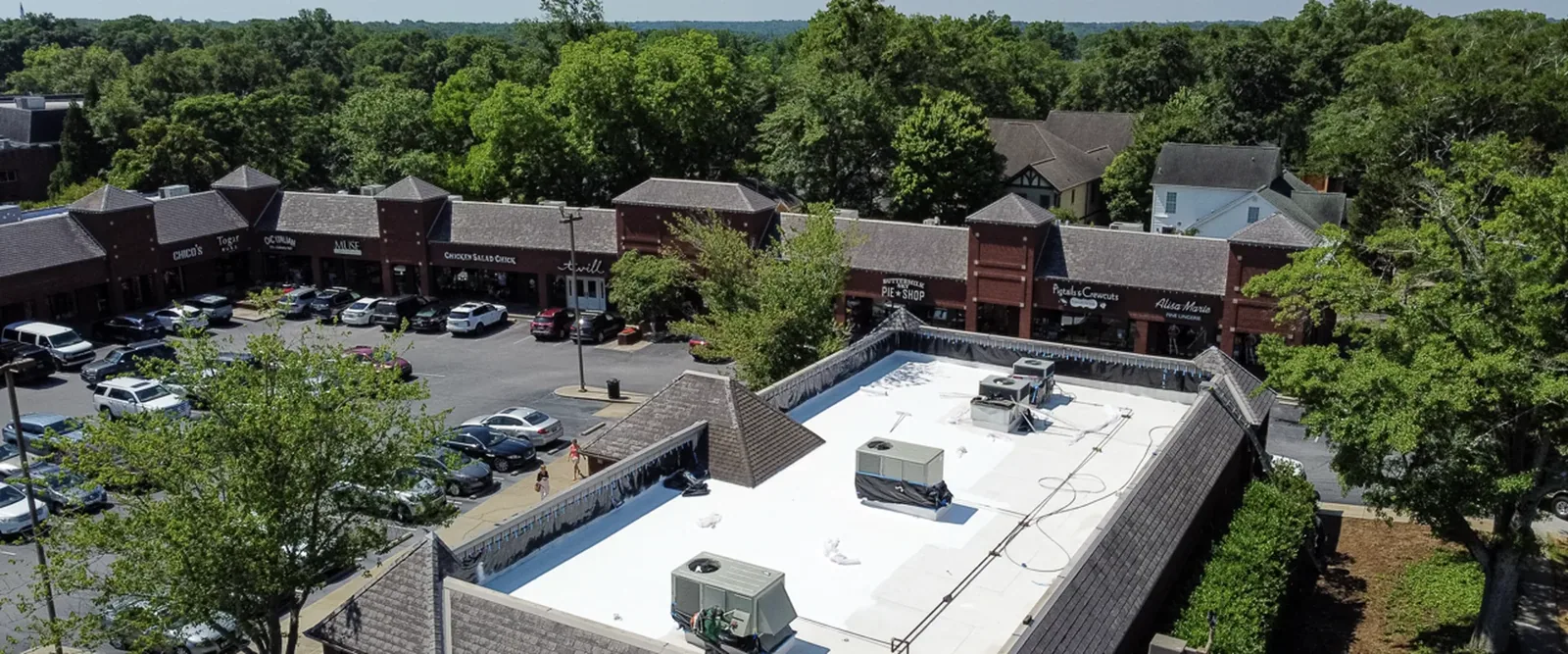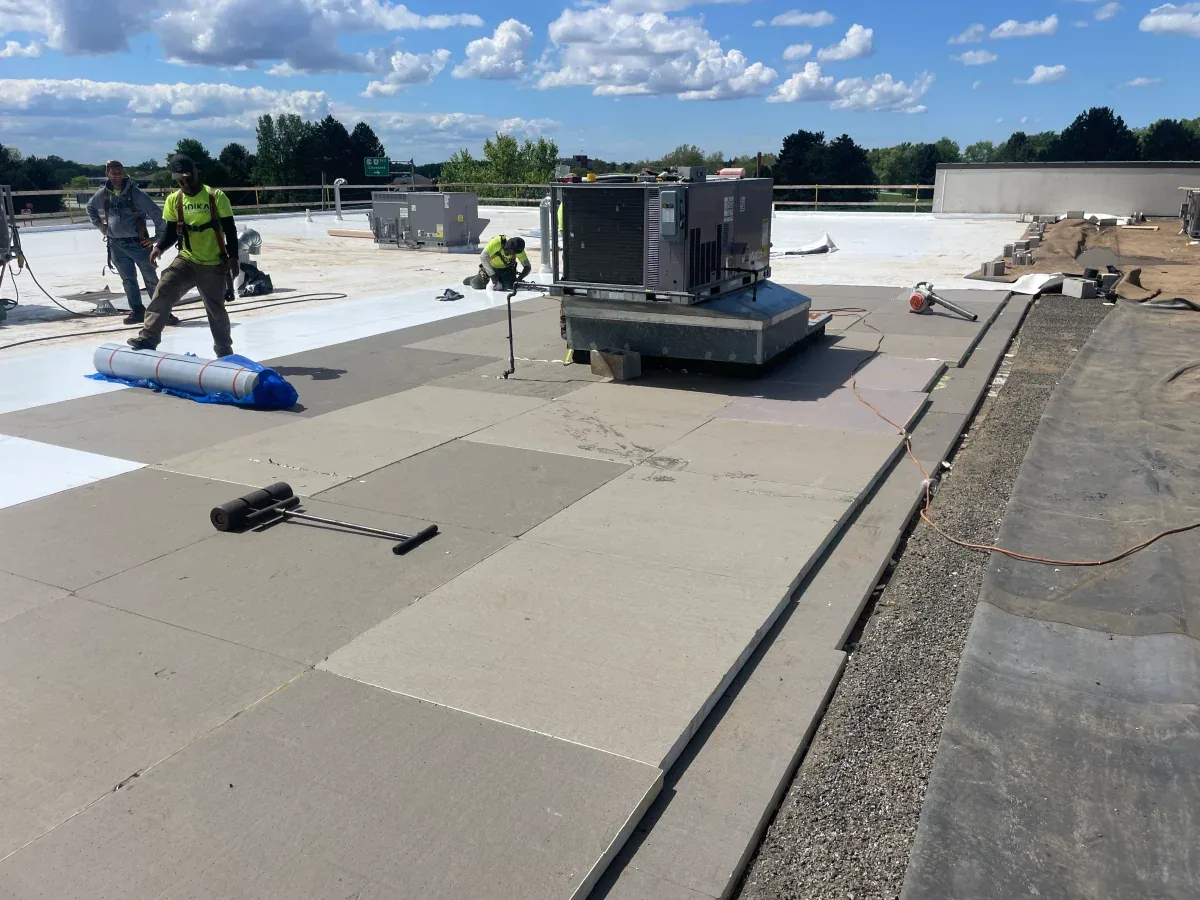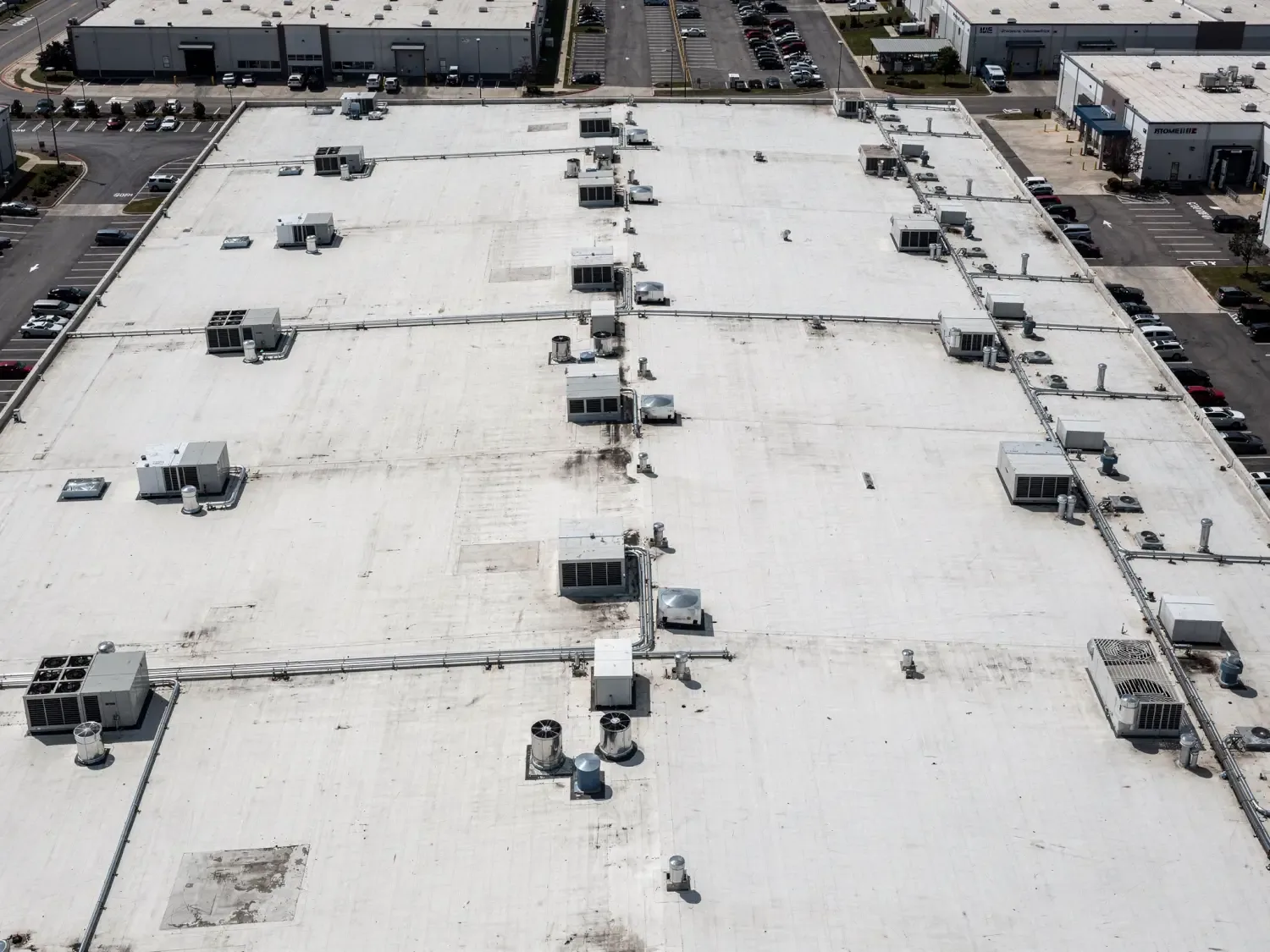
A lifted coping corner is the first place to stop. We secure the loose edge if access is safe, then trace the adjacent seam and fasteners before deciding how far the wind damage runs. A displaced metal strip can expose the membrane, while an open lap can admit water several feet away from the visible lift. We mark the roof zone and the temporary protection point before the crew moves across the surface.
I-35 and SH 130 serve Georgetown’s industrial growth areas, including NorthPark35 and Georgetown Logistics Park. Central Texas severe-storm exposure makes wind inspection relevant, but the roof in front of us determines the repair boundary. A storm date does not establish material damage at a particular property.
Wind pressure changes at corners, parapets, roof edges, and transitions. We inspect coping joints, edge metal, cleats, fastener rows, membrane terminations, and the surface just inside the perimeter. A loose cap may be a single attachment issue or a sign that several sections have moved. We record the observed length and check how the metal ties into the roof assembly before ordering replacement pieces.
On a single-ply roof, the edge membrane and termination bar need review together. On metal, we inspect panel ends, clips, fasteners, and closure details. On a built-up or modified-bitumen roof, we check flashing adhesion and surfacing at the transition. The repair method follows the installed system. A coping and edge-metal scope can address perimeter details when the field membrane remains intact.
We also look for loose rooftop equipment covers, damaged screens, detached signs, and debris that may have struck the roof. Those items can leave secondary punctures or strain nearby flashing. We identify who controls equipment shutdown or removal. The roofer does not shift active mechanical equipment without authorization. Photos show both the direct wind finding and nearby conditions that need another trade.
A ceiling drip can sit several bays from the lifted edge. Water can turn beneath a lap, follow a wall or structural line, and surface indoors at a separate low point. We compare the room report with the connected roof zones and their curbs, drains, and transitions. The map labels the confirmed opening separately from a possible path. If the entry point remains uncertain, we propose a controlled test instead of extending tear-off by guesswork.
Georgetown's courthouse district contains civic, county, commercial, and residential activity in a compact downtown area. At a property near Downtown Georgetown, roof access and interior entry can pass through occupied public areas. Along FM 971, delivery and staging conditions may differ. We plan those logistics with the site contact, then inspect the roof itself for evidence.
Moisture below a membrane can change the repair size. A scan may help flag candidate areas, but an image does not establish wet insulation. A restricted outlet can require a separate ponding-water review. We mark test locations and state the layer or attachment question each opening should answer. A moisture survey can guide that next check. The owner approves any opening before removal proceeds.
Wind damage can include open laps, pulled fasteners, folded edge metal, displaced coping, damaged flashing, or impact from loose objects. Ordinary aging may include brittle sealant, earlier patches, and gradual surface wear. We record those conditions separately. The inspection states what is visible, what could not be reached, and whether a closer test is needed. We do not label every old defect storm-related.
A tornado path crossed Williamson County in March 2022, starting near Round Rock’s I-35 and TX 45 junction and continuing toward Granger. Georgetown's regional storm history is a reason to inspect, not a quantity takeoff. A tornado damage assessment can document current impact and openings at the project building. The same evidence standard applies when wind reports come from another severe-weather event.
If water is entering during the visit, safe temporary protection may limit interior exposure while the permanent repair is scoped. We identify the material used, the area protected, and the remaining work. The temporary measure is not represented as a completed system repair. An emergency dry-in response can be scheduled when the condition and access allow a safe intervention.
A short lifted edge may be reset or replaced if the adjacent substrate and attachment remain sound. Open membrane seams require a compatible patch or seam correction prepared to the system requirements. Bent or split metal may need replacement across a defined length, with fastener spacing and termination rebuilt. We write the confirmed quantity and list any concealed condition that could change it.
Repeated edge movement, widespread attachment failure, or wet insulation can change the decision from spot repair to a larger system scope. Recover is considered only after checking existing layers, moisture, perimeter height, and drainage. Tear-off may be needed to reach damaged components. A wind-related repair scope can remain focused when surrounding materials are sound; a replacement evaluation compares broader options when evidence supports it.
Cost and duration depend on roof height, access, edge length, metal profile, material lead time, removal depth, and safe weather windows. A repair near active loading or public access may need added protection or a different staging time. We state assumptions and exclusions. If removal reveals a deck or framing issue, work stops at a hold point while the owner reviews the finding and next step.
The crew secures the repaired edge, checks nearby drains, removes loose material, and confirms the ground route with the site contact. The closeout records the roof zone, repair materials, fastener or seam work, dated photos, and any area not reached. If temporary protection remains, the record names its location and follow-up requirement. The next inspection can compare that section with the original condition.
Owners near NorthPark35 or the Georgetown Logistics Park may have freight and access windows to coordinate. Those business areas are local planning references; the property manager sets the actual loading and safety controls. Send the roof plan, storm date if known, leak location, and site contact before mobilization.
A roof condition report can preserve observations for future maintenance or capital review. It lists what was inspected and where the work stopped. That makes later repair decisions traceable without assuming that an adjacent roof zone was included.
Start at exposed corners, edge metal, coping, seams, and rooftop equipment. We inspect the attachment and nearby membrane, then map any opening or movement by roof zone.
No. It identifies an event, not the condition of this roof. We document visible movement, openings, impact, and existing wear before setting the work quantity.
A local correction is possible when surrounding attachment, membrane, and substrate are sound. Repeated movement or concealed moisture can change the scope, so we verify those conditions first.
We contact the site representative, confirm safe access, and protect the area that can be reached. The report distinguishes temporary dry-in from the permanent repair still required.
Access, metal profile, lift requirements, material availability, roof height, weather, and removal depth all affect timing. We define the daily opening and dry-in point before work starts.