A cracked valley in the surfacing can send water below a built-up roof's top ply. We check the surface, nearby laps, and drainage before opening any layer. The roof map records the affected area and the route water could follow. That lets the owner see whether the issue is local or connected to a wider assembly concern.
Georgetown's summer heat and regional hail exposure make the top surface worth checking. Georgetown summers commonly reach the 90s, with recent days above 100 degrees Fahrenheit, and hail affects the Austin forecast area. Those conditions make edge, seam, and surfacing checks useful during the roof walk. They do not tell us whether a specific roof has lost its protection or contains moisture.
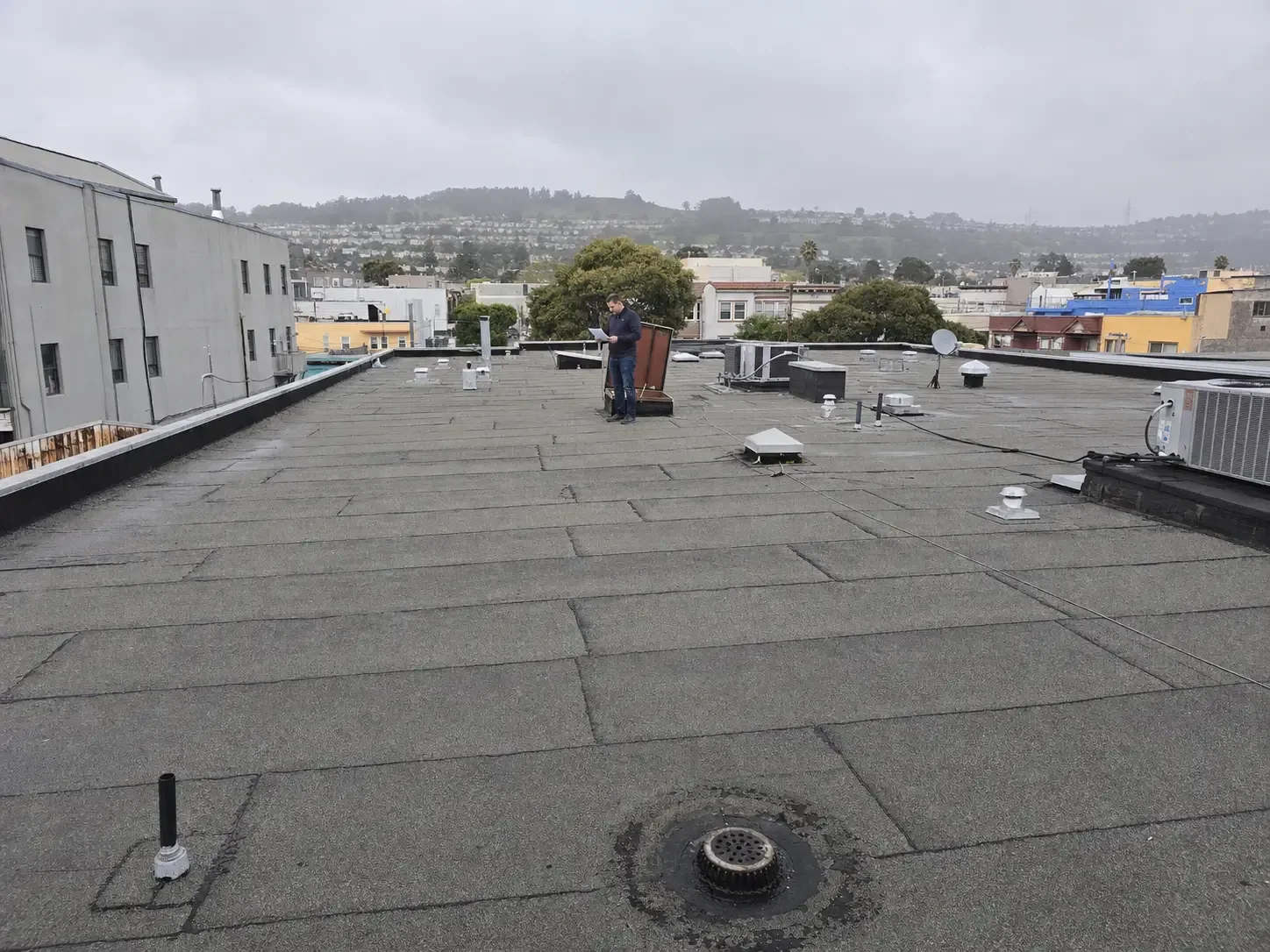
Built-up roofing combines alternating layers of bitumen and reinforcing ply sheets, often finished with aggregate or a protective coating. The installed assembly can vary by project. We look at the surfacing, exposed bitumen, laps, and transitions to identify where water may pass. A crack in the top layer needs context from the surrounding plies and drainage.
Loose aggregate can expose bitumen, while trapped debris can hold water at a drain or behind a curb. We check whether the surface has eroded, shifted, or separated. On an older repair, the patch edge may have lifted or the underlying layer may remain damp. We document what is visible before recommending an opening.
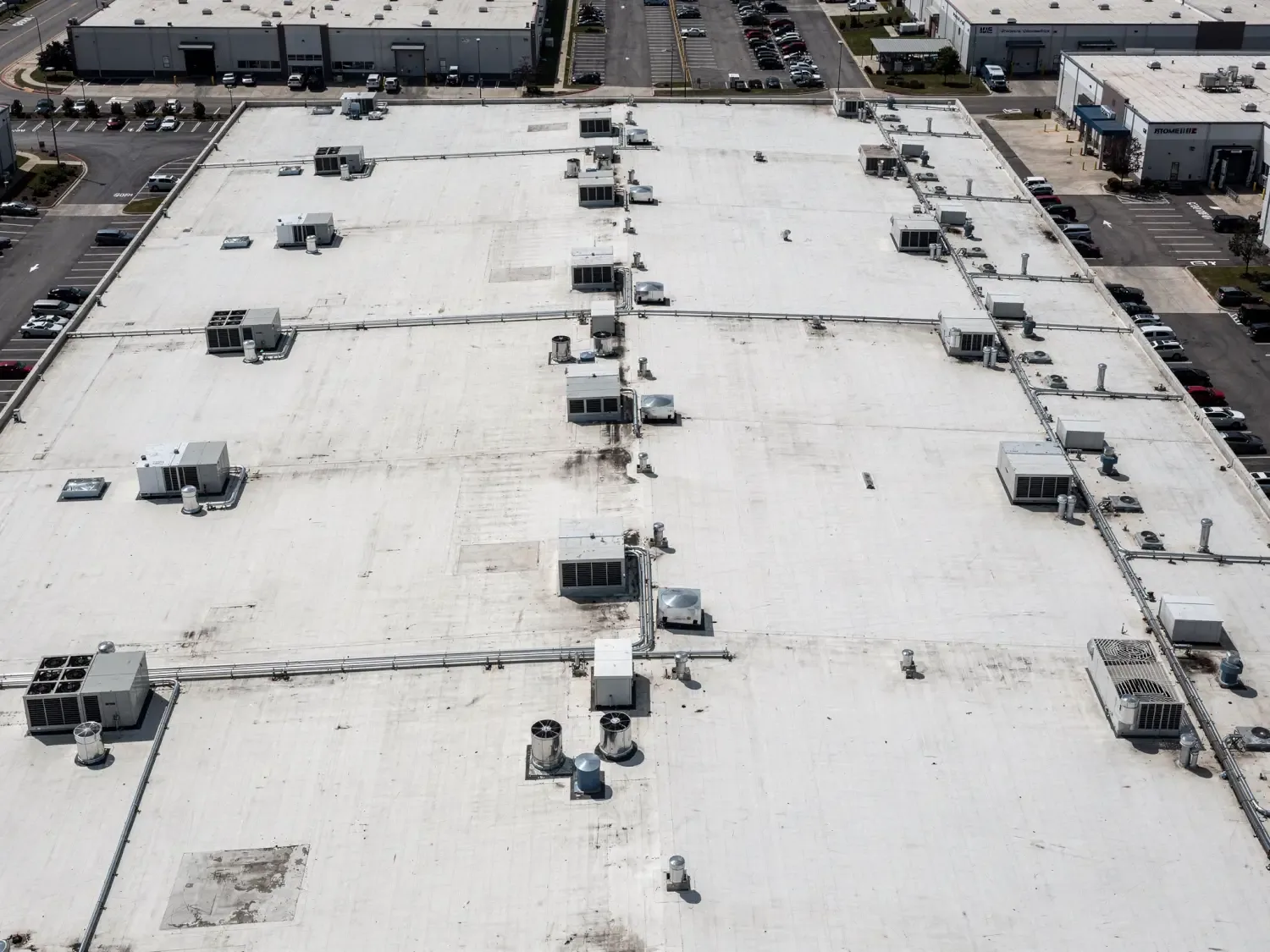
Berry Creek Business Park has multiple industrial buildings serving Georgetown near I-35 and SH 130. A broad roof area does not mean one uniform assembly. Drain slopes, equipment, patches, and surfacing can vary by section. We verify each roof zone and keep findings tied to the building inspected.
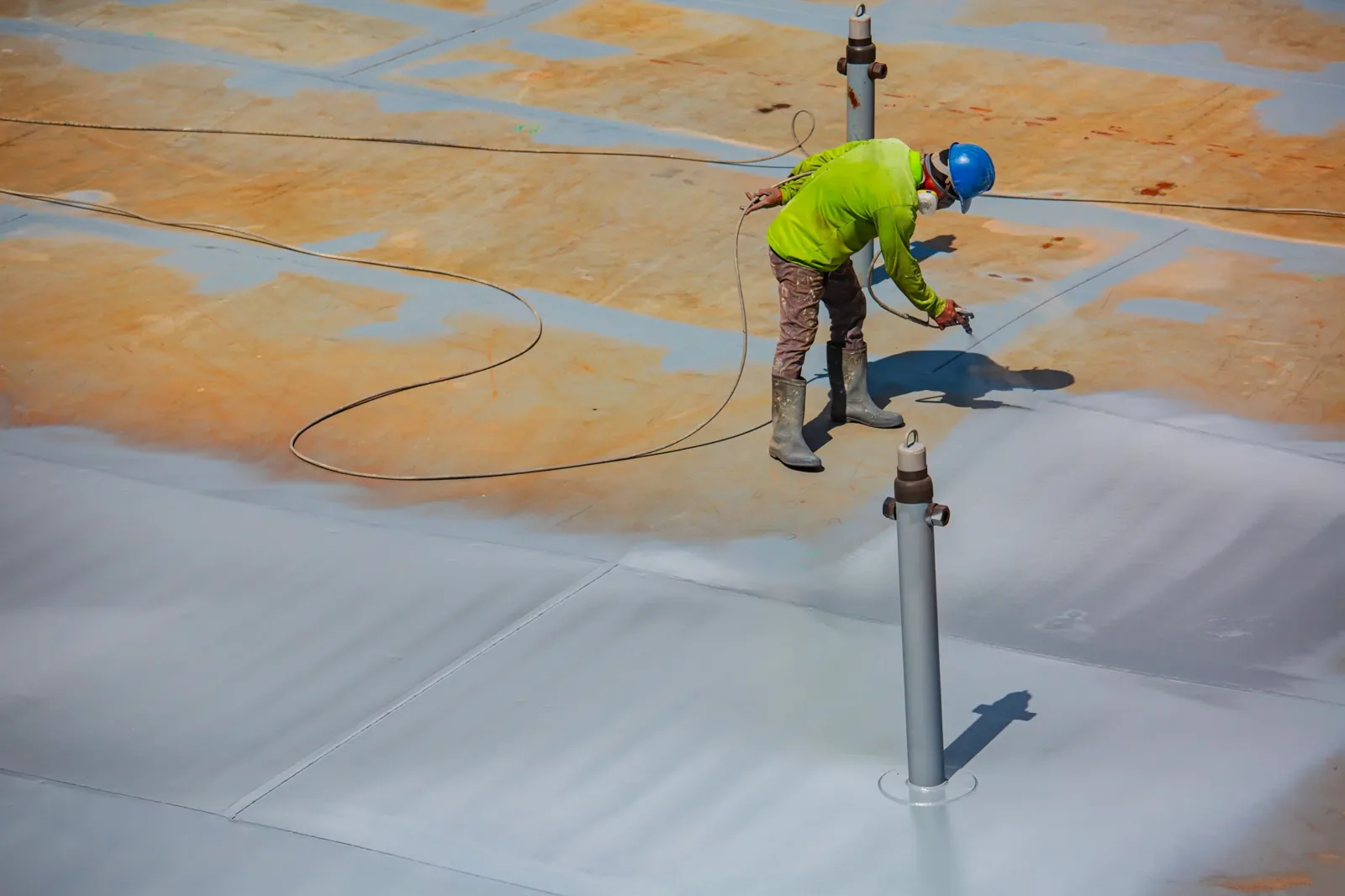
A localized blister or split may be repairable when the layers below remain dry and attached. We confirm the condition and prepare the repair area to receive compatible bitumen and reinforcement. The patch needs enough overlap to cover the defect and bond to sound material. A surface seal without a prepared edge can leave water moving below the top ply.
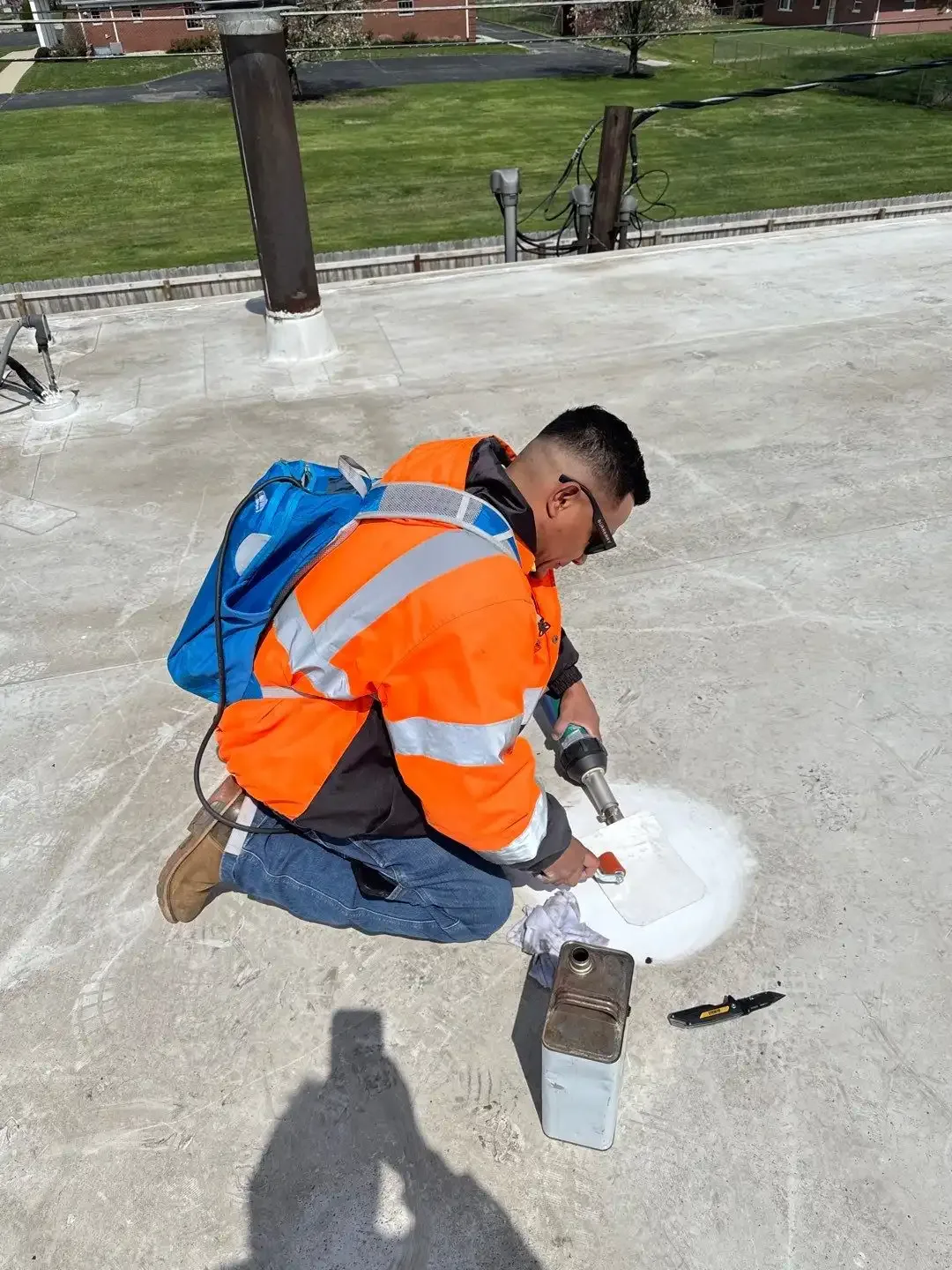
At a drain, curb, or parapet, the flashing must connect to the roof field and shed water. We inspect the corner, termination, and adjacent membrane. Heat application needs fire controls and a check for concealed combustible material. Cold-applied products have their own substrate and cure limits. The detail follows the existing assembly and approved material.
When repeated splits appear across several sections, we compare them with ponding, foot traffic, prior coating, and repair history. Targeted roof repair may address isolated defects. A broader pattern may require a replacement review or separate moisture investigation before a price is set.
Built-up layers can conceal moisture, so a dry-looking surface does not settle the assembly condition. We review interior reports, drainage, and areas with soft or blistered surfacing. If authorized, a test opening shows the actual layers at that location. We photograph each exposed ply and close the roof with an agreed dry-in detail.
Hail can mark surfacing and damage metal components. Wind can challenge perimeter details and edge flashing. The 1997 Jarrell F5 tornado and other touchdowns establish Williamson County tornado exposure; hail is also a regional hazard. After an event, we check edges, penetrations, drains, and visible impact areas. The report distinguishes storm observations from age-related wear and any condition hidden beneath aggregate.
Typical Georgetown summer highs run through the 90s, with recent temperatures above 100 degrees Fahrenheit. Heat affects safe access and the work limits for asphaltic products. We check surface and ambient conditions before opening a section. A hail assessment can record visible impact, while a moisture survey can identify areas that deserve closer inspection.
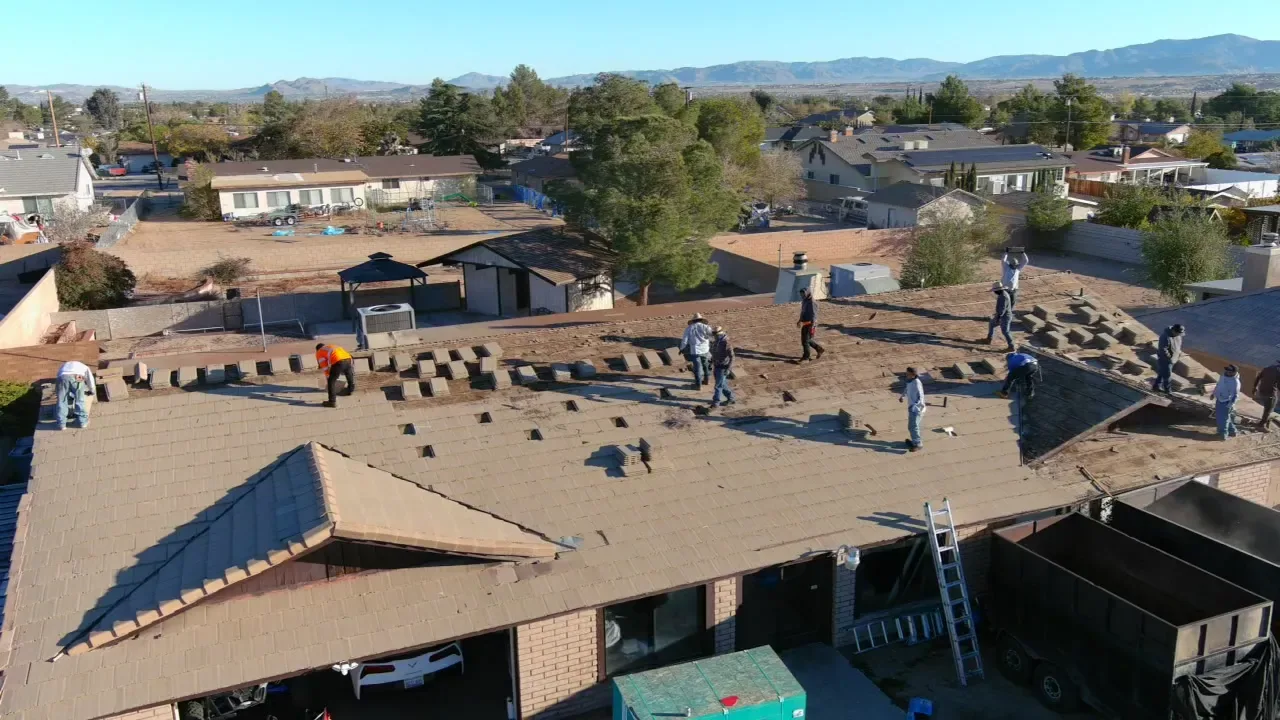
Recovery adds layers over the existing roof. It is only considered after checking attachment, moisture, deck condition, and added load. A wet or poorly bonded assembly can trap a problem below the new surface. If the deck or insulation needs broad correction, removal may be the more suitable route. We record the evidence behind that choice.
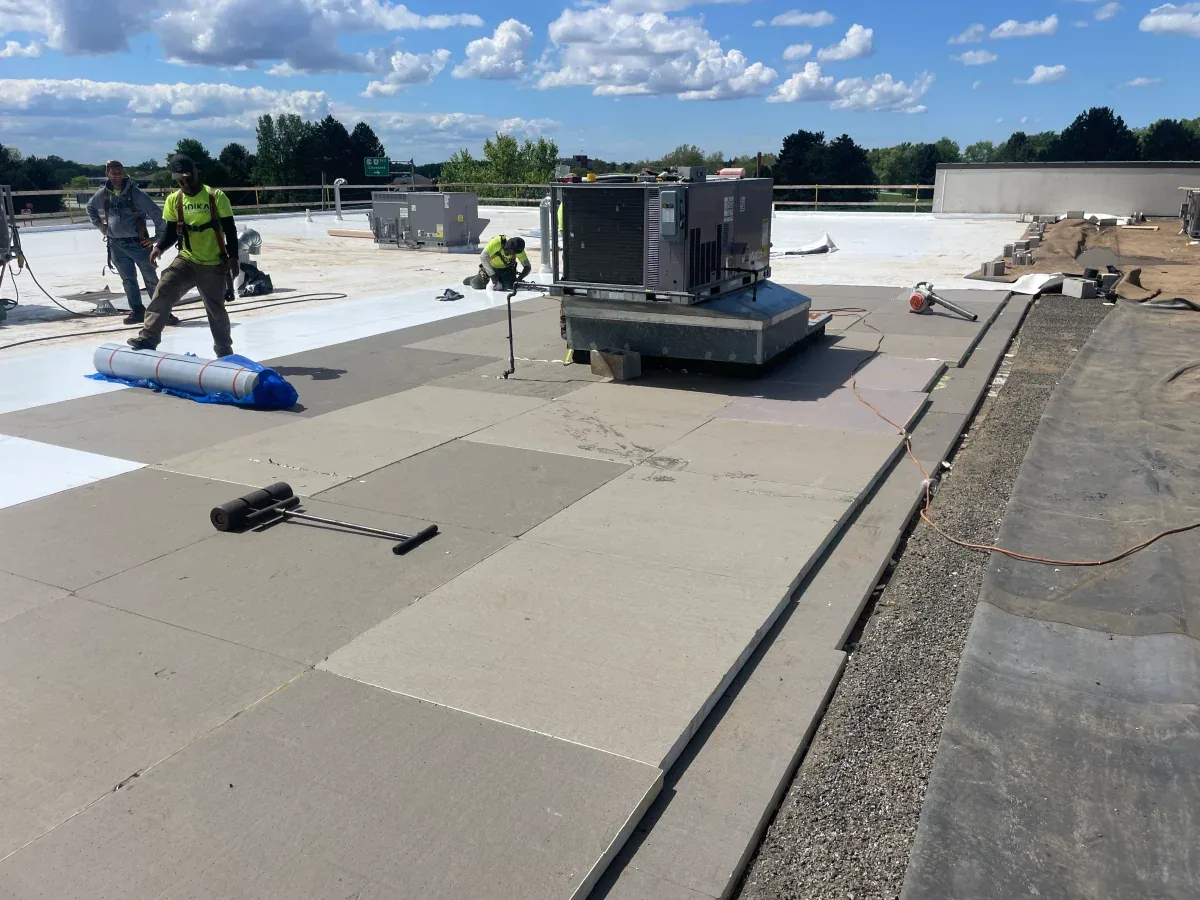
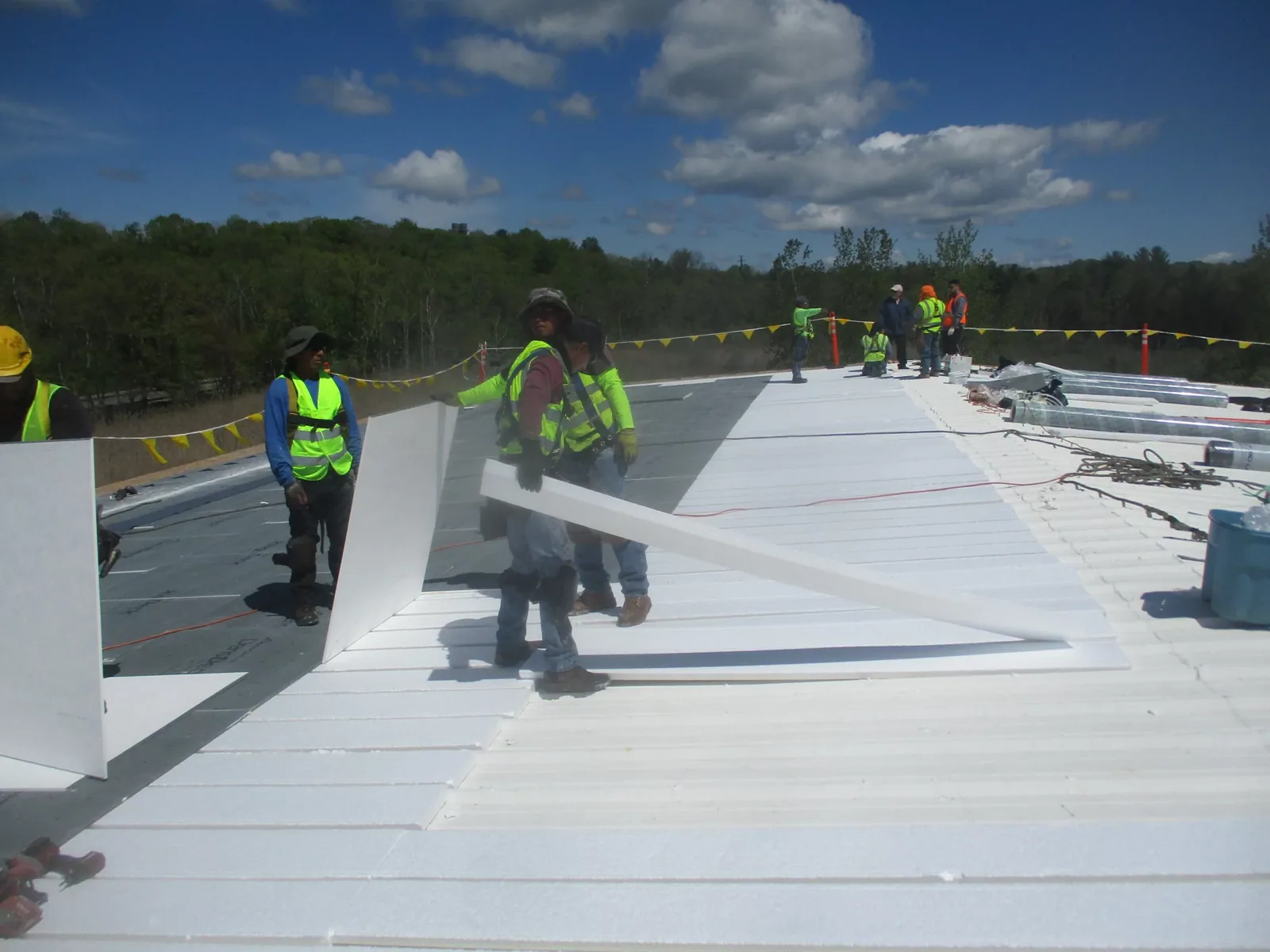
A recover evaluation starts with available roof records and field observations. An approved test area can confirm the layer build-up. If the project changes to replacement, the crew plans tear-off, substrate repair, material staging, and daily dry-in. Alternatives such as modified bitumen or TPO can be compared where they meet the project specification.
Cost and timing depend on disposal, access, weather, deck repairs, and the number of transitions. We separate known quantities from uncertain areas. The general contractor can then set a hold point for hidden conditions instead of carrying an unsupported assumption through installation. Each scope identifies what the roofer opens, what gets replaced, and what remains outside work.
We confirm the opening size, staging, fire controls, and protection plan before work begins. The crew removes only the approved section, checks the substrate, and rebuilds the assembly in sequence. Drains and temporary outlets remain clear. Before leaving, we inspect the tie-in and verify that water can shed from the completed area.
FM 971 joins Georgetown's I-35 and SH 130 routes. The corridor serves commercial development and connects housing, schools, and park activity. That context may help plan material delivery. The property contact still sets access, loading hours, and lift locations. We coordinate the route with the general contractor before the roofing material is staged.
At an occupied building, sections can be scheduled around loading, customer entry, and sensitive equipment. A phased work plan establishes daily boundaries and handoffs. If an opening is exposed after hours, emergency dry-in remains available, including holidays. Temporary protection is documented separately from permanent repairs.
The closeout shows which roof areas were repaired or replaced, which plies were opened, and where the work stopped. Photos record surfacing, laps, drains, and flashing. We identify a remaining soft area or excluded section rather than implying it was corrected. That record helps maintenance staff return to the right area after the next storm.
For work near NorthPark35, include building identifiers and access routes on each roof map. Georgetown's industrial growth area includes planned utility work to support additional business activity. The property-specific roof inspection, not a park listing, sets the repair limits.
Send the current plan, leak history, and access window. We can inspect the built-up surface, trace drainage, and mark any test area before writing a repair or replacement scope. Water entry can be reported at night, on weekends, and on holidays. The permanent correction follows the plies confirmed during the walk.
Yes, if the underlying plies are sound and dry. We inspect the crack and surrounding assembly, then use a compatible repair detail that bonds beyond the defect.
We compare roof observations with interior reports and may recommend a survey or approved test opening. Each method has limits, which we record with the findings.
Not automatically. We inspect surfacing, exposed bitumen, flashing, and drainage, then identify visible damage and any uncertainty below the surface.
Recovery depends on layer condition, attachment, moisture, deck, and added load. We review the assembly before recommending an additional layer.
Confirm roof access, fire controls, staging, occupied routes, and the daily dry-in limit. We mark hold points for concealed conditions before work starts.