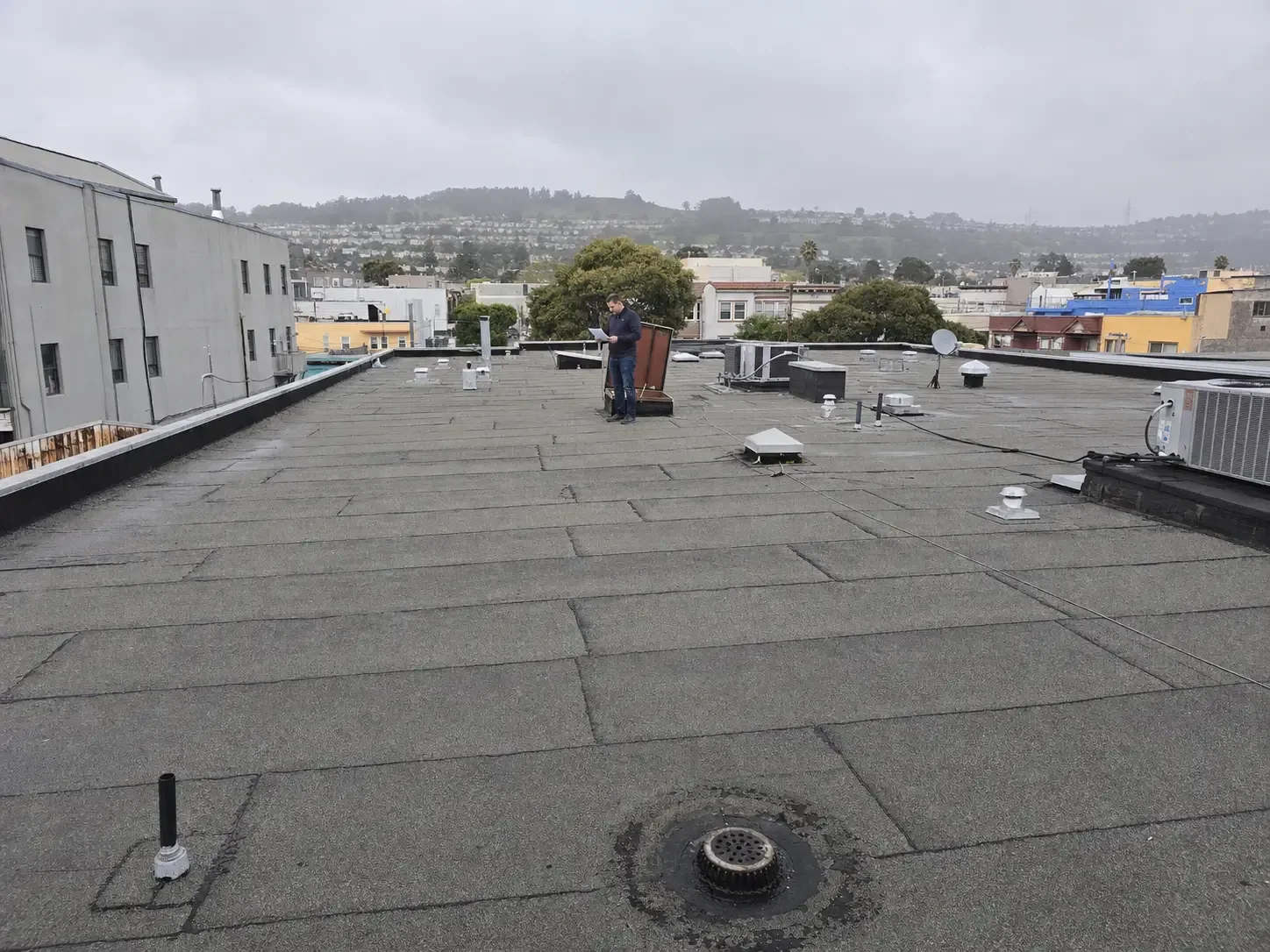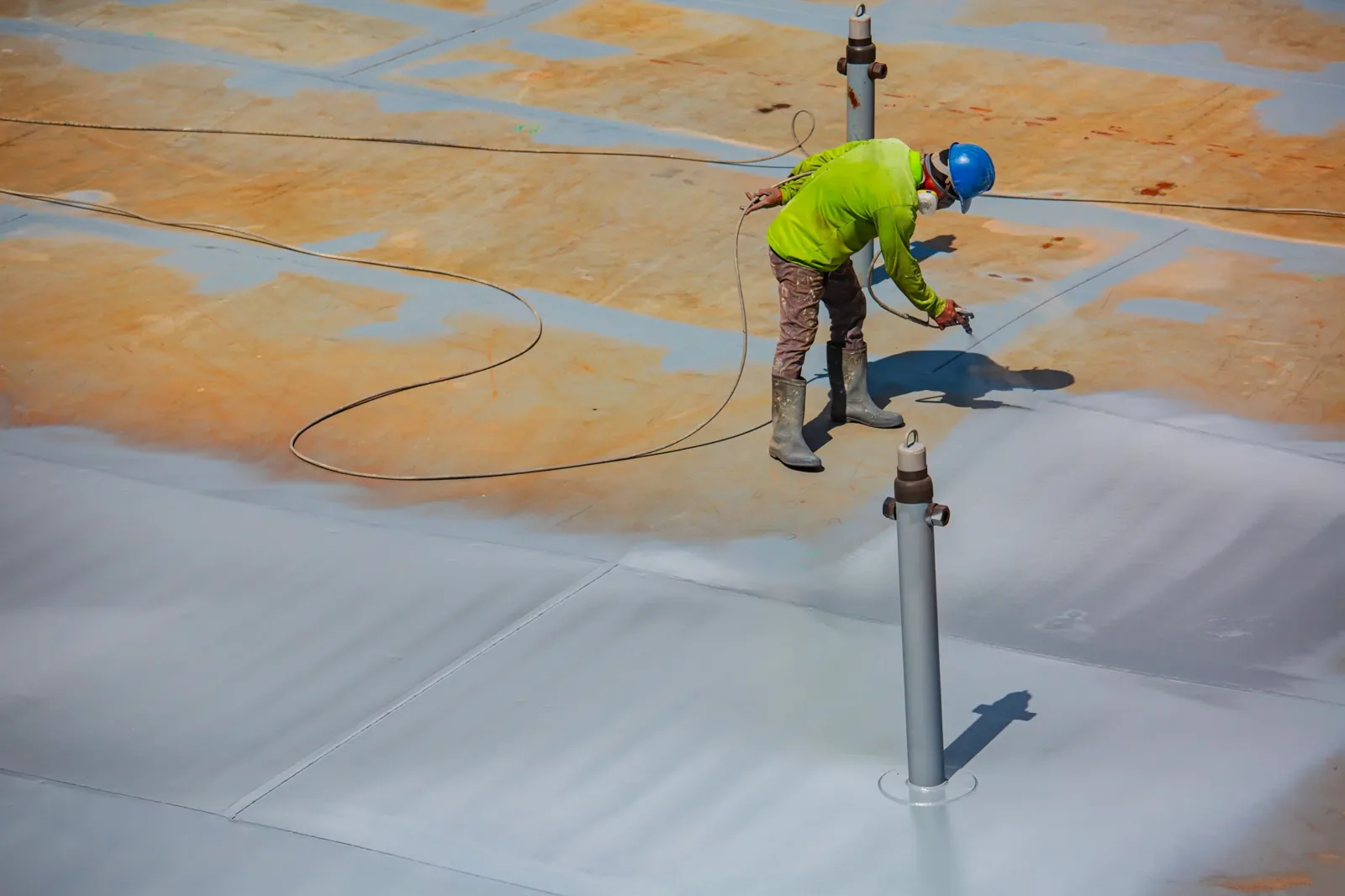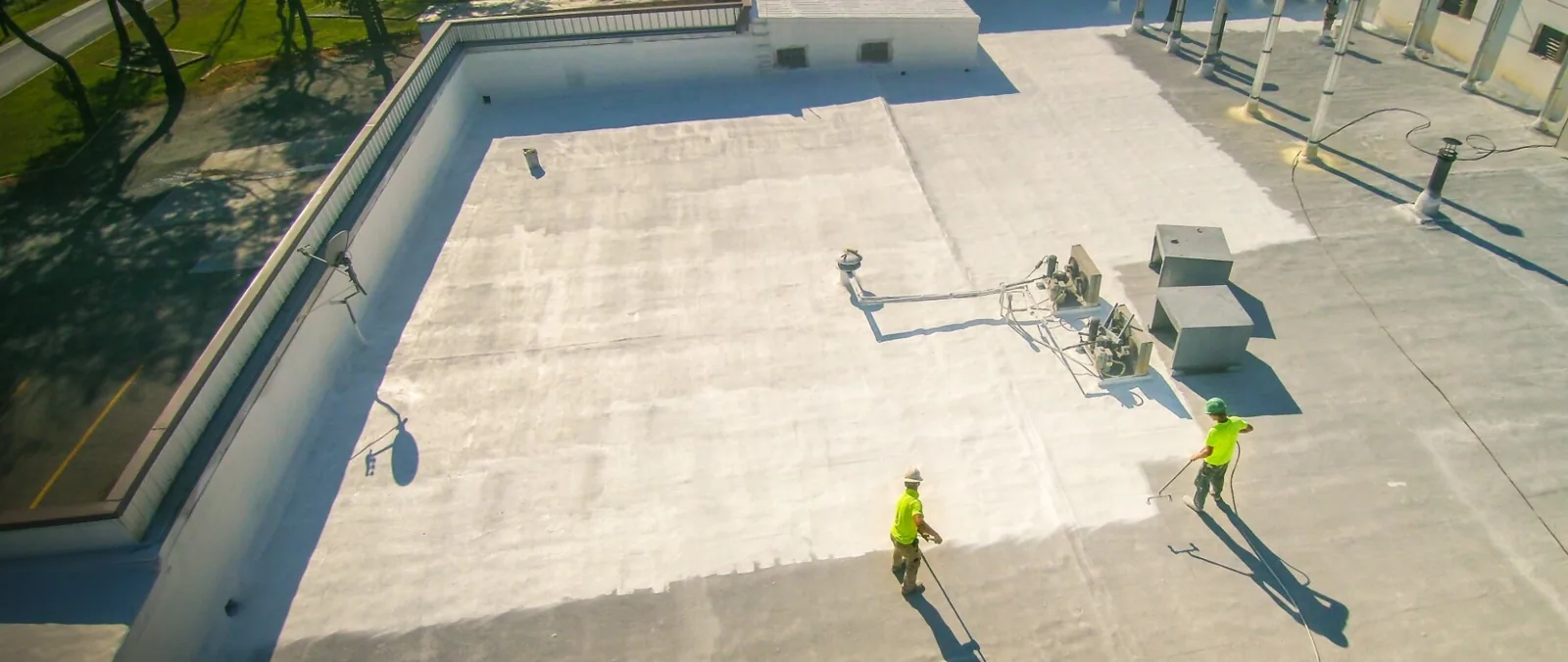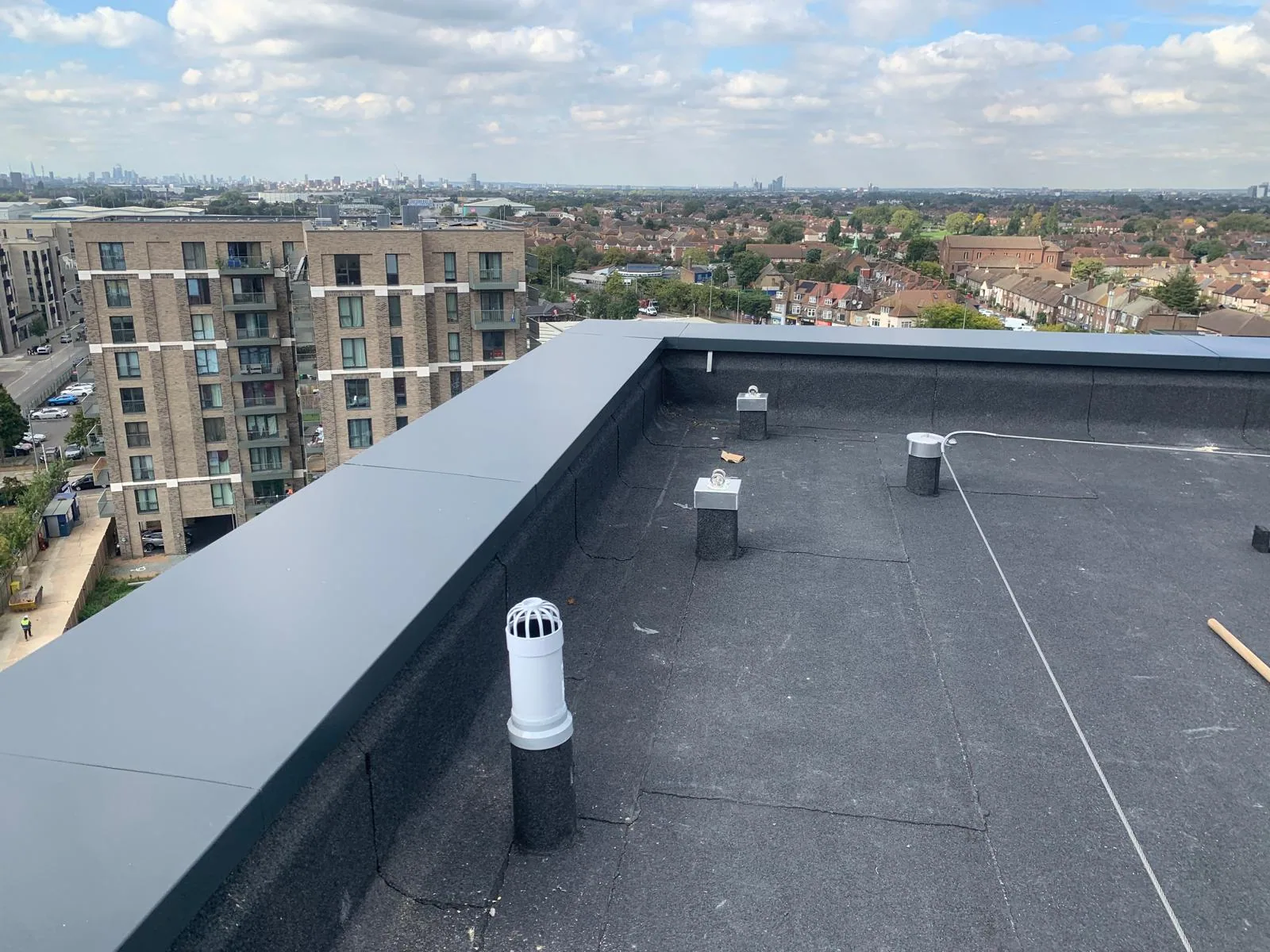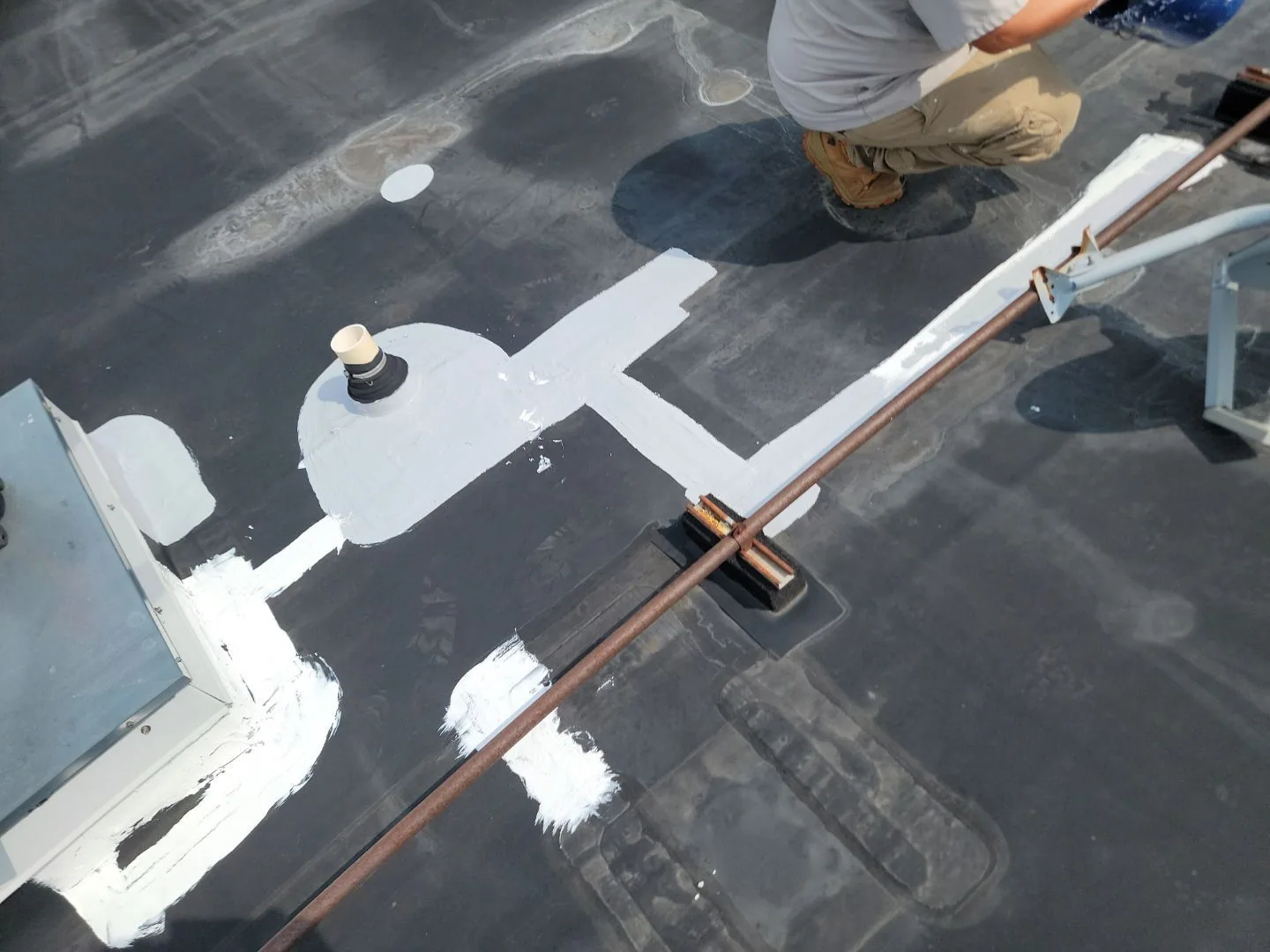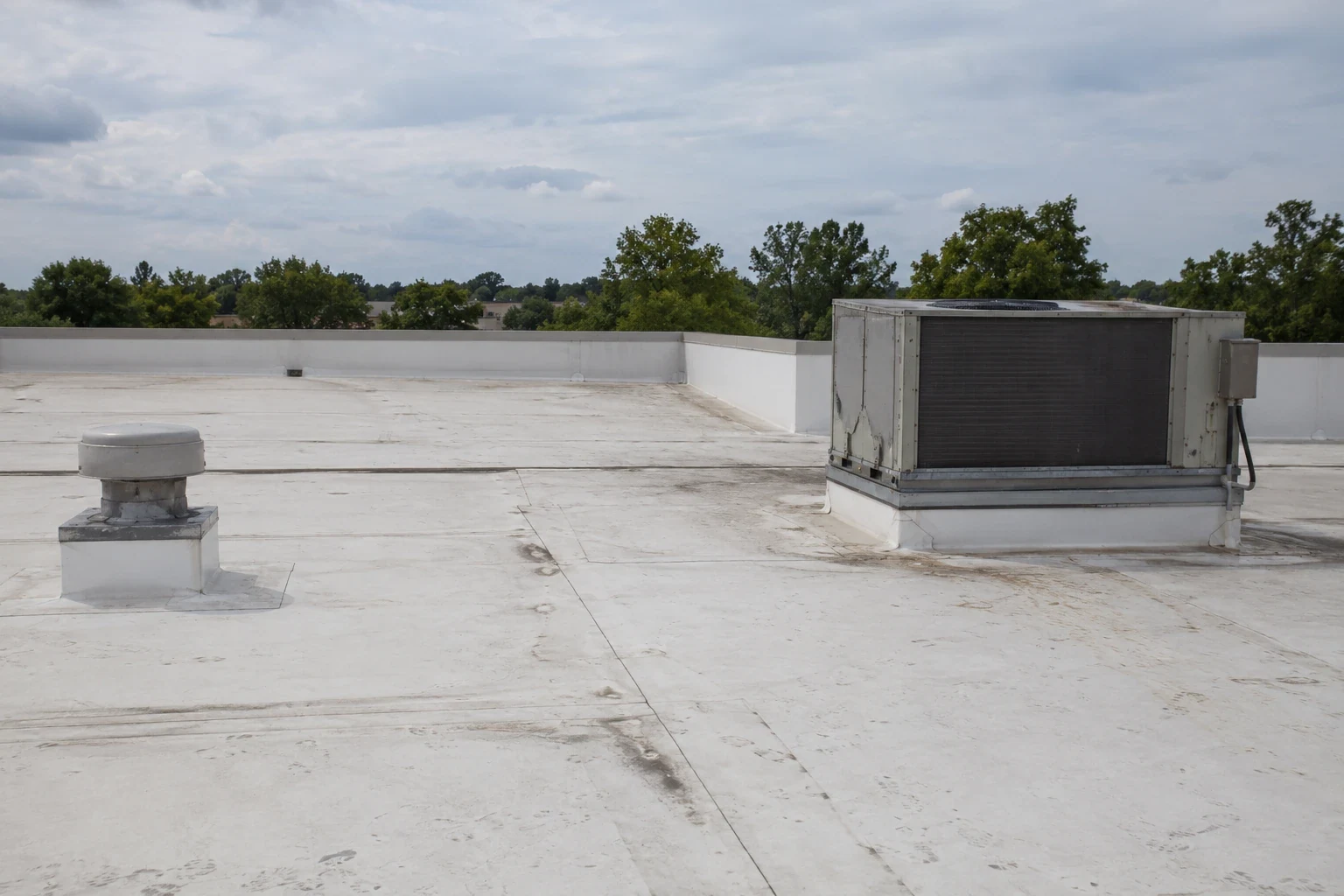
An EPDM lap can separate where a drain line meets a field sheet. We check the seam, adhesive edge, and nearby flashing before calling the leak local. The roof map records the direction of the lap and the route water could take. That keeps a repair tied to what the roof shows.
Georgetown's hot summers put repeated heat on exposed membranes and sealant details. Local weather station records include days above 100 degrees Fahrenheit. We inspect shrinkage, surface condition, and seam adhesion together. Heat is one condition in the review, alongside drainage, prior repairs, and hail exposure.
EPDM is a flexible rubber membrane used in low-slope roof assemblies. Sheets are commonly joined with seam tape or adhesive, and transitions use compatible primers and flashing products. We look for an open edge, fishmouth, wrinkle, or contamination that interrupts the bond. The detail must be dry and prepared before a repair can hold.
A seam that appears closed may still have a weak or contaminated edge. We probe carefully and inspect for movement under foot traffic or at a change in plane. At curbs and pipes, flashing height and termination matter as much as the field sheet. A perimeter detail review can help when movement begins near a roof edge.
We record whether the EPDM is fully adhered, mechanically attached, or ballasted when the assembly can be confirmed. That attachment affects how a repair transitions into the existing roof. If a patch is added without identifying the system, the edge may lift or transfer stress into adjacent material. Photos and the roof plan make those limits visible to the next crew.
Small punctures can accept a compatible EPDM patch after the surface is cleaned and primed. The patch must extend beyond the damaged area and use rounded corners. We press the bond with the required roller and check every edge. A patch placed over a loose seam or wet substrate only covers the symptom.
Where a membrane has pulled back, we look at the cause before resetting the edge. Shrinkage, attachment, substrate movement, and an undersized flashing can each change the correction. If the repair requires a test opening, we identify its location and close it before leaving the roof. Wet insulation or deck damage becomes a documented hold point.
Georgetown's industrial growth includes NorthPark35 and Georgetown Logistics Park, where planned utility work is intended to serve future industrial buildings. Each roof still requires its own condition record. When several EPDM laps fail across the same section, the repair plan must account for that pattern. Localized service may address a limited defect. Broader failure may justify a replacement comparison.
High temperatures can accelerate aging at exposed surfaces and affect adhesive work windows. We follow product instructions and verify conditions before priming or bonding a patch. Georgetown station records help identify local heat exposure, but they do not measure a roof's remaining life. We base the inspection on seam condition, membrane flexibility, attachment, and the assembly beneath it.
Hail reports are tracked across the Austin forecast area, while National Weather Service records document tornado activity in Williamson County. Hail can puncture a membrane or damage metal edge components. Wind can stress perimeter attachment and expose an open lap. We photograph visible findings by roof zone and avoid treating every scuff as storm damage.
After a severe weather report, begin with vulnerable edges, penetrations, and drains. Check inside for water entry, then trace the likely path from the roof detail. If water is active, leak tracing should precede broad patching so the repair follows the opening.
EPDM may cover insulation, cover board, and several earlier roof layers. We review available records and inspect accessible edges before proposing a recover. A moisture survey can identify areas for closer inspection, but it does not replace a test opening where layers remain uncertain. The owner and general contractor approve any opening and agree on how it will be closed.
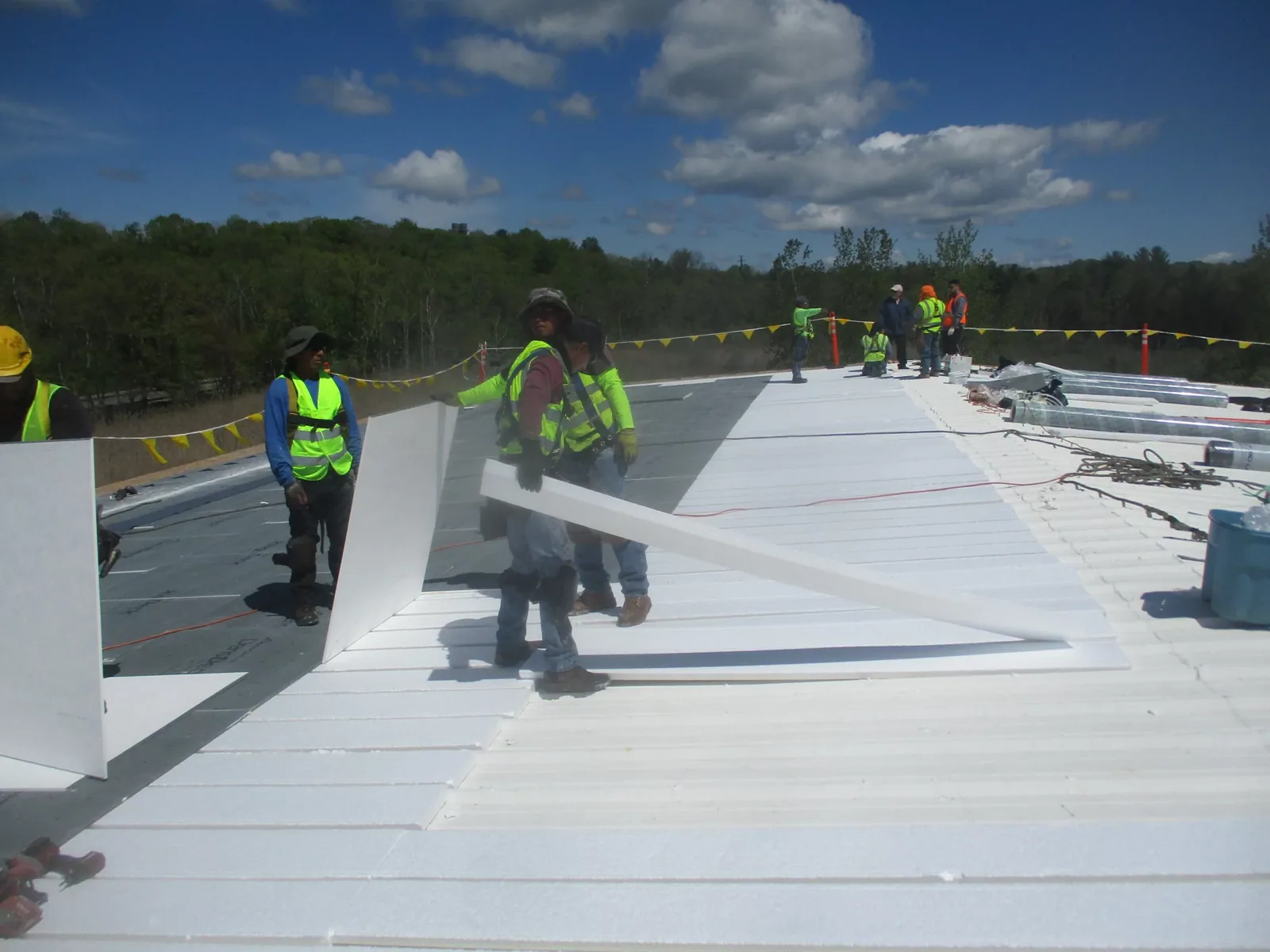
Recovery can leave trapped moisture beneath a new layer. Replacement can expose deck repairs and insulation changes, which affects staging and disposal. We compare those options against the scope, access, and observed conditions. A recover assessment checks layer count, attachment, and load questions. Where the roof needs a different membrane, TPO or PVC may be reviewed against the building use and project specification.
Drains and overflow routes need to function through each stage. We check whether insulation creates a low point or whether debris blocks the outlet. Each decision should be tied to the roof zone and the field evidence that supports it.
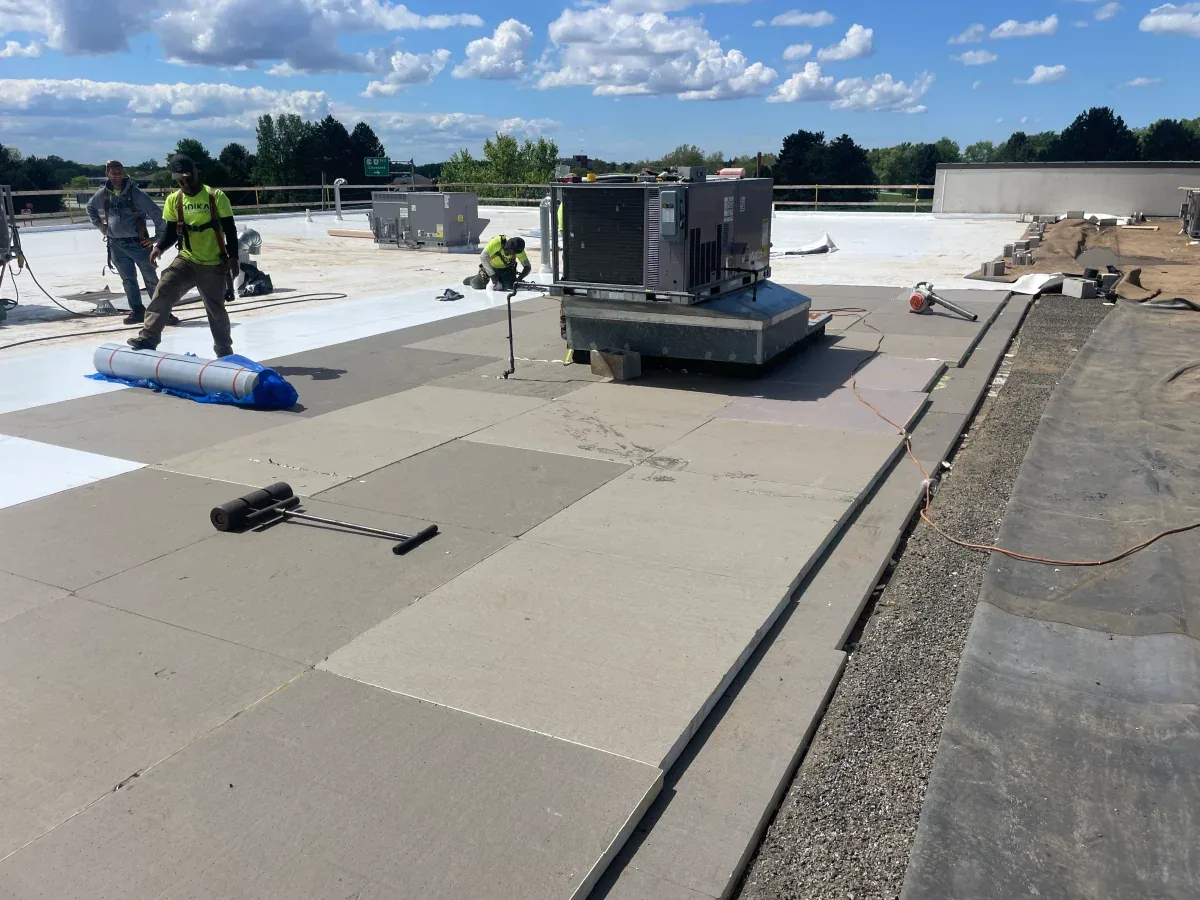
Replacement starts with a protected work area and a defined daily limit. We remove the approved section, inspect the substrate, and correct conditions included in the scope. The EPDM is positioned and bonded or attached to the specified assembly. Seams, corners, and penetrations receive a separate check before the crew advances.
FM 971 ties the I-35 and SH 130 sides of Georgetown together and serves a mix of commercial development, schools, housing, and park activity. Delivery timing uses the corridor context, but access rules belong to the property. We confirm the loading point, route, lift plan, and delivery hours with the general contractor before materials arrive.
On an occupied site, the crew protects equipment, maintains access, and checks temporary tie-ins at the end of each shift. The sequence changes if rain threatens or an open area cannot be closed safely. A phased work plan can set those transitions before mobilization. The roof map then shows where work is complete and where the next trade can enter.
Closeout lists the membrane areas repaired or replaced, seam and flashing details completed, and exclusions. Photographs show the edge of each work zone and any condition held for later review. We identify the attachment or assembly details confirmed during the work. A clear handoff reduces the chance that future maintenance treats an old defect as new.
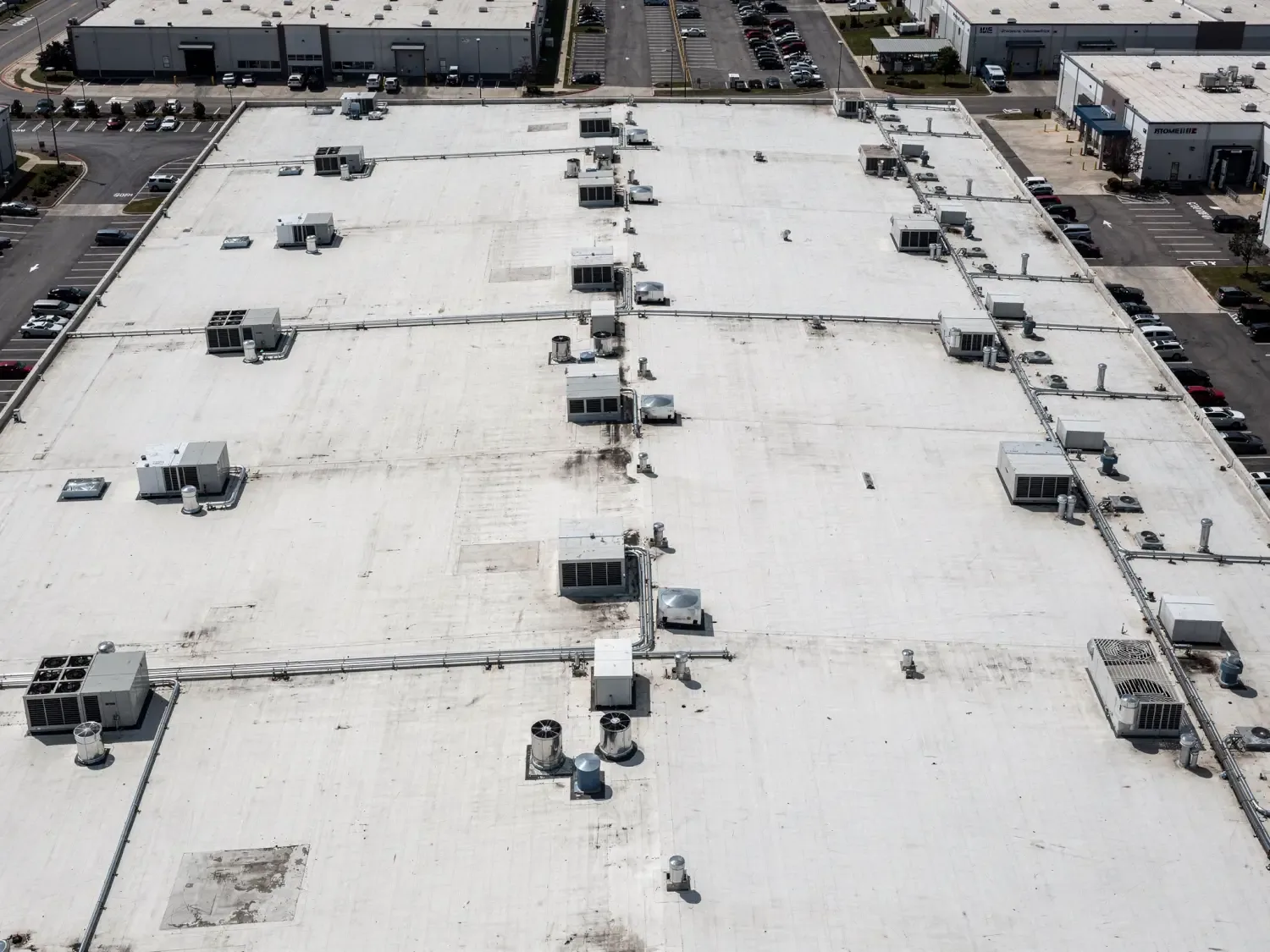
For a multi-building project in Berry Creek Business Park, label each roof separately. The industrial park's buildings sit near I-35 and SH 130, but each one has its own equipment, access route, and repair history. The record should identify which roof received the inspection and where its boundaries stopped.
Provide the existing roof plan, leak locations, and access window. We can inspect EPDM seams, drains, and flashing, then mark a repair or replacement boundary. Emergency response remains available at night, on weekends, and during holidays for active water entry. Permanent work follows the condition confirmed during the site walk.
The bond area must be dry and prepared for the selected repair materials. We protect an active opening first, then schedule the permanent patch when conditions allow a sound bond.
We inspect seams, penetrations, edges, and drainage, then compare roof findings with interior water marks. The visible ceiling stain may sit away from the roof opening.
Surface heat alone does not set replacement. We check flexibility, seams, flashing, attachment, insulation, and repair history before comparing options.
Preparation, contamination, aging adhesive, movement, or stress at a transition can affect a lap. We inspect the edge and surrounding assembly before selecting a repair.
Map the location, patch limits, nearby details, and any excluded condition. Photos of the finished edge help the next inspection compare changes in the same roof zone.