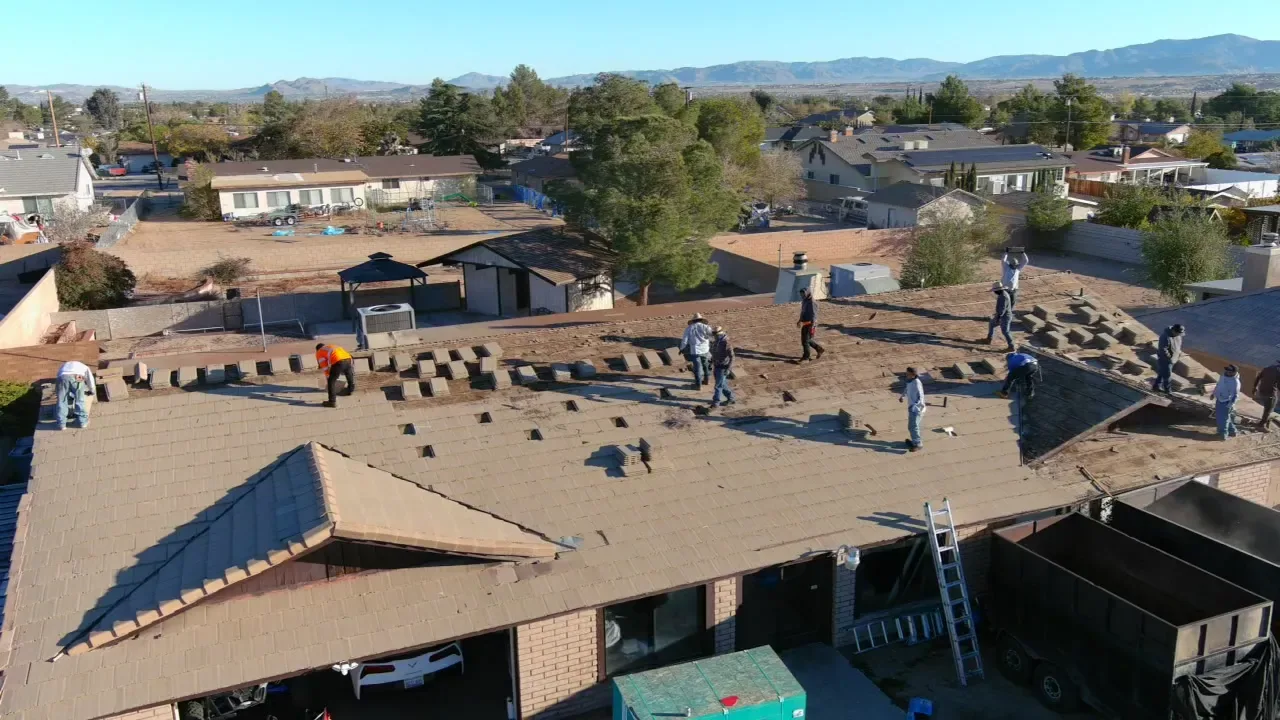
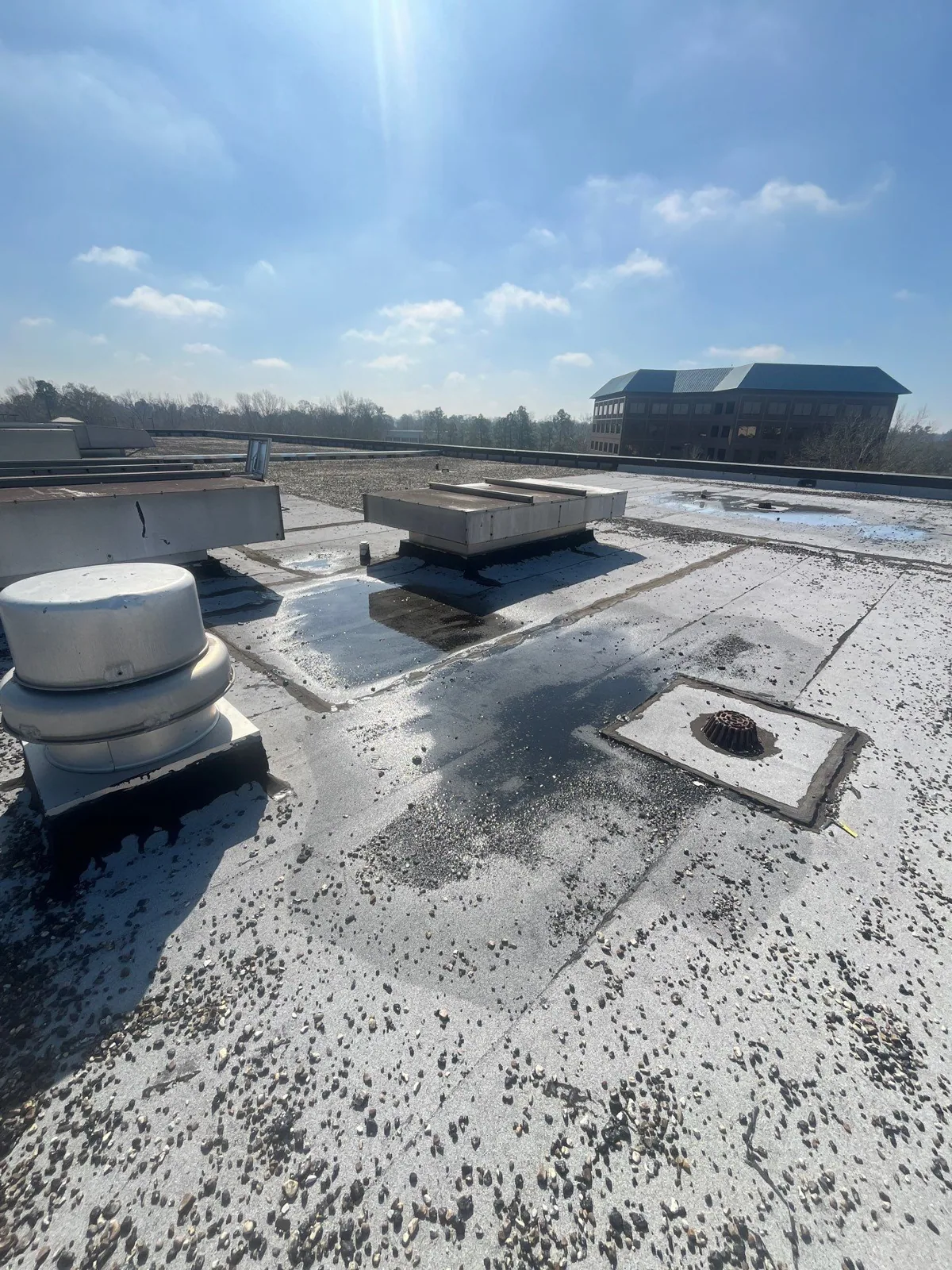
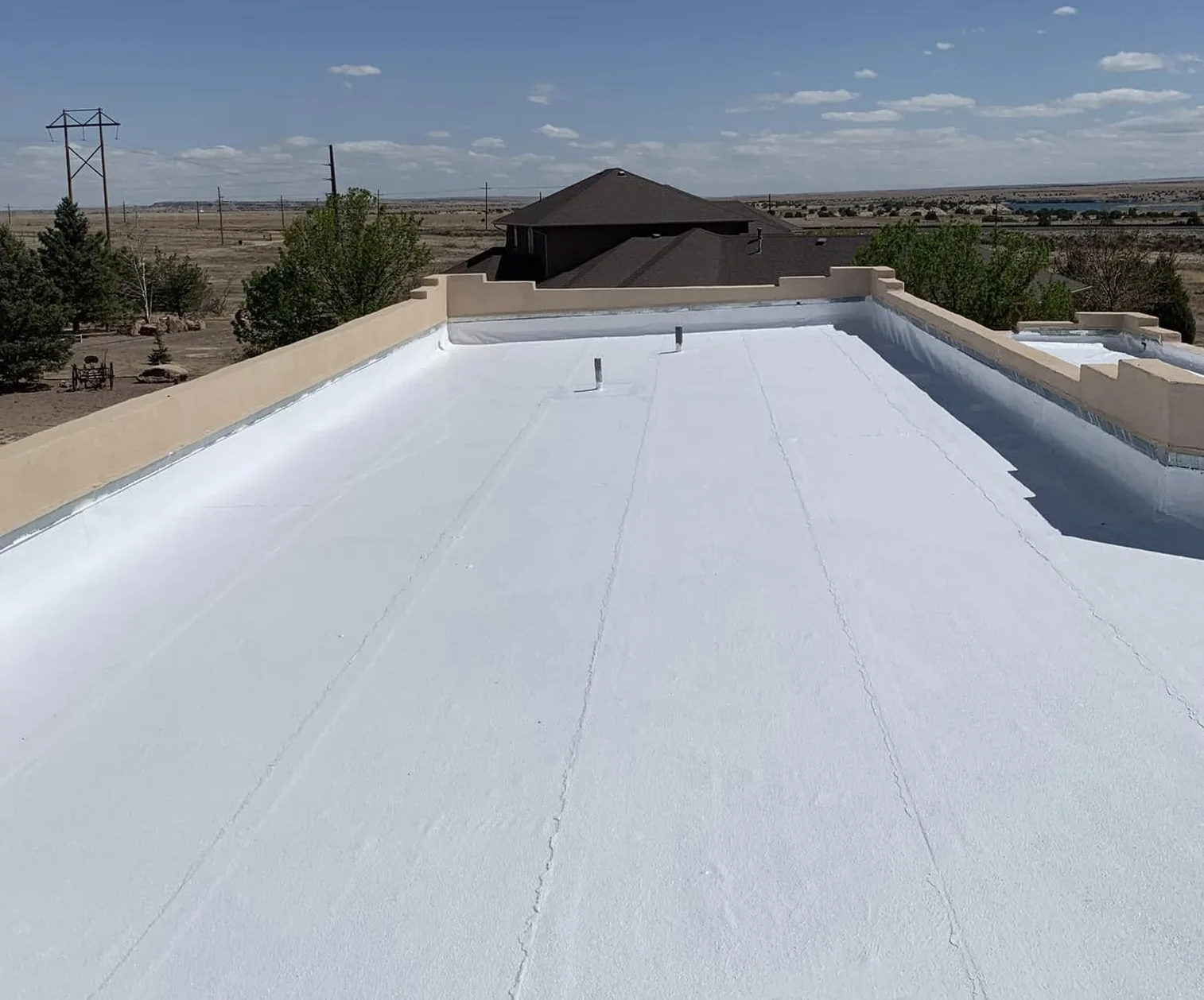
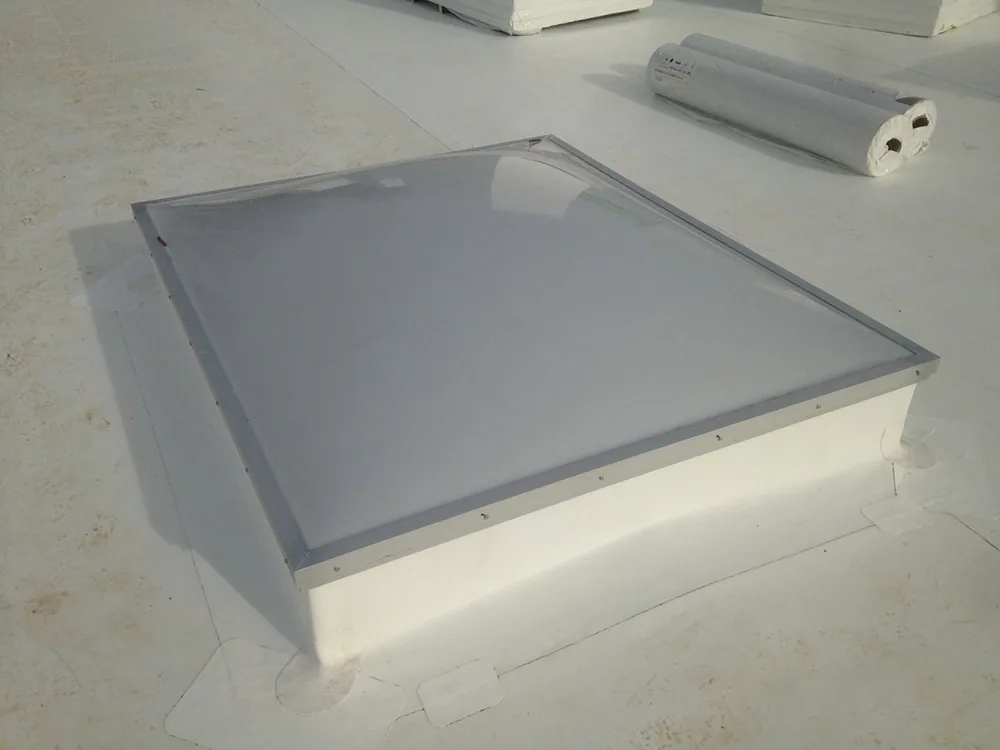
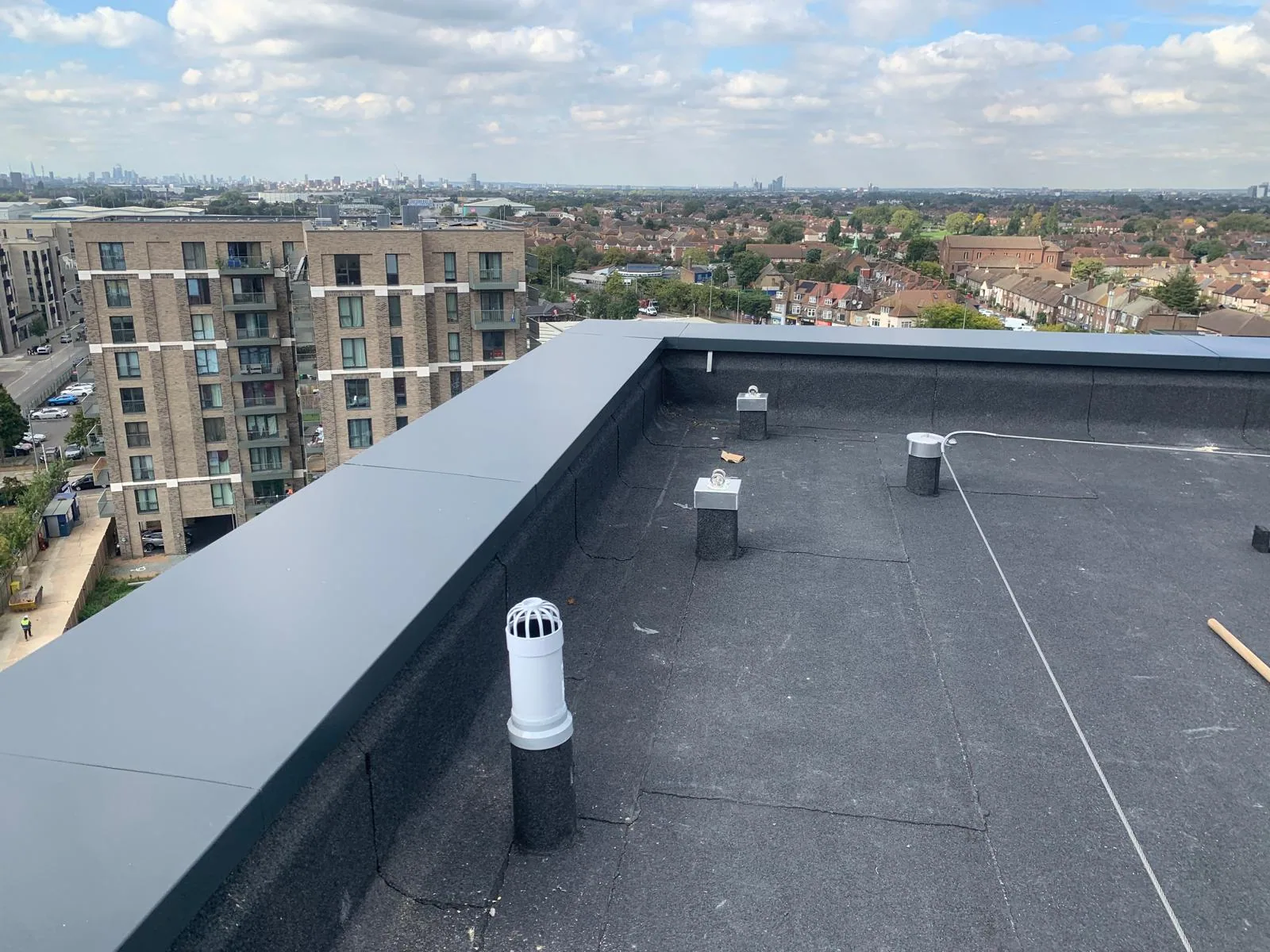
A split corner at a rooftop curb gives the first inspection point. We check the membrane-to-metal transition, fasteners, and nearby seam before removing material. Flashing failure can start at a curb, wall, drain, scupper, skylight, or edge. The water may appear indoors somewhere else. We mark the detail and trace the path before setting the repair limit.
Georgetown's Williams Drive corridor is planned for commercial, office, civic, and mixed-use development; FM 971 connects I-35 and SH 130 through commercial areas, housing, schools, and a regional park. Those settings can shape access and staging. The specific roof assembly and failed transition determine the work.
We inspect the flashing surface, termination, corners, sealant, counterflashing, and membrane immediately around the defect. At a curb, we look for loose metal, open seams, unsupported corners, and signs of movement from equipment. At a wall, we check whether the membrane turns up correctly and whether the top edge remains secured. At a drain or scupper, we examine the connection and water path.
Each material transition has a specific repair requirement. A membrane patch should not bridge a moving joint or trap water behind an edge. Metal may need a formed replacement section, compatible sealant, or renewed attachment. We identify the system and substrate before choosing a product. A penetration and skylight flashing repair addresses a curb or opening; a coping and edge-metal scope addresses perimeter termination.
Older patches can hide the original failure or create a new lap edge. We document layers and material condition before cutting them back. If the defect disappears under a prior repair, we mark the area for a controlled opening and explain what that opening should reveal. We do not widen removal simply because the first patch is irregular.
At an expansion joint, the roof has to accommodate movement without losing its weather seal. We inspect the joint cover and adjoining membrane for distortion, pinching, or a split that follows the movement line. A rigid patch can fail if it restrains a detail designed to move. We identify the joint type and route the proposed repair for design review where needed.
Interior staining is a starting point, not a roof diagnosis. Water may travel along a deck, insulation joint, beam, or wall before it drops into a room. We compare the report with connected curbs, parapets, drains, and roof-height changes. The roof map labels the suspected route and the confirmed opening separately. A test may be needed before the owner authorizes a larger repair.
The historic Georgetown downtown district mixes civic, county, commercial, and residential uses around the courthouse square. A roof walk above occupied public or retail areas may need a controlled interior route. The site contact identifies access limits and the room below the work. For facilities farther along FM 971, freight and lift logistics may differ; neither circumstance changes how we verify the flashing.
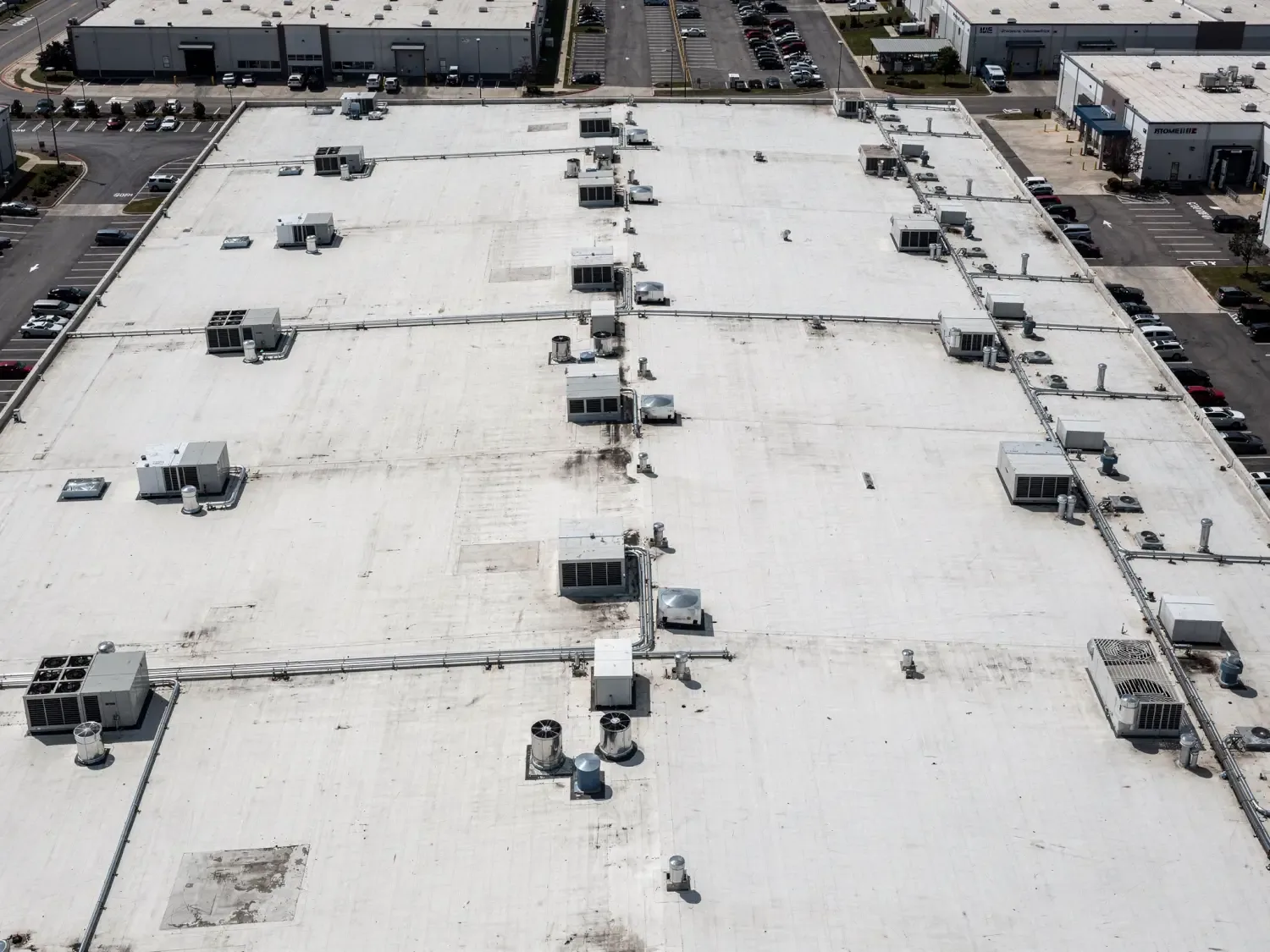
Moisture below the surface can extend beyond the visible defect. We note soft substrate, delamination, staining, and prior repairs. A thermal scan can highlight candidate zones, but temperature contrast alone does not prove wet insulation. A targeted moisture survey can guide a test opening. The report states the test location and the layer or attachment question it will answer.
High summer temperatures in Georgetown commonly reach the 90s, with recent days topping 100 degrees Fahrenheit. Heat can age sealants and make some materials less forgiving during repair. We inspect the condition of the flashing itself and follow product requirements for surface preparation and application. Temperature and substrate condition set the workable window.
A severe storm can lift metal, drive rain beneath an open counterflashing, or move rooftop equipment. The 2022 tornado path crossed Williamson County after beginning near Round Rock; it does not identify damage at a particular property. We record current fastener movement, gaps, impact, and water entry. A wind-damage inspection can document broader edge movement when the event affects more than one detail.
Ordinary wear and new damage can coexist. We distinguish a brittle sealant bead from a bent counterflashing, a maintenance gap from a torn membrane, and an old patch from a fresh opening. Photos carry a roof-zone and date. If the cause remains uncertain, we state the limit instead of assigning a storm or installation cause without evidence.
A sound surrounding surface may support removal and replacement of the failed flashing alone. We prepare the substrate, install compatible material, secure the termination, and protect the tie-in while it cures or cools as required. If the backing, insulation, or deck is wet or unstable, the repair may need to extend to sound material. The proposal describes the boundary and lists what remains concealed.
Repeated failures at the same design detail can signal movement, drainage, or attachment problems. We review the connection and nearby roof sections before recommending a system-level change. Recover is considered only after evaluating layers, moisture, edge height, drainage, and attachment. A seam repair may be separate when an open lap extends beyond the flashing. A replacement evaluation compares a broader correction when multiple details fail.
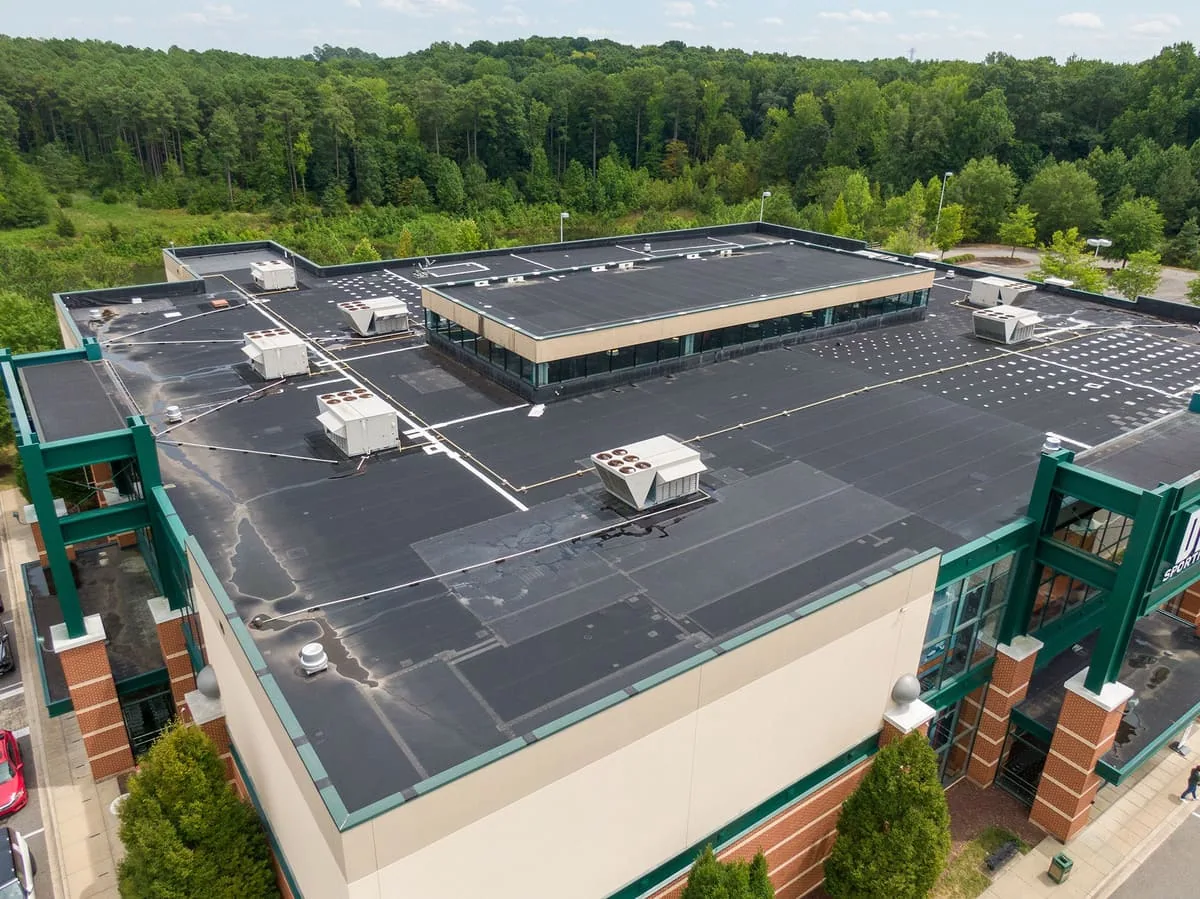
Price and timing depend on height, access, metal fabrication, substrate repair, equipment coordination, and whether the building can keep the area below open. A curb tied to active mechanical equipment may require another trade. We set a hold point before moving or disconnecting equipment. If removal exposes deterioration beyond the estimate, the site contact reviews photos and added quantity before work proceeds.
We photograph the repaired flashing from a useful distance and close range. The record identifies the roof zone, materials, termination, and any nearby condition left untouched. At the end of the shift, the tie-in is protected, loose debris is removed, and the access route is returned to the site contact. If a follow-up observation is needed after rain, the report says what to check.
Properties near Williams Drive and the FM 971 corridor may require different arrival windows. The owner supplies the roof plan, known leak locations, equipment contact, and staging rules. We establish the inspection route and report any inaccessible transition before quoting work.
A ponding-water assessment can be useful when the flashing detail sits at a low area or outlet. A later roof inspection can then verify the repaired transition and update the condition record.
Flashing manages transitions at curbs, walls, drains, scuppers, skylights, penetrations, and edges. We identify the installed assembly and inspect how each material is terminated and tied into the field.
Yes, when the surrounding membrane, backing, and substrate are sound. We verify those conditions first and stop at a hold point if removal exposes a larger defect.
Water can move along deck, insulation, or framing before it appears indoors. We trace nearby transitions and label the confirmed opening separately from the suspected route.
No. We inspect the current detail for movement, openings, impact, and wear. Regional event information does not set the quantity at an individual property.
Access height, metal fabrication, material compatibility, wet substrate, equipment coordination, and the extent of removal all affect the scope. We list assumptions and obtain approval before extending the boundary.