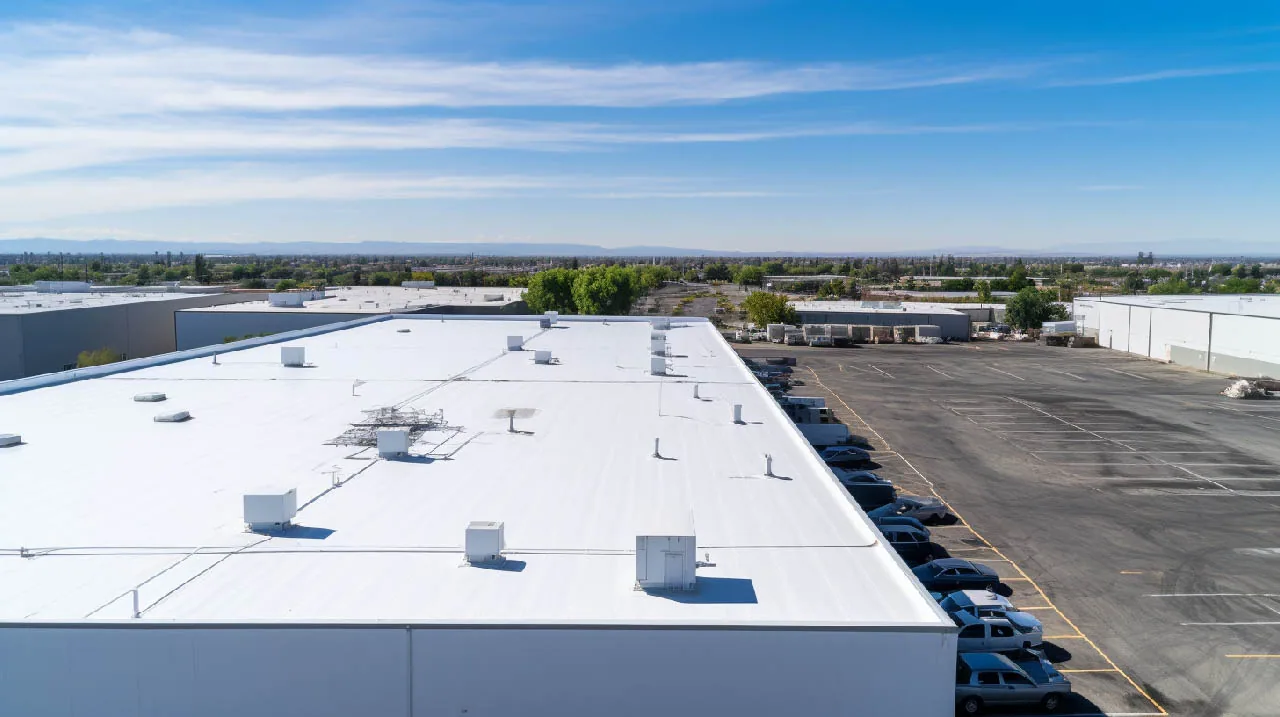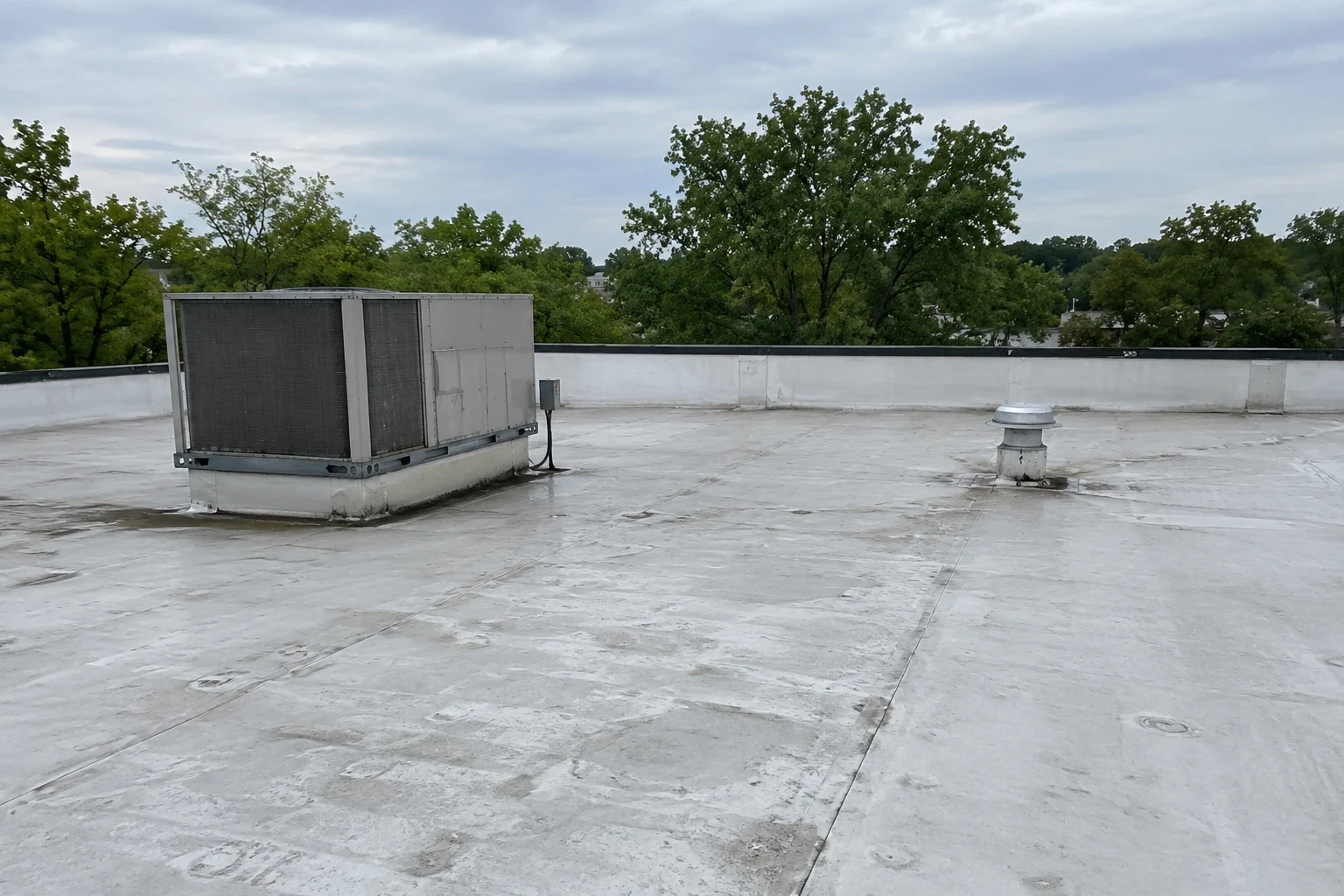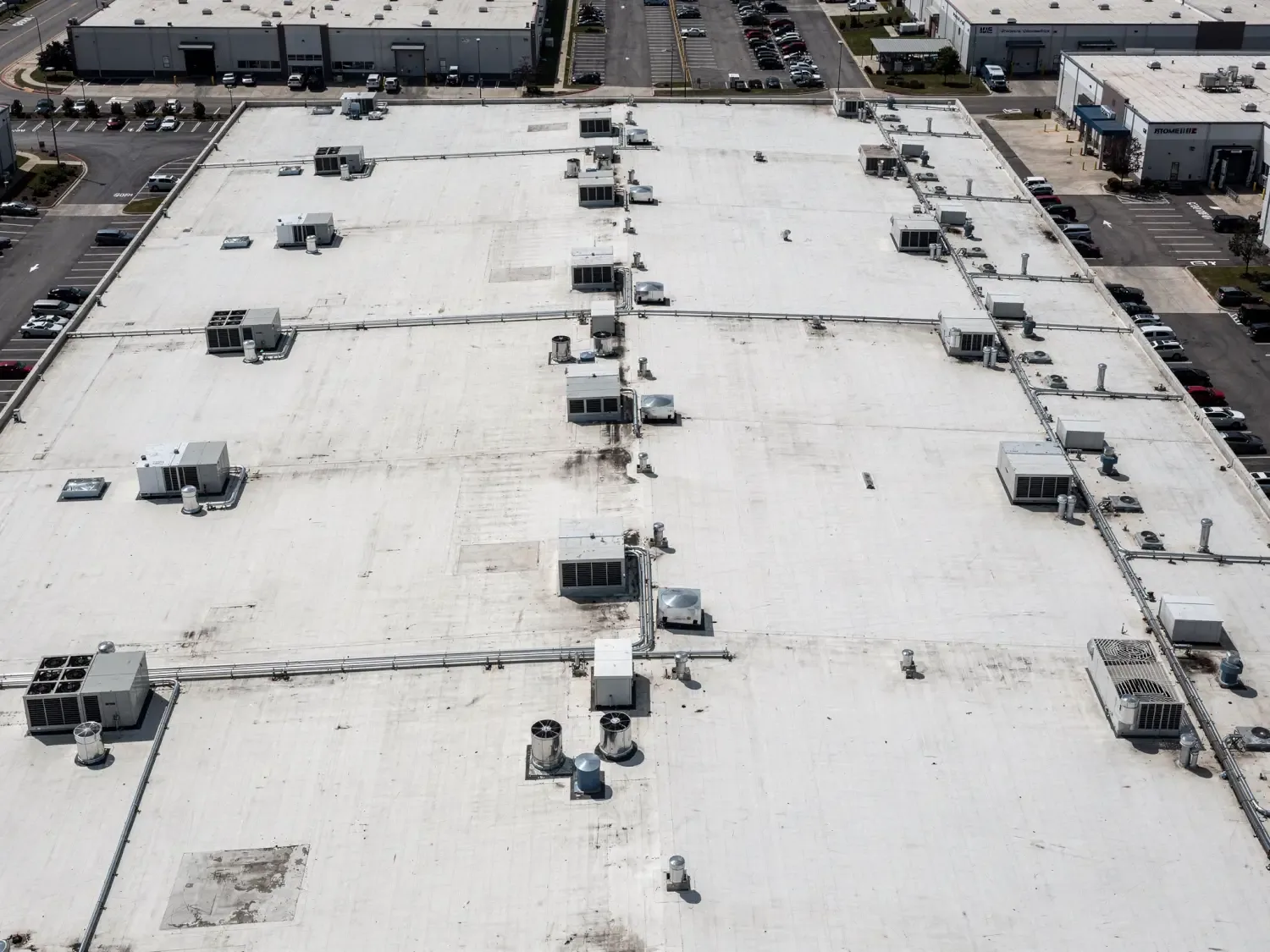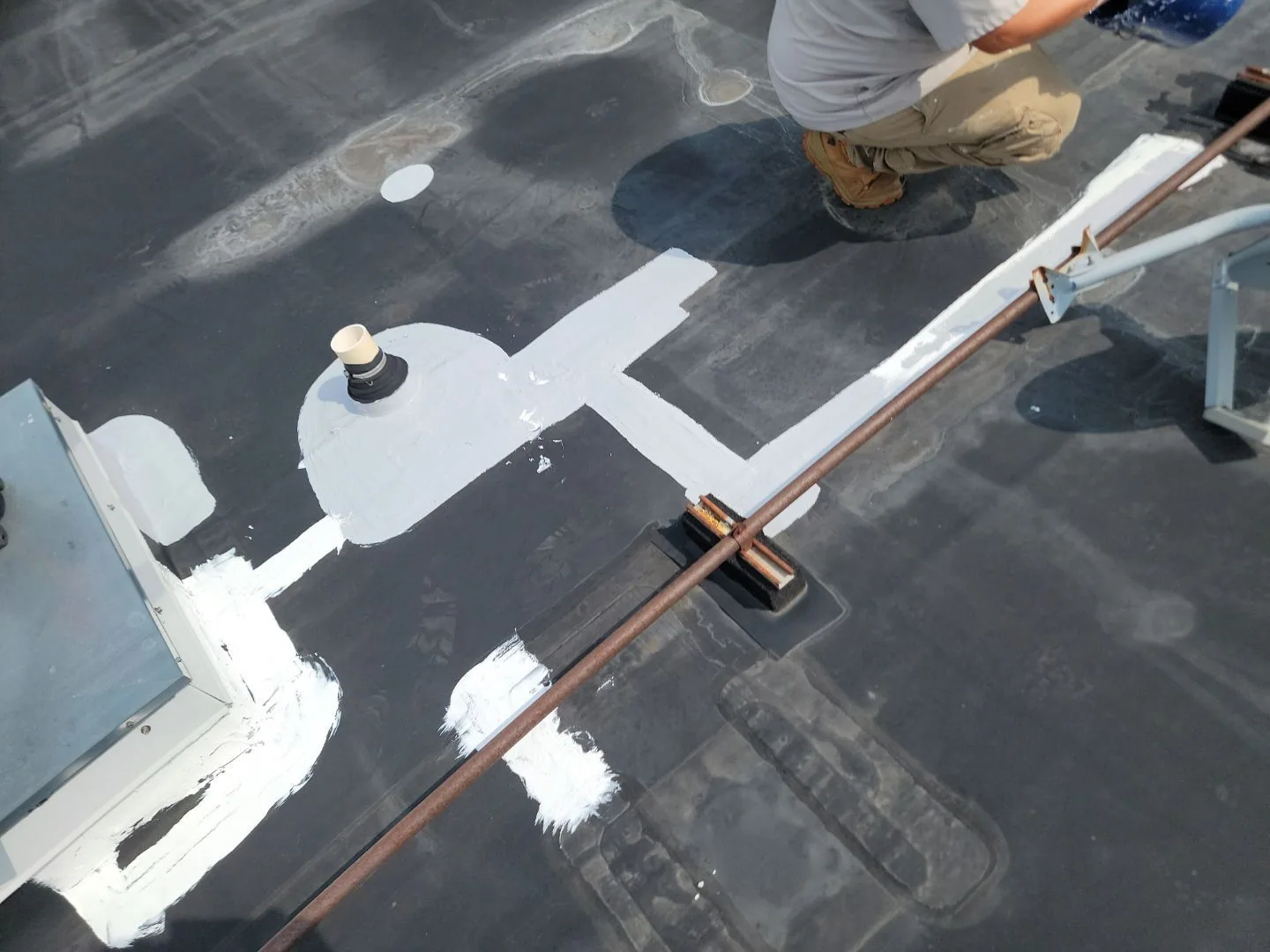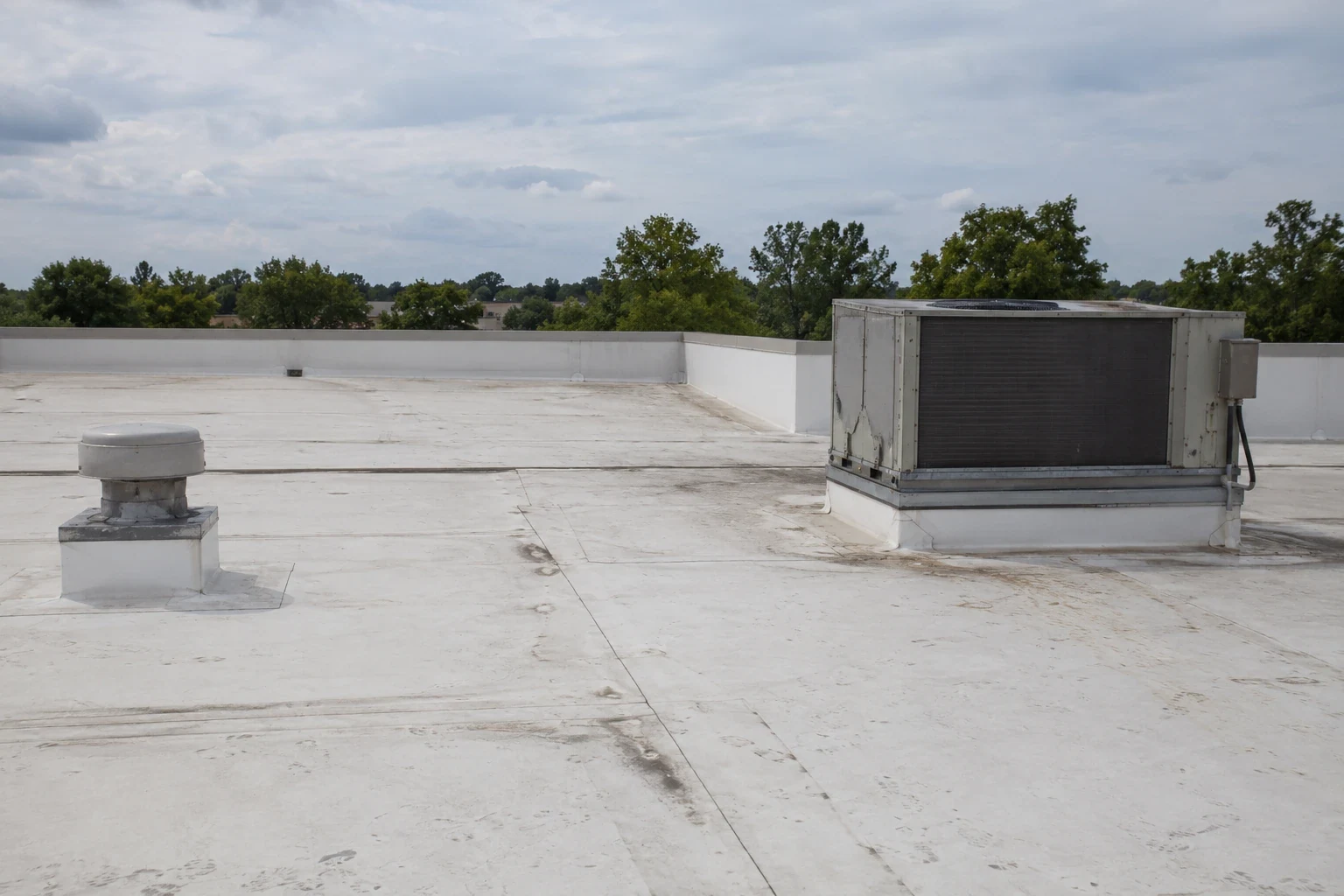
A PVC seam beside a rooftop unit needs a close check before the next rain. We inspect the weld, curb flashing, and nearby membrane. The roof map shows where the detail sits and whether water can travel toward a drain or edge. That first pass sets a clear repair boundary.
Georgetown summers bring sustained heat, and local station records include recent days above 100 degrees Fahrenheit. The work plan accounts for surface conditions and product instructions. We also look for hail marks, open corners, and previous patches. A weather record gives context. The field condition determines what the crew addresses.
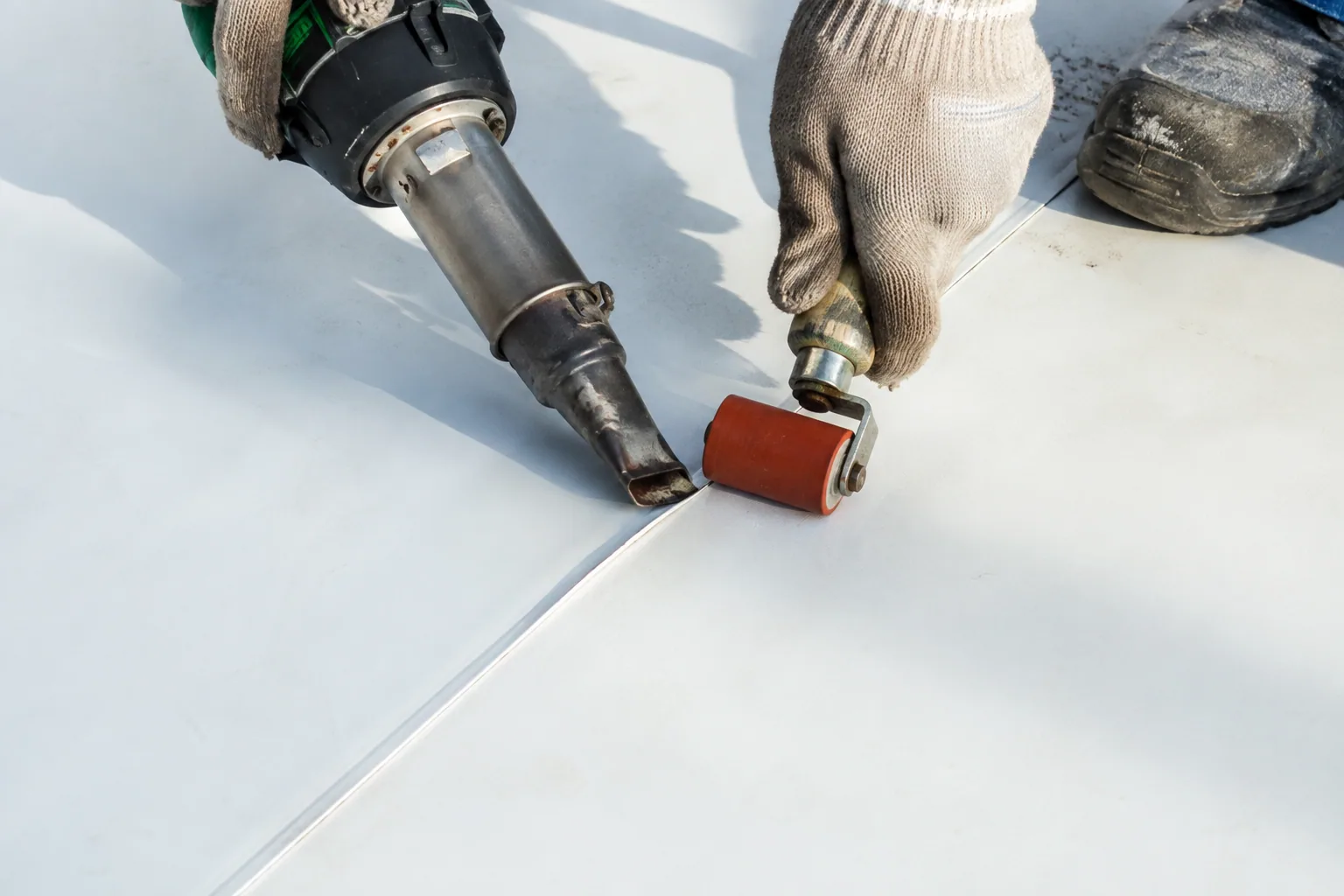
PVC roof sheets join through hot-air welding. The finished lap must fuse without a cold channel, burn, or contaminated edge. We check the weld with a probe after it cools, then examine the nearby sheet for movement or stress. At a transition, the flashing needs the same close attention as the field seam.
Plasticizer migration, incompatible materials, dirt, and earlier repair products can affect how a surface accepts a new weld. We clean a test area and confirm the membrane condition before choosing a detail. A patch is only useful when its perimeter can bond to sound material. If the surface remains uncertain, we stop at a hold point and determine whether further testing or removal is needed.
Berry Creek Business Park has several Class A industrial buildings serving Georgetown near regional freight routes. Those buildings illustrate why separate roof maps matter across a portfolio. Equipment layout, drainage, and previous repairs can differ from one roof to the next. We inspect each assembly rather than carrying a detail from one building onto another.
PVC is often considered where a project needs a single-ply membrane with resistance to certain oils, greases, and other chemicals. The exact exposure and product formulation still matter. We identify the substances, frequency of contact, cleaning practice, and likely spill path. We do not assume that every PVC formulation suits every process.
Georgetown economic development work includes advanced manufacturing, aerospace, retail, entertainment, and restaurant activity. A roof over a production or food-service operation may face different exhaust, grease, or maintenance demands than an office. We review rooftop discharge, equipment service paths, and drain protection as part of system selection. The use profile helps the design team ask the right material questions.
Where a roof already has PVC, we check compatibility before adding repair material. A repair scope should identify membrane type and known contaminants. If the assembly needs broader renewal, replacement planning can include deck checks, insulation correction, and flashing changes. The chemistry claim must remain tied to product data and actual exposure.
High roof temperatures can shorten the practical work window and change how crews handle membrane and accessories. We follow installation requirements and check the surface before welding. Wind affects loose material and perimeter access. Rain changes the dry-in sequence. The daily plan names the areas that can be opened and the tie-in that protects them overnight.
Round Rock appears in regional large-hail reporting, and Williamson County has a documented tornado path. We check for cuts, punctures, impact marks, lifted edges, and open corners, then separate each finding from age-related cracking or traffic damage. A hail review records roof impacts by location and inspection limit.
Drain bowls, scuppers, and overflow paths deserve attention after any storm. Debris can hold water against a seam or hide a damaged clamping detail. We trace the flow from high points to the outlet and check whether the membrane remains attached around the drain. If water enters during the event, leak tracing follows the likely path before repair limits are chosen.
A membrane alone does not tell us whether recovery is suitable. We identify the deck, insulation, cover board, attachment, and layers that can be confirmed. Moisture below the sheet can remain hidden. If a test opening is approved, we protect the opening, photograph each layer, and close it with a compatible detail. The finding belongs to the roof zone opened, not automatically to the whole building.
Where the field remains sound, a localized repair can leave adjacent areas in service. Where seams, flashings, and wet insulation show a repeated pattern, removal may be necessary. A recover evaluation checks the existing build-up and added load. A TPO option or a KEE membrane may be reviewed when project requirements and service conditions permit that system.
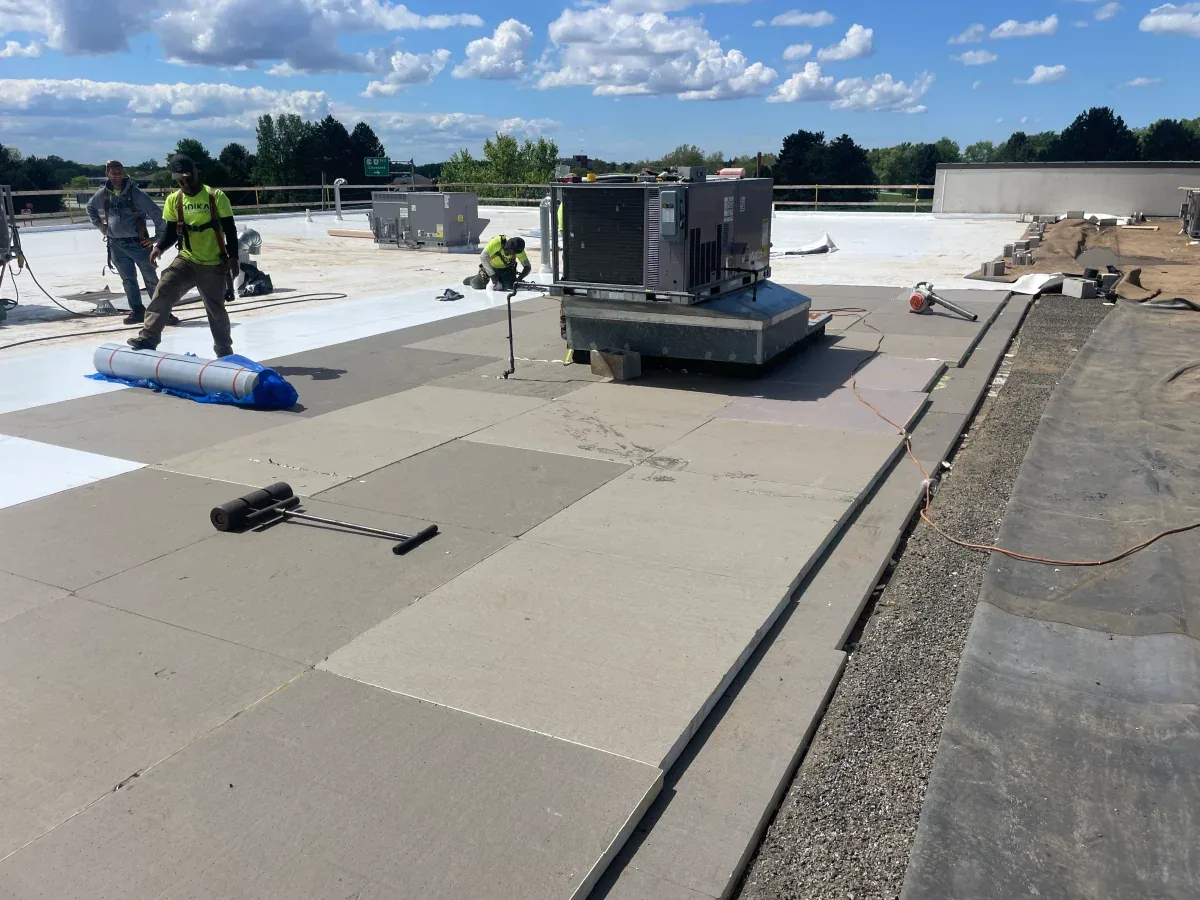
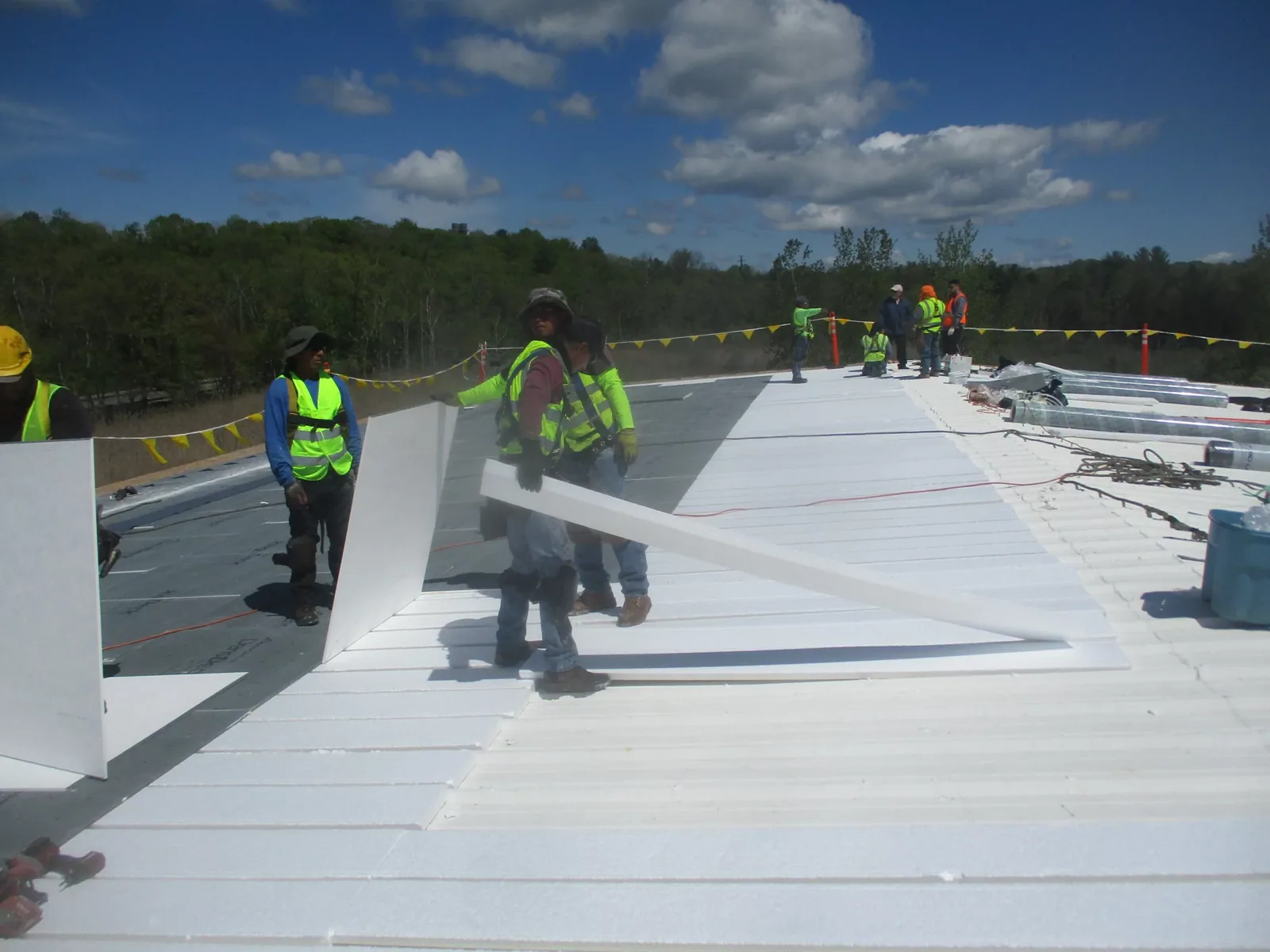
We compare repair, recovery, and replacement by the work they require. Removal changes debris handling and can expose deck repairs. Recovery depends on existing layers and attachment. Replacement gives the project a new assembly but needs a protected sequence. We record assumptions and hold points so the owner can compare options using the same roof plan.
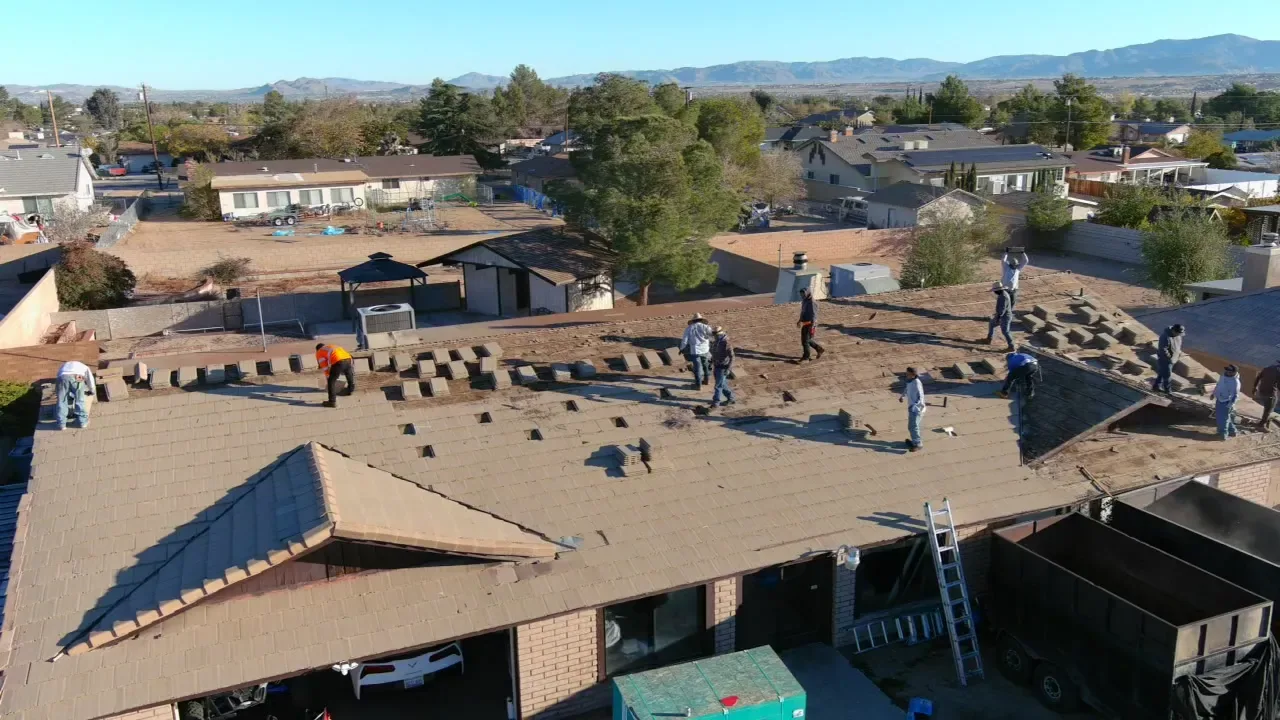
Occupied work needs a daily boundary. We coordinate tenant entries, loading activity, rooftop equipment, and routes to the work area. The crew keeps temporary tie-ins visible and checks them before leaving. A phased reroof sequence can limit simultaneous openings while preserving access for building operations.
FM 971 links Georgetown's I-35 and SH 130 routes and serves commercial development alongside residential, school, and park uses. The corridor can inform delivery planning, but site access still comes from the property contact. We confirm gate rules, staging, lift placement, and permitted delivery hours with the general contractor before scheduling material.
At the end of a shift, we secure membrane edges and protect drains. If weather changes, the crew closes the open area and checks that the temporary tie-in sheds water. The next shift starts with a review of that protection before work resumes. This handoff keeps an interrupted installation from becoming an untracked roof opening.
Closeout identifies the roof sections installed or repaired, the membrane type, and the details completed. Photos show seams, curbs, drains, edge metal, and any field change. We label areas excluded from the work so later service does not assume they were replaced. The roof map gives the next crew a practical route to each condition.
NorthPark35 and Georgetown Logistics Park are industrial areas near Georgetown's highway spines. Separate roof records keep seam checks, service paths, repairs, and future access needs tied to the right building.
Share the roof plan, use conditions, access period, and general-contractor contact. We can inspect the existing assembly and mark which details need a test or repair before new work begins. If water is entering, emergency response remains available at any hour, including holidays. The permanent scope follows the roof evidence collected during the walk.
It can be considered, but the actual discharge and product formulation matter. We review exposure, cleaning, and drainage before specifying the membrane or flashing detail.
After the weld cools, we probe the lap and inspect for a consistent bond. A contaminated edge or incomplete weld needs correction before the area is covered.
First we identify the repair material and check the surrounding sheet. The new weld needs clean, compatible membrane at its perimeter.
No single weather report sets that scope. We inspect the membrane, flashings, attachments, and any affected substrate, then map confirmed damage by roof zone.
It records the installed areas, seam and flashing work, access limits, and open items. Photos and a roof plan help a later crew check the right detail.