A separated parapet cap with fasteners missing from the corner sets the first check. We secure loose material when access permits, inspect the membrane termination, and mark the area that may need temporary dry-in. Current movement, punctures, open seams, and water entry set the repair quantity. We record each condition by roof zone before preparing the scope.
The National Weather Service documented a March 2022 tornado path from near Round Rock's I-35/TX 45 junction across Williamson County toward Granger. The 1997 Jarrell F5 is another county event. Both belong in regional planning; the roof walk records present movement, openings, and water entry before repair quantities are set.
Debris, damaged roof edges, wet surfaces, and compromised parapets can make a post-event walk unsafe. We confirm building release, roof access, fall protection, and the ground exclusion with the facility contact. If the deck or framing may be affected, a qualified structural professional determines whether entry is safe. We do not cross a damaged zone because it appears stable from the ladder.
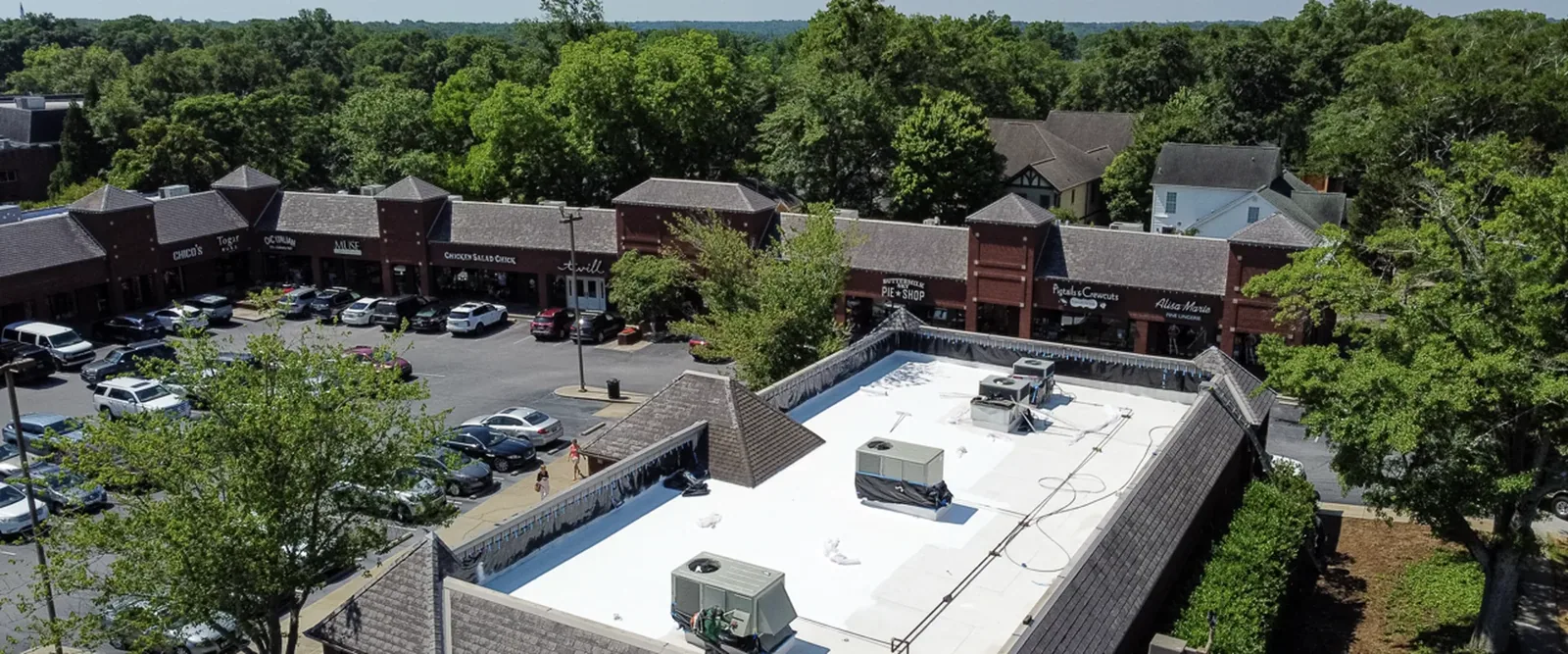
Before staging, we identify entrances, vehicles, utilities, rooftop equipment, and any public route beneath the work. Georgetown's courthouse district has civic, county, business, and residential activity around the square. A property in that setting may need a different pedestrian control plan from a facility near Berry Creek Business Park. The owner provides the actual access rules and operating limits.
Temporary protection is considered only after the attachment point and safe route are clear. We record what was covered, the method, and any remaining exposed area. If wind persists or a roof opening cannot be reached safely, the work waits. A temporary dry-in response protects a defined area but does not establish permanent repair quantity.
Access also depends on power, communications, and mechanical status after an event. The site contact identifies energized equipment, temporary barriers, and any room that remains restricted. We keep the crew's route outside areas marked unsafe and do not move damaged equipment. If the roof can only be viewed from a limited path, the report makes that limit explicit so the owner knows what remains unknown.
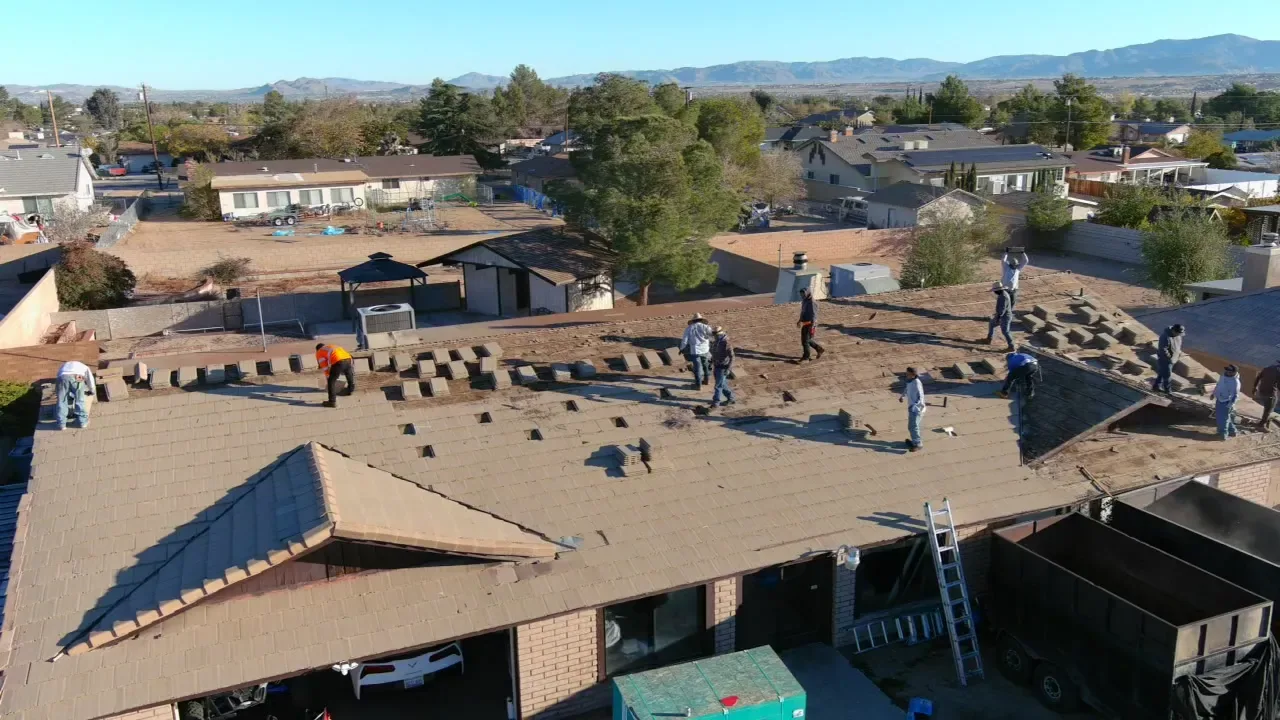
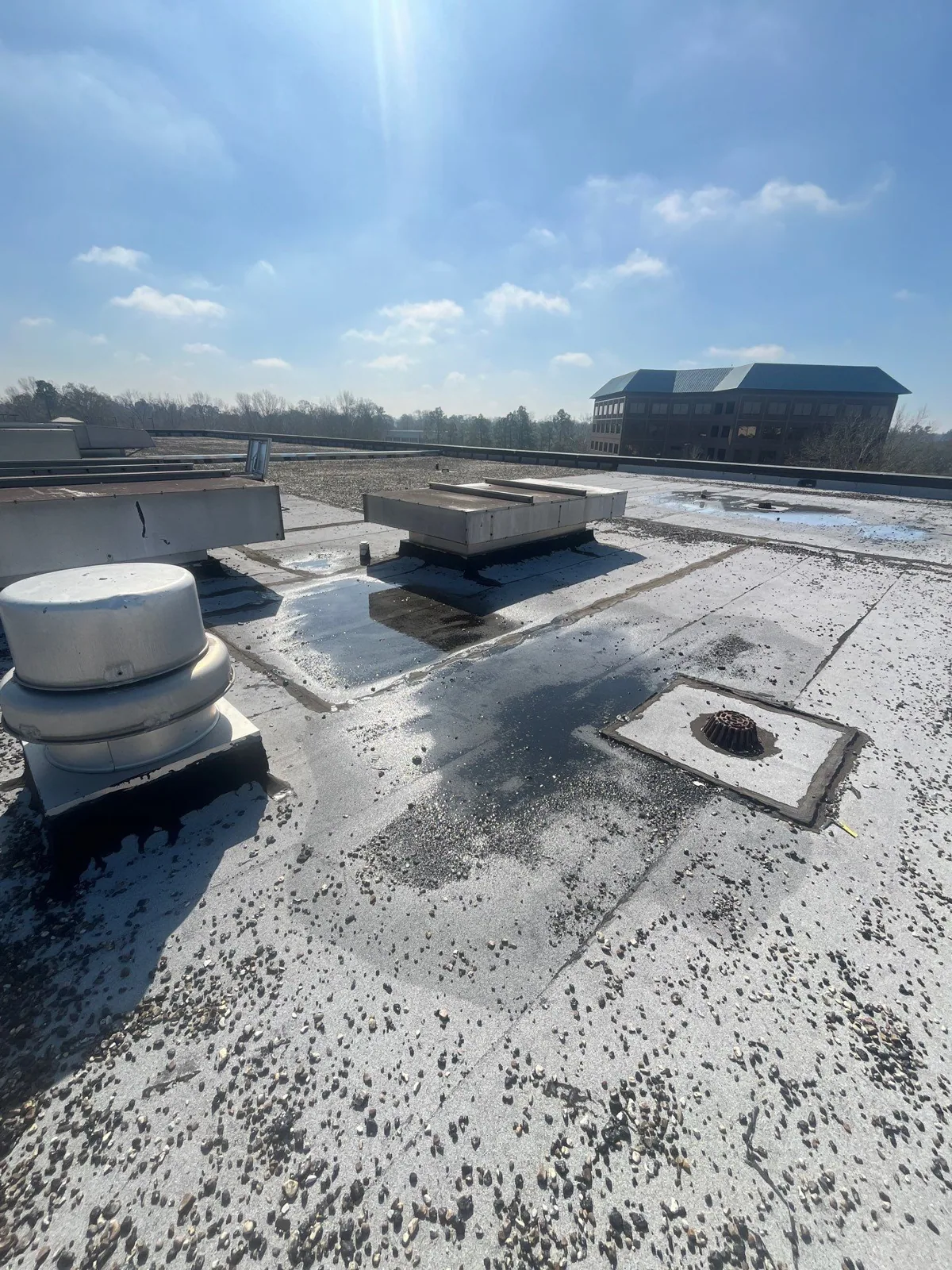
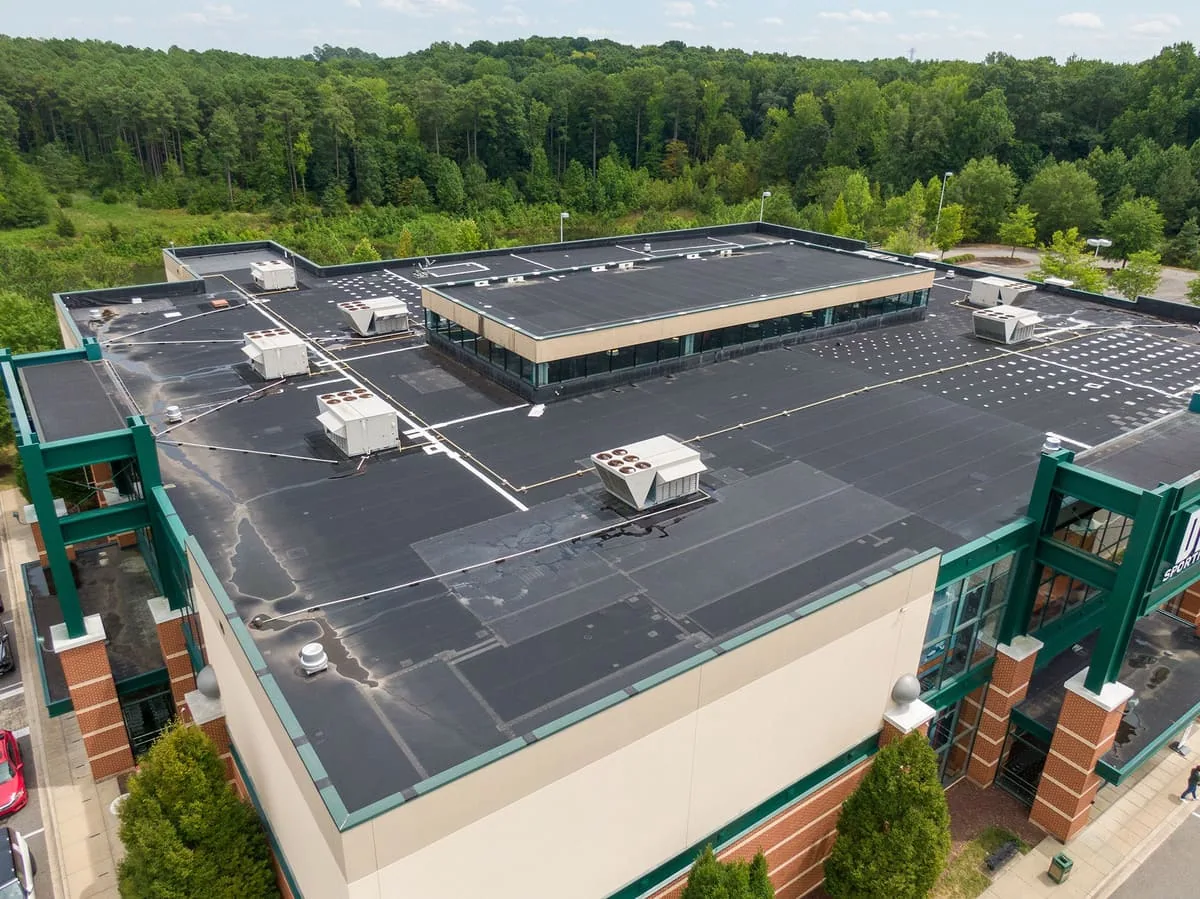
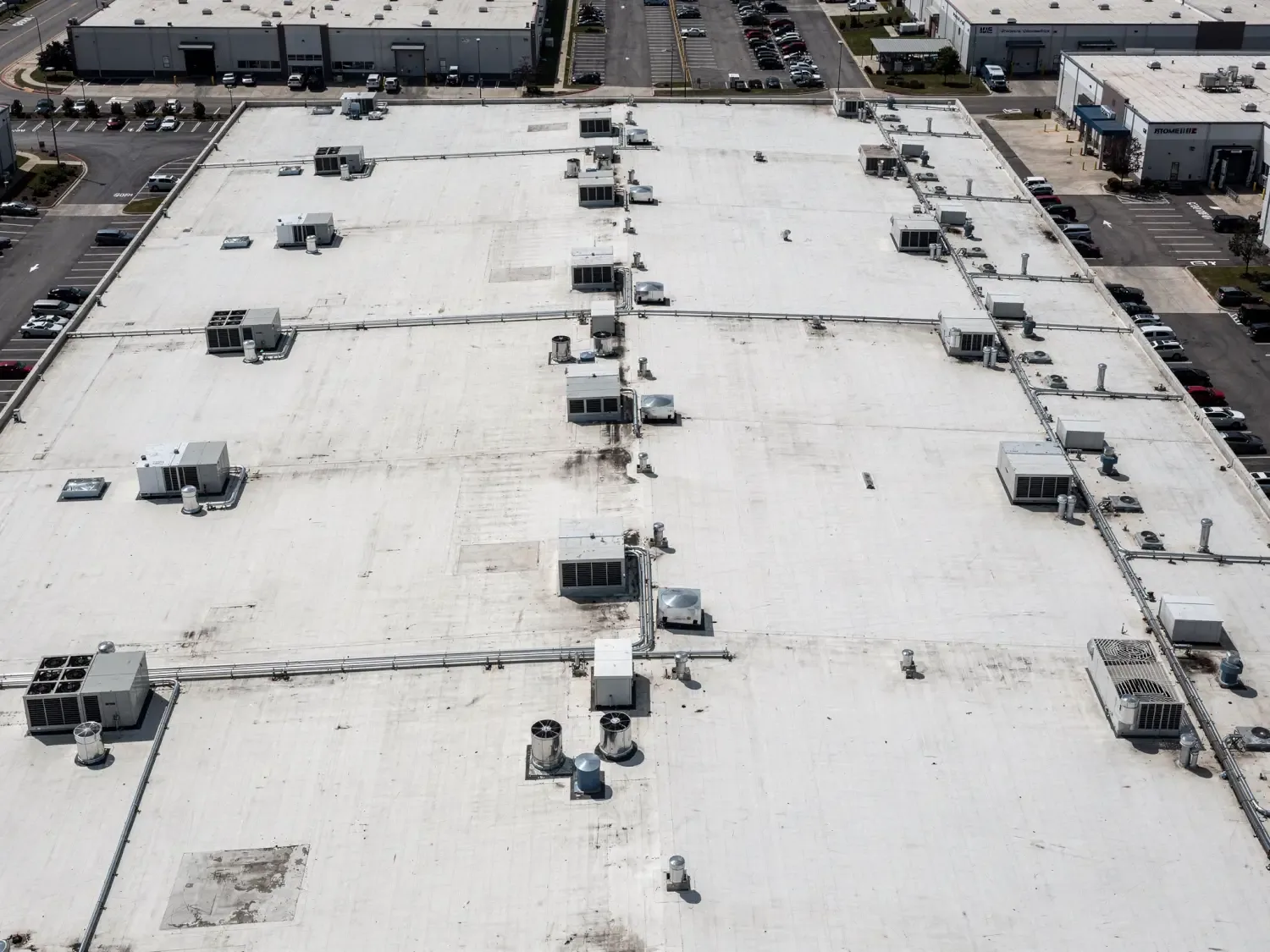
We inspect the perimeter, coping, edge metal, membrane seams, flashings, curbs, skylights, signs, and rooftop units. A loose accessory may have struck the roof; a lifted edge may expose the membrane beneath. We document each item separately and trace the water path where an interior leak has been reported. A roof map distinguishes impact, displacement, existing wear, and areas not reached.
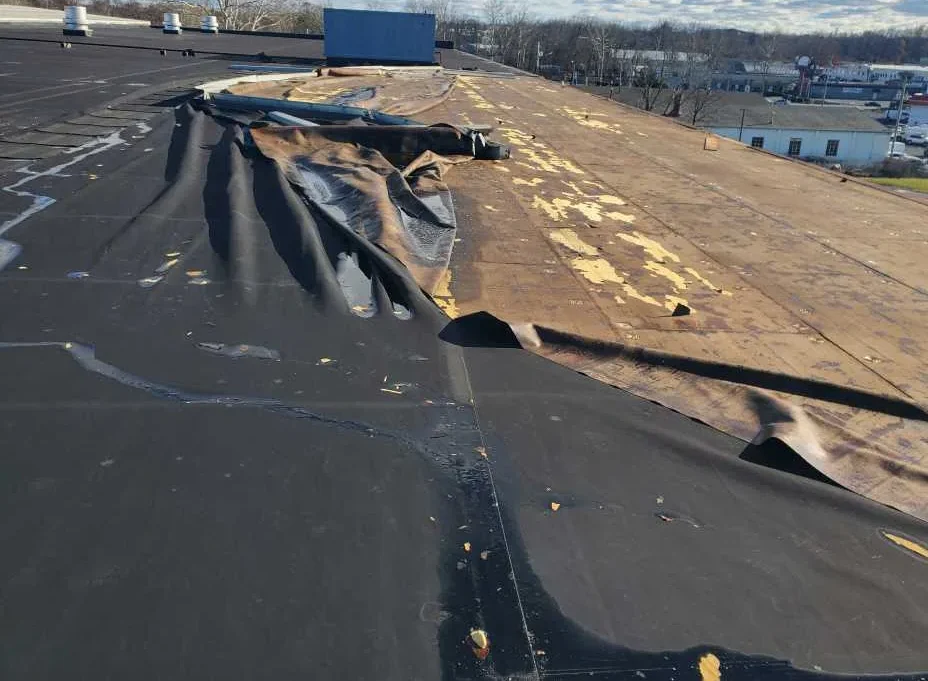
Metal panels can show fastener movement, torn edges, open laps, or deformation. Single-ply systems may have open seams, punctures, or pulled terminations. Built-up surfaces may have damaged surfacing or flashing. The repair method follows the installed assembly. A wind-condition inspection can cover edge or attachment movement beyond the immediate tornado-exposed section.
We compare the roof condition with interior reports but do not assume the ceiling stain lies below the opening. Water can travel along the deck or insulation. If the membrane appears intact while interior moisture continues, we identify the next test rather than extending removal without evidence. A moisture survey can help select candidate zones for approved testing.
Storm timing can help organize an inspection record, but it does not prove every visible defect came from the event. We note whether a condition appears displaced, punctured, or newly open and separate that observation from oxidation, brittle sealant, old patches, and other aging. If the owner has before-and-after photos, we can compare locations without treating them as a substitute for field review.
Round Rock lies near the start of the 2022 county tornado path; Georgetown and Granger are part of the broader county context. The documented 1997 Jarrell tornado also underscores regional risk. Neither fact says whether a particular roof was struck. The inspection report names the site, date, accessible sections, findings, and limitations.
Hail can occur with severe storms and may affect equipment, skylights, or exposed metal differently from a wind-lifted edge. We photograph each type of observation separately. A hail review may be a distinct scope if impact marks are present. We avoid one broad label when the roof shows several separate conditions.
A displaced coping section may be reset or replaced if the substrate and attachment are sound. A torn membrane or open lap requires a system-compatible repair extending to bondable material. Loose rooftop equipment needs direction from its service contractor. We identify the repair boundary and any condition that remains concealed. If the deck or framing is affected, work stops for structural review.
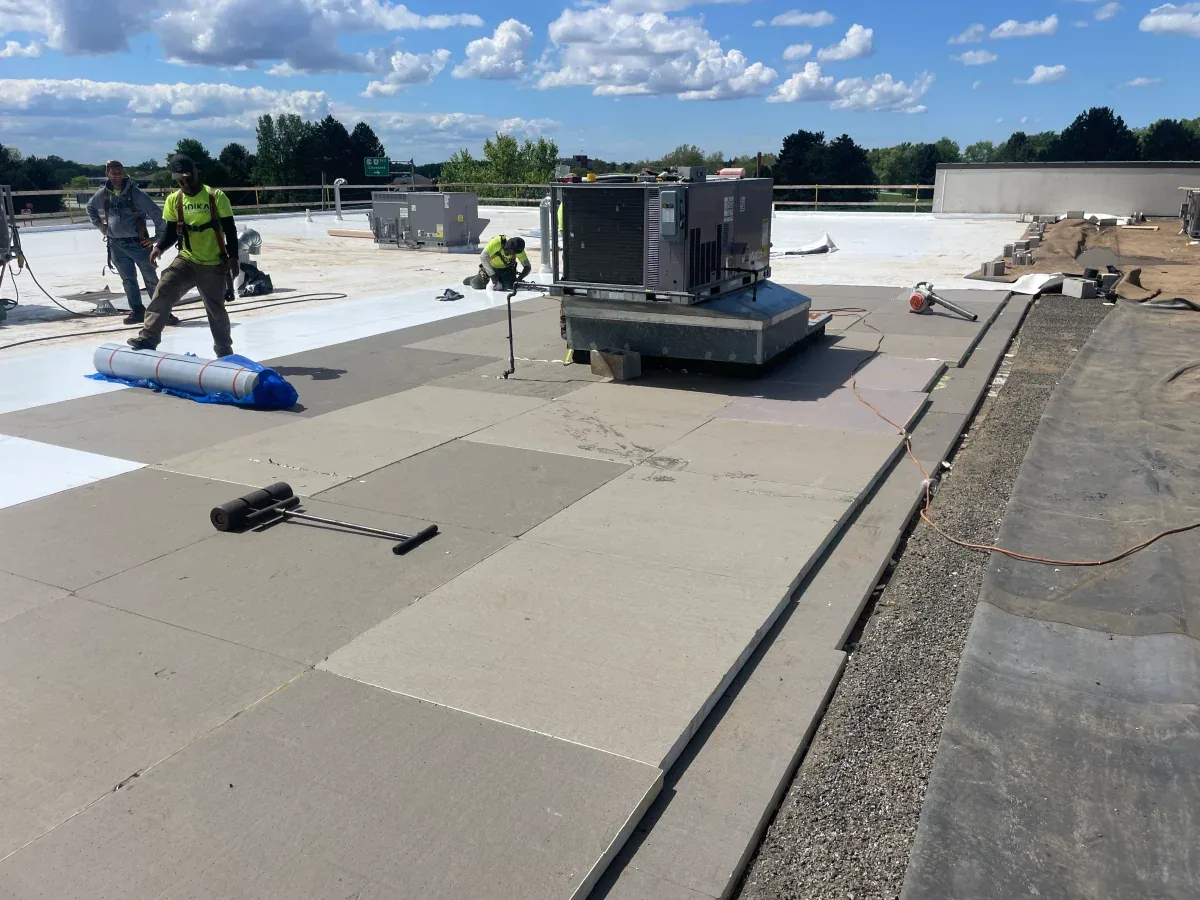
Recover is considered after checking layers, attachment, moisture, drainage, perimeter height, and the proposed assembly. Tear-off may be needed where the substrate is compromised or wet insulation must be removed. A defined repair scope can address isolated findings, while a replacement assessment compares broader work when repeated failures or deck concerns support it.
Price and timing depend on safe access, debris removal, material availability, crane or lift needs, structural clearance, weather, and the amount of roof exposed. The first visit may establish temporary work only. We state estimates, exclusions, and test limits clearly. If removal reveals a larger condition, the crew pauses at a hold point for approval before increasing the scope.
Every work shift closes with loose material removed, the temporary boundary secured, and the facility contact told what remains open. The record shows completed zones, materials, photographs, test results, and any area that could not be entered. If another trade must assess equipment or structure, we identify the handoff and avoid presenting roofing work as a full building clearance.
For properties near Georgetown or along FM 971, arrival and access plans can differ by building. Local corridors help with logistics; the property authority sets site rules. Share the roof plan, event date if known, reported interior locations, and approved access contact before mobilization.
A condition report keeps the inspection boundary and unresolved questions available for the next phase. A separate flashing repair may be needed where a wall, curb, or penetration detail is open.
After a repair, the property team can use the same map to check adjacent edges and penetrations during routine maintenance.
Only after the building and roof route are released as safe. Debris, wet surfaces, damaged edges, or structural concerns can delay access. We follow the authority and site representative's direction.
No. The path provides regional event context. We inspect the actual property and document current displacement, openings, water entry, and areas not reached.
We record the visible condition, location, and evidence of movement or impact. Existing patches, aging, and brittle materials are listed separately. Before-and-after photos can help but do not replace the roof walk.
When access and attachment are safe, we can define a limited dry-in measure. The report states its location and remaining exposure; permanent repairs wait for the verified condition and owner approval.
We stop at a hold point and refer the condition to the responsible structural professional. Roofing work resumes only after safe access and direction are established.