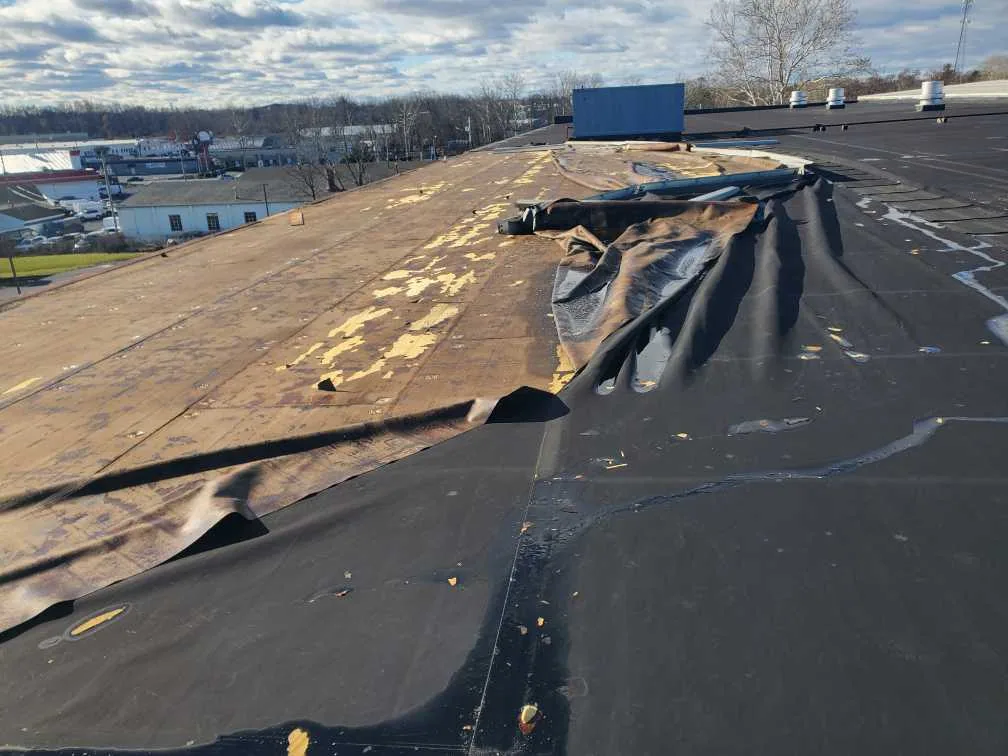
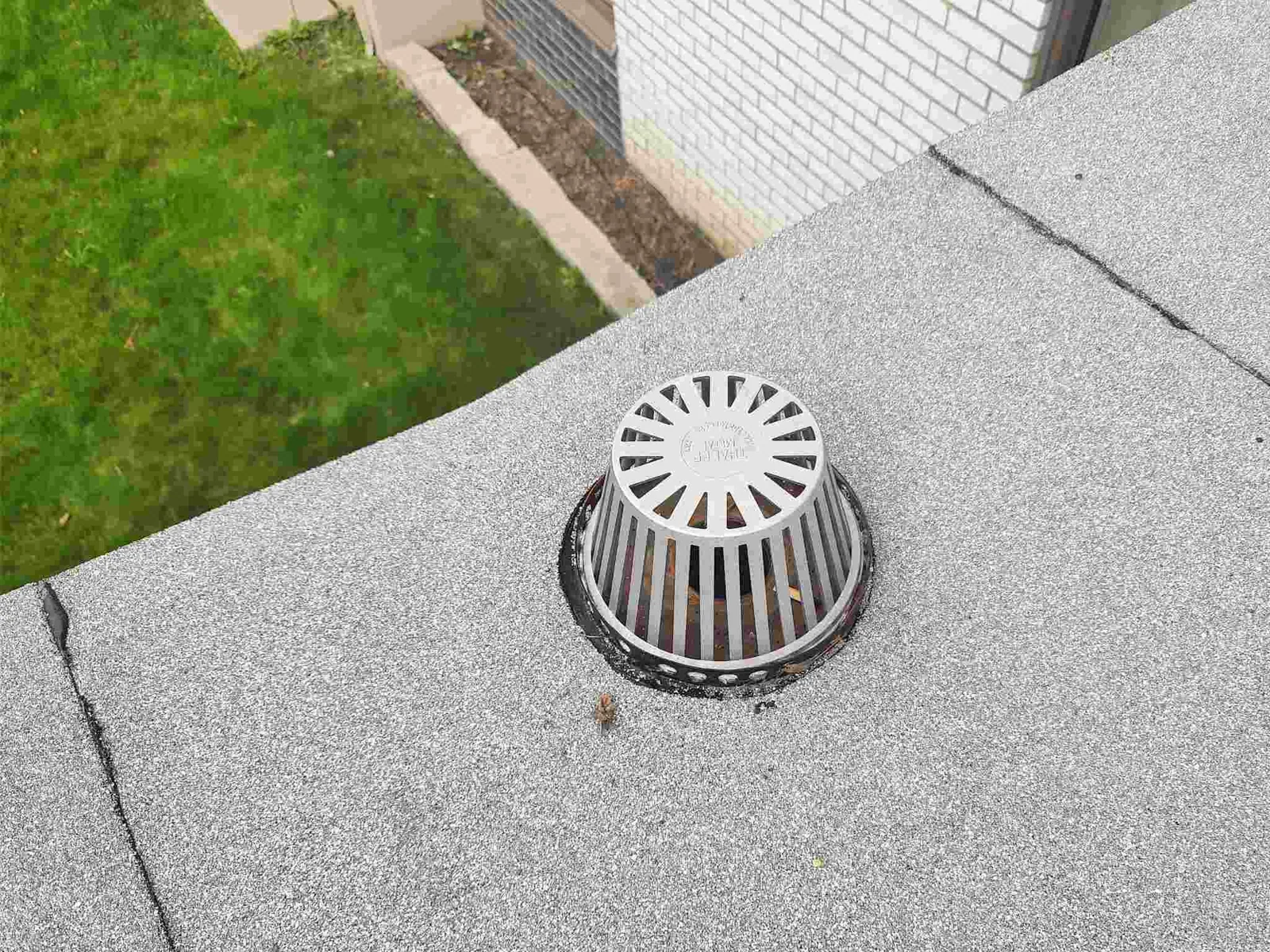
A drain bowl full of debris leaves a standing-water mark around its edge. We clear the visible obstruction and trace the flow path. Then we check the bowl, flange, clamping ring, and membrane tie-in. The repair boundary follows the defect, not the water stain alone.
Storm debris can block a drain or move roof details. In spring 2022, severe weather crossed Williamson County from Round Rock toward Granger; after an event, we check outlets and membrane details on the affected building. Berry Creek Business Park has multiple industrial buildings near I-35 and SH 130. We map each roof zone separately so the drain count, access route, and work area match the building under review.
We start uphill from the outlet. We look for debris lines, low spots, settled insulation, damaged crickets, and water marks near curbs or walls. A blocked basket is one possible cause. A depressed deck or misplaced overflow may be another. The inspection separates what is visible from what needs testing.
Each drain gets a roof-map label and a photo. We note the outlet type, nearby seams, and condition of the membrane around the bowl. If the roof plan is incomplete, we mark the location with a fixed reference such as a grid line or equipment row. That lets the crew return to the same outlet without guessing which one the report meant. A commercial roof inspection can map the wider system before a correction is priced.
Water that remains after clearing debris may point to slope, structural deflection, or a drain connection problem. We do not assume the surface alone explains it. If the roof needs a test opening, we define the location and approval before cutting. The report states the water depth and observation time when the condition can be measured safely.
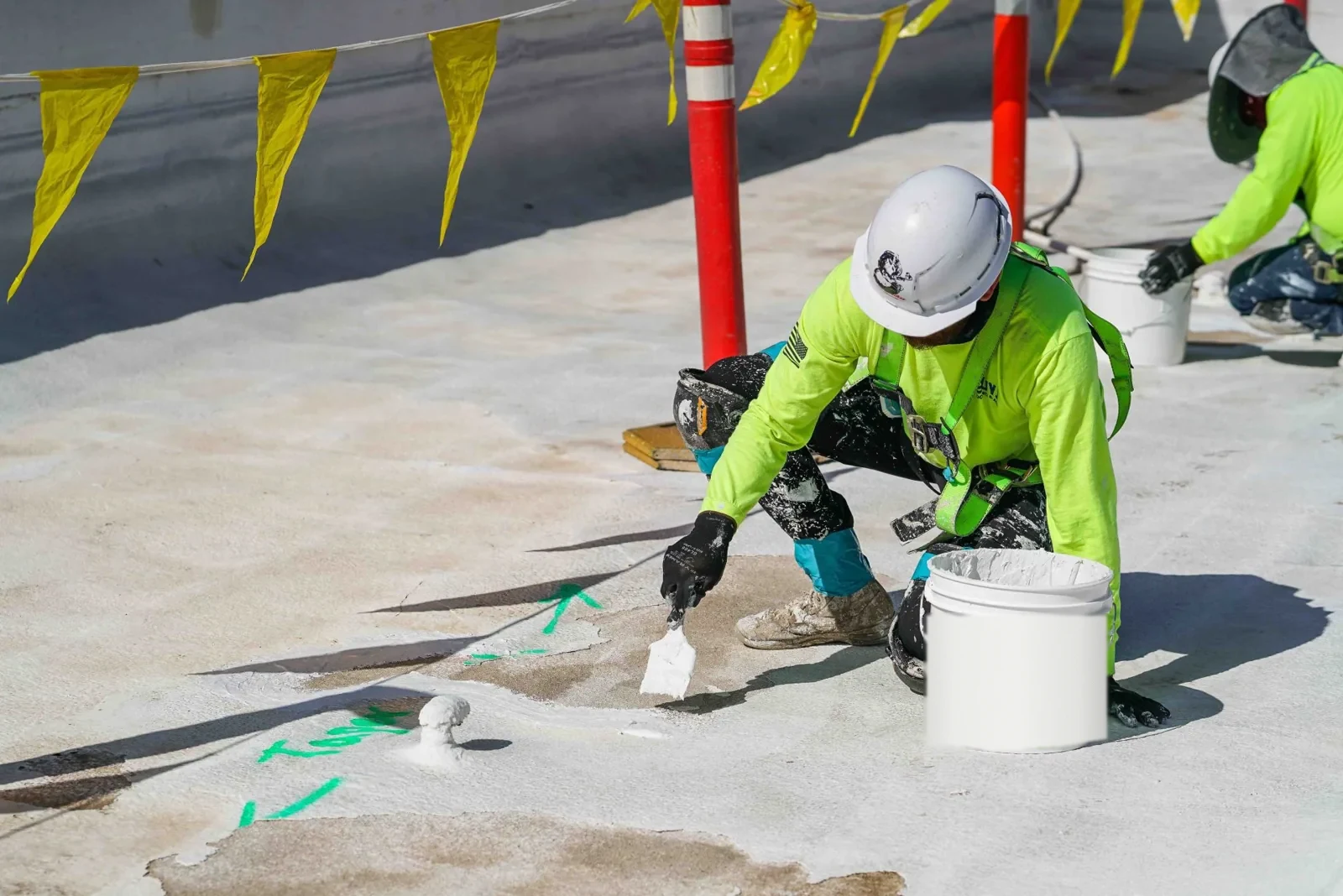
A drain repair can include the strainer, bowl, clamping assembly, flange, membrane, and piping connection. We inspect accessible parts and identify where a plumber or other trade needs to review the line. The membrane needs a compatible tie-in around the drain. A patch at the surface will not repair a separated connection below it.
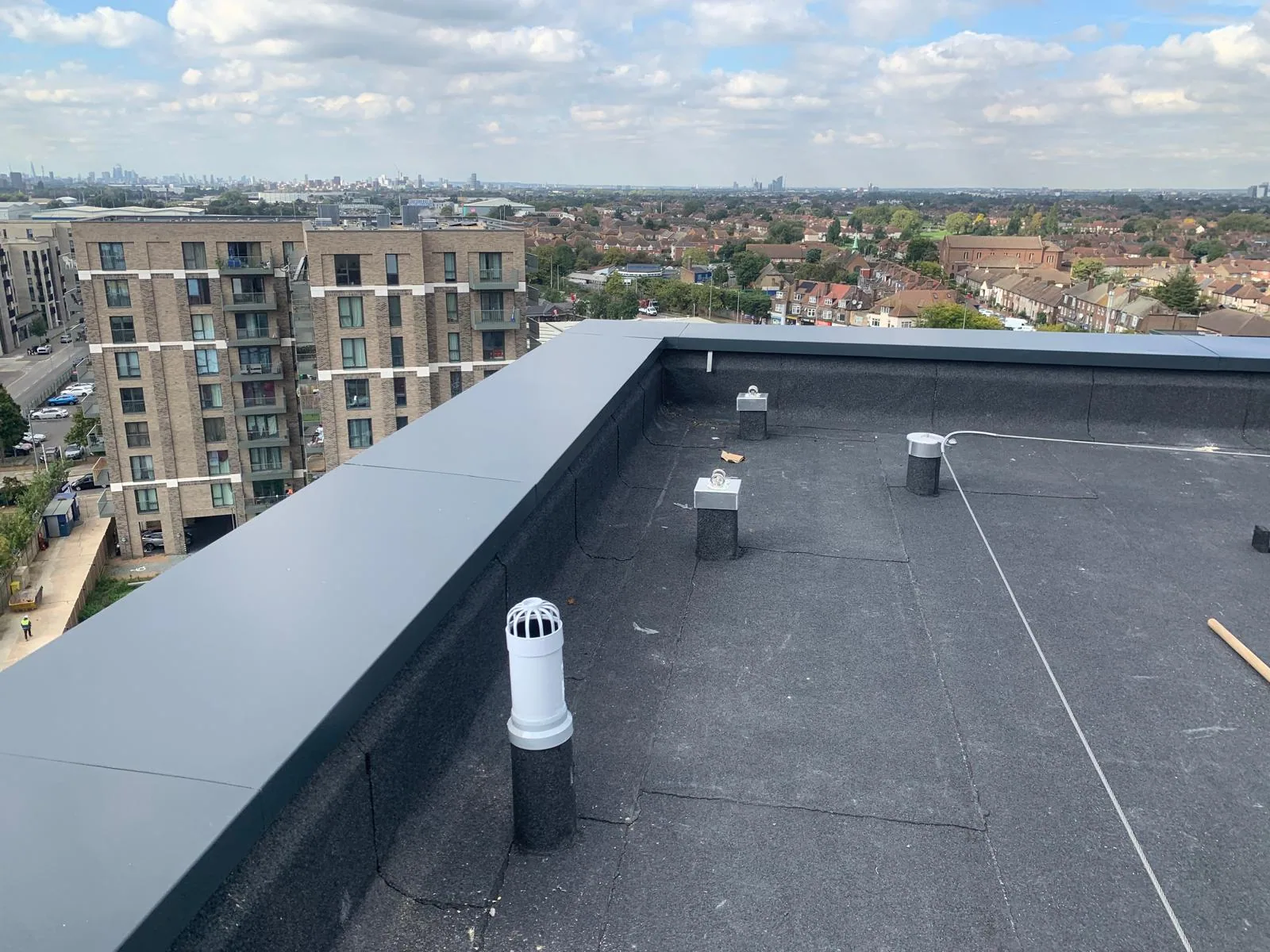
Scuppers need clear openings, secure metal, and flashing that sheds water out and away from the wall. We inspect the throat, edge, and exterior discharge point where accessible. A scupper blocked by roofing material can act differently from an undersized or damaged outlet. We record each issue separately. The edge metal and gutter service can address connected perimeter details when the repair crosses into coping or conductor heads.
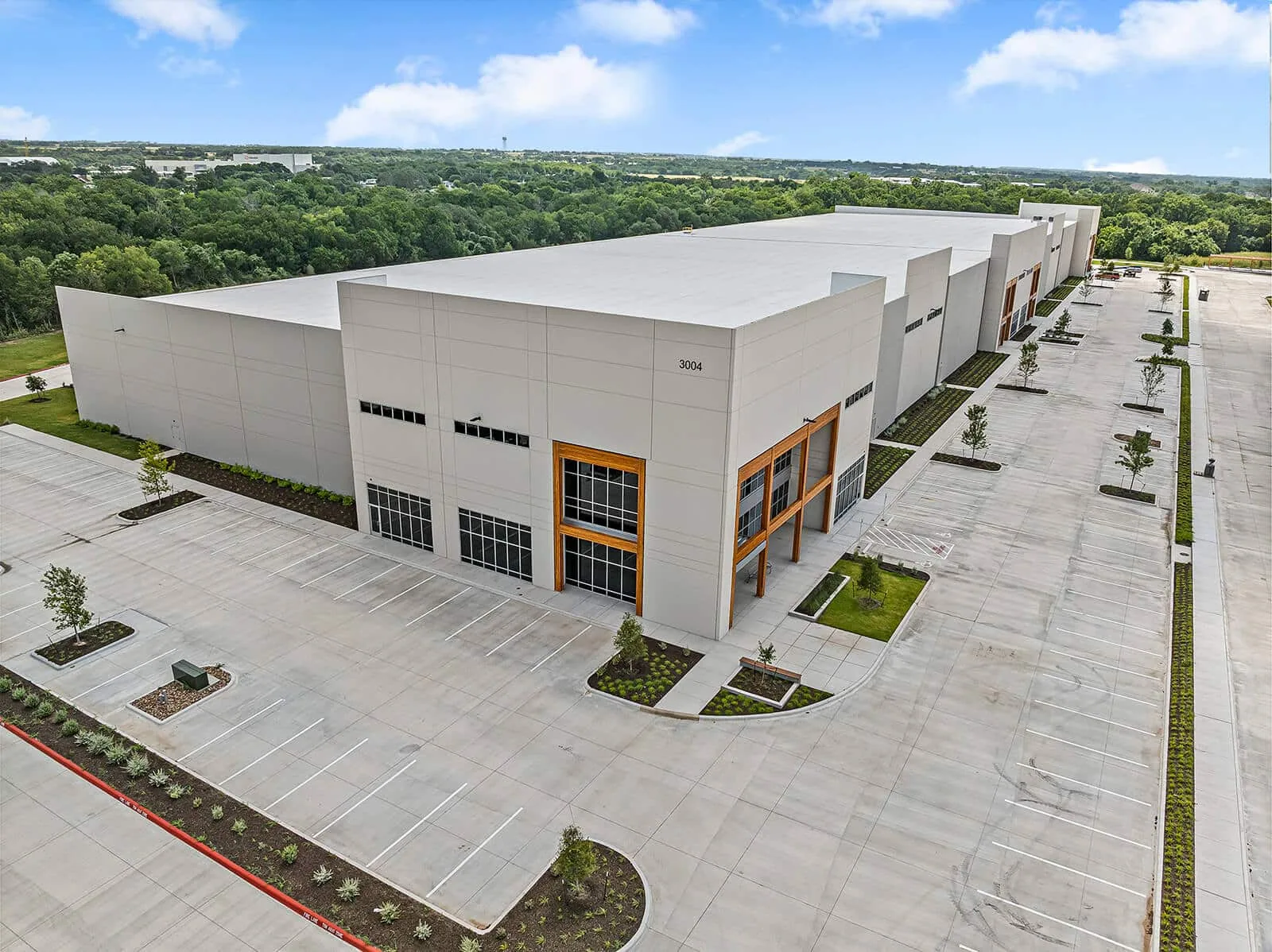
The I-35 and SH 130 growth area includes NorthPark35 and Georgetown Logistics Park. A large site may have several roof zones and outlet patterns, so we verify the building and drainage layout before setting quantities or staging equipment.
Water remaining on a roof after a storm deserves a measured review. We note depth, approximate extent, nearby outlets, and how long after the event the observation was made. A single photograph cannot establish a structural issue. We compare the observation with the roof plan, drainage locations, and any earlier maintenance record. If the same area holds water after separate events, that pattern may support a closer elevation survey or test opening. We state what that next step would establish before requesting access. Repeat observations can show whether the same area holds water or whether the condition changes with debris and flow.
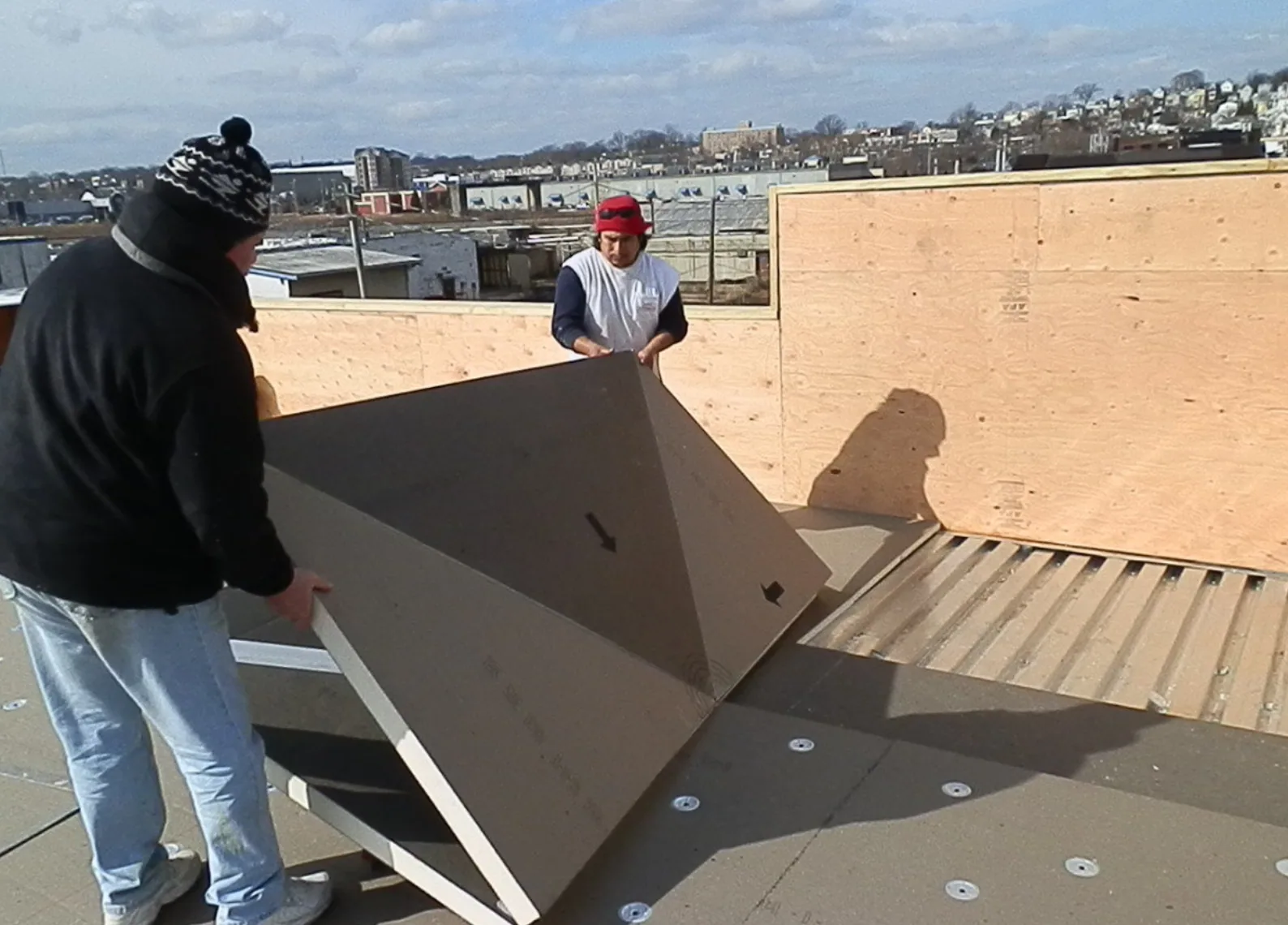
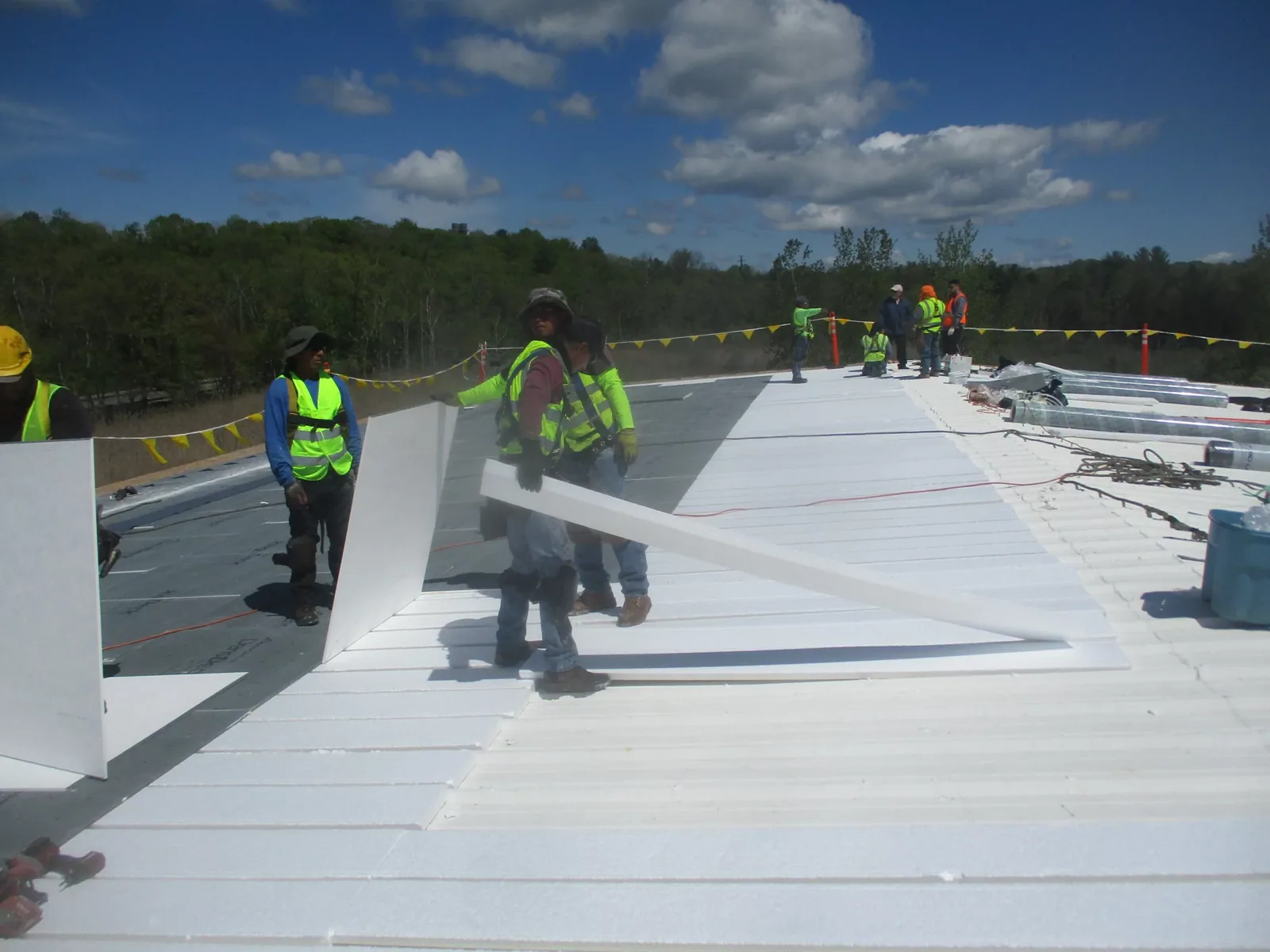
We check whether drains are positioned at low points and whether crickets direct water around curbs. If surface elevation is the issue, a tapered insulation correction may be part of the renewal plan. The insulation and cover-board scope can define that work. If the existing membrane is otherwise sound, a localized correction may be possible. If the substrate or deck is unstable, the scope changes.
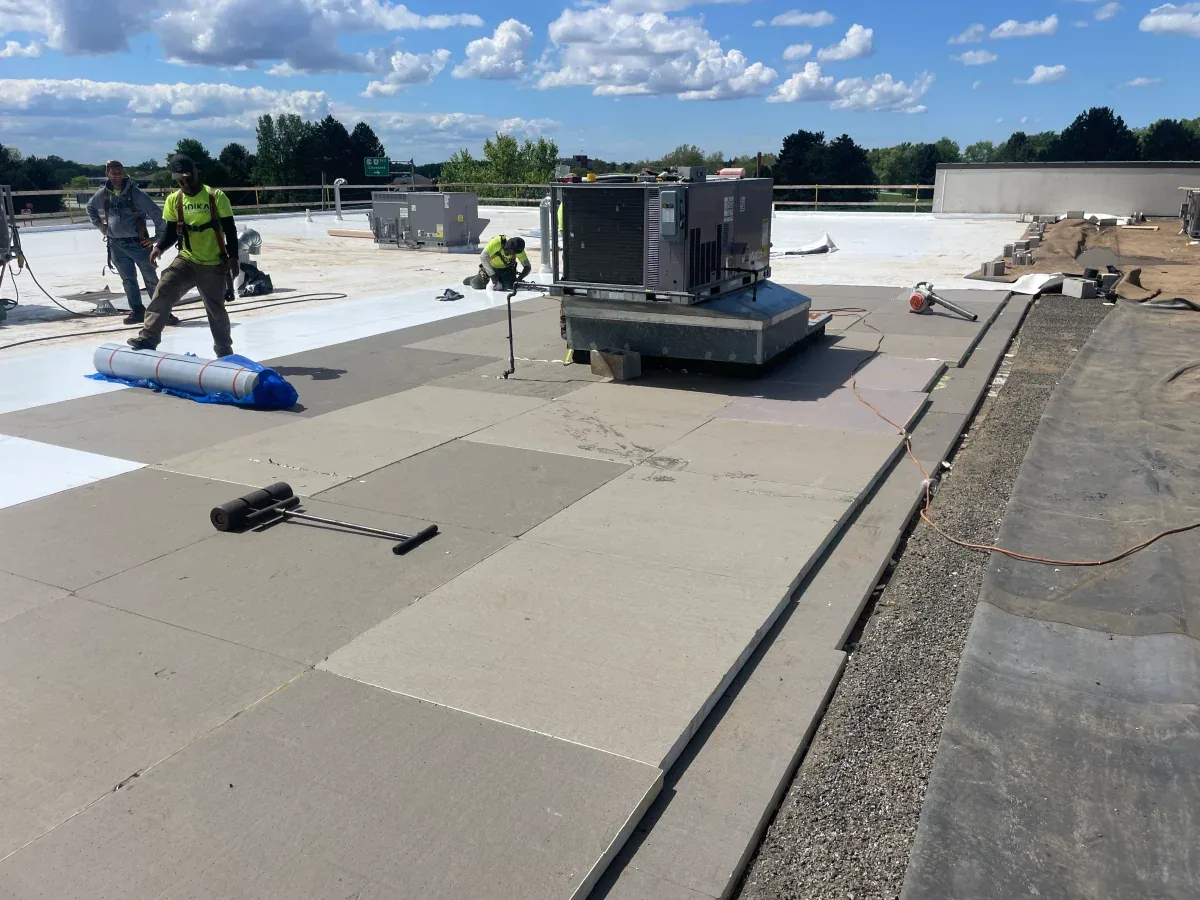
FM 971 runs between Georgetown’s two highway routes and serves commercial, residential, school, and park uses. We coordinate delivery and staging with the property representative. We coordinate lift locations and keep open drains protected from construction debris. A drain that works at the beginning of a shift still needs a closeout check before the crew leaves.
We agree on the access route, staging zone, and work boundary before opening the membrane. A drain tie-in may require a temporary water stop and a hold point for inspection. The crew keeps the outlet functional or provides temporary protection while work proceeds. Weather and surface conditions set the work window.
For occupied buildings in downtown Georgetown, the historic mixed-use district brings commercial, county, municipal, and residential activity around the courthouse square. That context can affect lift placement and public access. We confirm the actual property rules with the general contractor. The plan identifies who can approve a changed drain location or additional deck work. We also define how the opening will be protected if rain approaches and what must be inspected before the tie-in is covered. The general contractor gets a clear handoff at each hold point, including which trade returns next.
Cost depends on the number and type of outlets, membrane compatibility, access, piping coordination, and concealed conditions. We list confirmed repairs separately from allowances. A recover review may be needed if additional layers change outlet height or leave insufficient flashing clearance. A maintenance visit can then keep baskets and flow paths on a recurring check.
Closeout notes the drain or scupper repaired, the tie-in method, material used, and any limit that remains. Photos show the completed flange or throat, surrounding membrane, and water route. We check that debris is removed and the outlet is open before demobilization. If the piping connection was outside our scope, the record says so.
For facilities near Berry Creek Business Park or NorthPark35, separate roof-zone labels help staff coordinate follow-up across buildings. A later roof walk can compare the same outlet and note new debris, movement, or ponding. Maintenance notes should distinguish routine cleaning from a recurring flow problem that needs a repair scope. Point us to the affected outlet and include the roof plan and site representative. We will trace flow, check the tie-in, and define the next opening.
An active leak can be reported any time, even on a holiday. We protect the opening first and document the return point for permanent drainage work.
Debris, a blocked outlet, low insulation, deck movement, or a damaged drain connection can all affect flow. We inspect the area and record what is visible before setting a repair boundary.
We can repair the roof membrane and accessible drain tie-in. A concealed or downstream piping defect may require a plumbing trade. The scope identifies that boundary.
A scupper carries water through the perimeter wall. We check its throat, metal, flashing, and exterior discharge. The repair may involve edge metal or wall details as well as the membrane.
A coating does not correct a low point or undersized outlet by itself. We review flow, slope, and drain height first, then specify surface restoration separately from drainage correction.
Record the roof zone, drain or scupper, membrane tie-in, materials, photos, access limits, and any piping work left open. A later visit can compare the same point.