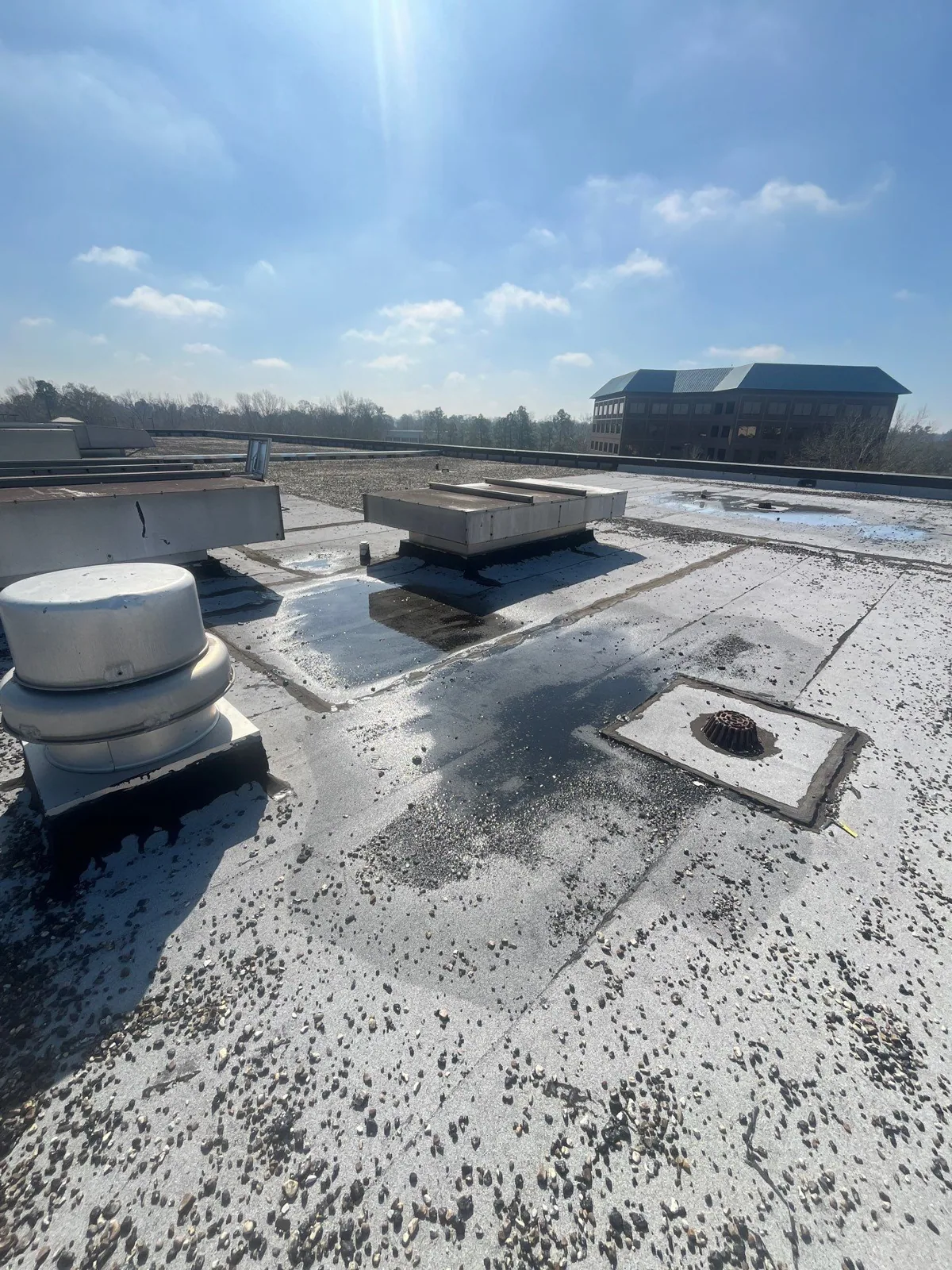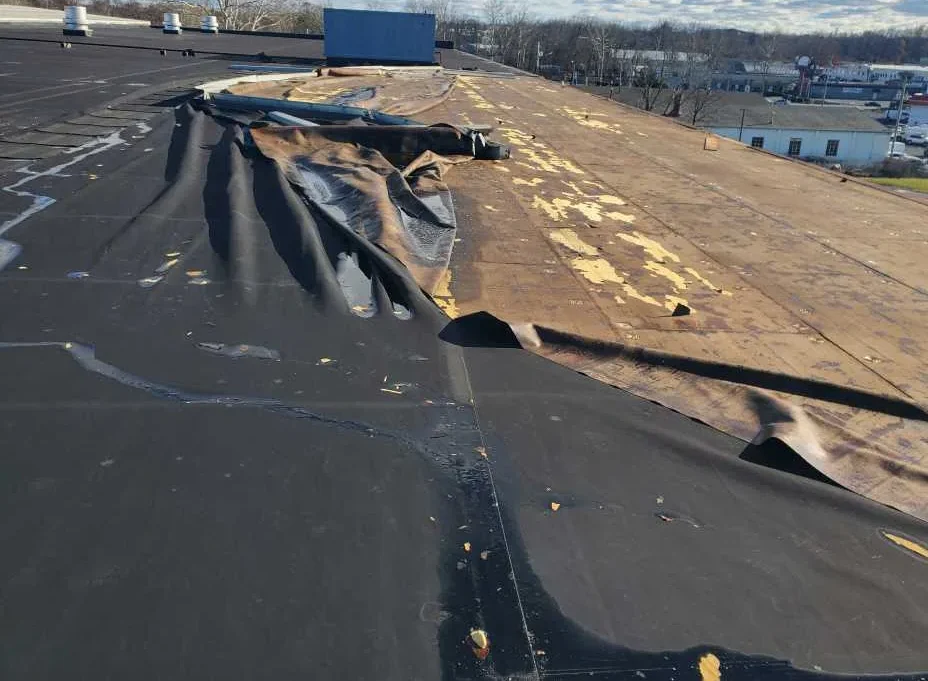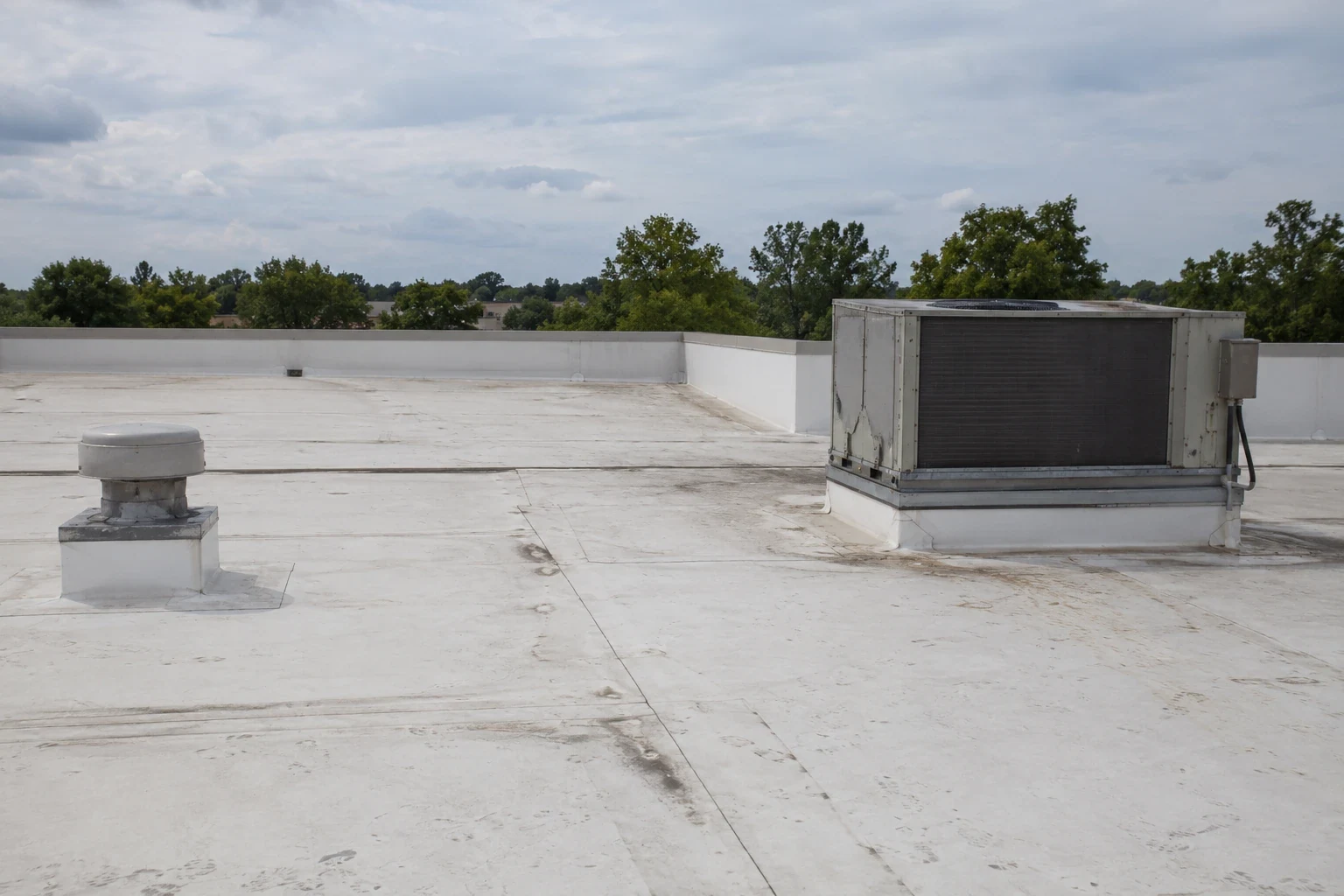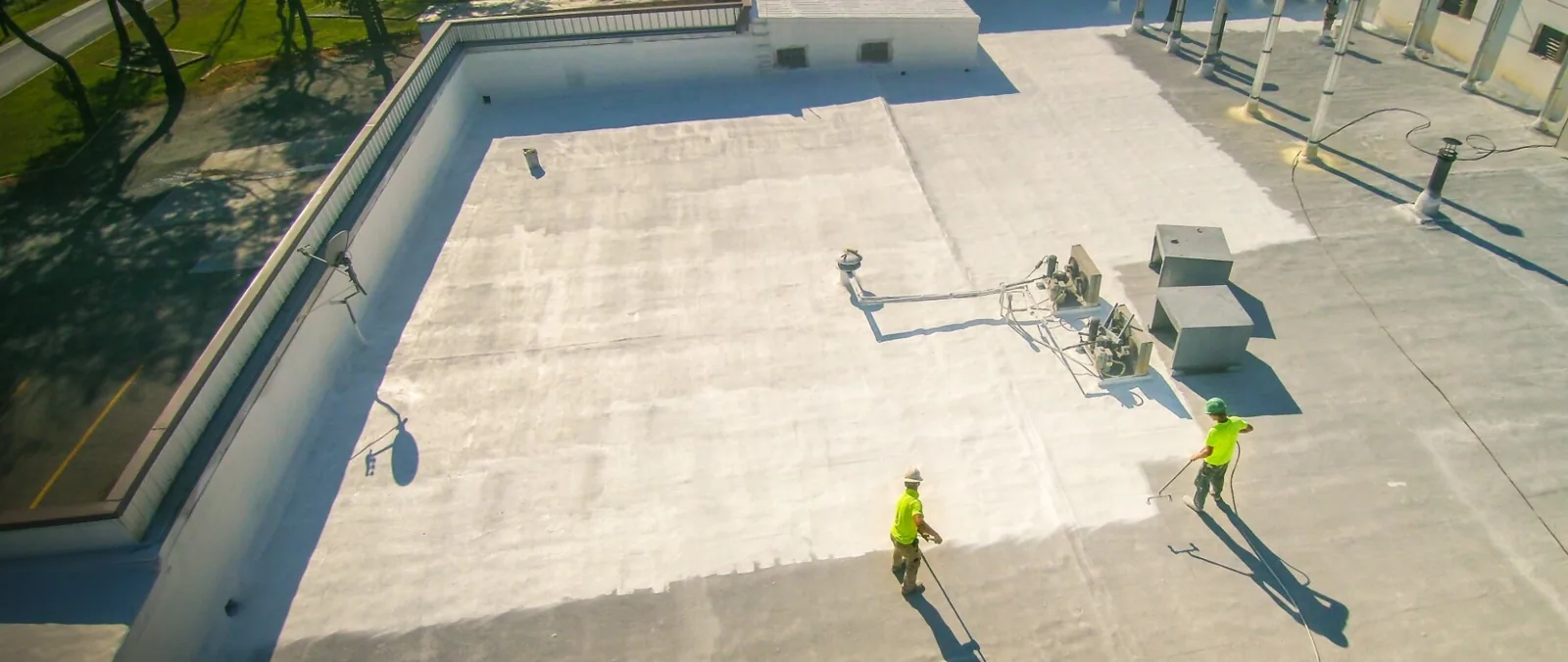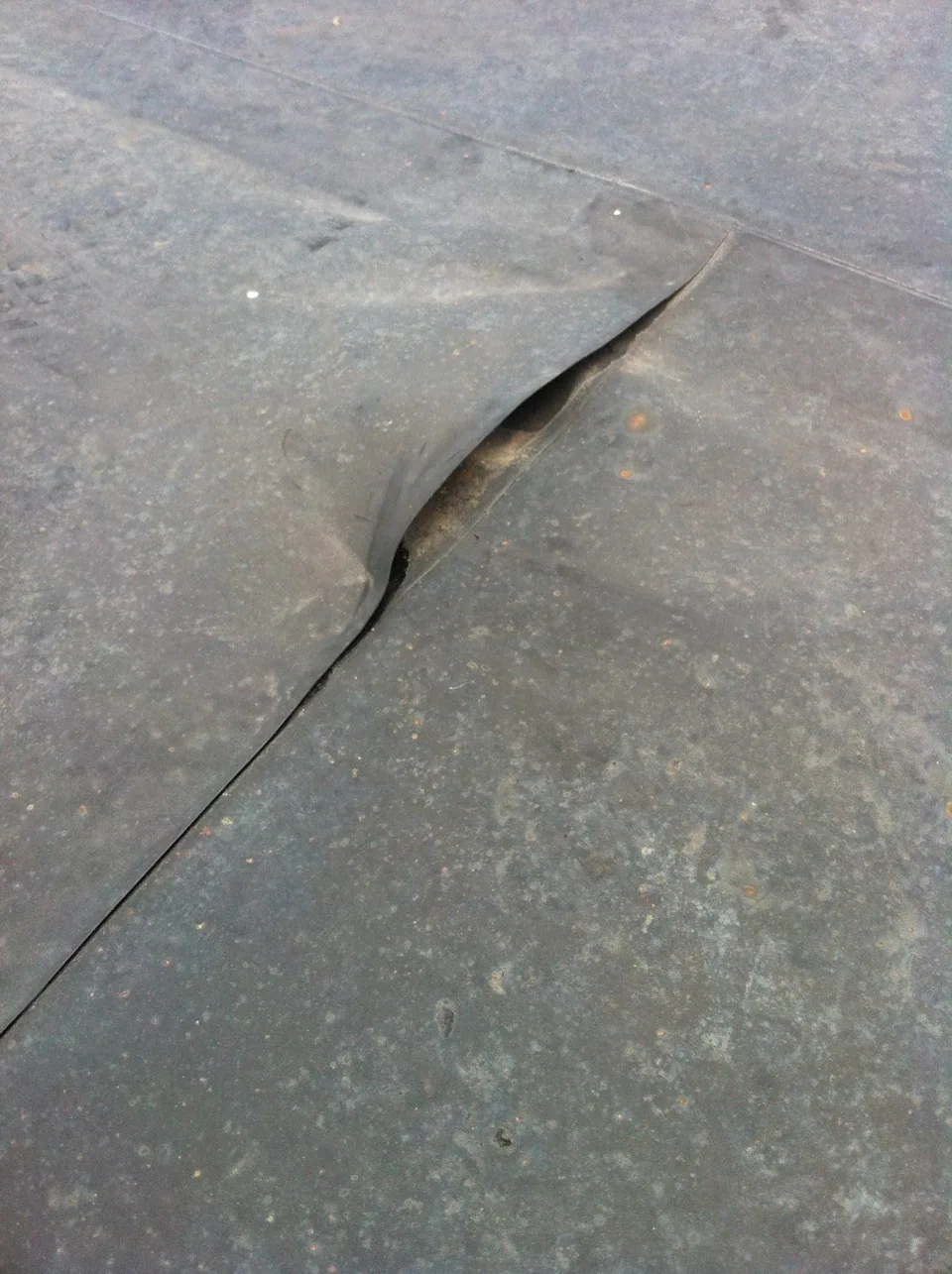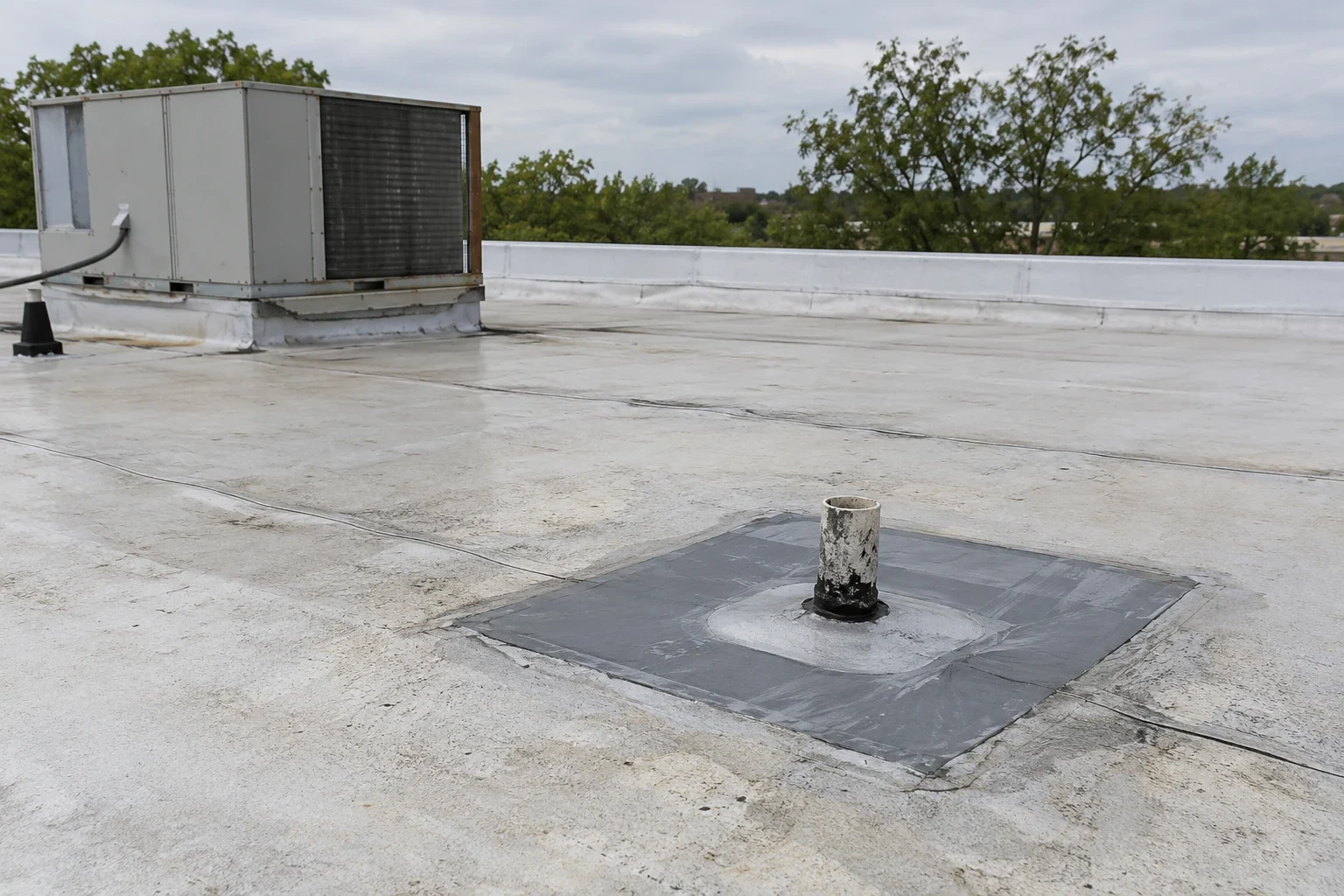
A crescent cut beside a rooftop service path is the first inspection point. We mark its length and direction, check nearby seams and pads, and determine whether the cut reaches the membrane or only the surface coating. A puncture can admit water through a small opening, while the wet area beneath may spread beyond what is visible. We set the inspection boundary before removing material.
Georgetown's industrial buildings near I-35 and SH 130 include Berry Creek Business Park and NorthPark35. Active maintenance routes and deliveries can create concentrated roof traffic at equipment and loading areas. Those local facilities help frame access planning, but they do not establish damage at a specific property. We inspect the actual roof and use its assembly to choose a repair.
We look for tool cuts, dropped hardware, sharp equipment feet, unprotected conduit, cart wheels, and fasteners. The shape and location can suggest what struck the membrane, but we confirm the damage pattern before assigning a cause. A puncture near a curb may have a separate flashing issue. We photograph the opening and nearby surface, then check the roof zone below for interior signs or wet insulation.
On TPO, PVC, or KEE, the repair often requires cleaning and a compatible welded patch. EPDM may require a compatible splice tape and primer. Coated systems need a different surface preparation and repair detail. We identify the installed system and verify that the surrounding membrane can accept a patch. A TPO membrane or EPDM system should not receive an incompatible material just because it is available onsite.
We also inspect walkway pads and service routes. A pad that has shifted can expose a traffic lane; loose hardware can cut the field surface. The facility contact identifies equipment service paths and any recurring access needs. If the cause is ongoing foot traffic, the repair plan may include repositioning or adding a compatible protection route after the membrane correction.
Metal shavings and loose fasteners should be collected during the repair. Left behind, they can damage tires, equipment, or another part of the membrane. We inspect the immediate work zone for those hazards before tools leave the roof.
A small opening does not define the wet area. We inspect the substrate at the puncture and look for soft insulation, staining, delamination, or movement. Water can travel along a facer or deck before showing indoors. If moisture testing is needed, we define the test area and what it should confirm. The owner approves any core or cut before removal begins.
A moisture survey can help identify candidate zones, but it does not prove that every warm area is saturated. We compare the scan with visual clues and confirm through an approved test. The report separates the puncture from any broader moisture condition. If the deck is damaged or cannot support a patch, that finding becomes a hold point for a larger repair discussion.
Georgetown's mixed-use courthouse district combines county, municipal, business, and residential functions across about 40 blocks. Interior access at a downtown building may require coordination with public offices or tenants. Along the FM 971 corridor, commercial properties may have different loading windows. In either location, we use the building map and site contact to reach the affected interior zone.
Central Texas summer heat can affect surface temperature, patch preparation, and safe roof time. Georgetown station observations commonly show summer highs in the 90s, with recent days above 100 degrees Fahrenheit. We check product limits, substrate condition, and the available work window before applying a repair. If surface moisture, dust, or heat prevents a sound bond, the crew protects the opening and returns when conditions allow.
Severe weather can expose an existing puncture by driving water across the surface. The documented March 2022 tornado path crossed Williamson County from the Round Rock area toward Granger. The track does not establish a membrane opening at a particular property. After a storm, we inspect the puncture, surrounding seams, edge details, and nearby rooftop equipment. A hail inspection can document separate impact conditions on the same roof.
If there is active entry below, we protect the affected area when access is safe and the correct temporary material is available. We record whether the measure is temporary or permanent. A dry-in does not close the underlying repair if moisture or substrate condition remains unknown.
We remove loose or compromised material to a sound boundary, prepare the surface, and install a compatible patch with the required overlap. The finished perimeter is checked for wrinkles, fishmouths, contamination, or an unbonded edge. For welded membranes, a probe check follows the system procedure after the weld cools. For adhered systems, cure requirements control when the area can return to service.
Several punctures in one route may indicate a protection problem rather than isolated contact. We map each location and discuss walkway pads, equipment bases, or service-path adjustments. If the substrate is wet, the patch may need to extend to dry, stable material. A seam-failure repair is scoped separately if an adjacent lap has opened, while a repair estimate can group verified punctures by roof zone.
Cost and timing depend on membrane type, patch size, access, moisture testing, material preparation, and the need to remove equipment or protection. We identify assumptions about concealed layers. If the opening exposes widespread wet insulation, soft deck, or a larger tear, the crew stops at a hold point and presents the finding before expanding the work.
We mark the repair location on the roof map and notify the site contact of any temporary traffic restriction. The closeout includes photos, patch material, date, test result, and nearby condition left outside the scope. A walkway pad is reset only after the repair is ready and the pad can sit without damaging the membrane.
Near Berry Creek Business Park and NorthPark35, deliveries or equipment service can share the same access routes as roof work. The facility team identifies who needs notice and how roof access is authorized. A later maintenance visit can check the patch and protection route after normal operations resume.
Send the roof plan, membrane type if known, puncture location, interior report, and service-route schedule before the walk. We will map the repair, define any test area, and hand off the protection requirement.
It can. Water may move through insulation or along the deck before it appears inside. We inspect the surrounding assembly and compare roof and interior locations before setting a patch boundary.
We identify the installed membrane and verify compatibility with the surface and repair detail. TPO, PVC, EPDM, and coated assemblies use different preparation and attachment methods.
When conditions warrant, we propose a defined test area and explain what the opening will confirm. The owner approves a core or cut before removal. A thermal scan alone does not establish moisture.
We document the repeated locations, inspect pads and equipment bases, and identify a protection change with the facility contact. The patch corrects the membrane opening; traffic protection addresses the recurring exposure.
The membrane detail, adhesive or weld, temperature, and product requirements determine the release time. We identify the restriction and tell the site contact when the area can return to service.