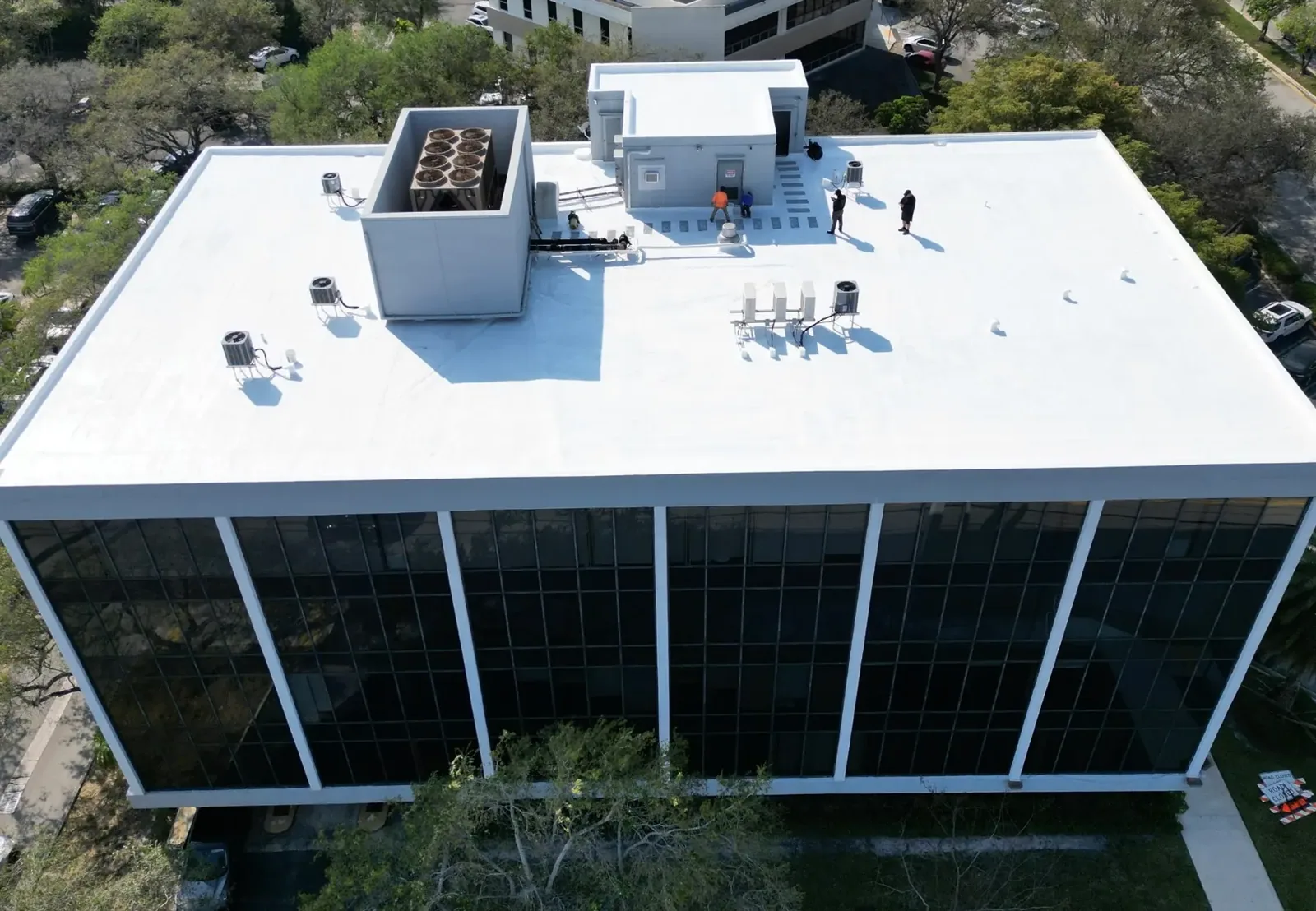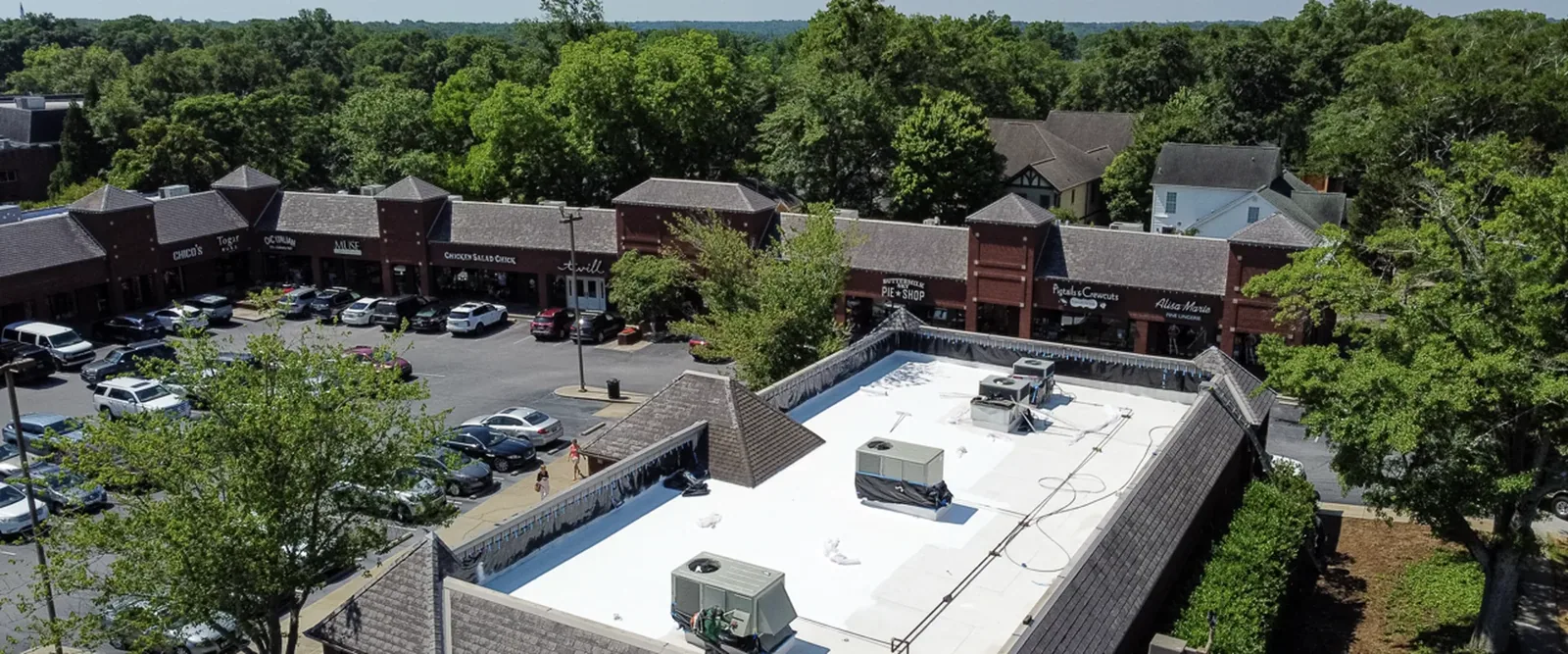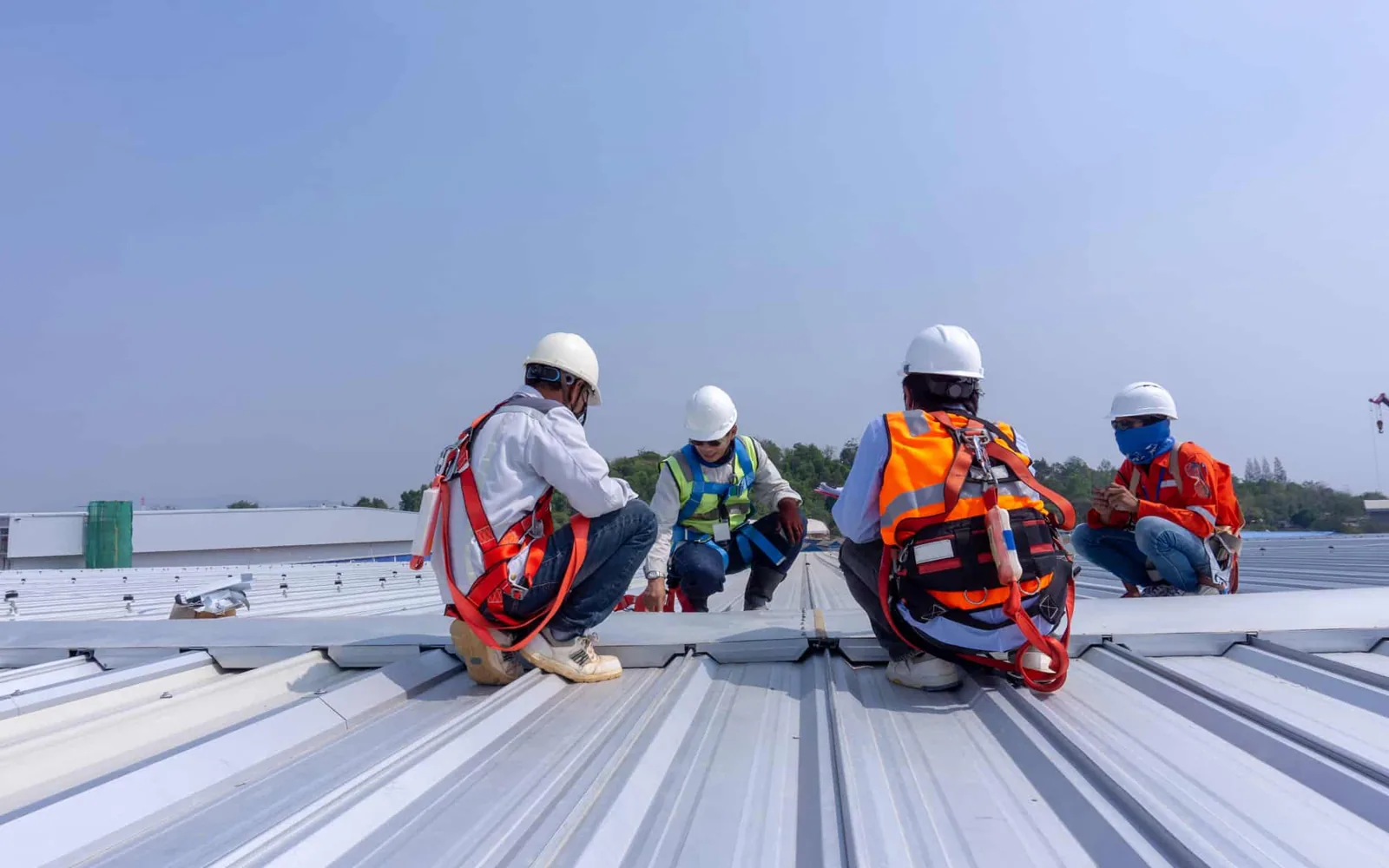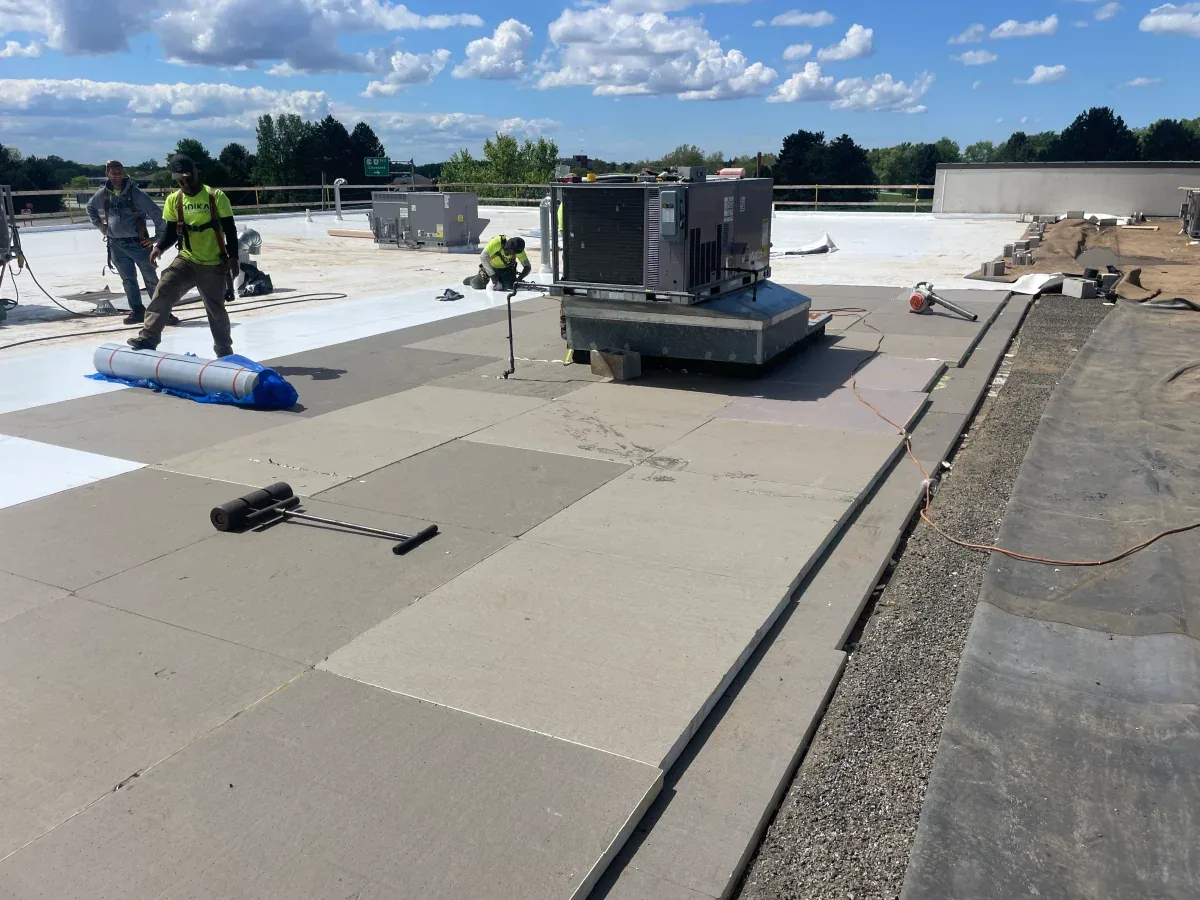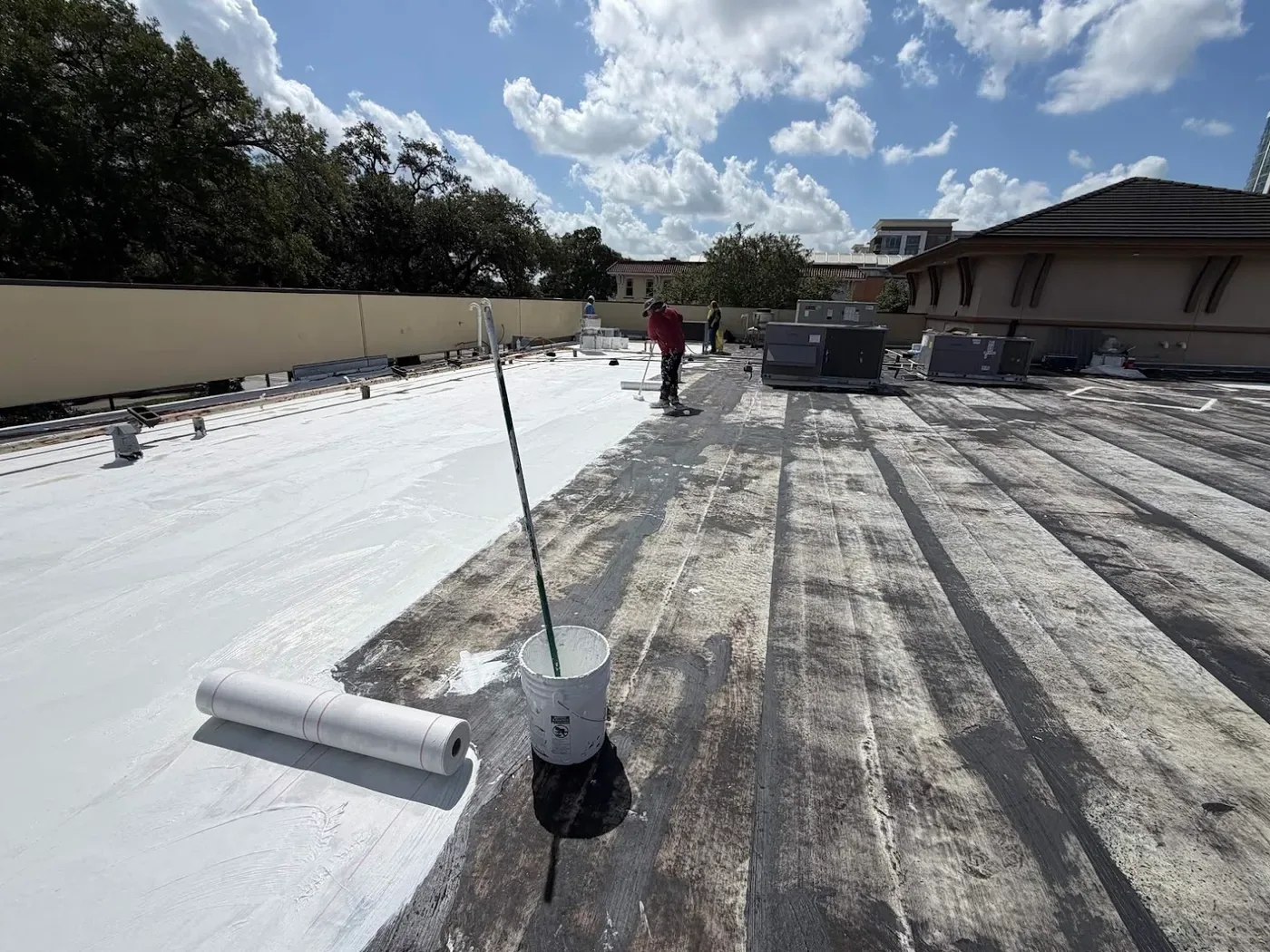
A coating that peels at the drain edge has lost its bond where water tests it first. We check adhesion, surface condition, and the existing roof before discussing restoration. The coating goes only where the assembly can support it. We mark repairs and test areas before full application.
Georgetown summers bring high roof temperatures, and the local station has recorded days above 100 degrees. That heat can affect application windows and cure conditions. Berry Creek Business Park serves industrial users near I-35 and SH 130. A coating project there still starts with the actual roof, not the park's tenant mix. We map the work boundary and confirm the access route with the site contact.
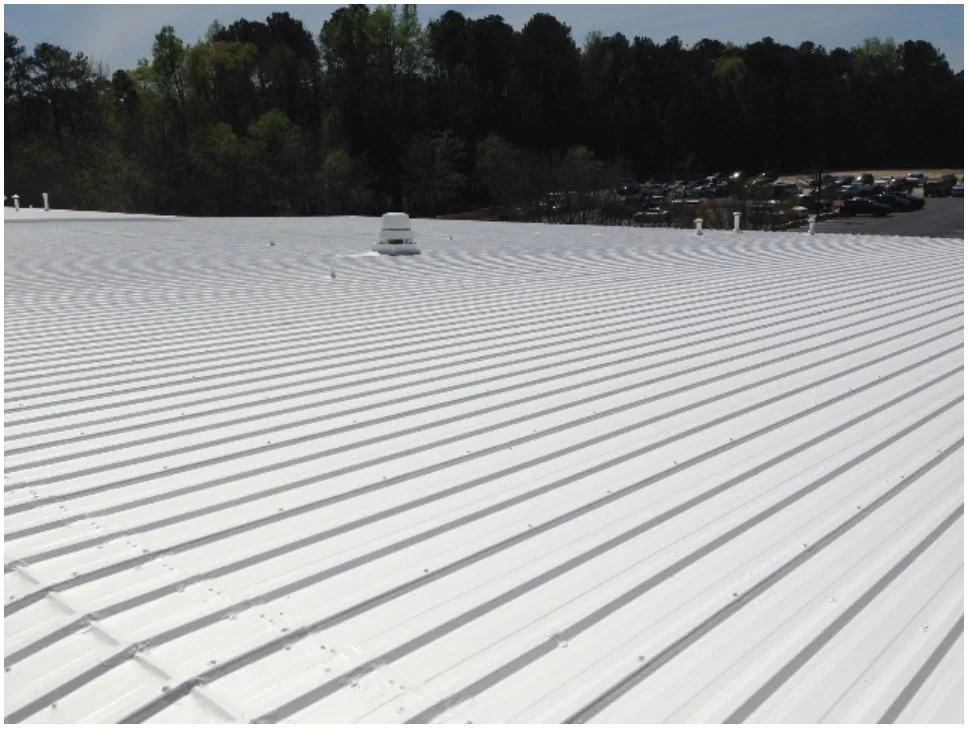
We identify the membrane or roof surface and check whether it is dry, stable, and suitable for coating. Loose surfacing, open seams, wet insulation, failed flashing, or a moving deck can defeat the restoration plan. We inspect representative areas and record repairs that must come first. A test patch can show adhesion under actual site conditions.
Coatings do not correct trapped moisture or replace damaged insulation. If water has entered the assembly, we locate the affected area and decide whether selective removal is needed. We also check whether a previous coating remains compatible with the proposed product. The work plan names preparation, primer if required, reinforcement, application thickness, and cure conditions. A roof inspection can establish the condition record before the coating scope is priced.
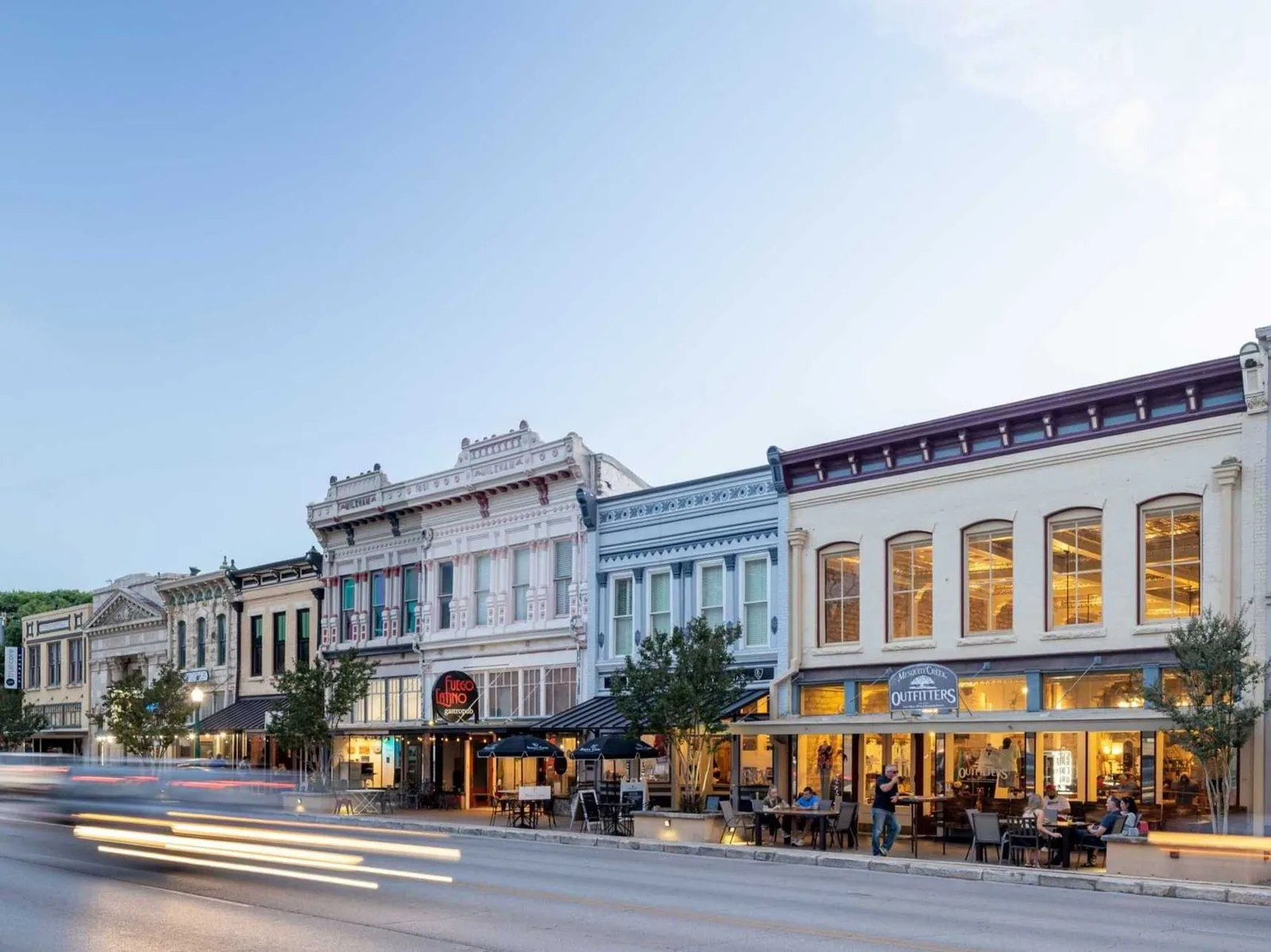
A roof surface with several generations of patching needs a careful system review. Georgetown’s 40-block courthouse district mixes historic commercial, municipal, county, and residential uses, so access and staging must fit the actual building. We identify the membrane and repair history during the site walk.
Open seams, punctures, failed penetrations, and loose edge details need repair before a field coating covers them. We mark each defect and decide whether the substrate can hold a compatible patch. Drains, scuppers, and overflow paths get separate attention. A coating should not bridge a moving joint or hide a detail that still needs correction.
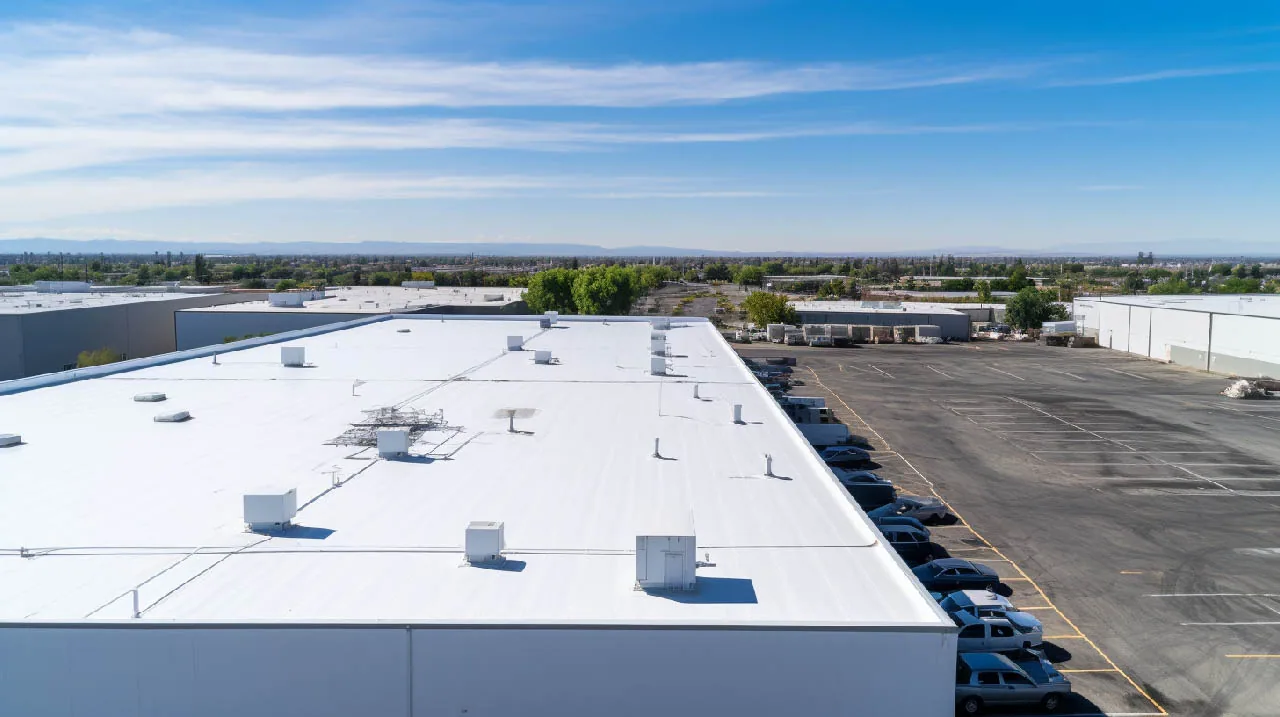
A coating may reinforce a sound surface, but it does not solve poor drainage. We check low areas, outlet height, debris, and water paths near curbs or walls. Any change to slope or drain capacity belongs in a separate corrective scope. For drain defects, the drain and scupper service can address the flow path. If the membrane itself needs a defined repair, a repair visit establishes the tie-in before restoration.
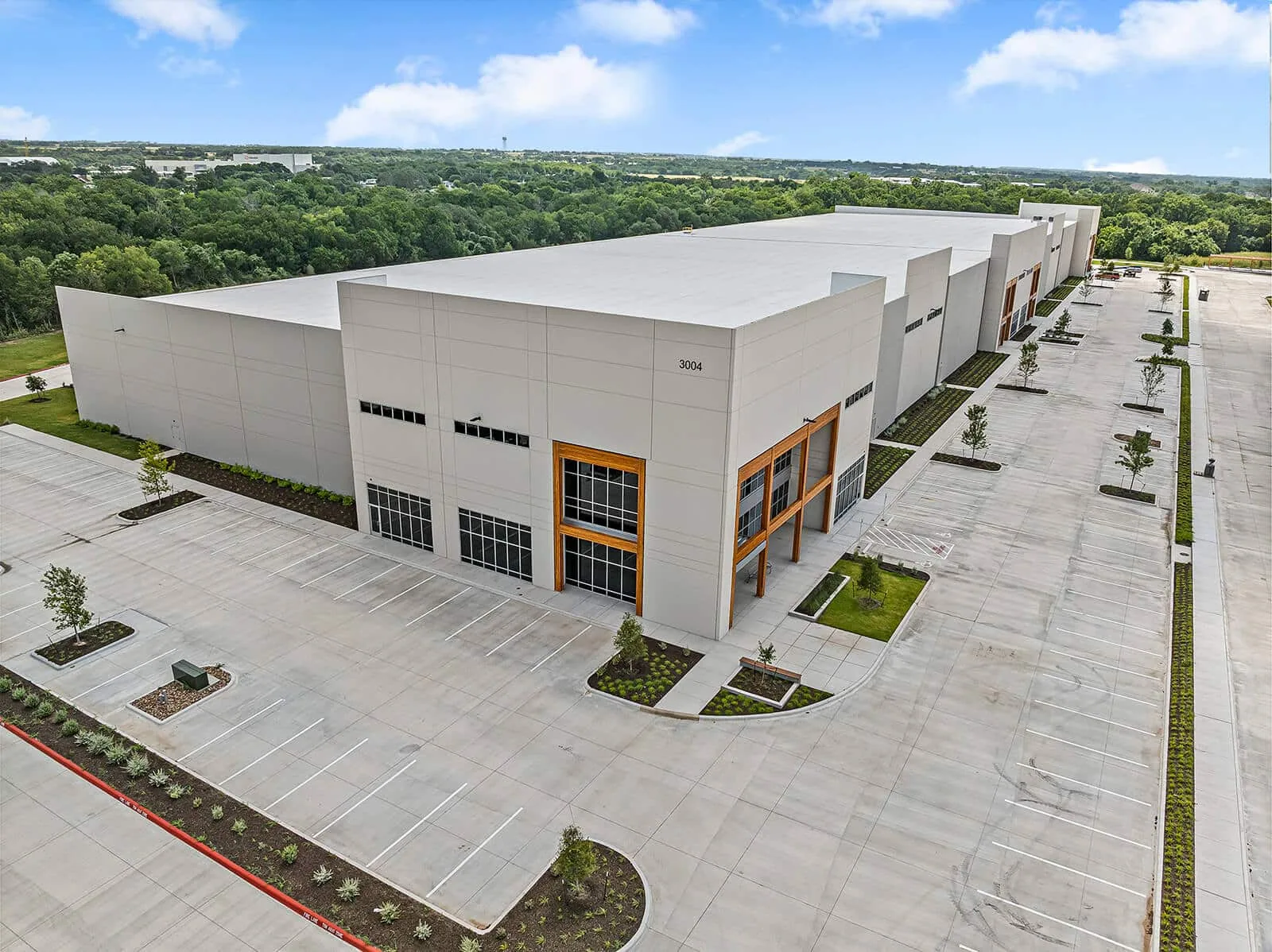
NorthPark35 and Georgetown Logistics Park are part of Georgetown’s industrial pipeline, with utility expansion planned for additional buildings. On each project, the roof map separates drains, curbs, and equipment transitions by zone and marks which details are included.
Coating work needs a clean and dry surface. The product instructions set temperature, humidity, and cure limits. We check the surface, forecast, and dew conditions before opening containers. Wind can carry overspray beyond the work zone. Nearby equipment, vehicles, and occupied areas need protection before application begins.
Georgetown station records show summer daily highs commonly in the 90s, with recent days above 100°F. Hail reports span the Austin and San Antonio forecast area; tornado tracks are documented in Williamson County. After severe weather, we inspect the roof before setting coating work. We define a weather hold point, protect opened areas, and reset the sequence when conditions fall outside product requirements.
Material staging and access matter too. Near Berry Creek Business Park, confirm delivery paths and loading activity with the site contact. In downtown Georgetown, public access and historic-district circulation may shape setup. We set the route with the actual property representative. The crew sets the cure window after a test area confirms surface preparation and product behavior under site conditions. At parapets and curbs, we also verify termination height and reinforcement width before the field coat reaches the edge. The inspection note records where each repair sits relative to the application boundary.
The decision depends on the substrate, moisture, number of repairs, existing layers, and how long the owner needs the roof to serve. A coating plan can preserve a viable assembly when preparation and product compatibility check out. Widespread wet insulation, deteriorated deck, or an unstable membrane may call for replacement instead. The inspection record should show why the chosen scope fits the roof.
We compare coating, recover, and tear-off with the same roof area and drainage assumptions. The proposal lists preparation, repair quantities, reinforcement details, application rate, exclusions, and access costs. It also states how concealed conditions are handled. A silicone coating system or an acrylic coating system has different product requirements. We select from verified exposure and current technical documents, not a generic claim about service life.
If the existing roof cannot support restoration, the replacement evaluation can set a removal boundary. A photo condition record helps the owner compare scope and later maintenance. We itemize the preparation hours, material quantities, access needs, and test locations. Those are practical cost drivers. The proposal also names the point where added work must pause for review, so the coating crew does not expand beyond the approved roof area.
At completion, we mark treated roof zones, repaired details, and any areas excluded from the coating. The file includes product information, preparation notes, photos, weather conditions, and approved changes. It also lists locations where access was limited or moisture testing remains open. The map gives a maintenance crew a clear boundary for later work.
Follow-up inspection should check adhesion, film condition, drains, seams, and transitions. After rooftop equipment work, review nearby coating and flashing for cuts or traffic damage. A maintenance plan can keep the coated zones on a schedule. For an active leak before that visit, emergency response is available around the clock, including holidays. Temporary protection stays distinct from the final restoration work. We also record any untreated transition and its reason, such as incompatible material or unresolved moisture. That note keeps the owner from assuming the coating covered the full roof.
Provide the roof assembly, prior coating history, and dates when the surface can be exposed. We will inspect a test zone and confirm the restoration boundary. The scope will state what can be coated, what must be repaired first, and where a hold point remains.
A coating is an option when the existing assembly is dry, stable, compatible, and repairable. We inspect the roof and use test areas where needed. Wet or damaged materials may require removal.
Ponding requires a separate drainage review. We check drains, scuppers, low areas, and outlet conditions, then define correction work when needed.
The product instructions govern surface temperature, moisture, and cure conditions. We check the roof and forecast before application. Heat, rain, wind, and dew can change the work window.
We inspect the surface, confirm compatibility, prepare the test area, and review adhesion before production. The result applies to the tested condition and does not replace a full roof review.
The scope should name surface preparation, repairs, reinforcement, product system, application requirements, work boundary, exclusions, and how concealed damage is handled.