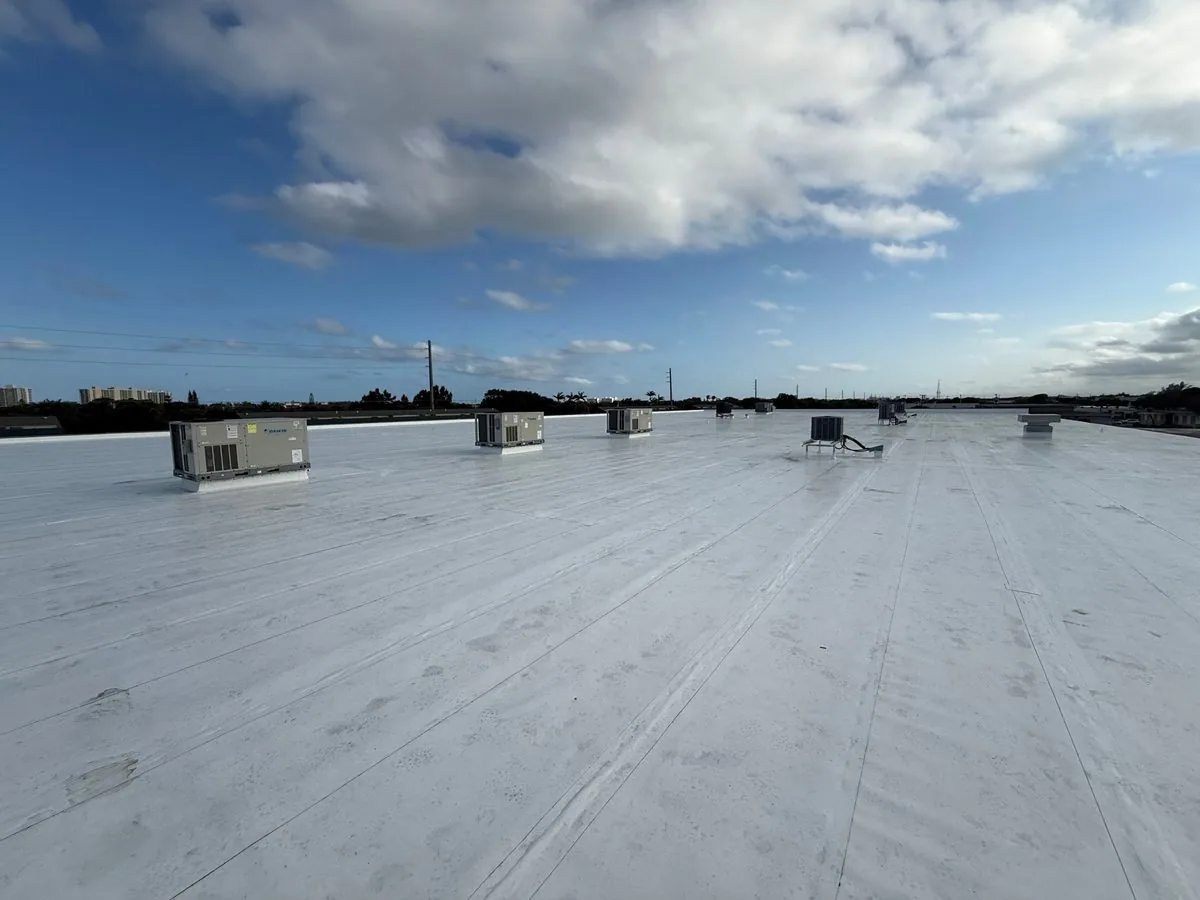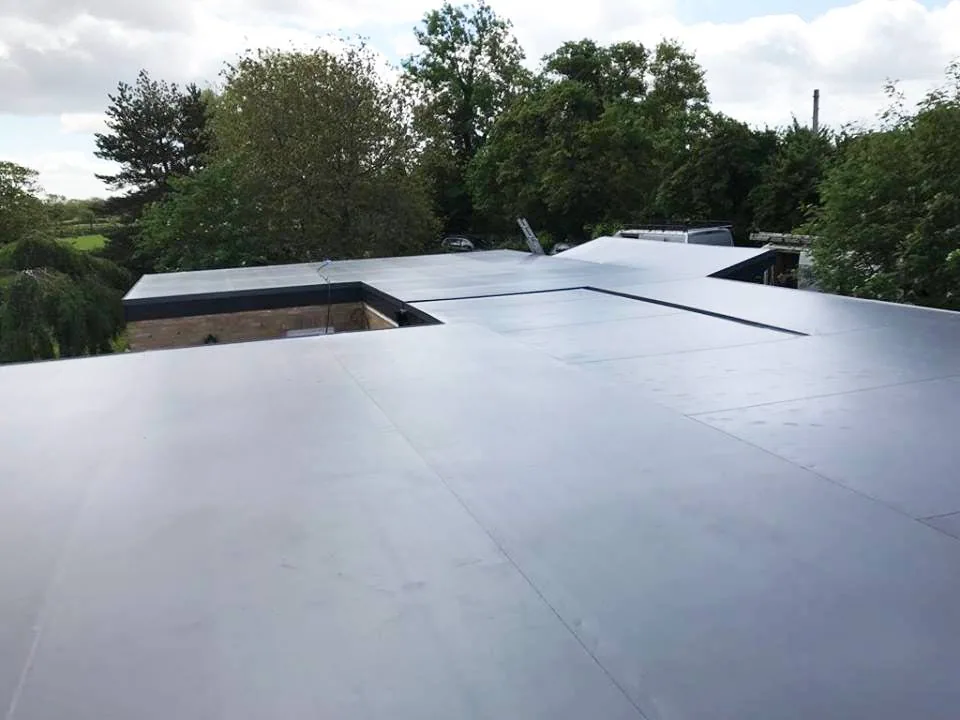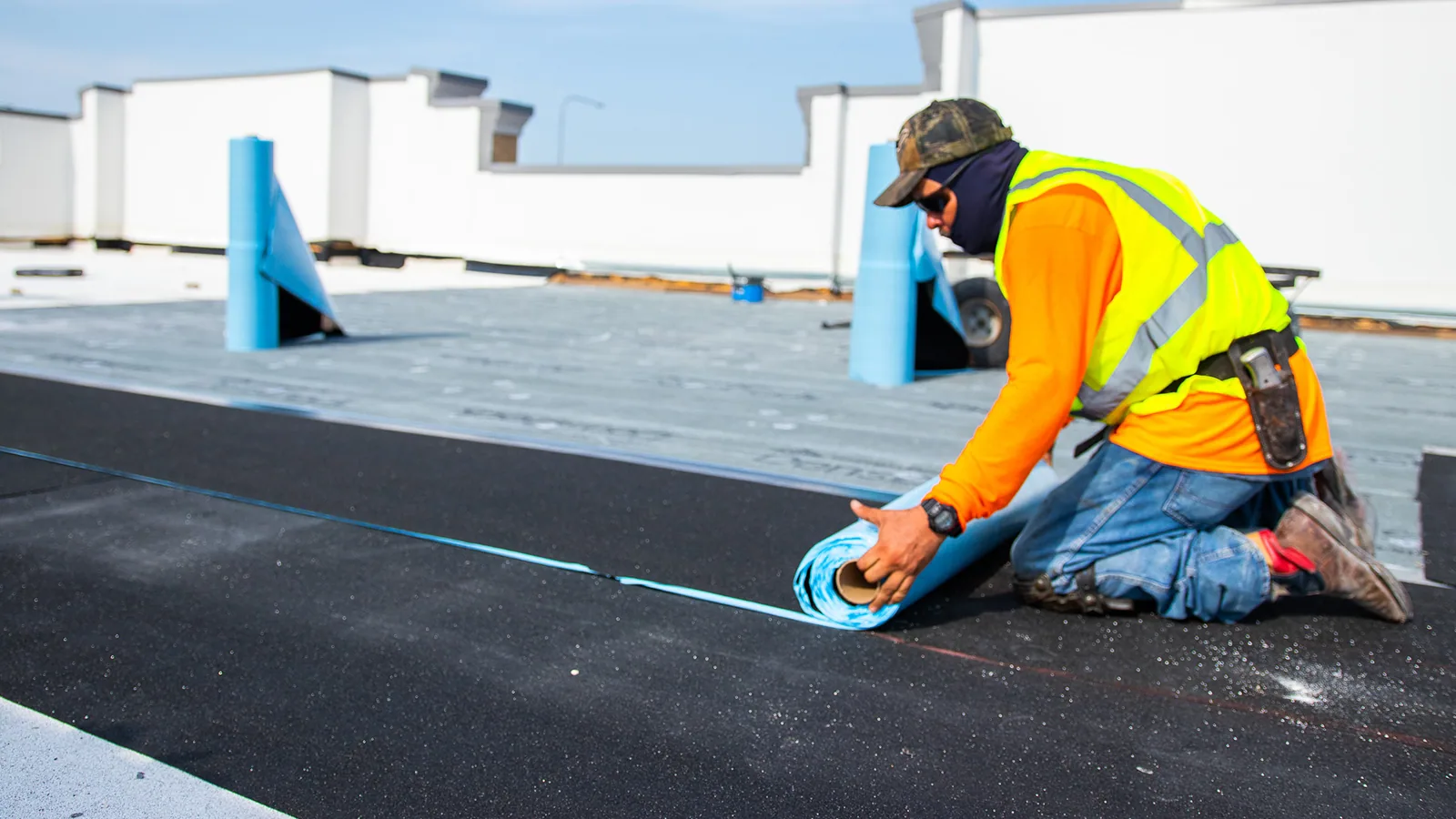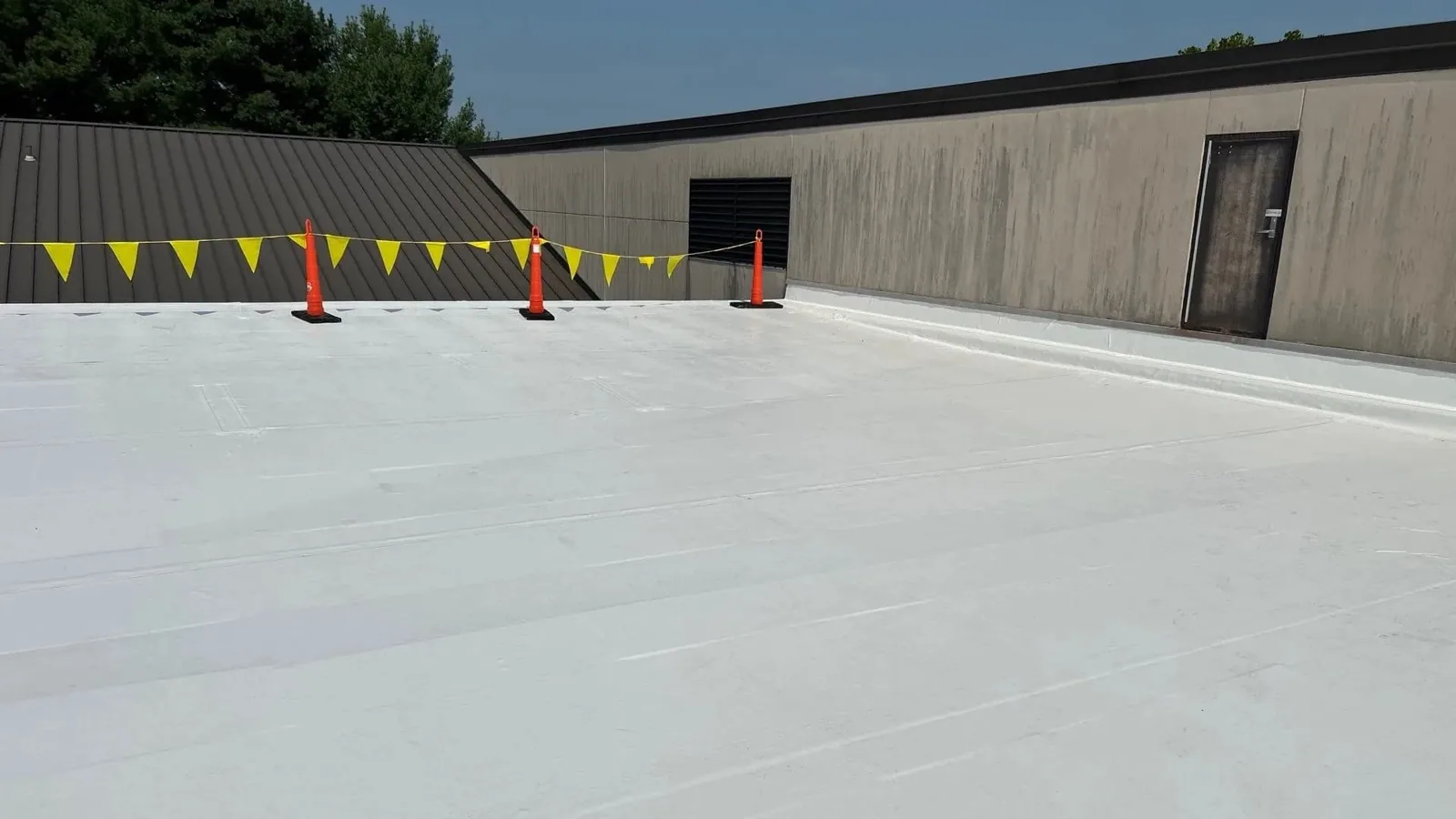
A blister beside a roof drain needs more than a surface patch. We check the membrane, nearby lap, drainage path, and any trapped moisture before setting the boundary. Soprema supplies commercial roofing products that include SBS modified bitumen, PVC, and PMMA or PMA liquid-applied membranes. The roof assembly determines which repair detail belongs there.
Georgetown’s hot summers put exposed laps and flashing under repeated heat. Local station readings commonly place daily highs in the 90s, with recent values above 100°F. Industrial sites near Berry Creek Business Park and NorthPark35 also require planned access and material staging. A modified-bitumen roof review begins with the existing layers and not a product assumption.
SBS modified bitumen uses asphaltic sheets, while PVC is a thermoplastic membrane and liquid-applied systems cure across a prepared substrate. Those products do not share one repair method. We identify the roof type, attachment or adhesion, surface condition, and transition details before recommending work. Product documents help confirm what is compatible with the installed assembly.
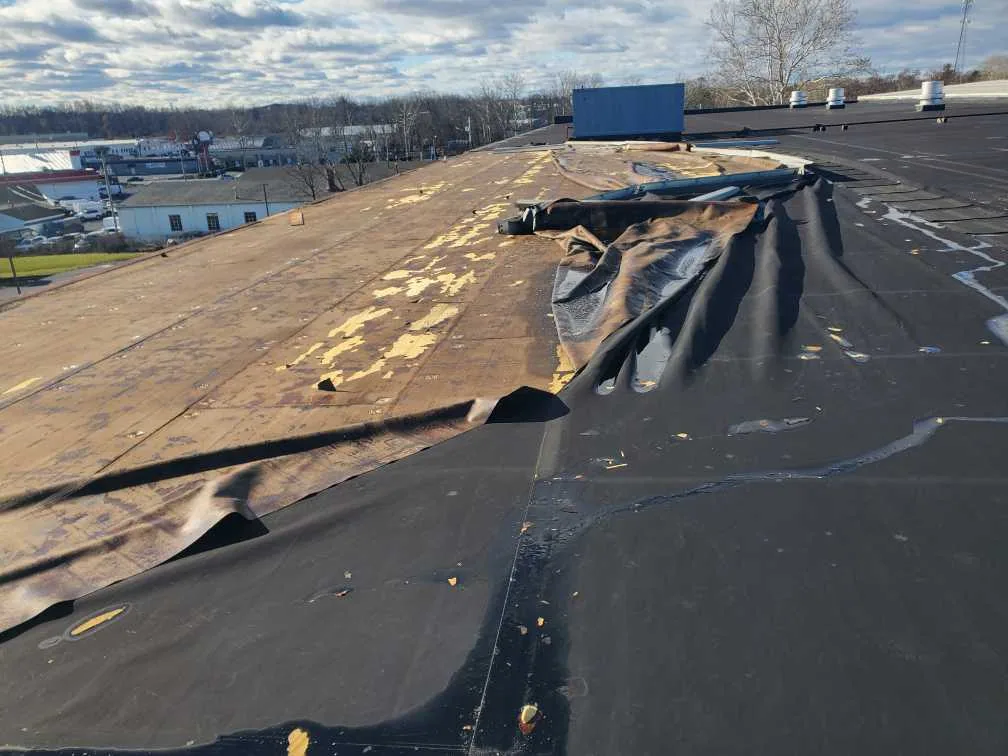
For a modified-bitumen roof, inspect laps, granulated surfaces, flashing plies, and transitions at curbs and walls. A surface split can extend beyond the visible opening. The crew checks the adjacent sheet and substrate, then decides whether a local patch can tie into sound material. Open layers need protection and a clear dry-in sequence before the shift ends.
For PVC, verify a clean, weldable surface and sound membrane around the defect. A liquid-applied detail needs compatible primer and a prepared substrate. We do not move from one material to another because they are both sold under the same brand. A test area can settle adhesion or weld questions before the owner approves broader work.
NorthPark35 and Georgetown Logistics Park are industrial growth areas named in local economic-development work. Separate maps and repair records keep each building’s roof findings tied to the right assembly. A GAF commercial systems comparison or Johns Manville product review should follow the same field identification step.
Water can travel along a lap, insulation joint, curb, or drain bowl before appearing indoors. We begin at the reported area, follow the roof slope and membrane seams, then compare those paths with interior staining. The map records where the walk started and where it stopped. That keeps a likely route distinct from a confirmed opening.
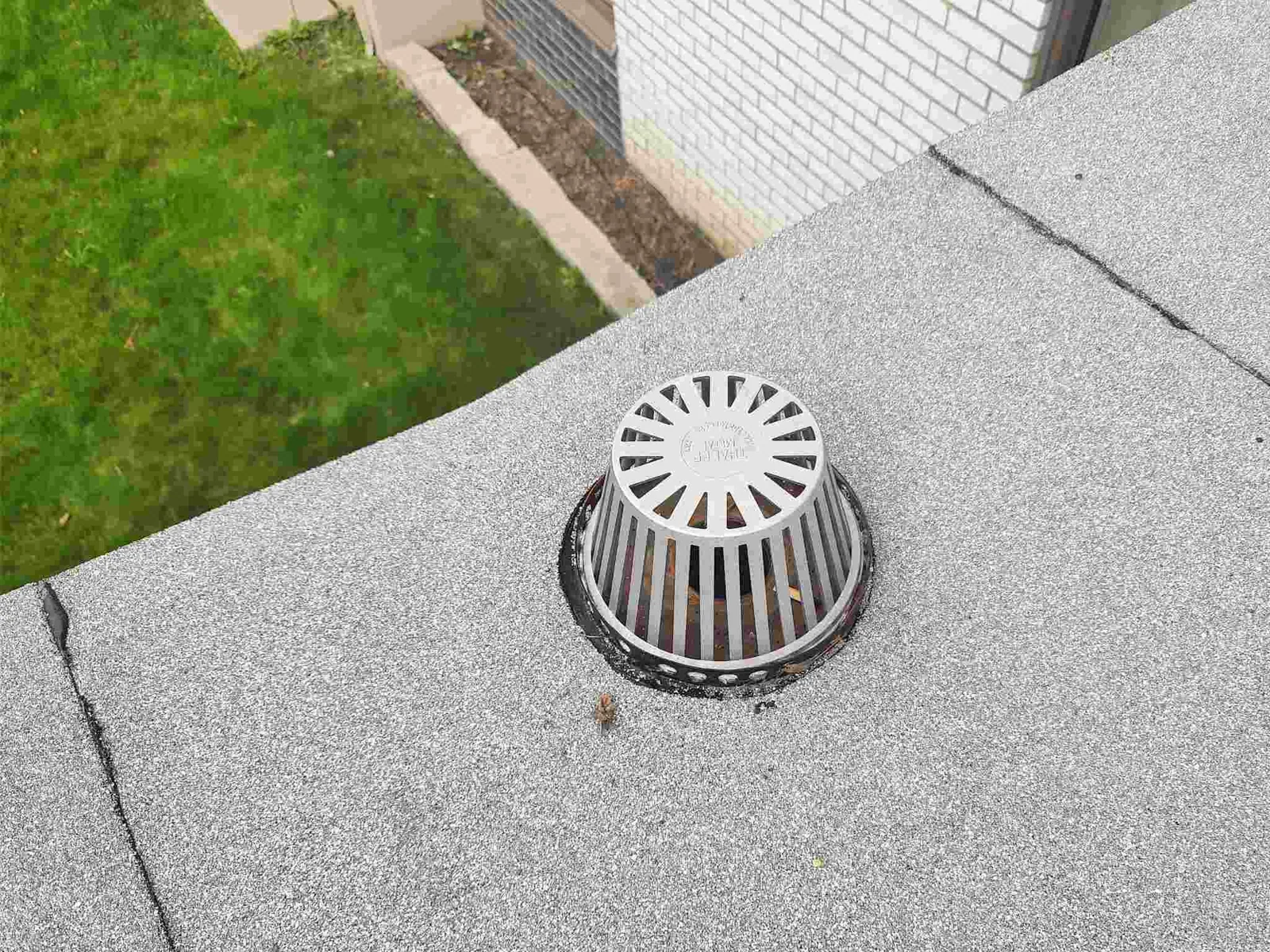
At a drain, inspect the bowl, clamping ring, strainer, and membrane connection. A blocked outlet is not the same repair as a loose flange. During heavy rain, slow drainage can reveal low areas or blocked outlets. Standing water still needs a roof-side check to identify the failed detail. A drain inspection notes each observed condition and the next verification step.
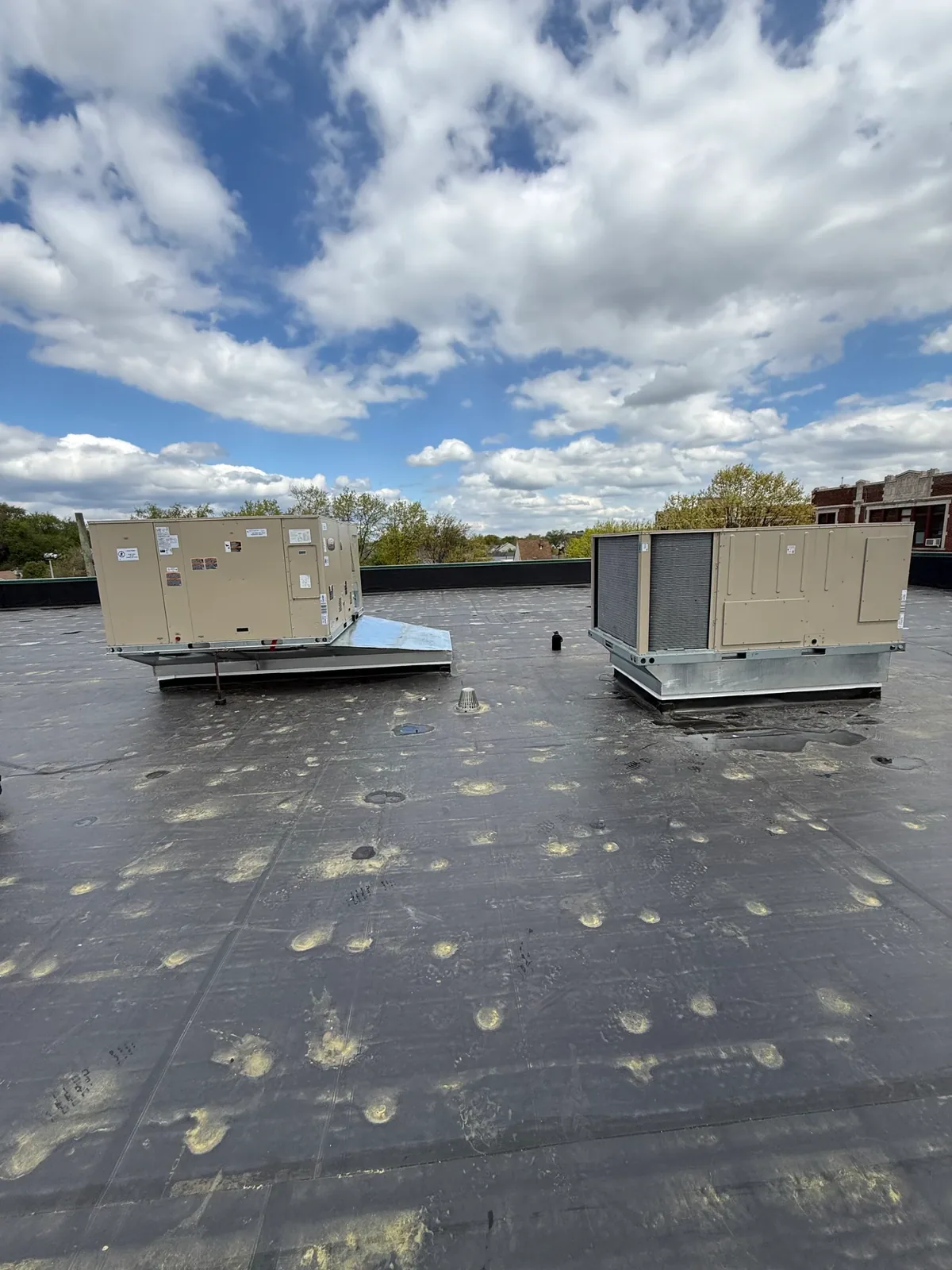
At parapets and curbs, check the transition from horizontal field to vertical flashing. Termination bars, counterflashing, sealant, and corners each need their own review. If a mechanical trade moved equipment or conduit, photograph the interface and include the work boundary in the handoff. A curb detail inspection can separate roofing work from equipment support changes.
If insulation may be wet, the survey result can identify test areas but cannot replace verification. We mark the pattern, select a test location, and document what the opening shows. Dry material, wet material, and material not inspected remain separate findings in the report.
Surface temperature, moisture, dust, and afternoon wind can affect preparation and tie-in work. Before opening a roof, confirm the forecast, access route, material delivery, and a workable dry-in sequence. If conditions shift, secure the opening, mark the stopping point, and record what remains for the return visit.
The NWS documents hail events across the Austin and San Antonio forecast area and a 2022 tornado track across Williamson County. Those records support a timely inspection after severe weather. They do not prove a specific building was damaged. We record punctures, fractured surfacing, displaced edge metal, loose flashings, or water intrusion only when observed. A storm-damage inspection separates field evidence from the event date.
Georgetown station data show high summer temperatures. Heat can change safe access and the time available for a repair. We stage materials where they will not block roof drains or fire access. Near the FM 971 connector between I-35 and SH 130, delivery timing should be coordinated with the general contractor and property operator.
Georgetown adopted the 2021 International Existing Building Code for repair and alteration of existing buildings. Applicable requirements depend on project scope and review. We describe the roof condition, proposed repair, and interface details so the project team can coordinate the design and permitting questions.
A local patch may fit where the surrounding membrane is sound and the substrate is dry. Repeat failures, broad deterioration, widespread moisture, or an unreliable transition can push the decision toward a larger restoration or replacement. We state which observation supports the recommendation and identify each area that still needs testing.
A repair scope separates membrane work from access, temporary protection, interior covering, and follow-up testing. A coating or liquid-applied treatment needs a sound base and compatible preparation. We check adhesion, drainage, existing layers, and edge conditions before pricing that option. A restoration evaluation does not assume a coating can correct a concealed assembly problem.
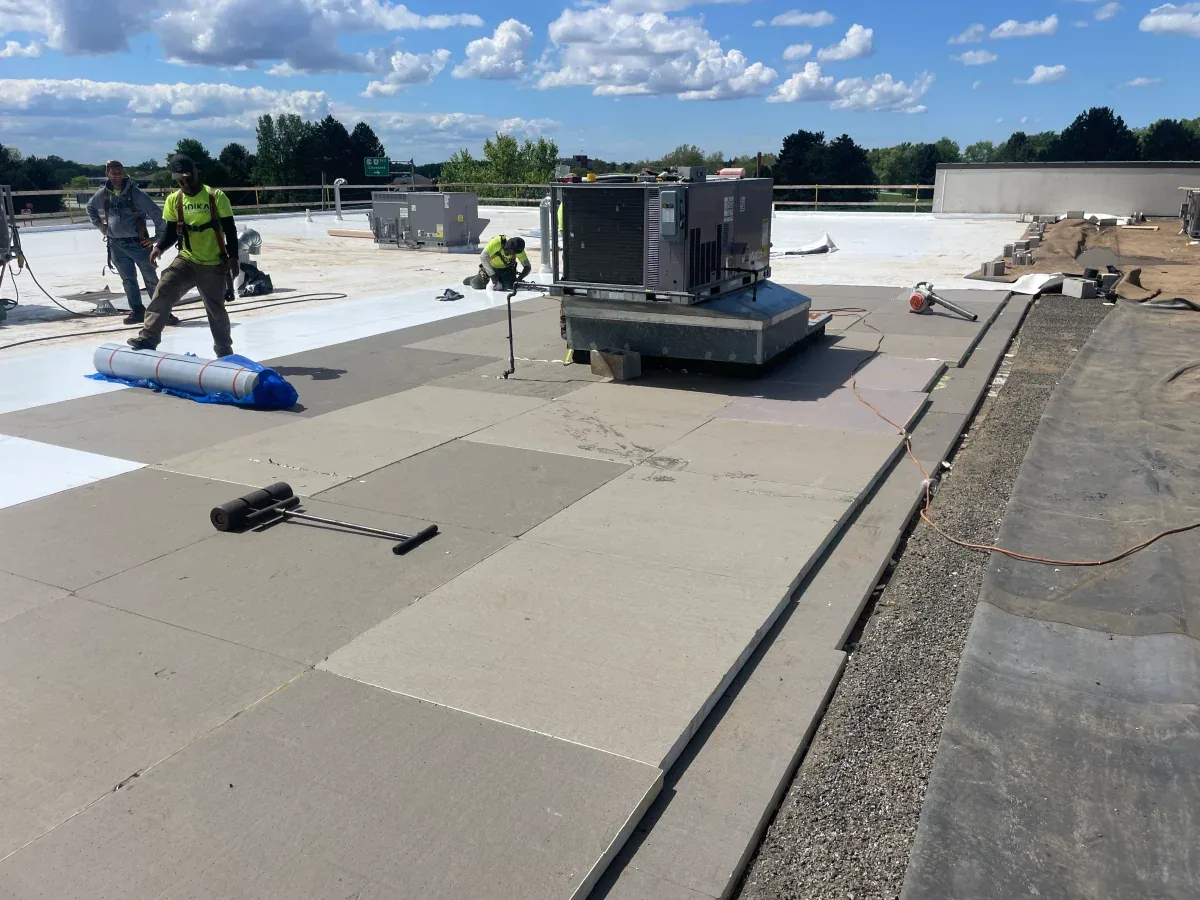
Replacement planning considers tear-off, recover limits, insulation, drainage, penetrations, roof loading, and work sequencing around operations. If the roof remains serviceable but needs phased correction, show the near-term repair and later capital work as separate decisions. A replacement review gives the general contractor a basis for sequencing adjacent trades and temporary dry-in.
For properties across the Georgetown area, maintain a separate record for each roof. A Berry Creek Business Park roof visit can use a coordinated access window, but findings stay attached to the building that was inspected. The map, photographs, repair boundary, and open items travel together.
Before mobilization, confirm the ladder or hatch, travel path, lift access, staging space, and contact responsible for the general-contractor handoff. Mark drains, curbs, transitions, penetrations, and any areas unavailable during the visit. That keeps the crew inside the agreed work boundary.
At a test opening, check the actual membrane, adhesive or attachment, insulation, and deck. If layers differ from the expected assembly, stop and document the condition before the repair continues. Temporary dry-in should be labeled separately from permanent work. The closeout records materials used, test results, and the next hold point.
A condition report can hold dated photos and access limits. The owner can keep it with system submittals and later repairs. A capital planning review can use those findings to compare repair timing with broader replacement. Neither record should imply that an uninspected area is sound.
Send the building address, roof plan, issue location, access hours, and available product paperwork. We will confirm the inspection route and the first test area before assigning a repair boundary.
No. Modified bitumen, PVC, and liquid-applied products have different substrates and repair steps. We identify the installed assembly before selecting materials.
We inspect the surface and surrounding layers, then use a test opening if needed. The report separates confirmed wet material from an area that was not opened.
Compatibility depends on the specific products, substrate, and preparation. We check the system documents and a test area before proposing that transition.
It can help identify when an inspection may be useful. The property inspection documents visible conditions; the event record alone does not establish building damage.
Provide the roof plan, reported location, system records, access window, and any previous repair notes. We confirm the field boundary before pricing concealed work.