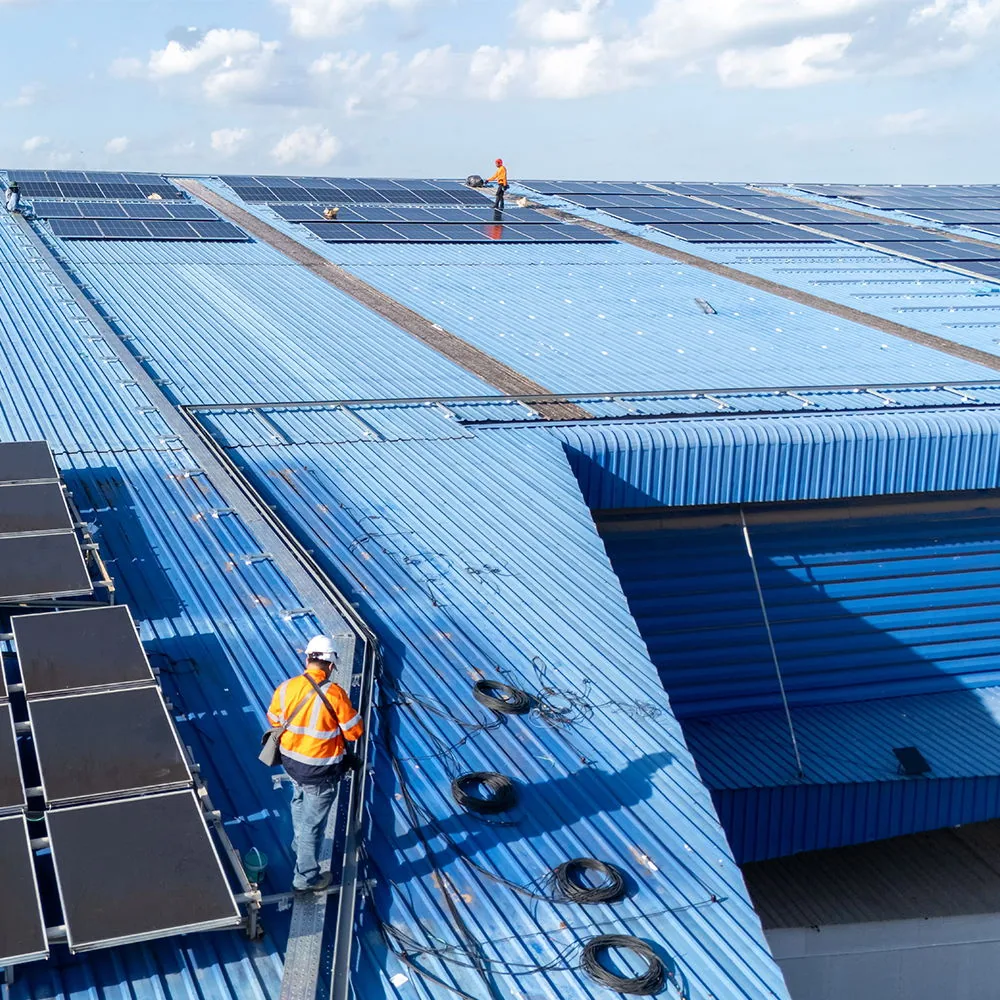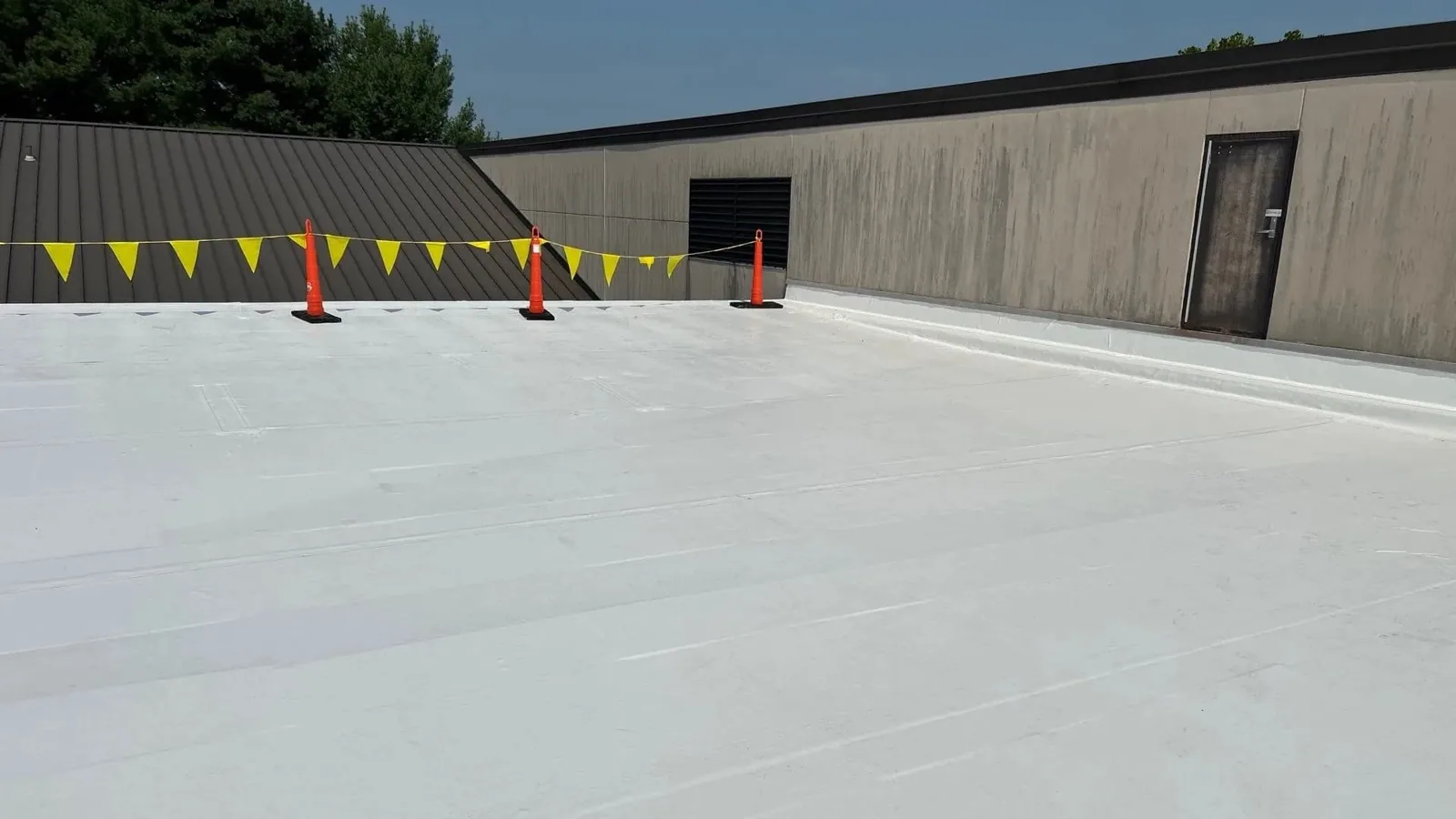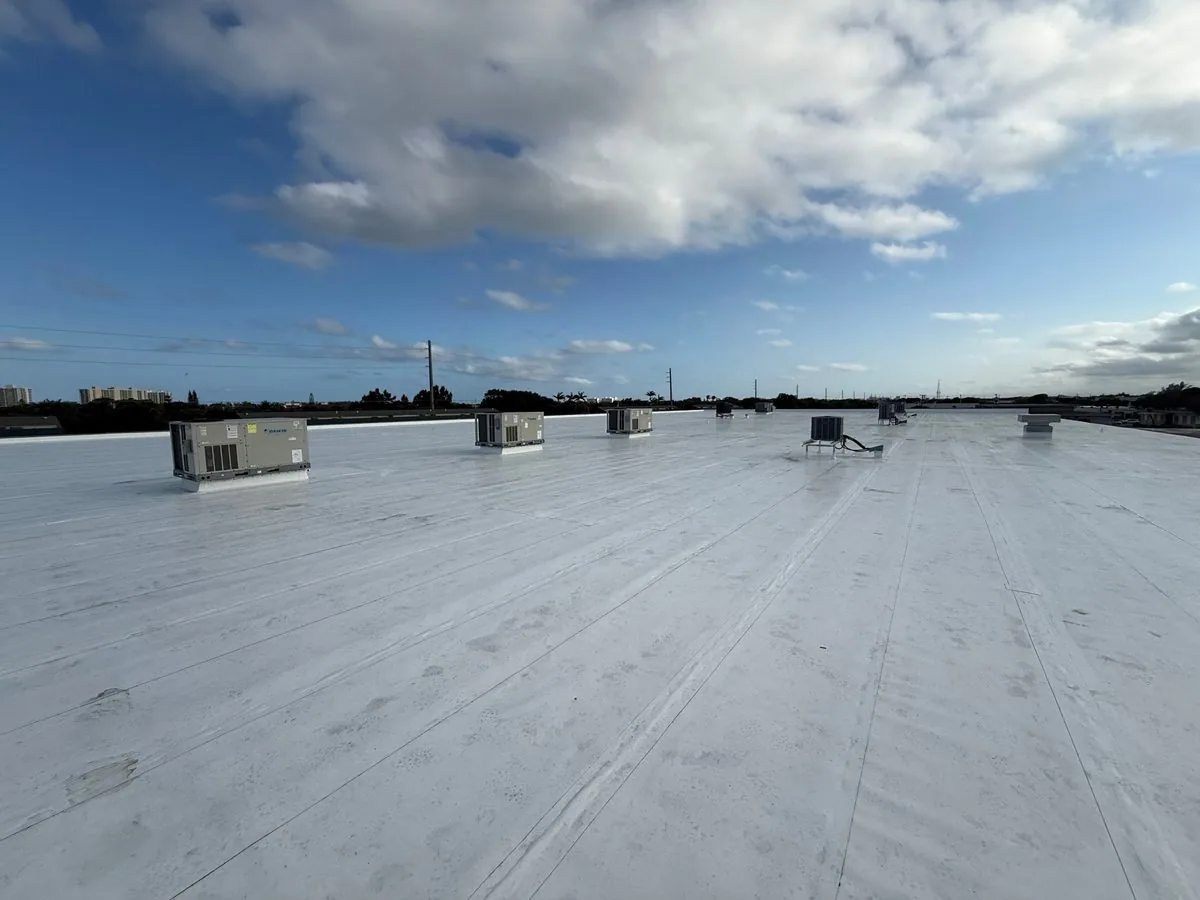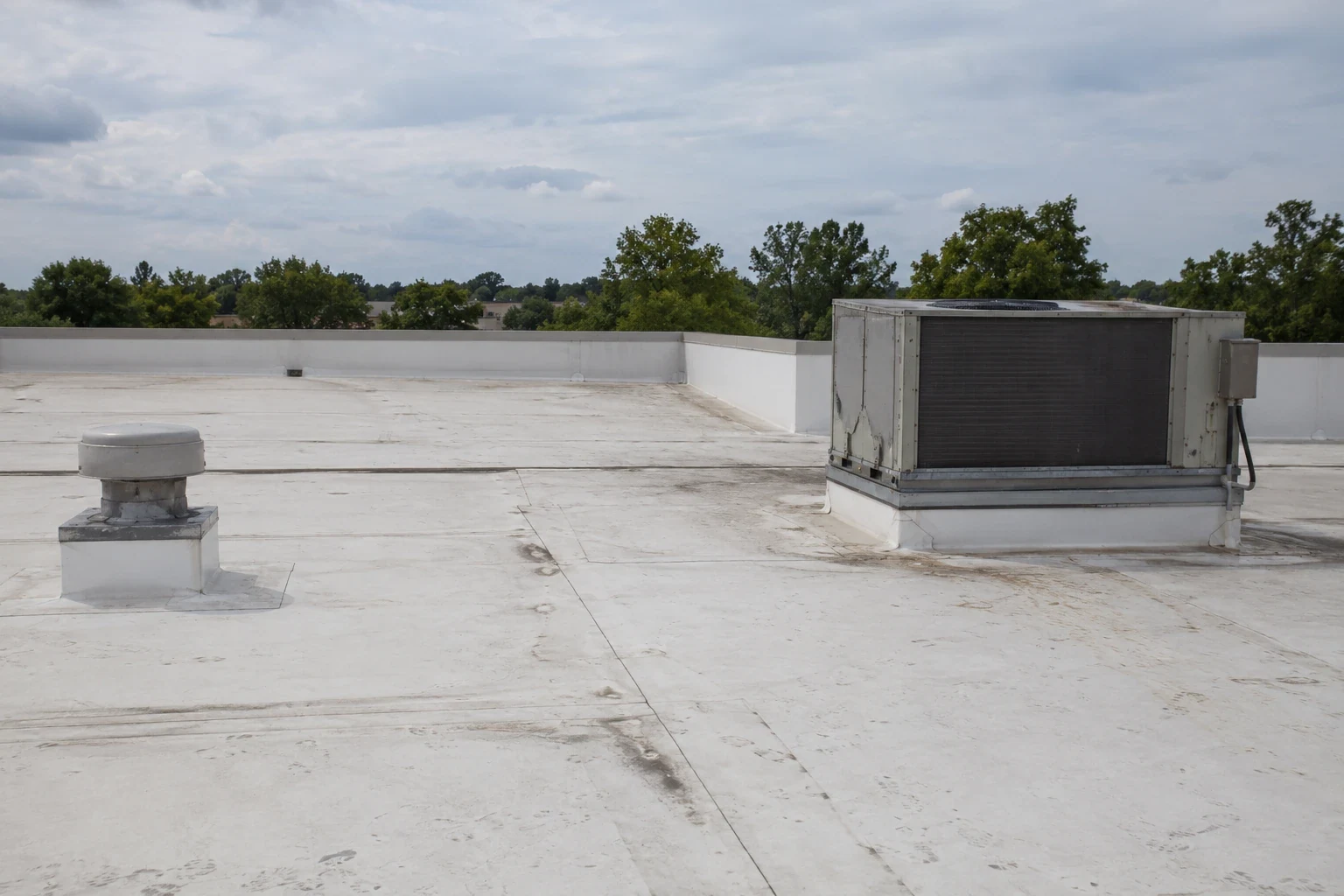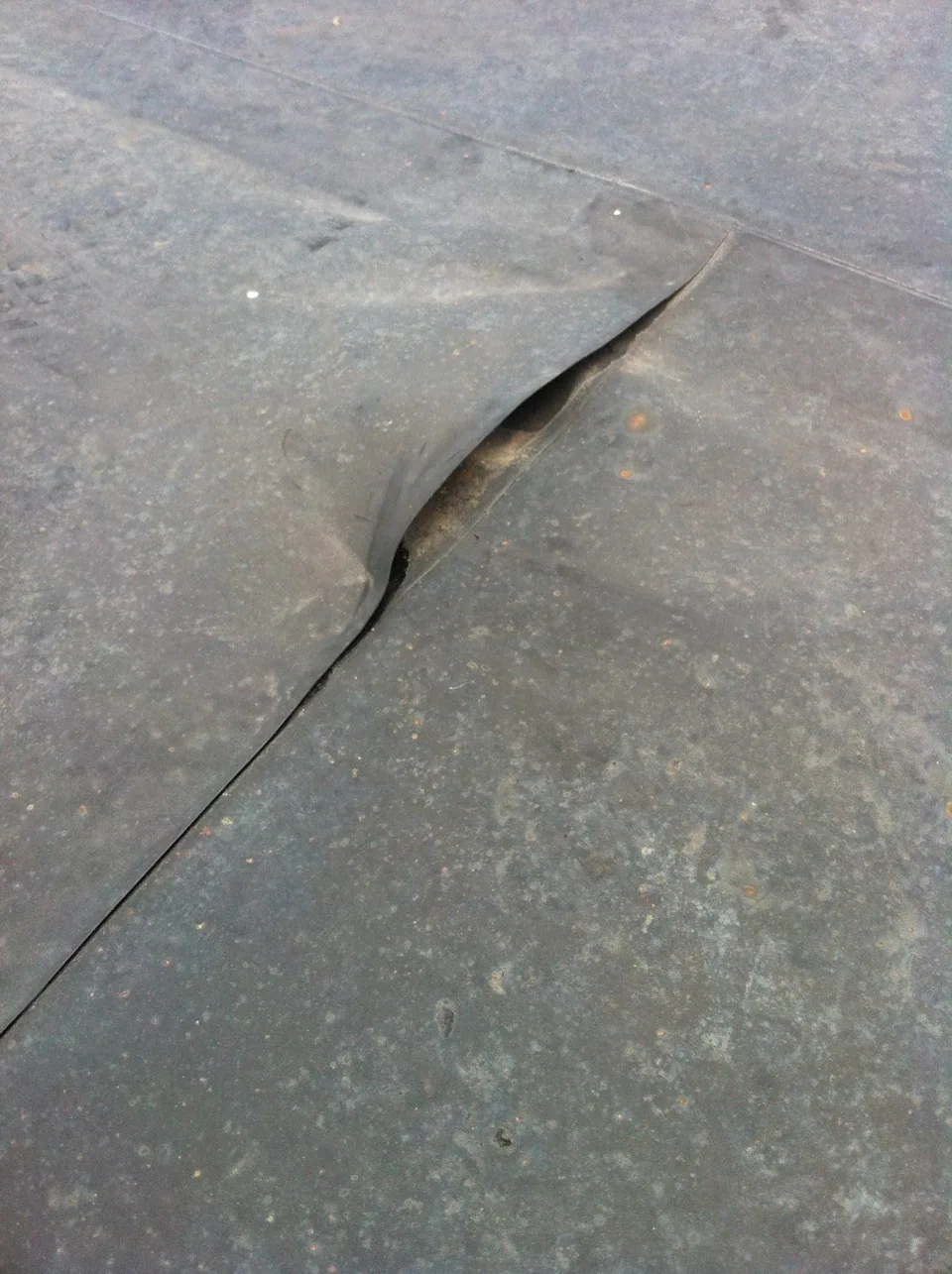
A lifted weld at a GAF membrane T-joint sets the first inspection point. We test the seam, check the adjacent sheet, and trace any interior report before choosing a patch. The brand name does not tell us whether the installed roof is TPO, PVC, or another assembly. We read the field condition and available records, then mark the repair boundary.
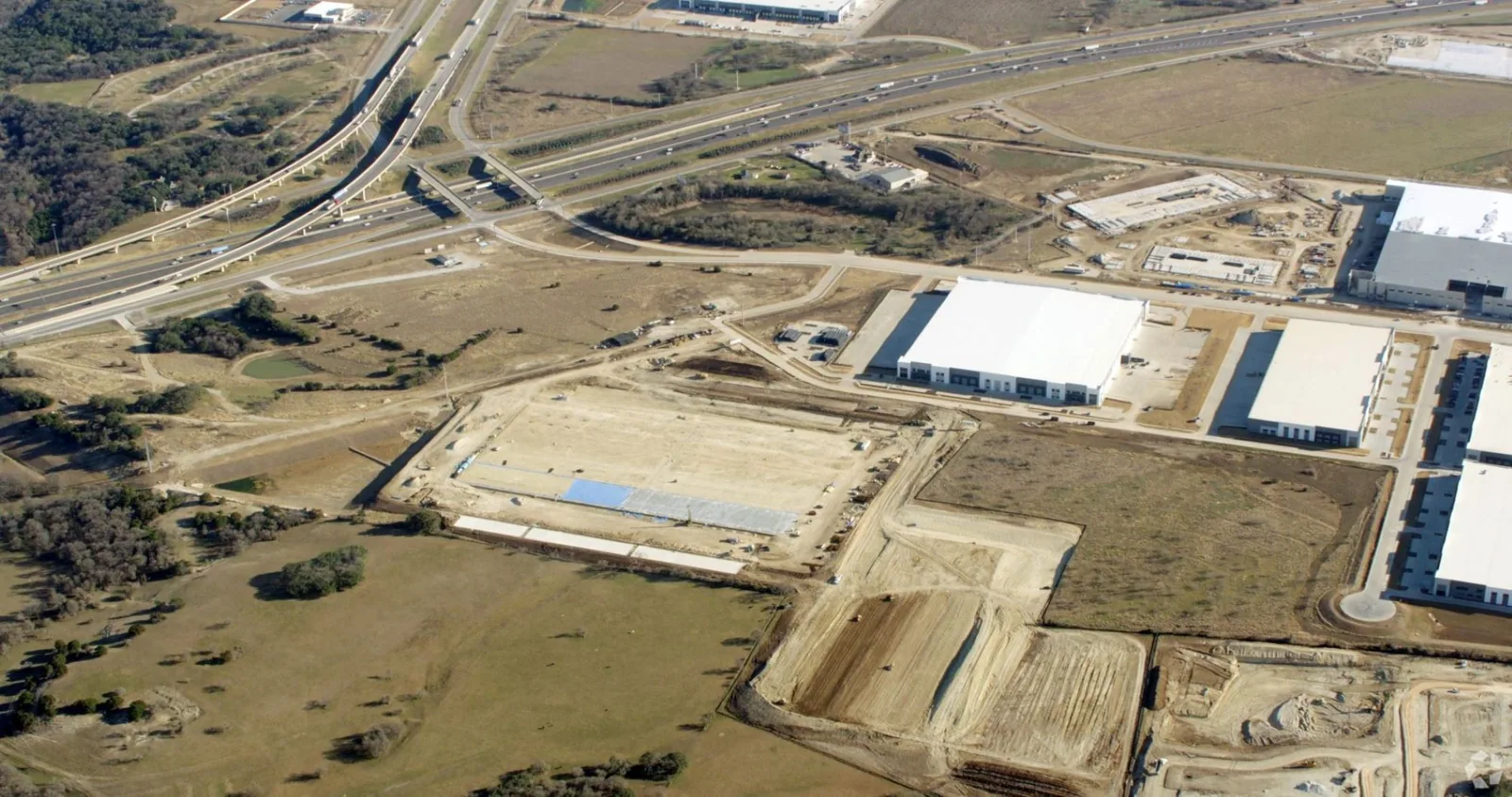
Georgetown's hot months commonly bring daytime highs in the 90s; recent summers have also included days above 100 degrees Fahrenheit. Industrial development near NorthPark35 and Georgetown Logistics Park adds active loading and equipment zones to the local commercial mix. Heat and access shape the work window; the roof system and observed defect control the repair.
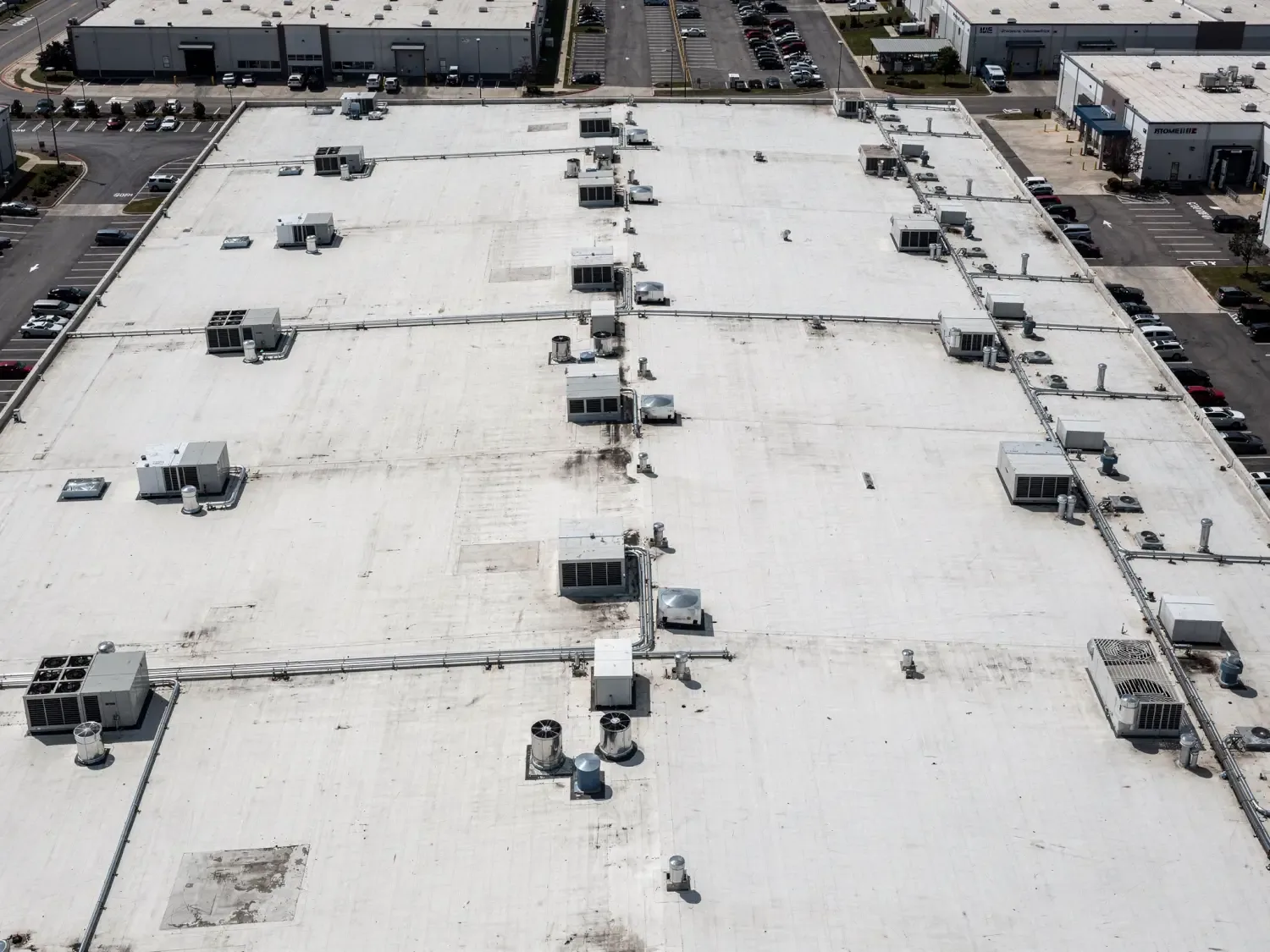
GAF's commercial portfolio includes TPO, PVC, asphaltic, and coating systems. Its single-ply membranes can be mechanically attached or adhered, with details and accessories selected for the assembly. We confirm the installed membrane, attachment, insulation, cover board, and roof transitions before specifying a repair. We do not assume that a label on an old invoice matches the roof today.
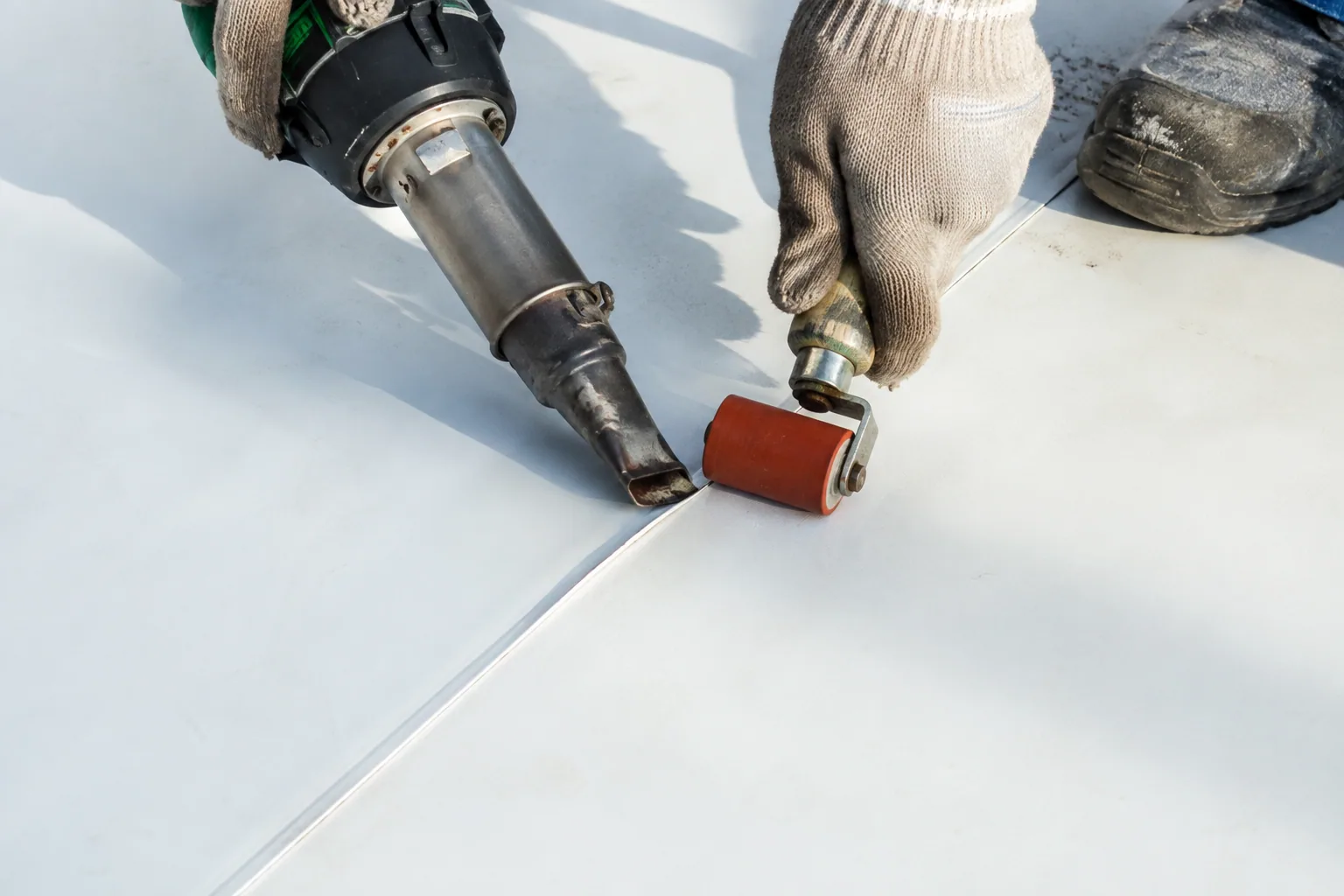
Thermoplastic seams are heat welded; an EPDM splice uses a different joining method. That distinction changes the repair preparation and field test. We check the weld or splice, end laps, corners, penetrations, and edge terminations. A TPO system review or a PVC assembly check helps keep the repair tied to the material present.
GAF also publishes asphaltic and coating system specifications. On an older roof, multiple layers or past restoration work can obscure the original system. We inspect cut edges, transitions, and exposed sections where access allows. If the assembly cannot be identified visually, a controlled test opening may be needed before we price a system tie-in.
The assembly choice affects how repairs meet the field sheet and how accessories connect at the edge. A GAF specification may identify a mechanically attached or adhered approach, but the fastener pattern, insulation, cover board, and deck condition still need field confirmation. We review the approved details and note where the roof differs from the record. A substitution is not assumed to be equivalent without the design team's direction.
Brand comparisons are useful only when they compare a real roof requirement. Carlisle SynTec also lists TPO, PVC, and EPDM assemblies; Johns Manville offers those single-ply categories alongside modified-bitumen systems. The project still turns on attachment, chemical exposure, wind design, drainage, and maintenance access, not a logo. We record the criteria and compare compatible assemblies on those points.
We begin at the reported leak or visible defect and inspect connected seams, curbs, drains, wall transitions, and edge metal. Water may travel before it appears indoors, so a ceiling mark does not locate the opening by itself. We map the roof zone, photograph the current condition, and separate confirmed damage from an untested path.
Georgetown's 40-block courthouse-square district combines civic, county, commercial, and residential uses. Interior access near Downtown Georgetown may require a coordinated route through occupied areas. A property in NorthPark35 may need a freight window instead. Those place facts inform logistics, while the facility contact and roof plan establish the field route.
If moisture beneath a membrane could change the patch size, we identify a test area and what it should confirm. Infrared images can point toward candidate locations; they do not alone prove wet insulation. A moisture survey can support the investigation. Testing proceeds only after the owner approves the location and removal method.
Georgetown's hot season often brings highs in the 90s, and recent summers have included days above 100 degrees Fahrenheit. Surface temperature, substrate moisture, wind, and material requirements affect a weld, adhesive, or coating application. We check conditions at the roof rather than relying on the air temperature alone. If the surface or weather falls outside the product instructions, we protect the opening and wait for an acceptable window.
Hail crosses the Austin forecast area, so we check the membrane, edge attachment, curbs, and equipment for physical impact. We check for fractured surfacing, punctures, and impact marks while keeping event history separate from property observations. We inspect the membrane, edge attachment, curbs, and equipment for current evidence. A wind-damage inspection can document displaced edges or open details where those conditions are present.
At a GAF roof with repeated seam separation, we compare the pattern with field repairs, rooftop traffic, and substrate movement. A single open weld may be local. Recurring issues at multiple zones can indicate broader attachment, workmanship, or aging concerns. The report records what is confirmed without assigning cause beyond the evidence.
A localized membrane opening can be patched when the surrounding sheet is clean, stable, and compatible with the repair method. We prepare the area, complete the tie-in, and verify the seam or patch edge. Failed flashing at a curb may need a formed detail rather than a field patch. A seam-repair scope handles a longer open lap; the quantities stay separate from other roof conditions.
Recover is considered only after checking moisture, attachment, layer count, drainage, and perimeter height. A coating is not a fix for wet insulation or loose membrane. Tear-off may be the better option where the deck or broad areas require access. A replacement evaluation compares the verified roof layers, insulation, cover board, edge details, and daily dry-in sequence.
Cost and schedule depend on system type, access, preparation, material lead time, weather, test results, and how much roof can be safely opened. If removal uncovers wet material or deck damage, we stop at a hold point and show the finding before expanding the scope. Any warranty or manufacturer documentation remains subject to its own terms and eligibility; we do not promise coverage.
Before proposing restoration, we check whether the existing surface can accept the listed preparation and tie-in. A coating system has substrate and application limits. If the field sheet is loose, wet, or too deteriorated to support the repair, coating over it only hides the condition. We document the test area and findings, then compare a localized patch, recover, or removal using the verified roof layers.
The closeout names the roof system identified, repair materials, affected zones, photos, and test results. It also identifies areas not reached and any next inspection point. That record helps maintenance staff distinguish a repaired weld from nearby aging. If a product label or prior warranty file is available, we can attach it to the facility record without treating it as proof of current coverage.
For buildings near NorthPark35 or Downtown Georgetown, arrival and staging differ by property. The site representative sets access rules and operating limits. A roof condition report can carry the repair boundary into future maintenance planning.
Send the roof plan, GAF system records if available, reported leak locations, and access contact before the walk. We will verify the assembly, mark the first inspection zone, and state what the repair includes.
We inspect the GAF assembly present at the property, including single-ply and other commercial system types. The installed membrane, attachment, layers, and field details must be verified before we recommend work.
Yes, if the sheet around the opening is sound and the correct preparation and tie-in can be made. Repeated separation or wet substrate can change the scope.
No. We can record the label and compare the roof condition with available documents. The manufacturer and contract terms determine coverage and eligibility.
Surface temperature and product instructions matter for welding, adhesives, and coatings. We confirm the actual roof conditions and adjust the work window when required.
Send the roof plan, system records, previous repair notes, reported leak areas, and access rules. Those details help set the inspection route and identify any test approval needed.