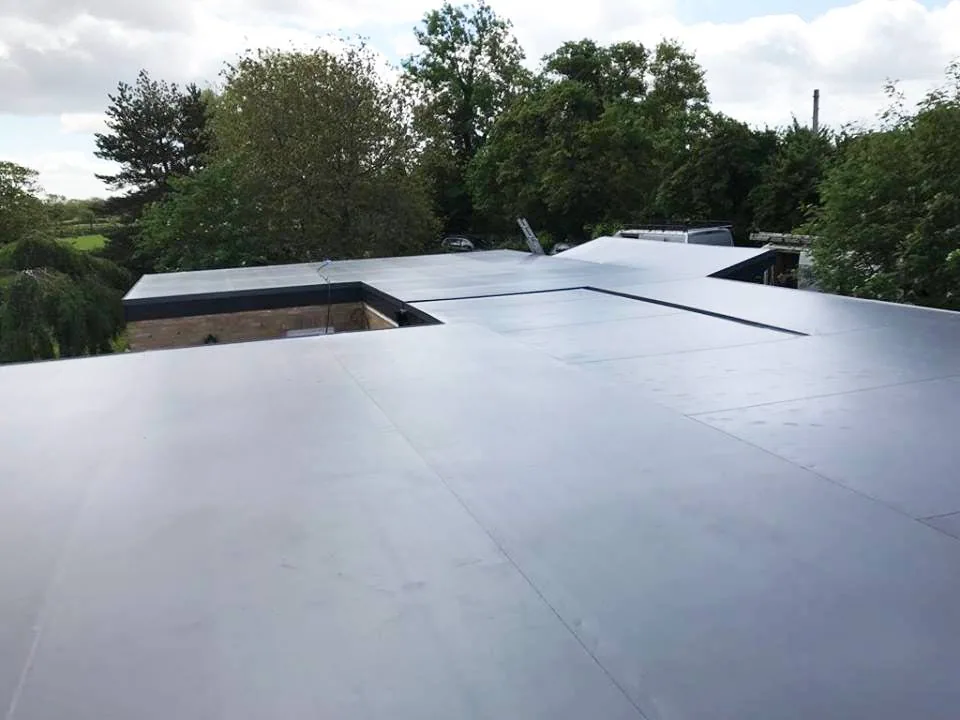
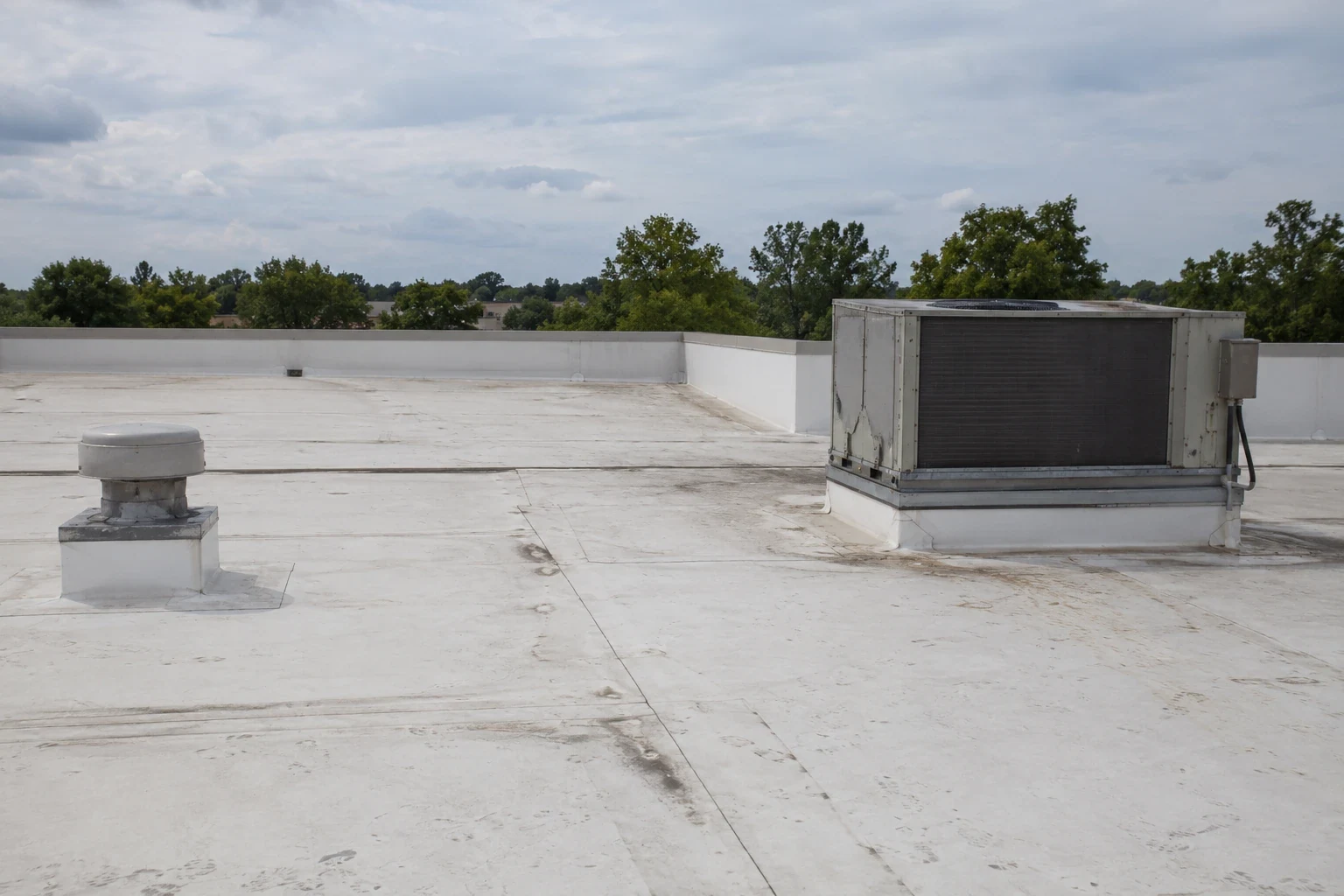
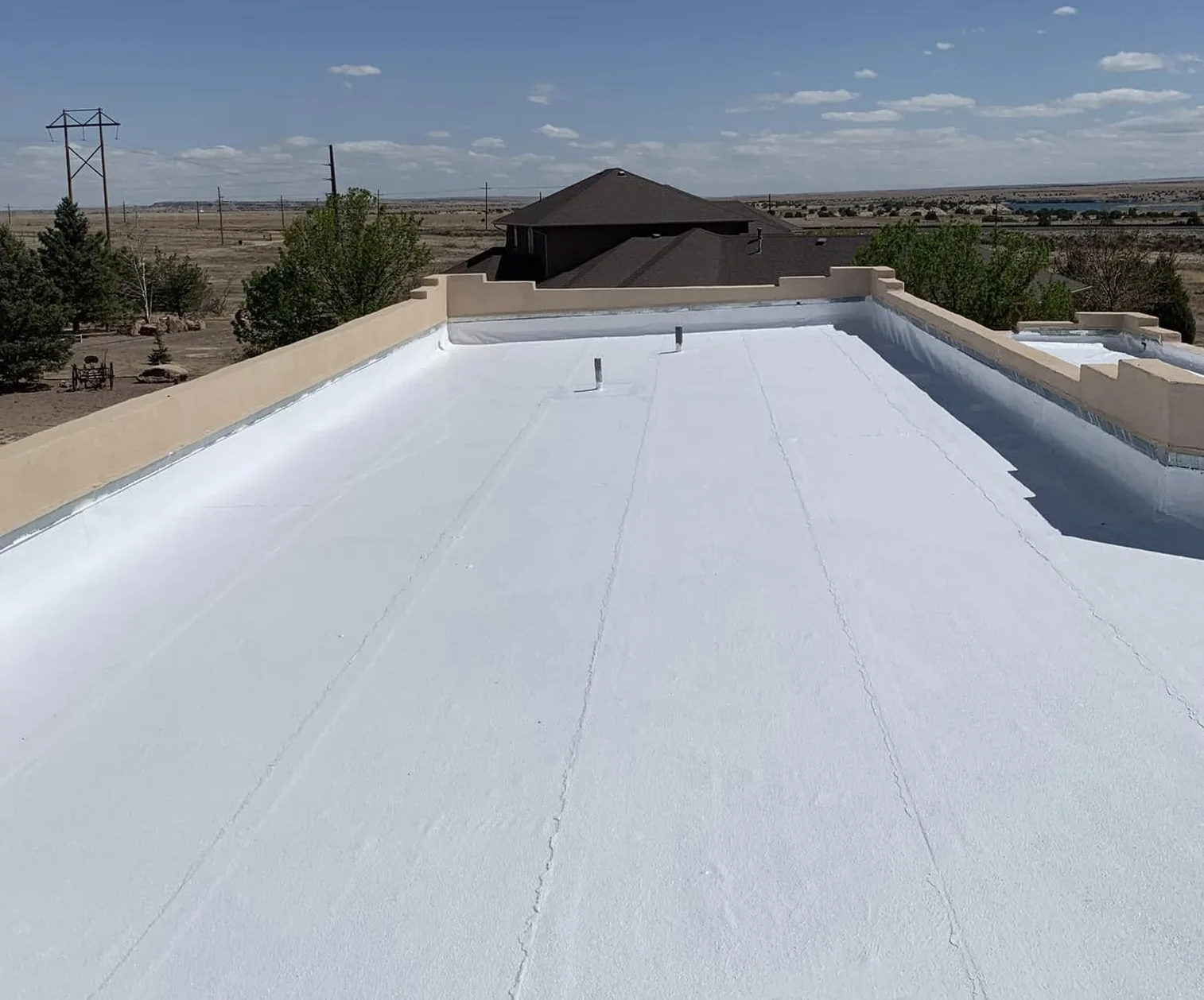
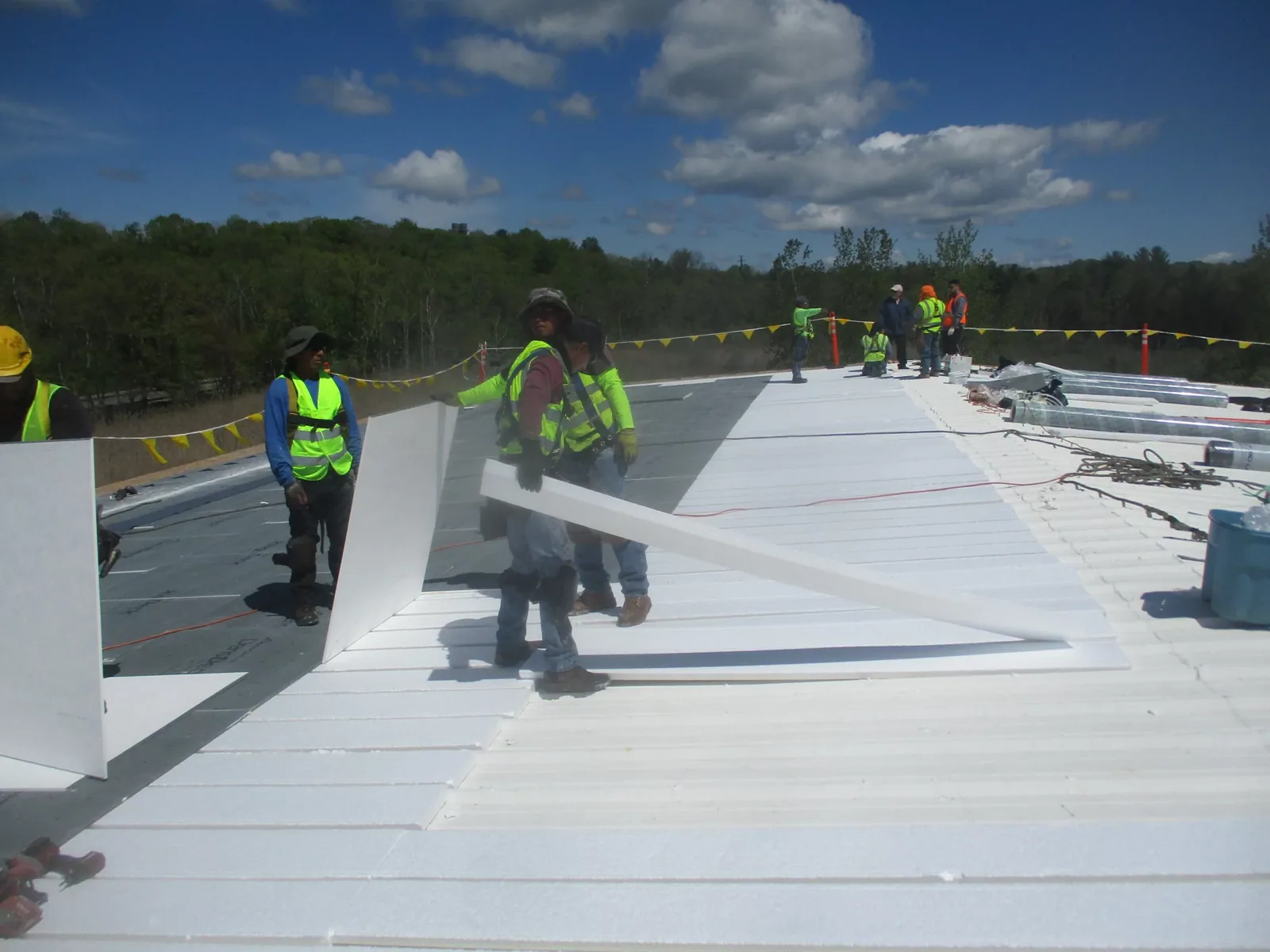
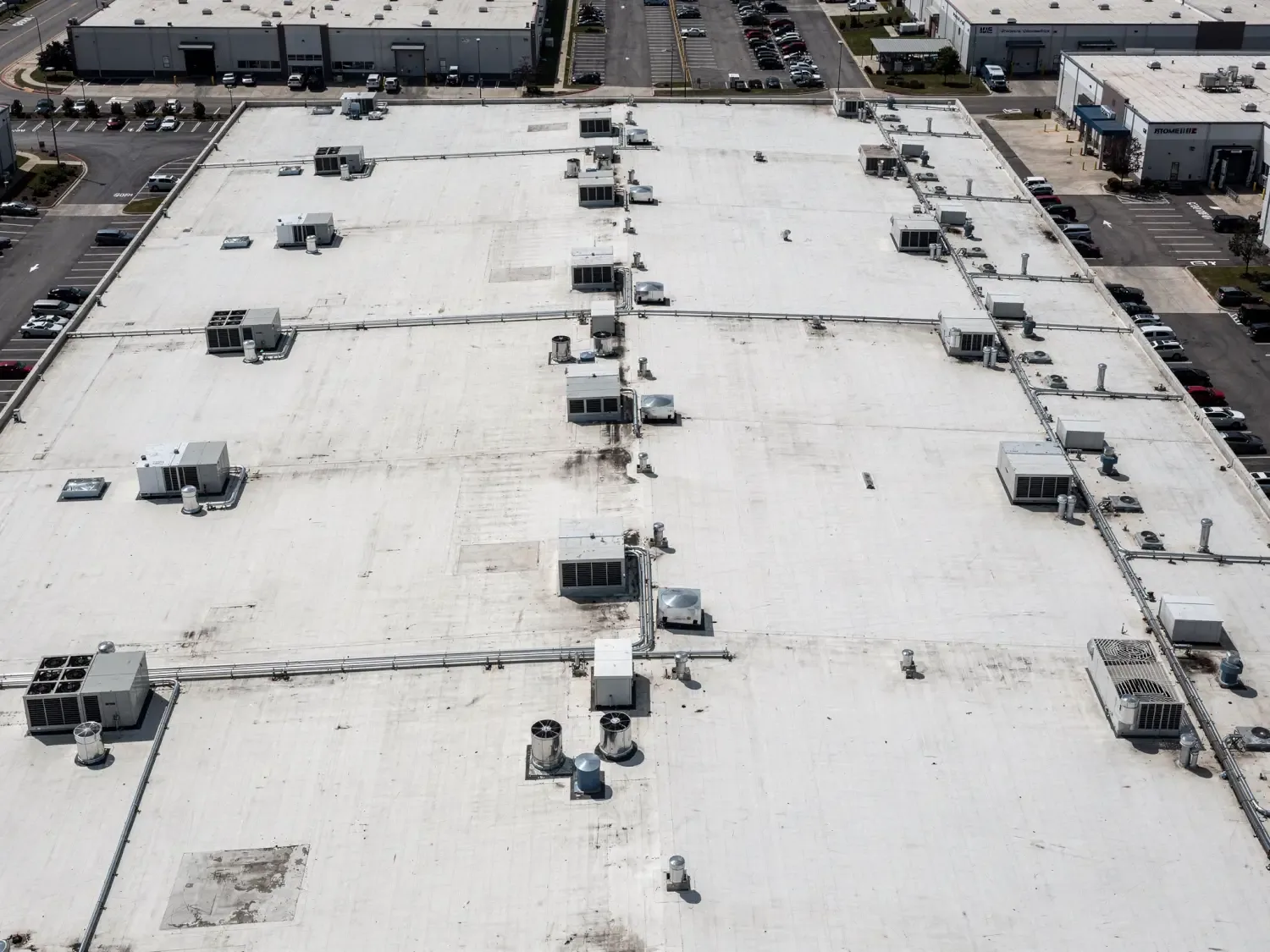
A lifted seam cover at a Carlisle roof transition starts the field walk. We inspect the membrane type, attachment, and adjoining flashing before writing a repair quantity. Carlisle SynTec manufactures EPDM, TPO, PVC, and fleece-backed single-ply roofing membranes, with associated insulation and accessories. The installed assembly still has to be identified at the building. A brand name does not confirm which membrane or installation method is present.
Summer afternoons in Georgetown often reach the 90s, and recent local highs have passed 100 degrees Fahrenheit. Berry Creek Business Park and NorthPark35 are industrial settings where delivery routing and rooftop equipment need building-specific review. We use those place details to plan access and weather windows; the roof condition sets the technical scope.
Carlisle's Sure-Seal EPDM, Sure-Weld TPO, and Sure-Flex PVC are distinct systems. EPDM seams typically rely on tape or adhesive details, while TPO and PVC seams are heat welded. PVC can be selected where chemical or grease exposure affects the assembly decision. We verify the material and detail before cleaning, priming, welding, or applying a patch. A product label is useful evidence, not a substitute for inspection.
We look at field seams, end laps, penetrations, perimeter attachment, drains, curbs, and prior repairs. A fleece-backed membrane or reinforced sheet changes how a patch ties to the field. The roof map records each section so a mixed assembly is not treated as one continuous system. Where a seam is open, we probe only as allowed by the system and document its measured length.
A Carlisle EPDM repair and a TPO seam correction need different preparation. We also review edge metal and insulation transitions because a membrane repair can fail if the termination or substrate is unstable. If the roof assembly cannot be confirmed from records or visible conditions, a test opening may be needed before materials are ordered.
Field records can help, but we compare them with the membrane at the roof. A previous invoice may describe one addition while the main building retains another system. Where a property has several sections, we verify each transition and record the attachment separately. A GAF commercial system and a Johns Manville system may share a membrane category but still have product-specific accessories and details. We do not substitute one manufacturer's repair component for another without confirming compatibility.
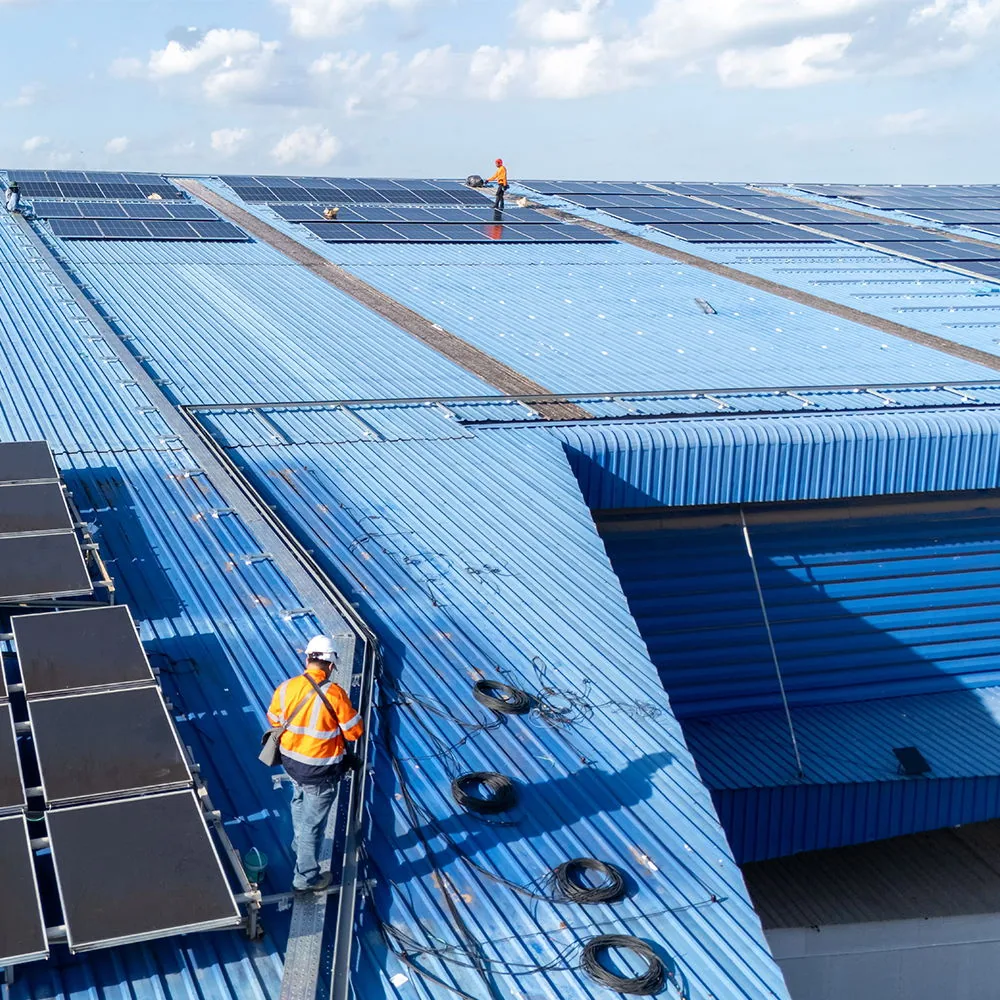
Mechanically attached, adhered, and ballasted assemblies respond differently to movement and wind. We inspect the fastener pattern where accessible, perimeter zones, and signs of uplift or displacement. On adhered work, we check for loose membrane and bond failure. A repair over unstable material only relocates the opening. We mark the affected area and note any limit where the attachment could not be observed.
In March 2022, a tornado moved from the Round Rock area through Williamson County toward Granger. That regional event is not evidence of damage on this Carlisle assembly. We inspect the installed system for current movement, open seams, and impact. A wind-condition inspection can document the edge and attachment where those findings appear.
If insulation may be wet, thermal screening can help locate a test candidate. It does not prove moisture by itself. We identify the core or cut location, state what the test is expected to show, and obtain approval before opening the assembly. The report separates confirmed wet material from an untested image or interior stain.
Heat at the roof can affect membrane handling, adhesive flash-off, and weld quality. Recent Georgetown summer days have exceeded 100 degrees Fahrenheit, after typical summer highs in the 90s. We confirm substrate temperature, moisture, wind, and the product installation requirements before beginning. The crew sets a daily area and a secure tie-in point; an exposed sheet is not left open because the schedule says so.
At Berry Creek Business Park, three Class A industrial buildings sit near I-35 and SH 130. A site with freight activity may need a controlled delivery route and lift window. A building closer to Downtown Georgetown may require public-facing ground protection. The owner sets the operational rules. We check roof access, staging, and tenant or worker routes before mobilization.
When a repair spans a field seam and curb, we identify which detail controls the tie-in. Replacing a strip of membrane is not enough if water enters behind the curb flashing. A flashing-failure scope can address that transition separately. The estimate identifies each repair type and keeps its quantity traceable.
A single open seam can be repaired when adjacent material is sound and the correct Carlisle-compatible detail can be completed. Repeated separation, wet insulation, or loose attachment can require a broader scope. We record the measured defect, photos, and areas not reached. The repair quantity comes from the roof walk and any approved test, not from the system label.
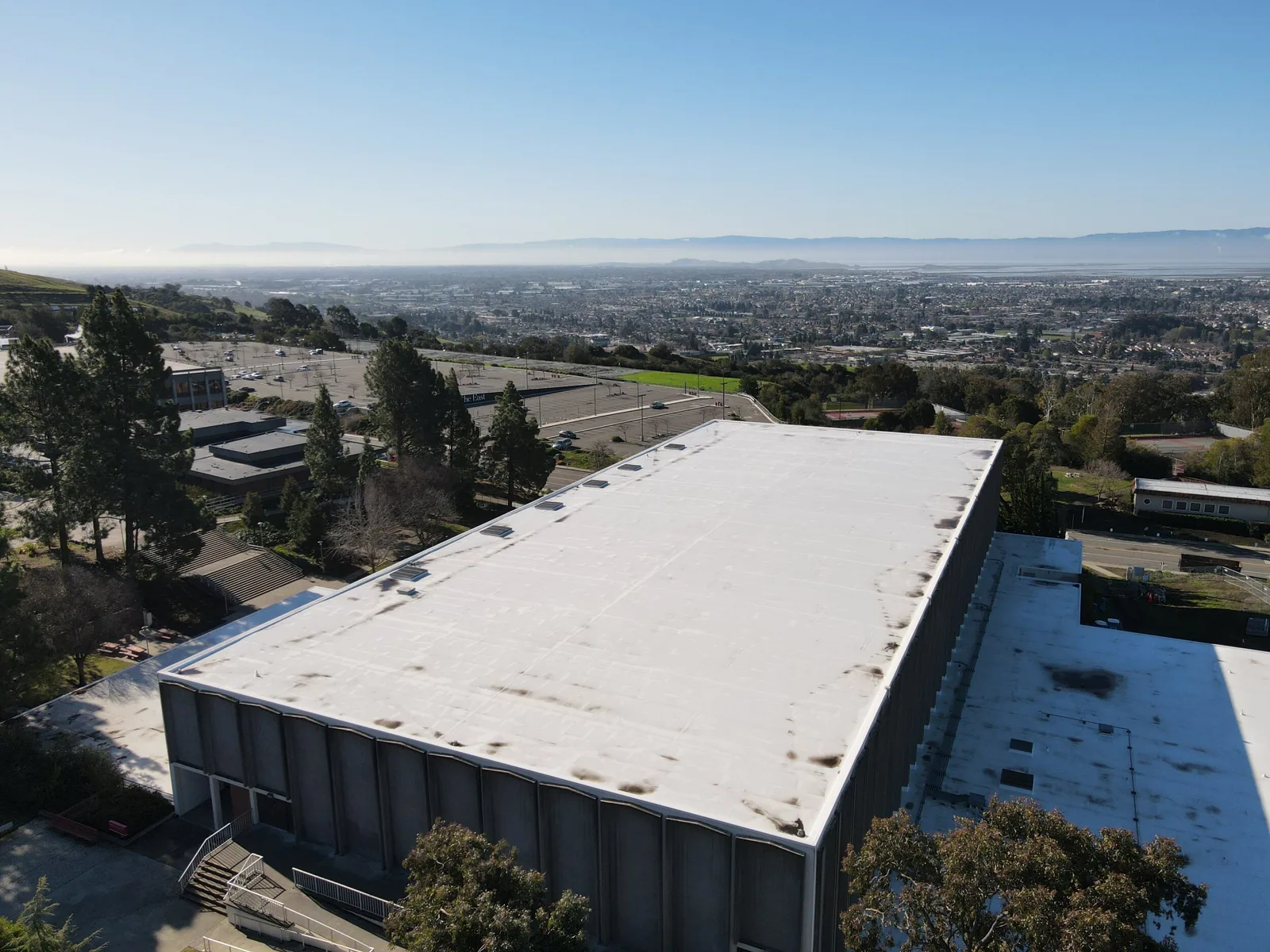
Recover is evaluated after checking layer count, attachment, moisture, drainage, edge height, and compatibility. Carlisle lists complete assemblies with membrane, insulation, adhesives, and cover boards, but the existing deck and building conditions still determine what fits. A recover assessment can compare an overlay with tear-off; a replacement review addresses removal and rebuilding when the substrate or roof layers call for it.
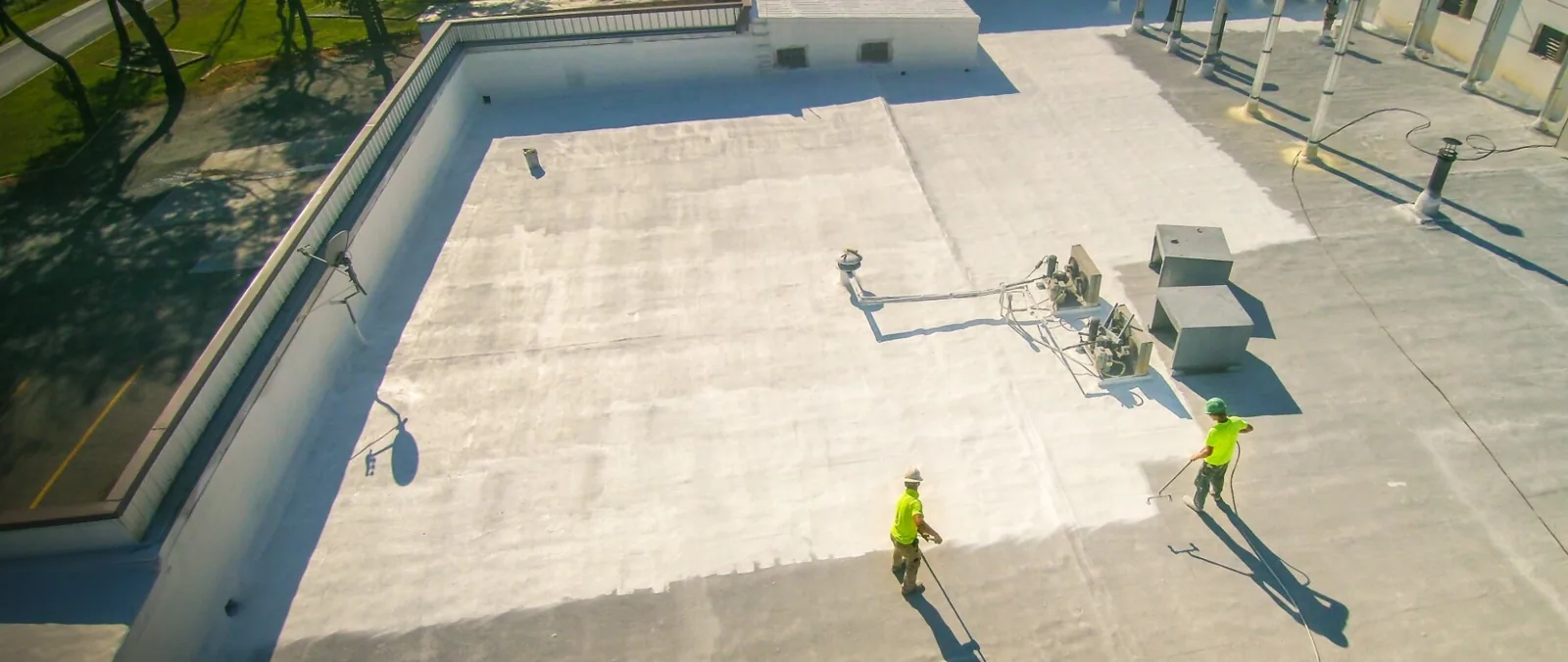
Cost depends on roof access, membrane type, repair length, substrate, insulation, detail count, and how much area can be opened in the safe work window. We include material preparation and protection in the scope. If concealed wet material or a deck issue appears, the crew holds and presents the finding before added work proceeds. Product warranties have specific terms and eligibility; no coverage is assumed.
The closeout names membrane type, attachment where confirmed, repair material, seam or patch location, date, and test result. It includes photos and any inaccessible zone. If records identify a Carlisle product, we attach that information to the roof map. The record does not claim manufacturer approval or warranty coverage beyond the documents available.
For a building near Berry Creek Business Park or NorthPark35, the contact sets freight and access limits for future maintenance. A roof inspection can compare later changes with the documented repair and confirm whether adjoining details remain sound.
Provide the roof plan, system submittals, repair history, leak location, and access rules. We will verify the Carlisle assembly at the site and return a defined work boundary with the next hold point noted.
We review labels and records, then inspect the exposed membrane, seams, and details. EPDM, TPO, PVC, and fleece-backed sheets require different preparation and repair methods.
Thermoplastic TPO and PVC seams are heat welded. EPDM uses a different splice detail. We confirm the system before selecting a repair and testing the finished seam.
Carlisle SynTec lists membranes, insulation, adhesives, fasteners, and accessories in its commercial roofing portfolio. The specific materials on an existing roof must still be confirmed from the project records or field conditions.
No. It gives regional context only. We inspect the installed membrane, attachment, edge, and flashing for current evidence.
That depends on layers, attachment, moisture, drainage, edge height, deck condition, and system compatibility. We verify these conditions before recommending recover or removal.