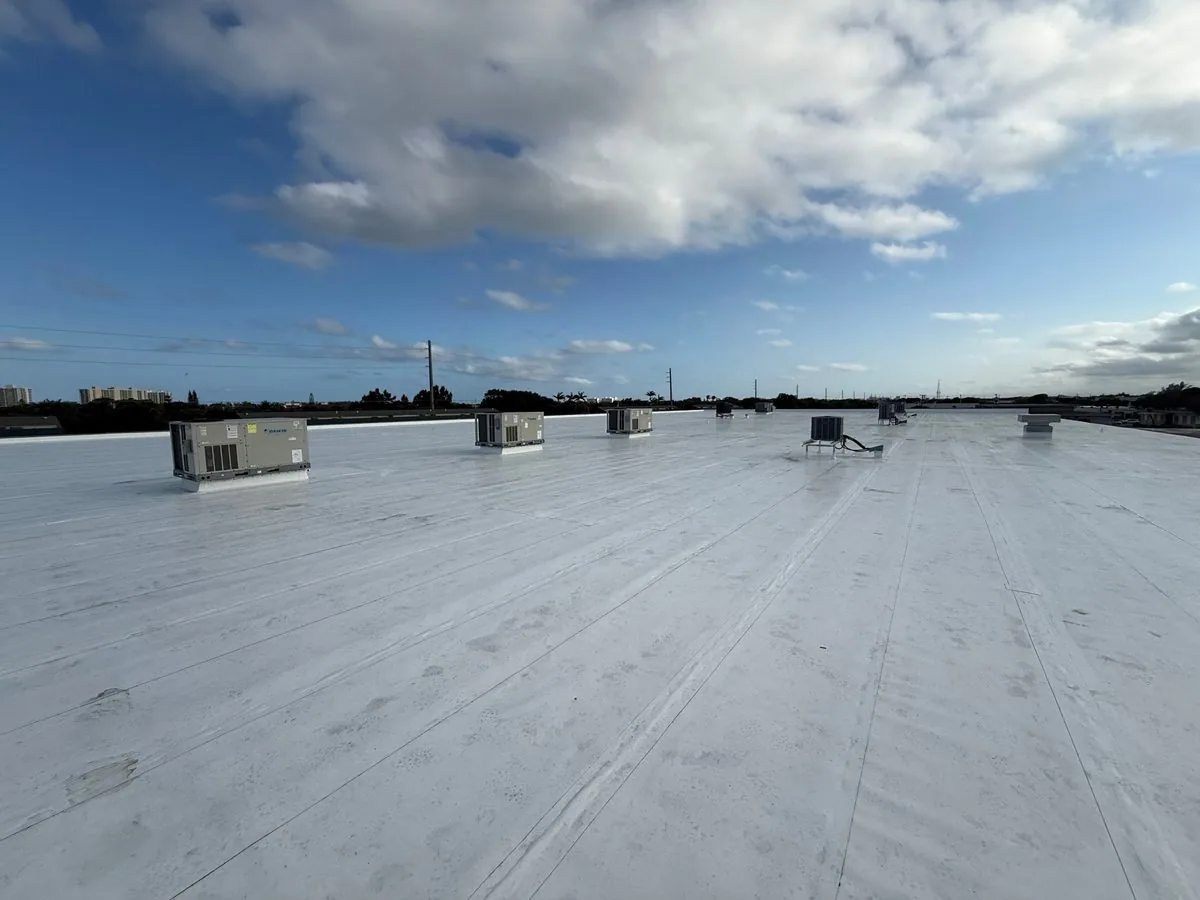
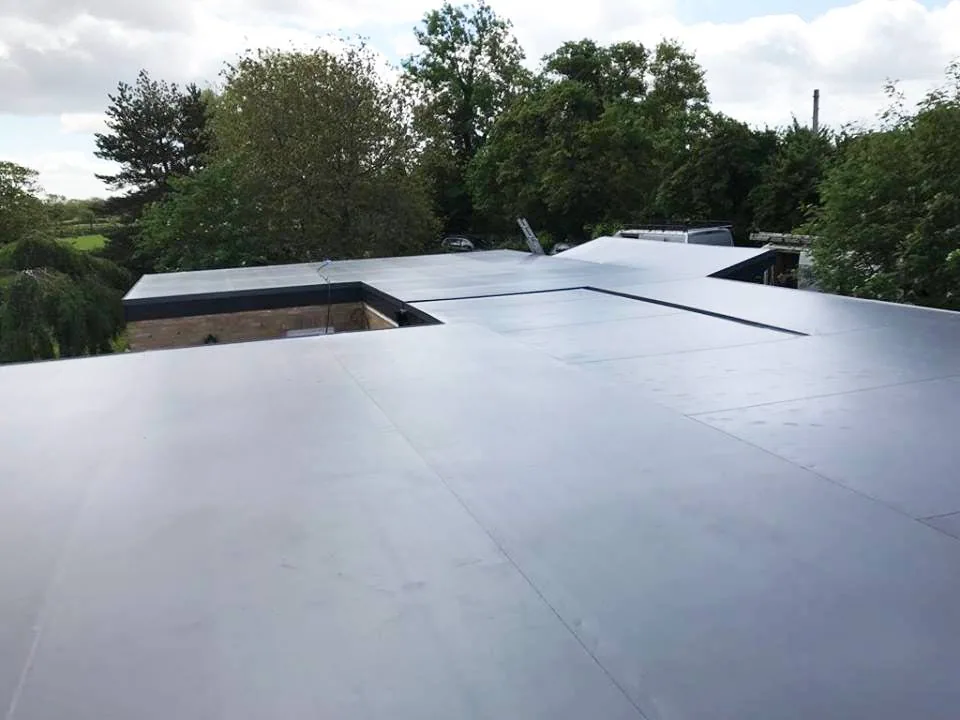
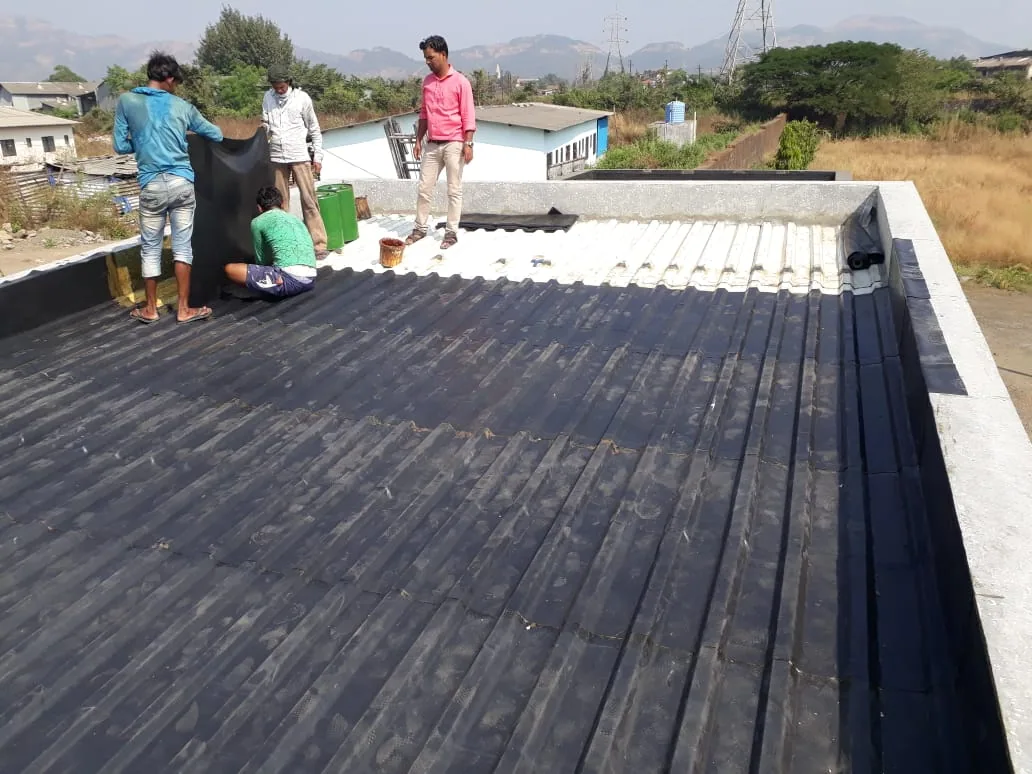
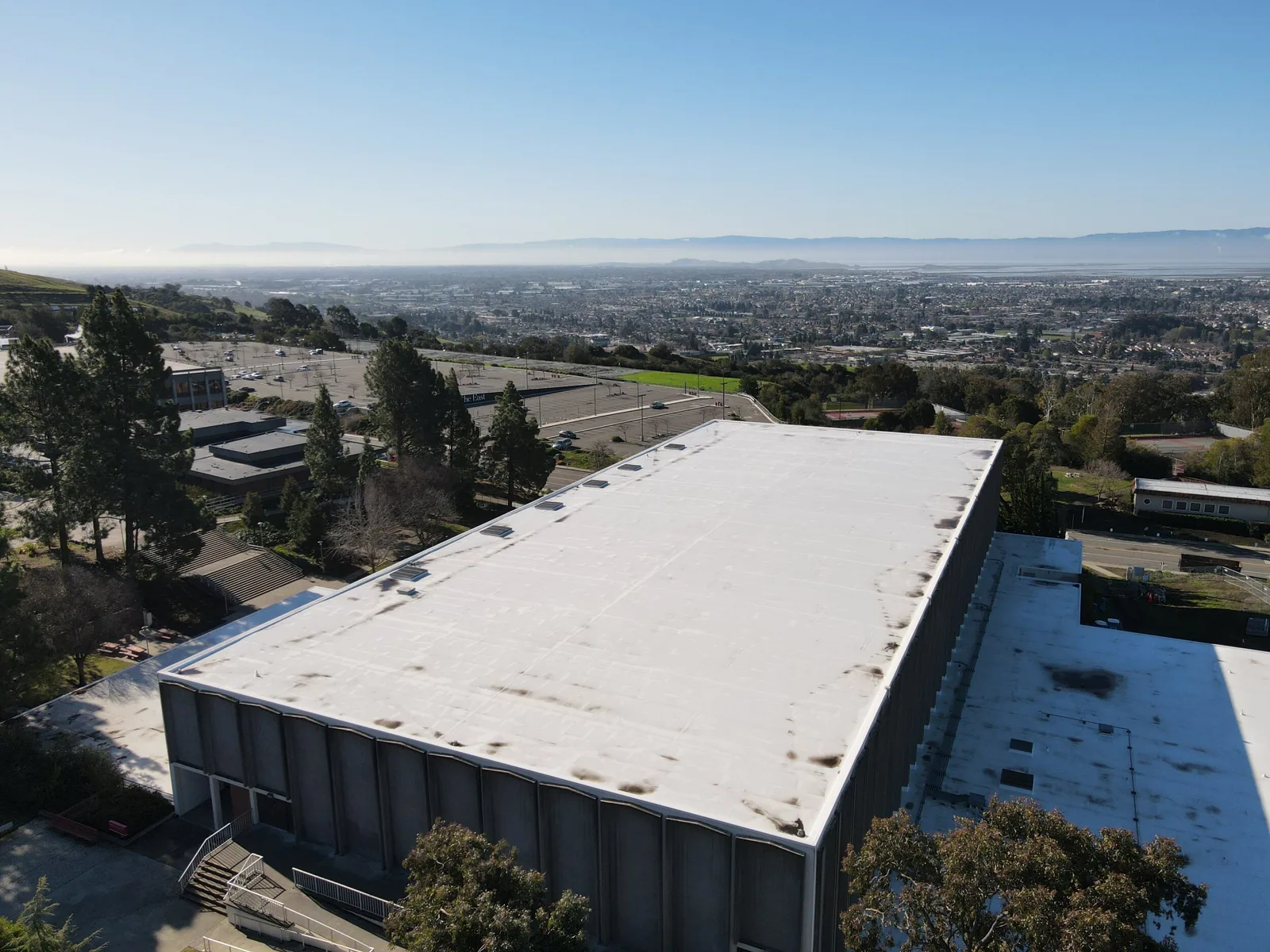
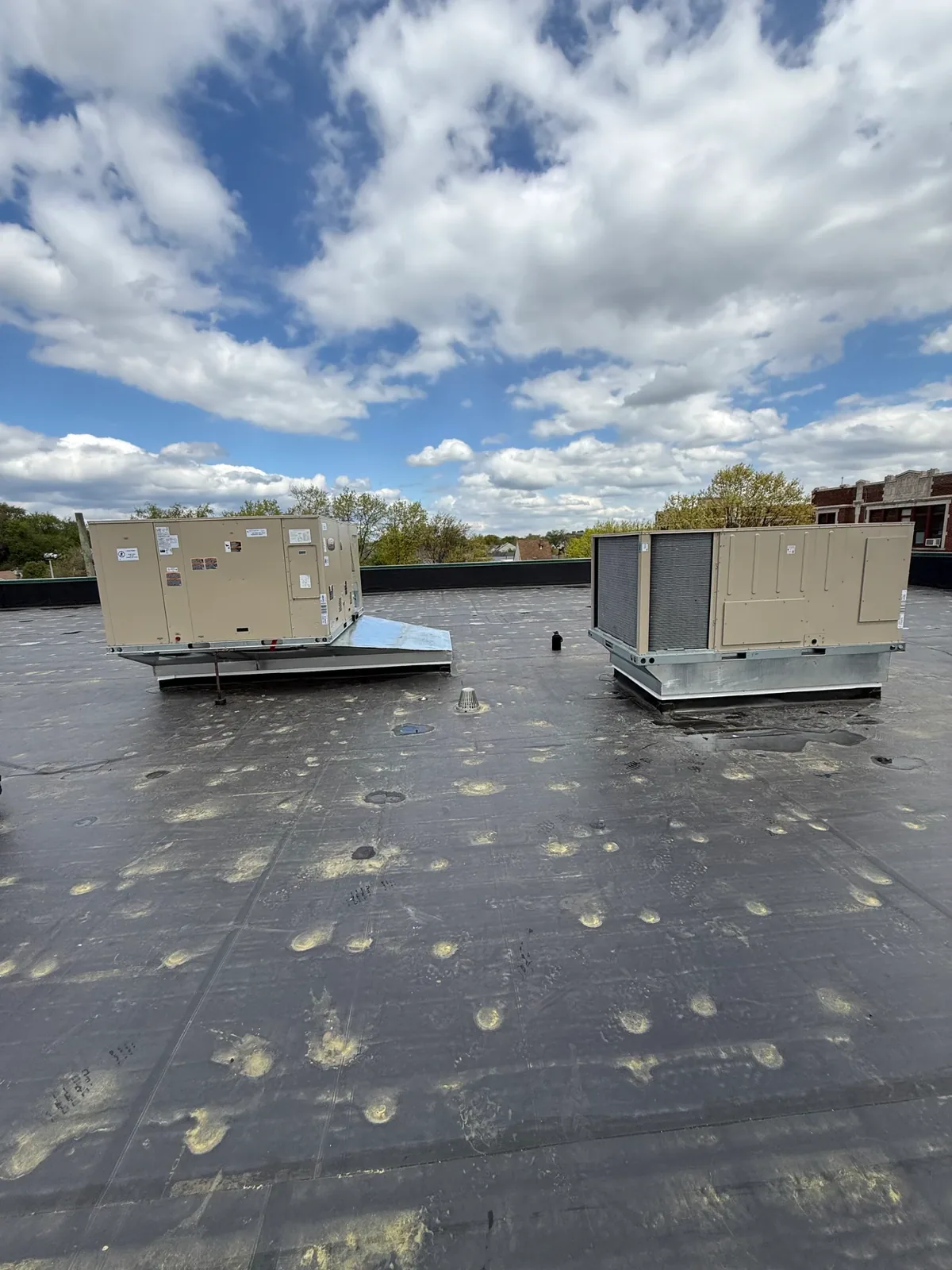
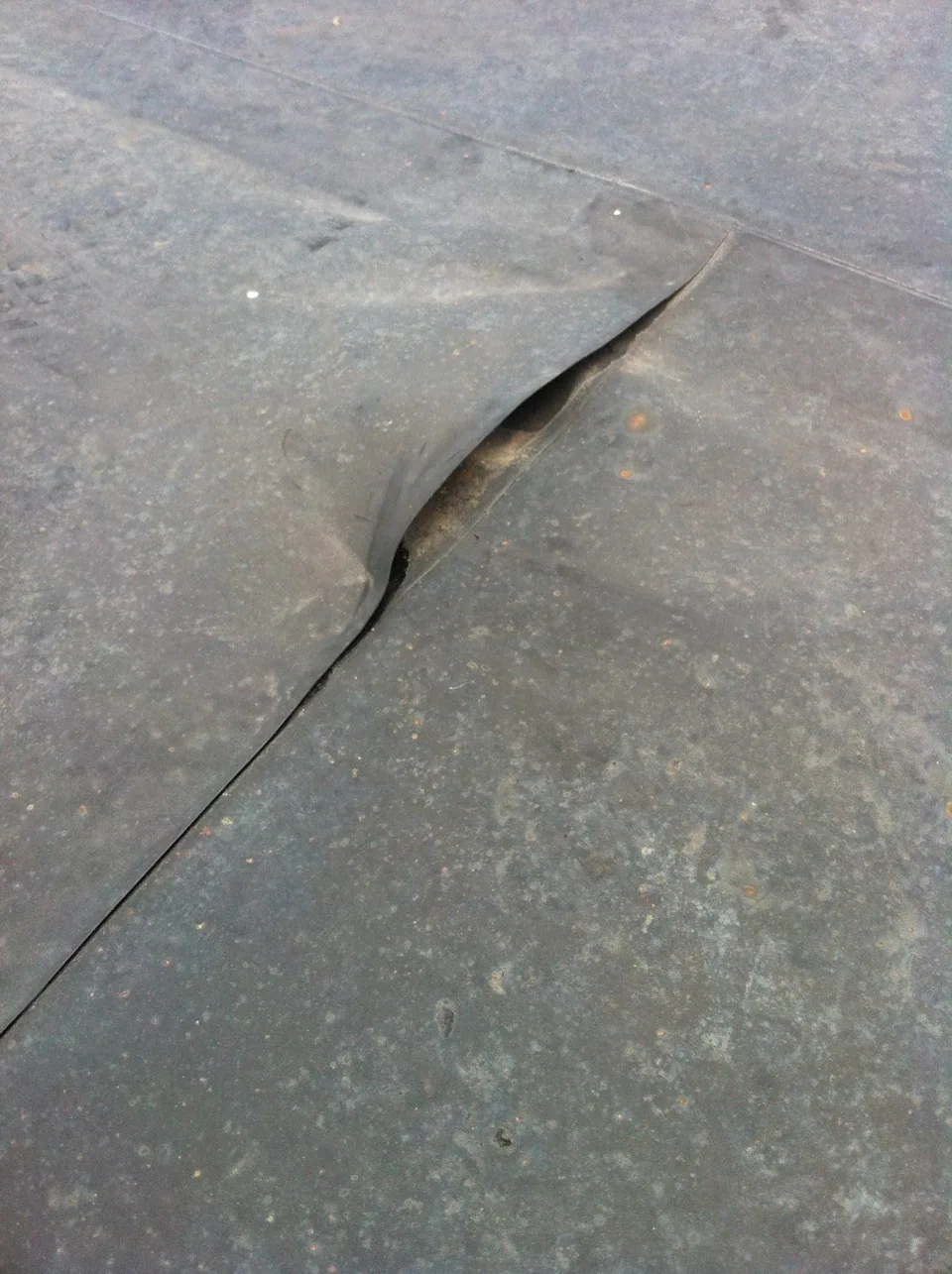
A seam opening beside a rooftop unit sets the first check. We trace its tie-in, inspect the adjoining field, and identify the membrane before marking a hold point. Holcim Elevate offers commercial systems that include EPDM, TPO, PVC, asphalt, metal, and insulation components. The installed assembly and its condition decide what work fits.
Georgetown station records show summer highs commonly in the 90s, with multiple recent days above 100°F. On the roof, we check exposed flashing and the installation window before staging a tie-in. Georgetown’s industrial pipeline includes NorthPark35 and Georgetown Logistics Park, where planned gas service is intended to support additional industrial businesses and buildings. Each roof still needs its own map, access route, and tie-in check. System identification starts with the material actually in place.
This product family does not reduce to one membrane. RubberGard is an EPDM line, while UltraPly includes TPO options. PVC, asphaltic membranes, metal, insulation, and accessory products may also be part of the manufacturer’s commercial line. We inspect field markings, edge details, roof records, and visible layers before choosing a repair method.
Color alone is not enough. Two membranes can look alike from a hatch while needing different cleaners, primers, weld settings, or patch materials. We record the system clues, then compare them with available closeout documents. If the assembly remains uncertain, a test area or controlled opening becomes a hold point instead of an assumption.
At Berry Creek Business Park, we identify each roof separately across the multi-building industrial development near I-35 and SH 130. Shared routing can simplify site visits, while each roof map records its own confirmed system, insulation details, penetrations, drains, and transitions. We note insulation only where it is confirmed.
When field conditions support EPDM, compare its seam and flashing needs with a Carlisle SynTec system review. If the roof is TPO, a GAF commercial system review can frame a separate materials discussion. Compatibility with the existing roof controls the repair selection.
At a seam, we look for separation, contamination, fishmouths, weak adhesion, or a prior patch that has released. On EPDM, repair details differ from heat-welded thermoplastic seams. On TPO or PVC, the crew needs a clean, weldable surface and sound membrane beyond the cut. We verify conditions before deciding whether a localized patch can hold.
Curbs and penetrations add more interfaces. Equipment vibration, later trade work, standing water, and sun exposure can affect the flashing even when the field membrane remains serviceable. We trace the detail from vertical face to horizontal field and check corners, terminations, and adjacent seams. A curb and equipment review can isolate that interface.
Georgetown's summer heat affects timing for surface preparation and tie-ins. If the membrane is too hot, wet, dirty, or otherwise outside the product requirements, we do not force the weld or adhesive step. We record the condition and return within a suitable window. The scope states what is ready, what is deferred, and what must be protected before leaving.
A transition from one assembly to another deserves a separate line on the roof map. The interface may include cover board, insulation, edge metal, or a prior coating. We document those layers when visible and stop if a concealed condition changes the repair. The written seam-repair scope identifies the exact boundary and any test area.
Central Texas storms can bring hail, heavy rain, and tornado conditions. Regional storm records can help time an inspection. We check the roof for punctures, displaced edge metal, open laps, damaged accessories, and water entry, then keep those findings separate from earlier wear.
Before opening a membrane, confirm the forecast, crew access, material staging, and dry-in plan. A short repair can still expose insulation or decking if the opening is not controlled. We set the boundary, keep the next tie-in achievable, and protect the area before weather closes the window. The field report documents findings and test limits.
NorthPark35 and FM 971 connect commercial development with Georgetown’s regional road network. Before material delivery, the general contractor confirms loading points, travel paths, occupied areas, and equipment staging for the property.
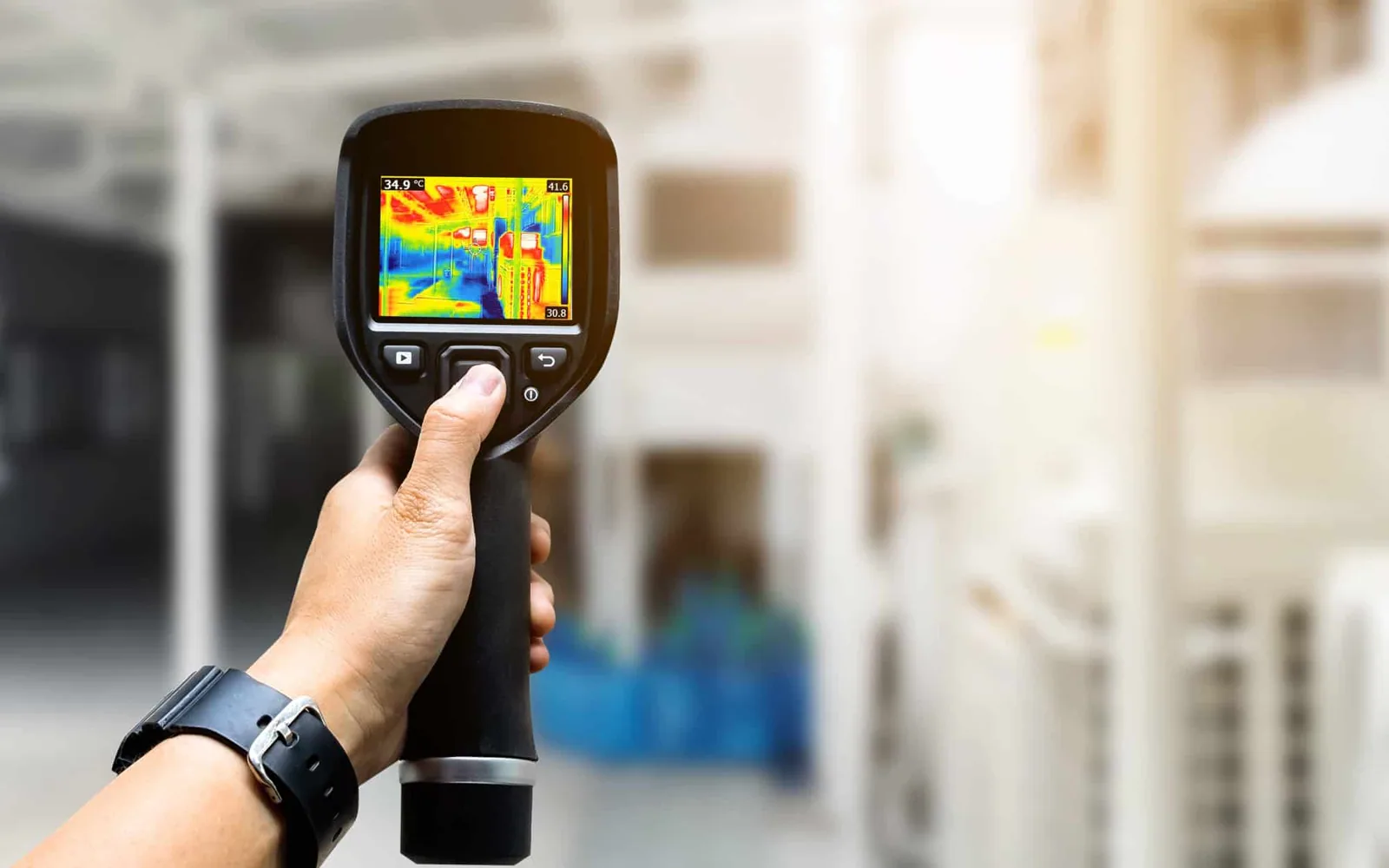
If moisture is suspected beneath the membrane, a moisture survey may identify areas for field verification. Infrared results do not replace a test opening. We mark the survey boundary, note conditions that could affect the reading, and agree on the next step before removing roof layers.
A small seam failure with dry adjacent material may support a targeted repair. Repeated failures, widespread wet insulation, deteriorated flashing, or a membrane that cannot accept a reliable tie-in may shift the decision toward broader work. We document the evidence and show the owner where one option ends and the next begins.
A commercial repair estimate separates membrane correction from access, protection, and interior coordination. If the field remains sound but a compatible coating or overlay is under consideration, the assembly needs evaluation first. Coating adhesion, drainage, trapped moisture, and edge conditions control feasibility. A restoration assessment should answer those questions before pricing a surface treatment.
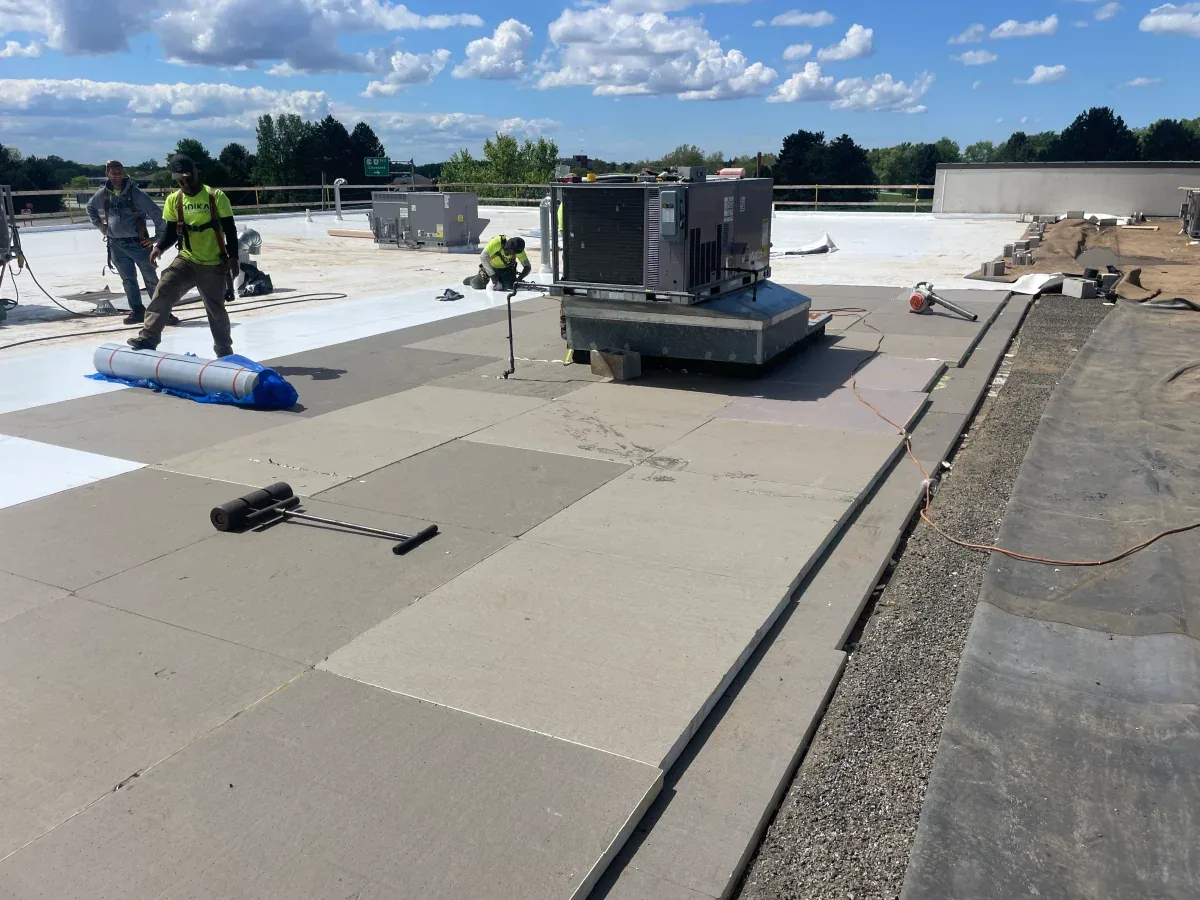
Replacement planning starts with tear-off or recover constraints, insulation condition, drainage, rooftop equipment, and schedule. Georgetown’s existing-building rules follow its 2021 IEBC adoption. Project requirements depend on the work scope and applicable review. We identify the roof work and interface conditions so the general contractor can coordinate design, permits, and adjacent trades.
At each option, the proposal states the system basis, material transitions, test areas, exclusions, and dry-in sequence. A replacement plan may be the right path when repairs cannot restore reliable continuity. The project closeout identifies the applicable product documents and the terms included in the approved contract.
Before mobilization, confirm roof access, staging, occupied areas, and the general-contractor contact. The roof map marks drains, curbs, edges, penetrations, and the proposed work limit. We note where tools and materials can travel, what needs protection below, and which area remains outside the visit.
At the first opening, check the layer stack and stop if it differs from the expected assembly. Photograph the exposed condition. Confirm whether insulation is dry, whether the deck is sound, and whether the next tie-in can be completed before ending the shift. The crew keeps temporary dry-in separate from permanent correction in the closeout.
For a wider property program, dated photos and field limits stay with each building record. Portfolio tracking keeps separate roofs from merging their systems. This matters near Georgetown Logistics Park, where industrial properties may share a road corridor but have different roof assemblies and contacts. A Berry Creek Business Park site visit also needs building-specific access and roof records.
Send the property, roof plan, reported issue, access window, and available system documents. We confirm the first inspection route and list missing information. That gives the general contractor a usable handoff before repair, testing, or replacement work begins.
We compare roof records with visible membrane, seams, edges, and flashing. If the assembly remains uncertain, we mark a test area or opening before choosing materials.
No. The repair material and method must match the membrane and detail. We identify the assembly first and keep the repair boundary tied to compatible materials.
Wet insulation, recurring failures, weak substrate, or too little sound membrane for a tie-in can expand the scope. We document the hold point before opening more area.
Yes. We inspect for visible impact, displaced details, and water entry. A regional hail record sets context, while the field inspection determines what is present on that building.
Send the roof plan, access window, building contact, reported issue, and available system documents. We use those to set staging, the work boundary, and dry-in steps.