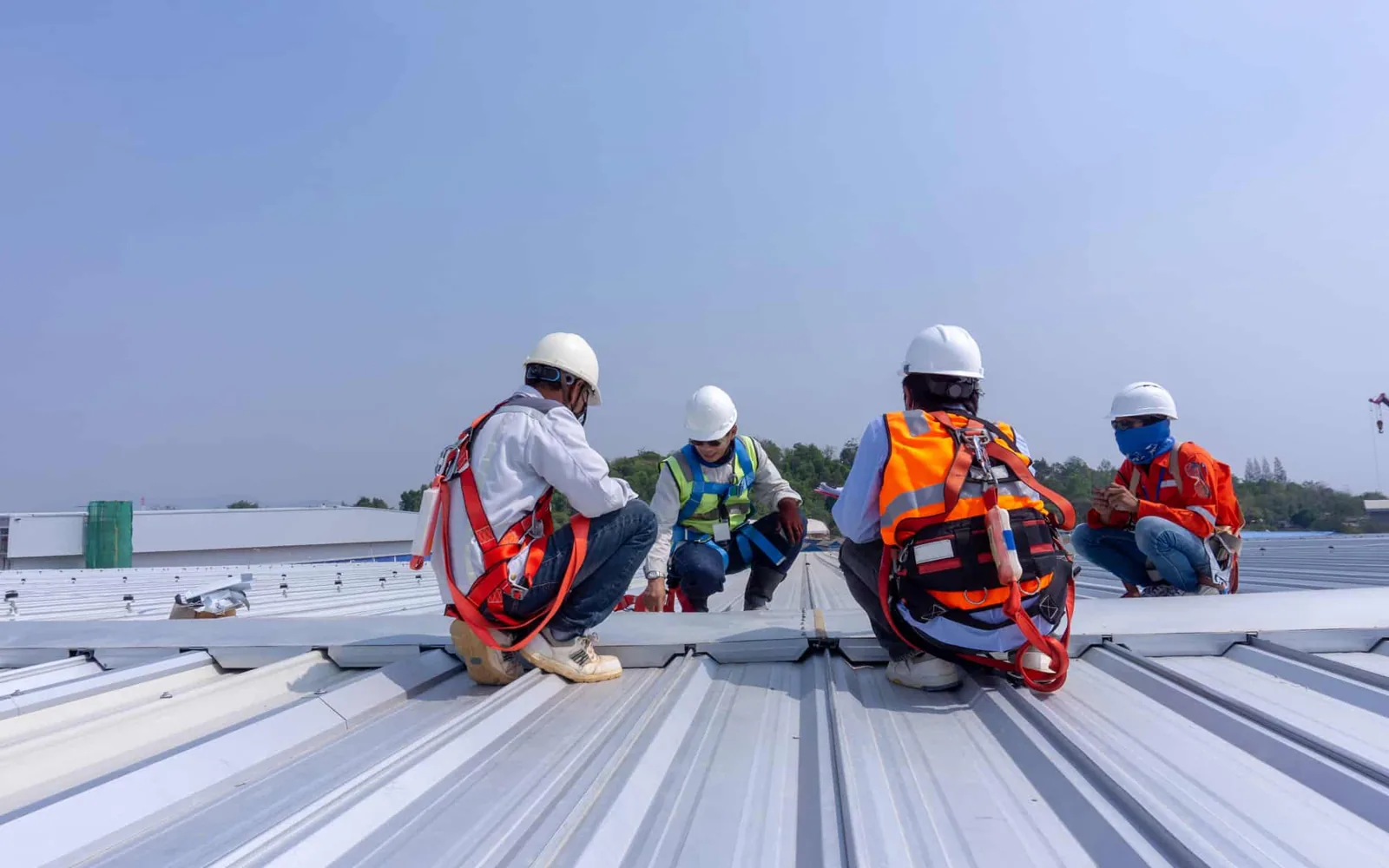
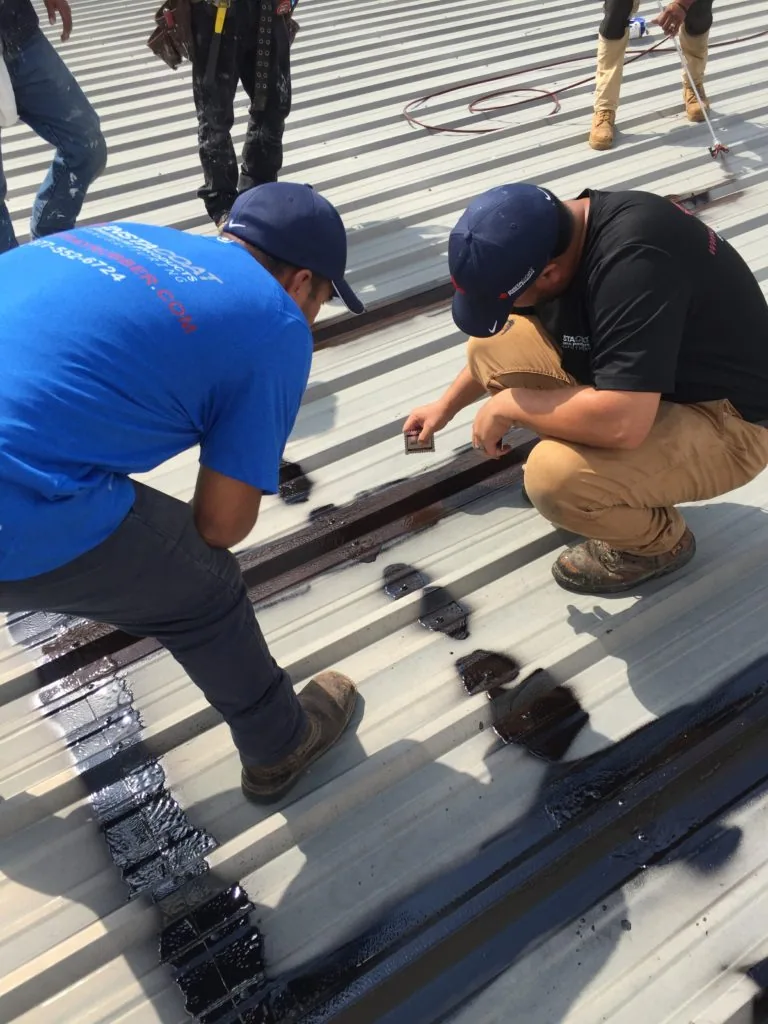
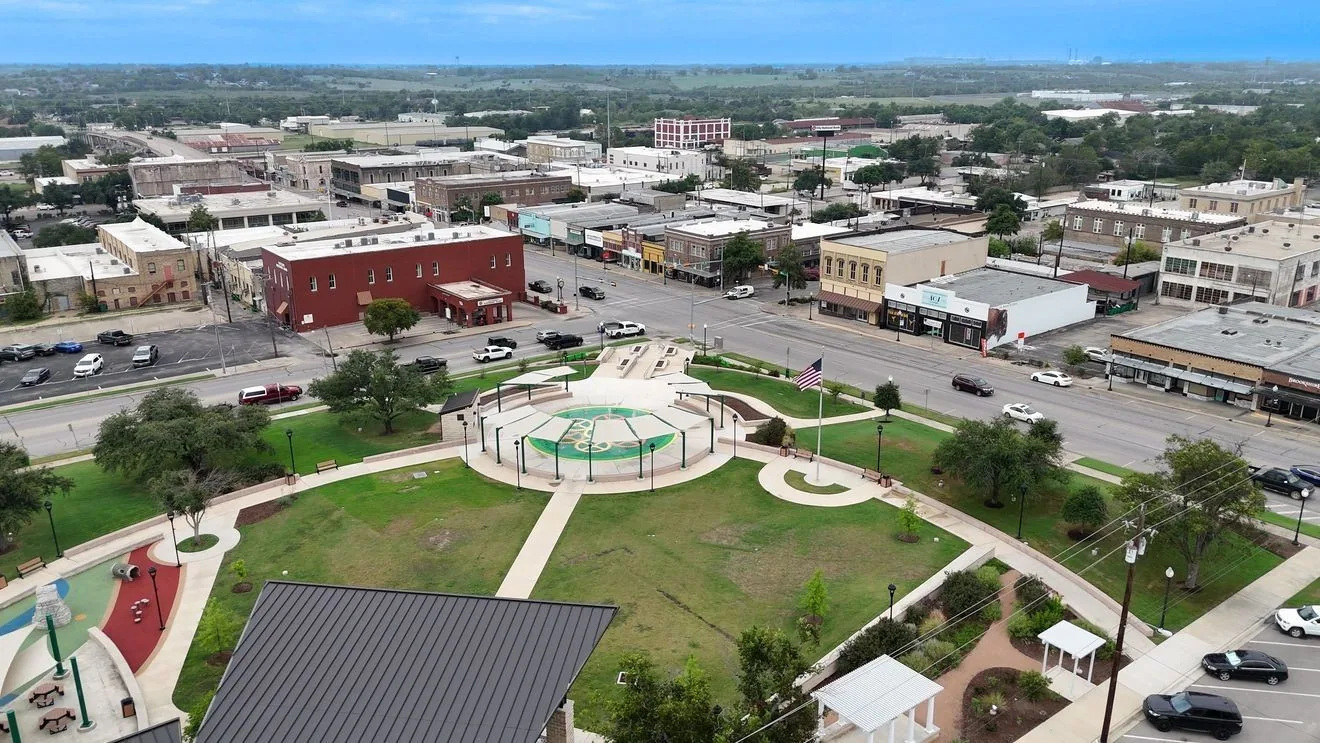
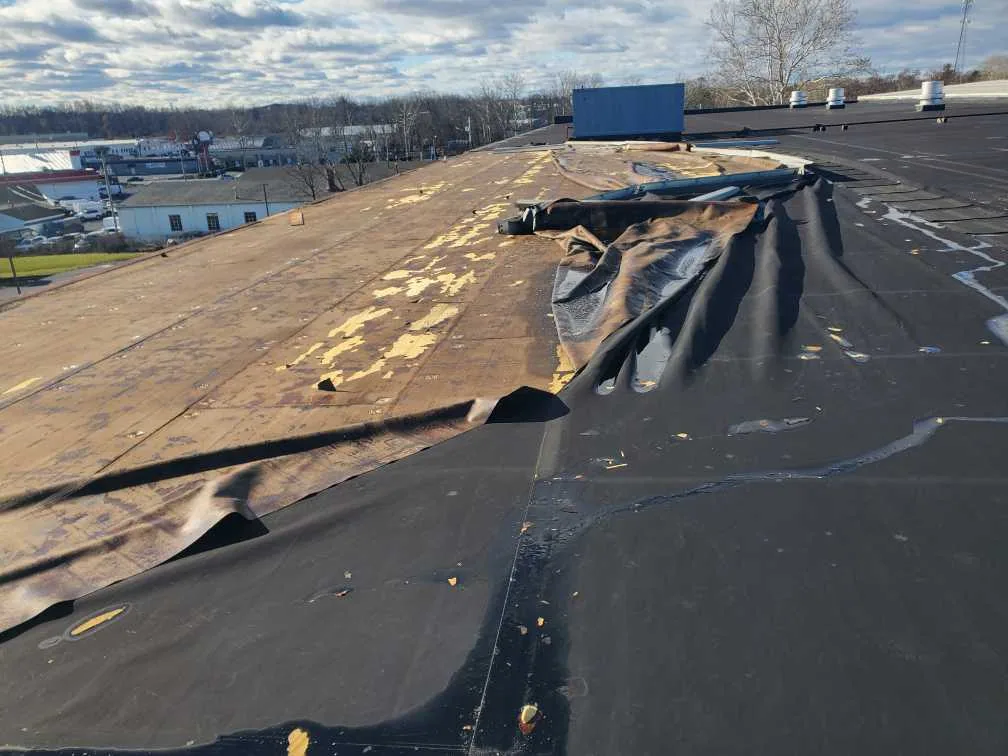
A loose edge flashing sets the first inspection point. We check the metal lap, attachment, and membrane termination, then mark the work boundary before opening the roof. Liberty Hill’s adopted downtown strategy supports preservation and business growth in its historic core, which the city also designates for commercial-retail use. We confirm access, staging, and the work boundary with the property contact. Our first commercial roof inspection checks actual materials, transitions, and access, then notes any detail that needs a test.
Our work starts with finding the water path or failed connection, then choosing a repair or larger project from the field evidence. At a leak, we trace the interior report to roof-level evidence instead of assuming the entry is directly overhead. At a failing edge, we check termination, fasteners, and the tie-in before setting repair limits. A Georgetown area inspection follows the same evidence-first approach; each property still needs its own roof map, access plan, and scope.
Liberty Hill’s downtown strategy supports preservation alongside business growth. At a parapet or wall, we inspect flashing height, counterflashing, terminations, and movement at transitions. At an edge, we check metal attachment, laps, and whether the membrane remains secured below the cover.
When a repair affects a building with preservation or design review, the owner or project lead confirms the applicable review before the crew changes visible exterior details. We can define a repair area, document existing conditions, and identify proposed materials for that discussion. A roof condition report can keep observed defects, photos, and recommended next steps together without treating a planning designation as a roof assessment.
Access may be as important as the detail. We confirm roof entry, ladder or hatch use, material staging, pedestrian paths, and work hours with the property contact. If the area below an edge or doorway stays active, we mark the ground-level boundary and keep debris control in the sequence. An owner managing both markets can schedule a separate Downtown Taylor roof review with its own map and access contact.
Start with the reported interior location, then compare it with roof slope, drains, walls, and penetrations. Water can travel before it reaches a ceiling. We check the likely path and identify a confirmed defect where possible. If the evidence does not isolate an entry point, we define a small test area and explain what the opening should answer before work begins.
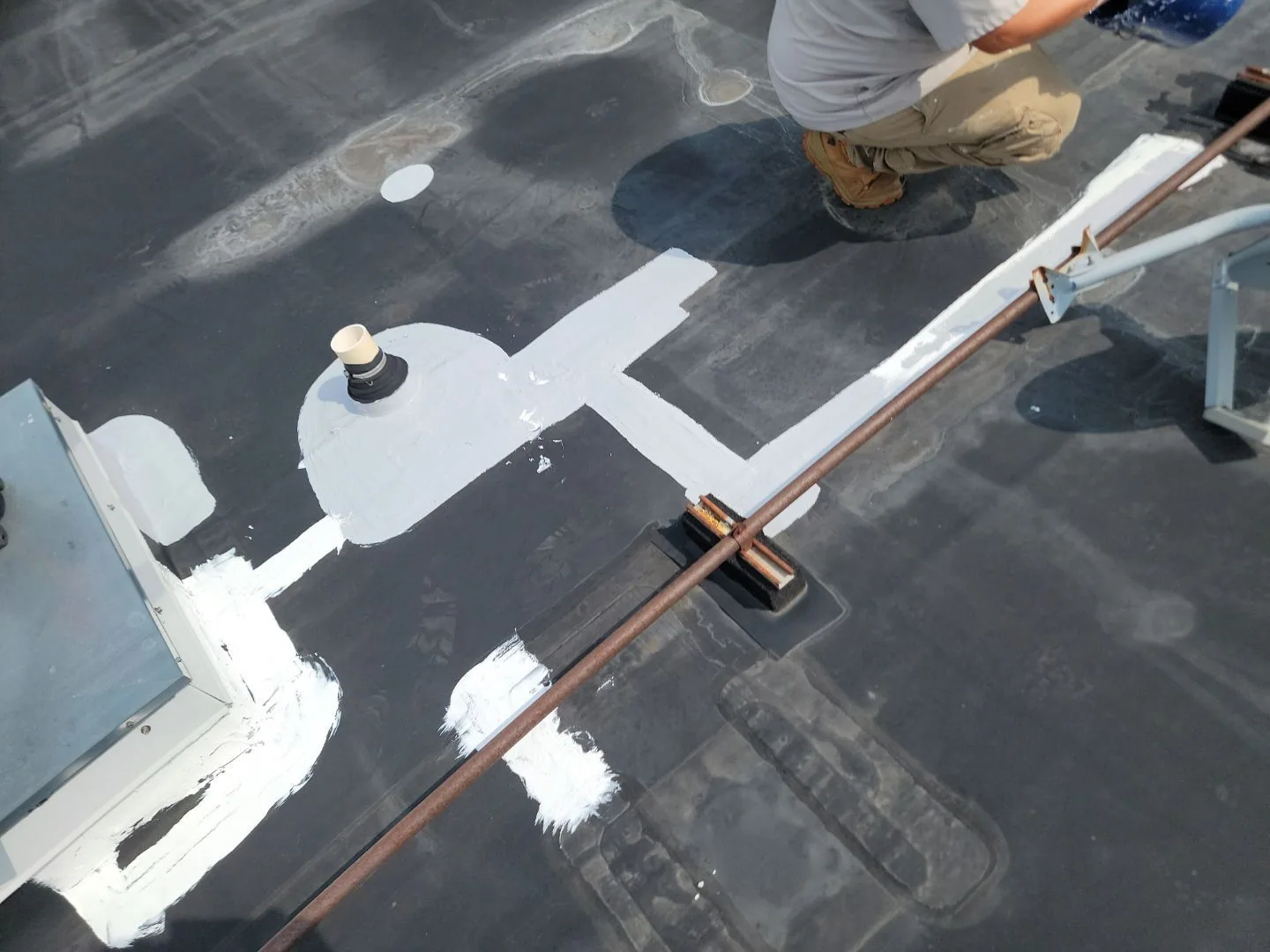
For drainage, we follow the water line toward the outlet and check for trapped debris, a weak membrane tie-in, or a low spot that changes flow. At a curb, we check corners, flashing height, and the membrane connection. On metal, we inspect panel laps, fasteners, closures, and transitions. The repair scope names the selected detail and its tie-in. A leak-repair visit should distinguish the confirmed water entry from areas that remain untested.
Photos show the detail and its roof-map location. Close views capture a split seam, puncture, open lap, or failed flashing; wide views locate it by the drain, edge, wall, or equipment. We note whether the area is dry, temporarily protected, or still exposed. This gives the owner and the next trade a usable record of what the crew actually reached.
Schedule heat-sensitive steps for the conditions measured on site. Georgetown's station log puts many summer maximums in the 90s and includes recent three-digit days. At a Liberty Hill roof, current surface readings and product limits determine when adhesive, coating, or exposed membrane work can proceed. Insulation stays protected until the area can be closed.
Hail and severe wind also call for a roof-level check. In March 2022, a tornado began near the Round Rock I-35/TX 45 junction and moved across Williamson County toward Granger. That county event is regional context, not evidence of a Liberty Hill roof impact. After a storm, we inspect the roof for punctures, displaced metal, open seams, lifted flashing, and impact marks. A storm inspection records observed conditions separately from the event history.
If weather interrupts an active repair, the crew protects the opening, checks the temporary tie-in, and reports what remains. Work resumes when substrate and material conditions support it. A visible boundary keeps the next crew from treating a test area as complete.
A localized repair fits when the surrounding surface and substrate can accept a compatible tie-in. We remove only the material needed to prepare the detail, complete the connection, and inspect the finished edge. If repeated leaks, wet insulation, or weak attachment extend beyond the visible defect, the foreman pauses at a hold point. The next step may be moisture testing or a broader inspection rather than a larger patch by default.
A recover review checks moisture, existing layer count, attachment, drainage, height at walls, and clearances around equipment. If the retained assembly can support the proposed system, the scope defines the required preparation and transitions. If it cannot, a replacement plan sets out removal, substrate review, insulation, and new flashing. The verified assembly and project requirements set the roof material.
Timing and cost depend on roof material, affected area, access, staging, transition count, weather, and how much work can be opened and closed in one shift. Hidden deck damage or saturated insulation can change the scope. We show the condition and obtain approval before extending the work boundary. A recover assessment should state the assumptions that support keeping existing layers, while a repair proposal names the detail and limits.
For the handoff, we attach roof-map references and photos to each repair limit, then note what remains temporary or inaccessible. Where an electrician, mechanic, or wall contractor owns a transition, we identify the interface and the next decision owner. This lets the returning crew find the detail without opening a sound section.
Liberty Hill maintains plans for city growth, economic development, and transportation. Before an alteration, the project team confirms which permit review applies to the parcel and proposed work. We document roof conditions, insulation, drainage, and equipment details for that review.
For related work in the neighboring market, Jarrell has its own I-35 access and development context. On a Liberty Hill roof, the final handoff states what is weather-tight, what remains, and who approves the next step. If a new leak, storm, or equipment change alters the condition, schedule another inspection rather than assuming the prior report still applies.
It gives planning context, but the owner should confirm the property’s review and permit requirements. We document the existing roof detail and proposed work so the project team can review the scope before visible changes proceed.
We compare the interior report with the roof slope, drains, seams, walls, and penetrations. If the evidence does not confirm the path, we define a test area and explain what it will establish before opening material.
Often, if adjacent membrane, attachment, and substrate support a sound tie-in. We inspect the surrounding edge first, then limit the repair to the confirmed failure and document any condition that may require broader work.
The assembly, repair area, access, staging, number of transitions, weather window, and hidden conditions all affect the scope. We identify assumptions and pause for approval if a test opening finds damage beyond the planned boundary.