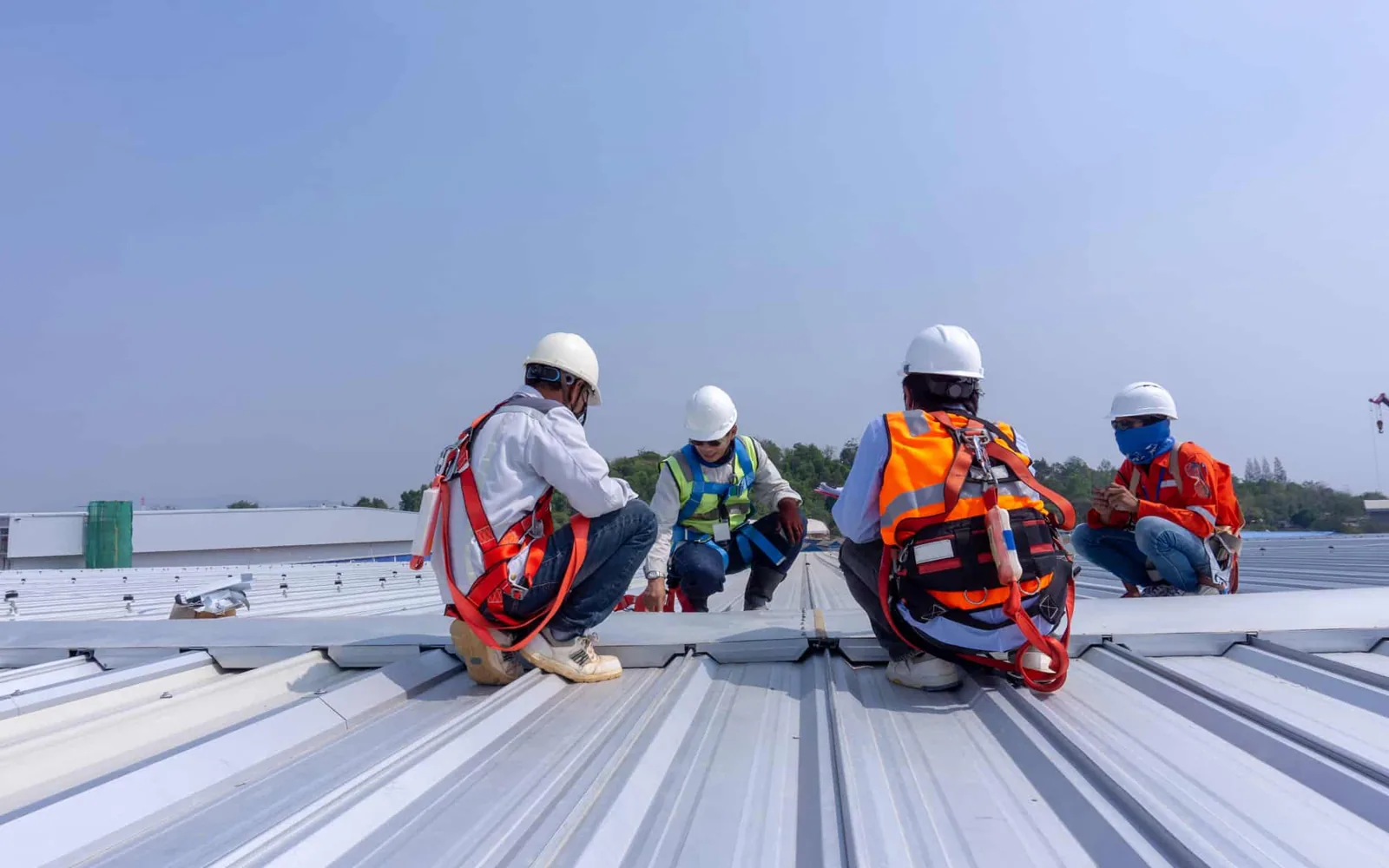
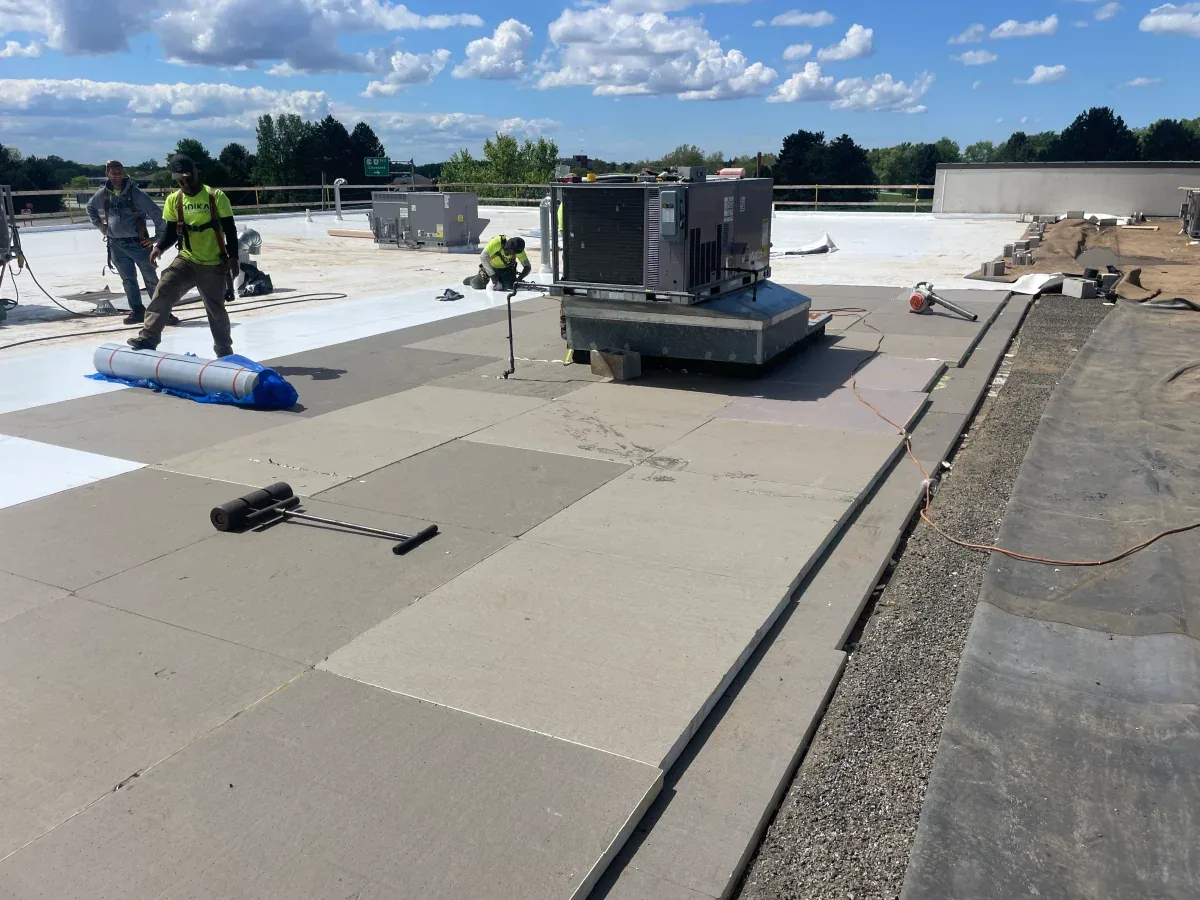
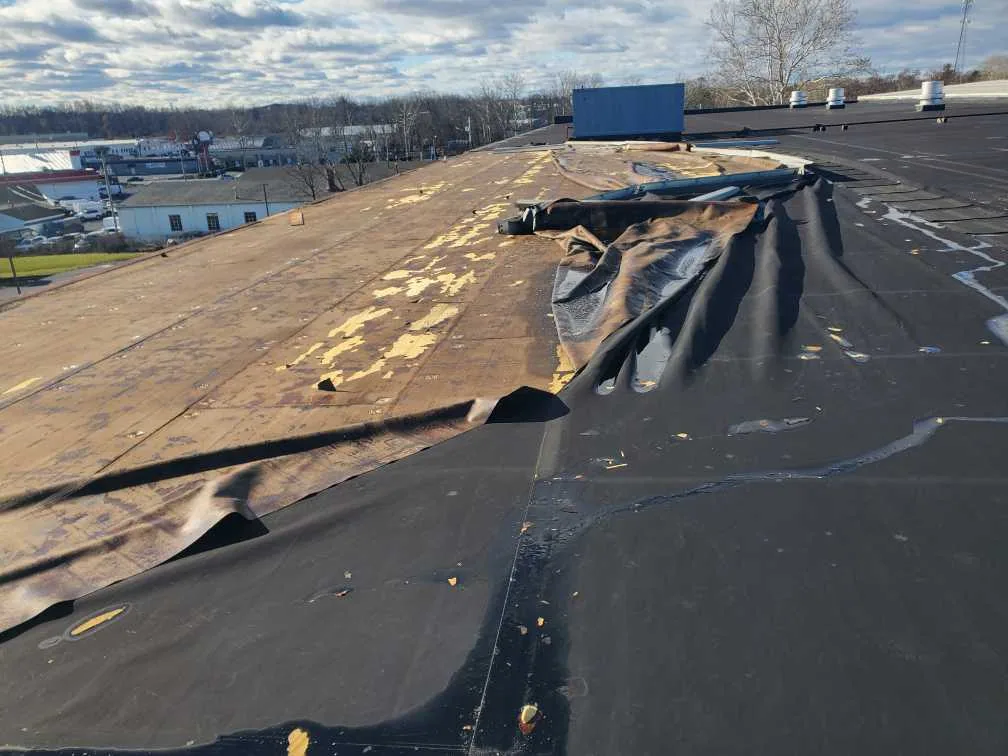
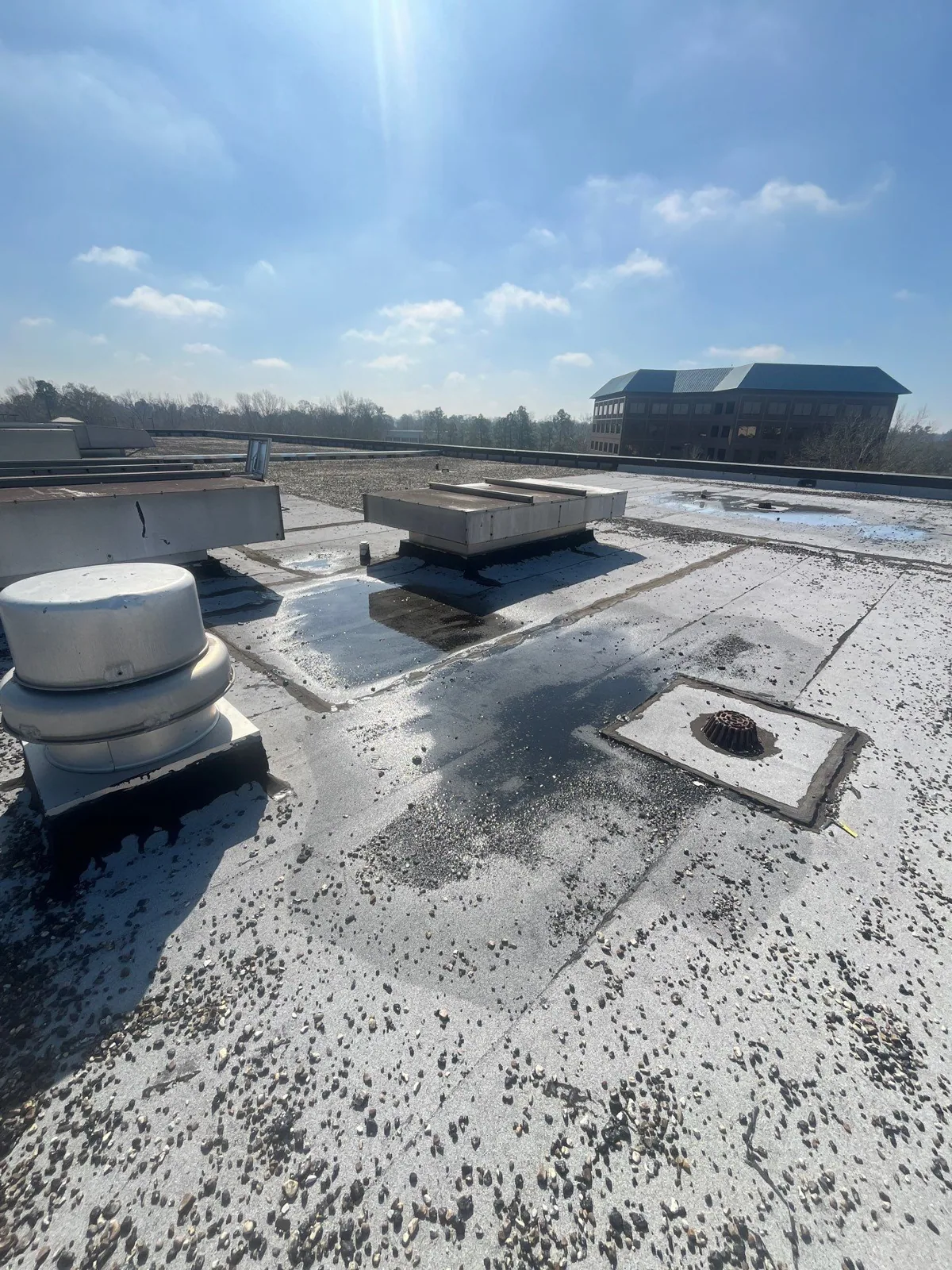
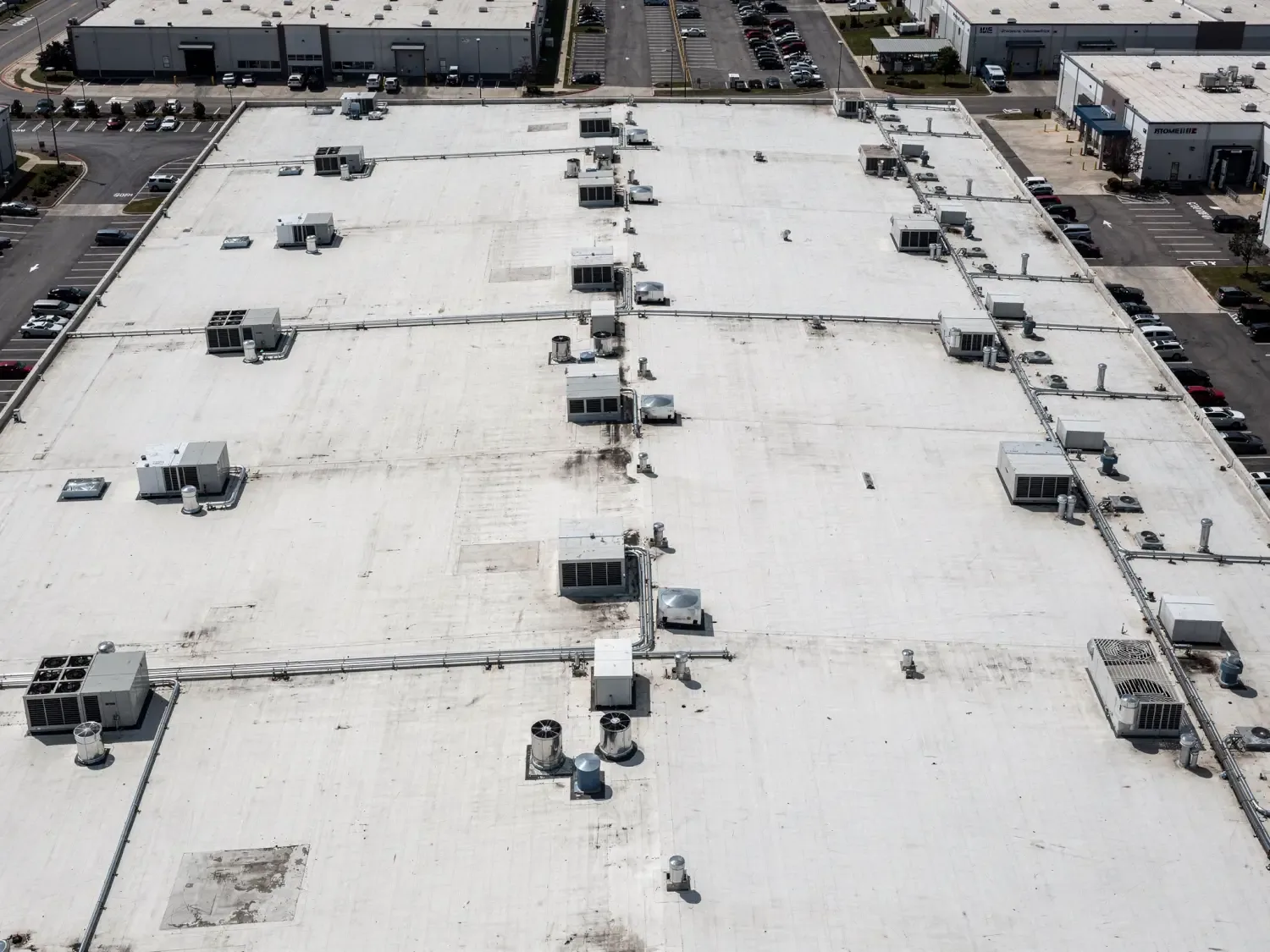
A split seam near a roof drain sets the first walk point. We check the seam, bowl, and low area, then mark the inspection limit before opening material. I-35 places Jarrell on a supply route linking Central Texas to Dallas-Fort Worth, San Antonio, and Houston. The city also identifies development-ready property with direct highway access in its limits and ETJ. Those market facts do not describe any roof assembly. We inspect the property details and set the boundary from what the crew can reach. A commercial roof inspection maps the defects and open questions.
Our crews inspect existing systems, correct failed details, and plan recoveries or tear-offs when field conditions call for them. At a leak, we trace the likely path, inspect transitions, and set a work boundary instead of assuming the stain sits below the defect. If a repair is approved, the crew closes the detail and checks the tie-in before leaving the zone. The Georgetown market has the same regional weather exposure, but Jarrell’s own access and project controls govern each visit.
We start at the reported leak or visible defect and work outward by roof zone. Drain review starts with flow through the bowl, then checks the flashing and low roof plane for a separate defect. At a seam, we look for separation, contamination, weak adhesion, or movement. At a curb, we check corners and the membrane connection before deciding whether the metal or the roof surface needs attention. These observations separate a roof condition from a possible cause that still needs testing.
The Jarrell EDC highlights workforce access from Austin, Killeen, and Temple-Belton. We confirm each site's hours and occupancy with its project contact. We ask the owner or general contractor to identify operating hours, restricted areas, roof access, lift paths, and staging limits. If a delivery crosses an active yard, the work plan marks a route and a spotter handoff. A repair scope should identify the affected detail, preparation, tie-in, and any condition outside the approved boundary.
Photos should show both the close-up and the surrounding roof zone. The close view captures a split, puncture, loose fastener, or open flashing corner. The wider view locates it relative to drains, walls, curbs, and equipment. We record whether the area is dry, protected, or still exposed so the next crew has a defined starting condition.
Heat-sensitive work needs a site check before material is exposed. The Georgetown station logs many summer maxima in the 90s and has recorded recent days above 100 degrees. We use that regional signal to plan, then confirm the Jarrell roof surface and product limits before starting adhesive or membrane work. We keep exposed insulation and open roof sections within a dry-in sequence the crew can finish.
Severe weather also changes what an inspection can conclude. A documented March 2022 tornado entered Williamson County after beginning near Round Rock’s I-35 and TX 45 junction, then continued toward Granger. County weather history also records the 1997 F5 tornado at Jarrell. Neither regional record establishes damage at a property. After a storm, we inspect the actual property for displaced edge metal, punctures, open laps, damaged flashings, and debris impacts. A storm-damage evaluation separates those observations from the event history.
If weather arrives during a repair, the foreman selects a secure stop point. The crew protects the opening and records what remains before work resumes.
A localized repair can make sense when the surrounding membrane, insulation, and deck remain suitable for a lasting tie-in. The scope names the defect, limits the preparation area, and states how the repair will be checked. If moisture, repeated failure, or weak attachment extends beyond that detail, we pause at a hold point and map the next inspection area. A ponding-water review checks drainage and low areas without assuming that water observed after rain identifies the leak path.
A recover assessment asks whether existing layers can stay. We check moisture, layer count, adhesion, drain height, wall clearances, and equipment transitions. If those conditions rule out a recover, a replacement evaluation plans tear-off, deck review, insulation, and transition details. The verified assembly and project requirements drive system choice; the city name does not.
Timing and cost depend on roof area, material, access, staging, transitions, weather, and how much work can be closed in a shift. Hidden wet insulation or damaged deck can change the plan. We show the condition and get approval before extending the boundary. A recover review and replacement proposal should state assumptions for comparison.
Jarrell’s interstate connection can support regional delivery planning, but the property contact controls the actual gate, loading path, work hours, and emergency access. Before mobilization, we confirm where materials can be unloaded, how roof access is secured, whether a lift needs a reserved area, and who can release the next work zone. If another trade owns a curb, conduit, or wall transition, we identify that interface before the membrane closes around it. The Innovation Business Park has separate project context; a Jarrell site walk still sets its own route and staging controls.
Repair permits and energy requirements depend on the building’s jurisdiction and work scope. Before changing insulation, drainage, fire classification, or equipment support, we flag the affected detail for the owner and design team to confirm the applicable review. The estimate keeps that approval outside the roofing crew’s field assumptions.
For a test opening, we define the question, location, protection, and closure responsibility first. If deck or insulation differs from the assumption, the crew documents it and pauses for a decision.
The closeout lists the mapped zones, repair status, and any temporary protection that remains. We include photographs, repair limits, and access or weather constraints that affected the sequence. A dry-in check confirms the tie-in before the crew leaves. If another contractor must finish equipment, wall, or electrical work, the handoff names the transition and who owns the next step.
For a larger portfolio or phased project, a roof condition report can keep separate findings tied to locations on a roof map. That supports later repair planning but does not replace inspection after a new leak or storm. The report identifies what was checked on the visit and what remained inaccessible.
Jarrell’s I-35 access is market context. The roof decision comes from the assembly, observed damage, and project requirements. Closeout states what is weather-tight, where repair ends, and who approves the next move.
Yes. We inspect the property for physical damage such as punctures, open seams, displaced edge metal, and failed flashing. A regional storm track helps explain timing, but it does not establish damage at your building.
It should name the roof zone, confirmed defect, preparation, repair detail, tie-in check, and any work excluded from the boundary. If a test opening finds wet insulation or deck damage, the crew pauses for approval before expanding.
No. The property’s gate, loading route, roof access, operating hours, and staging rules set the actual sequence. We confirm those controls with the owner or general contractor before mobilizing.
We check moisture, existing layers, attachment, drainage, wall height, and transitions. A recover is considered only when the retained assembly can support the proposed work; otherwise, replacement may provide a clearer substrate and flashing plan.