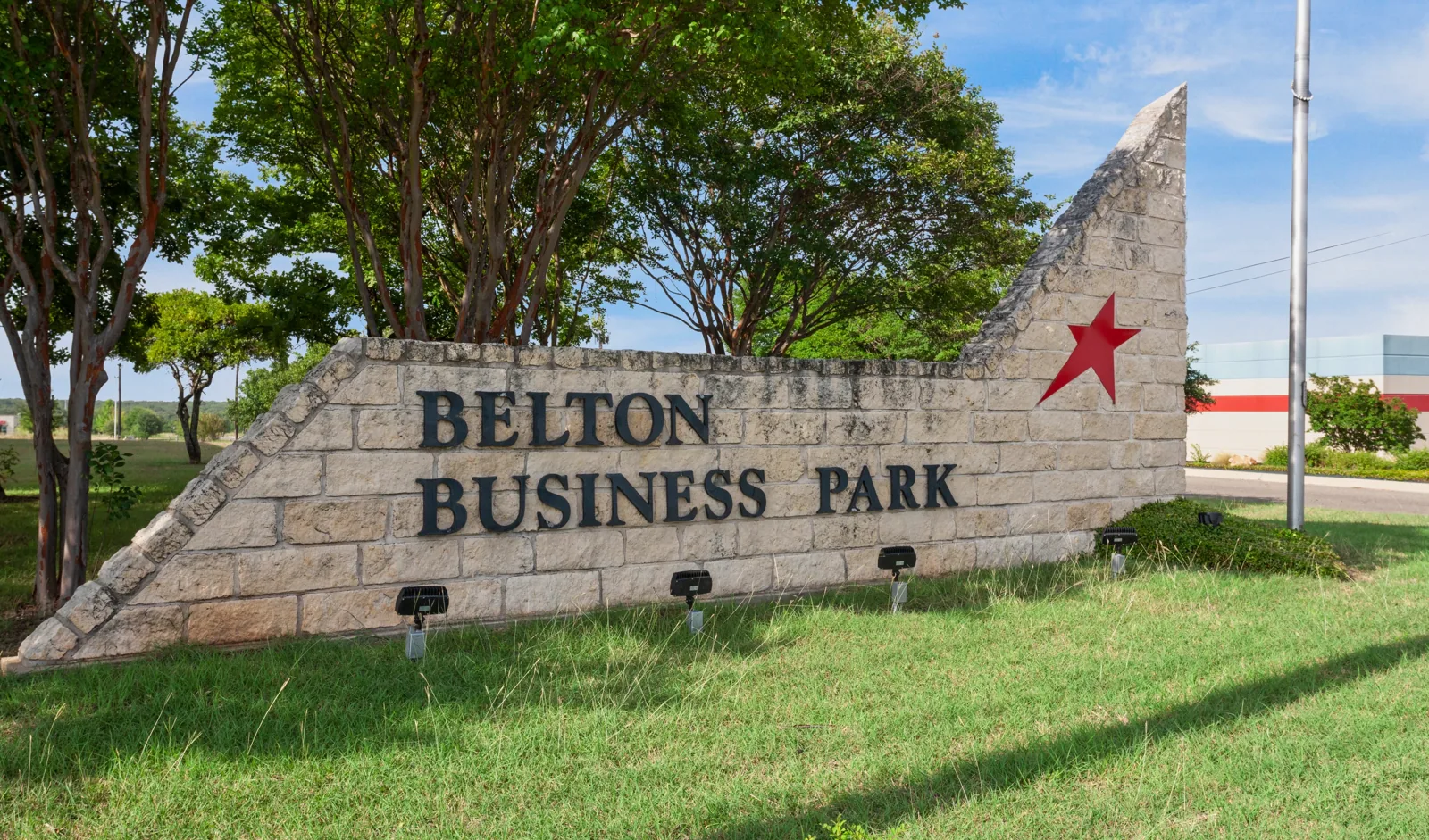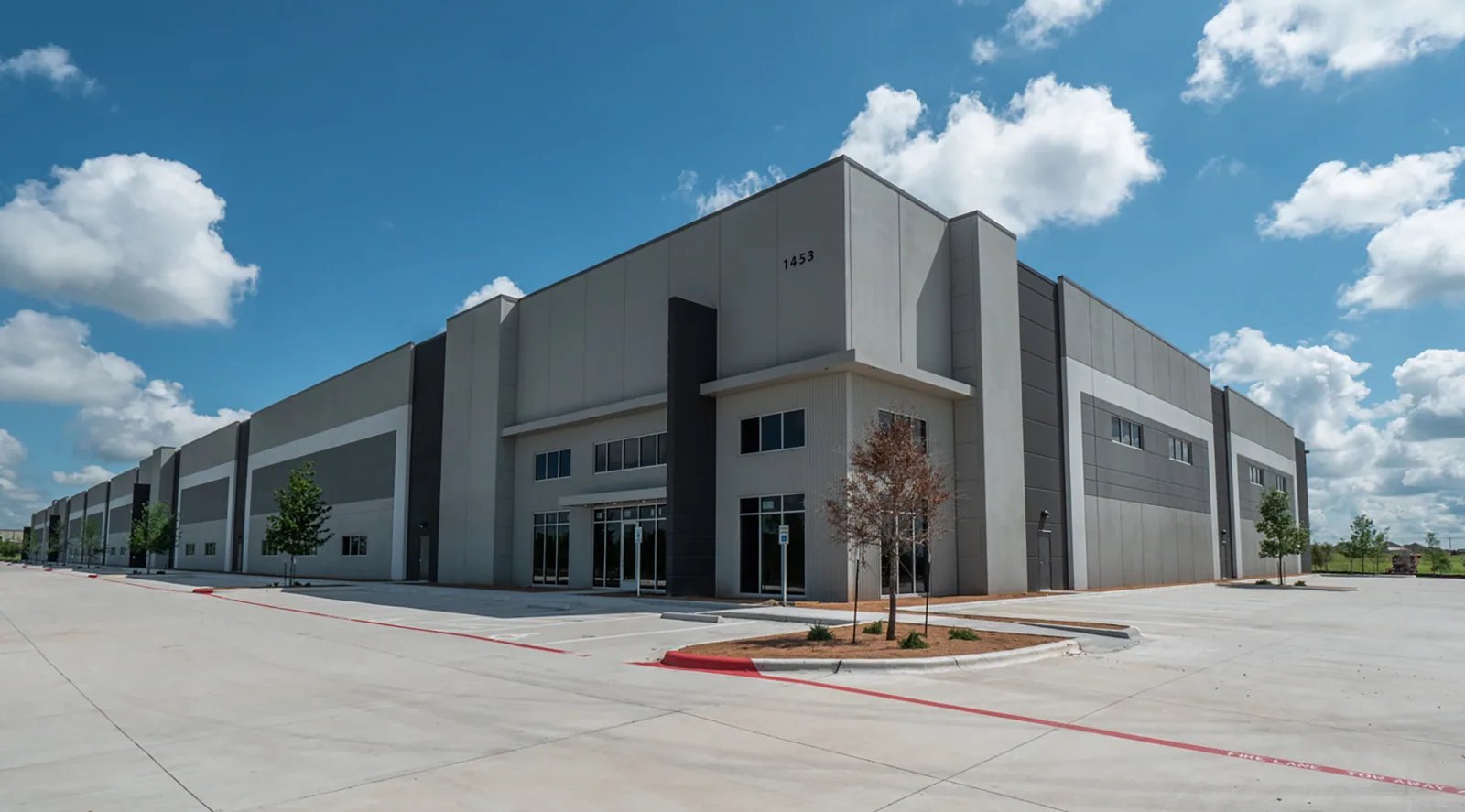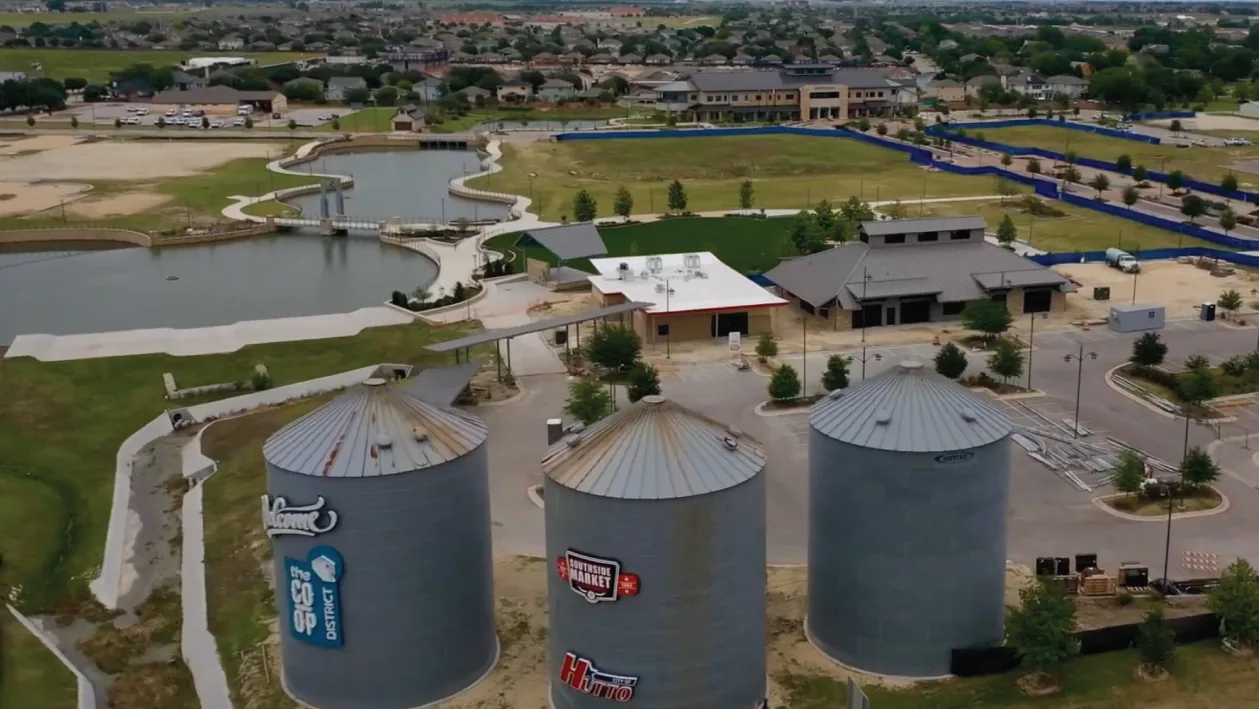
A drain ring loose against the membrane can leave a path for water. We inspect the connection, trace the flow area, and mark the roof section before repair. Hutto's economic-development targets include advanced manufacturing, life sciences, and professional services. Hutto’s business-development sites include Innovation Business Park and The Co-Op District, with separate access and operating needs at each property.
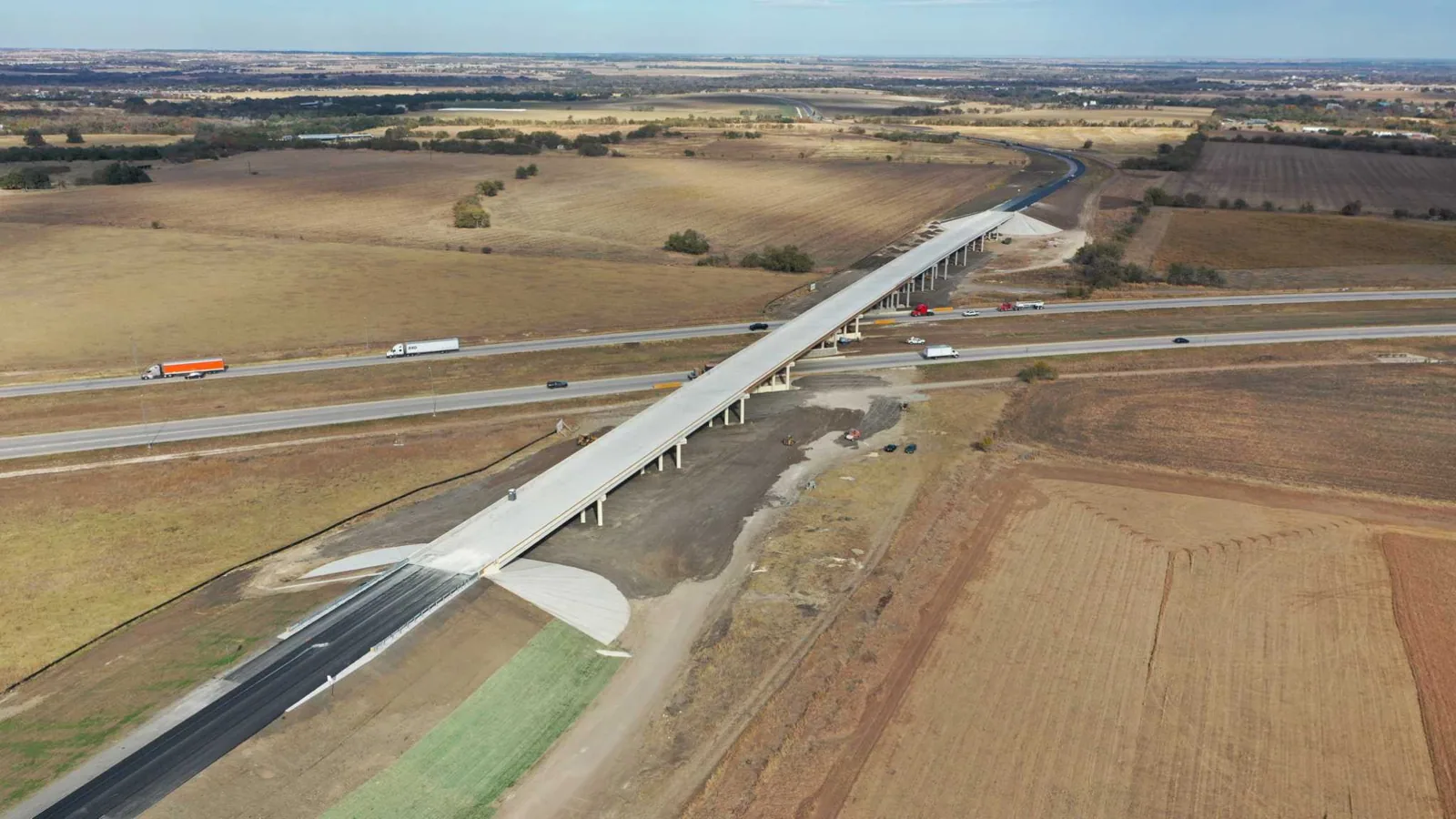
Hutto is positioned along US 79 and SH 130, with regional links to I-35 and metro markets. Those routes help identify the service area, but they do not tell us the roof assembly or access rules at a property. We confirm roof access, seams, drains, penetrations, and prior repairs on site. A commercial roof inspection sets a building-specific baseline.
For Hutto commercial roofs, we provide field inspections, leak response, selective repairs, restoration, and replacement planning. A walk at Innovation Business Park and a visit in The Co-Op District require separate access and roof records. We plan around the active operation and the general contractor's work boundary. When water is entering, our on-call response is available nights, weekends, and holidays.
At a drain, we check the bowl, ring, membrane connection, and nearby low areas. Debris can slow flow, but an open lap or failed flashing may also send water toward the same point. We photograph each detail and trace the likely route before setting a repair limit. The roof map marks what was reached.
At a wall or curb, we inspect corners, flashing height, sealant, and the tie-in to the field membrane. At the perimeter, we check edge metal, fasteners, and membrane termination. Water can travel along insulation or deck flutes before appearing inside. The interior stain is a clue, not the roof-level work boundary.
The site contact and field inspection establish current occupancy, installed roof type, and building condition before a repair method is selected. We confirm the actual site contact, approved entry, and roof system before recommending repair. A planned use is not an inspection result.
If the visible surface cannot resolve suspected moisture, infrared survey may help identify an area for a closer check under suitable conditions. A test cut should answer a clear question about insulation or deck. We mark the spot, explain the purpose, and restore the opening after inspection. The report states what was tested and what remains unknown.
US 79 and SH 130 connect Hutto with regional markets, with routes also linking to I-35. Those highways help frame the commercial service area. The property contact still needs to confirm the gate, loading route, staging space, roof hatch or ladder, and access window.
At an occupied building, we plan around deliveries, tenant schedules, equipment service, and entrances below the work area. The sequence can split roof areas into sections and keep a dry-in hold point before the crew advances. If hidden substrate damage appears, work pauses at the agreed boundary while the owner reviews the finding.
For broader regional coordination, Georgetown is a separate market location. Hutto and Georgetown each need their own site contact, route plan, roof map, and work boundary. We do not carry an access assumption from one visit into another.
Georgetown summers commonly bring highs in the 90s, with recent days above 100 degrees Fahrenheit. For a Hutto job, we check the surface and application window on site. Heat can stress exposed seams, flashing, and sealants. We check for brittle edges, open laps, and joints that have separated, then inspect the adjacent surface before calling the defect isolated.
The Austin and San Antonio forecast area has hail exposure, including the Round Rock area. That regional history supports a roof check after hail; it does not establish damage in Hutto. We inspect membrane, metal trim, penetrations, and flashings for actual punctures, fractures, and displacement.
After hail or wind, we check the roof surface, edge metal, and penetrations for visible openings or movement. The inspection records the actual condition and marks any area that needs closer testing. A storm report does not make that determination for the property.A written condition report ties photos to a location and next action. We separate repair, monitoring, and further testing. If a section could not be reached, the report names the access limit rather than extending a finding across the whole roof. That record supports decisions at either a single property or a portfolio.
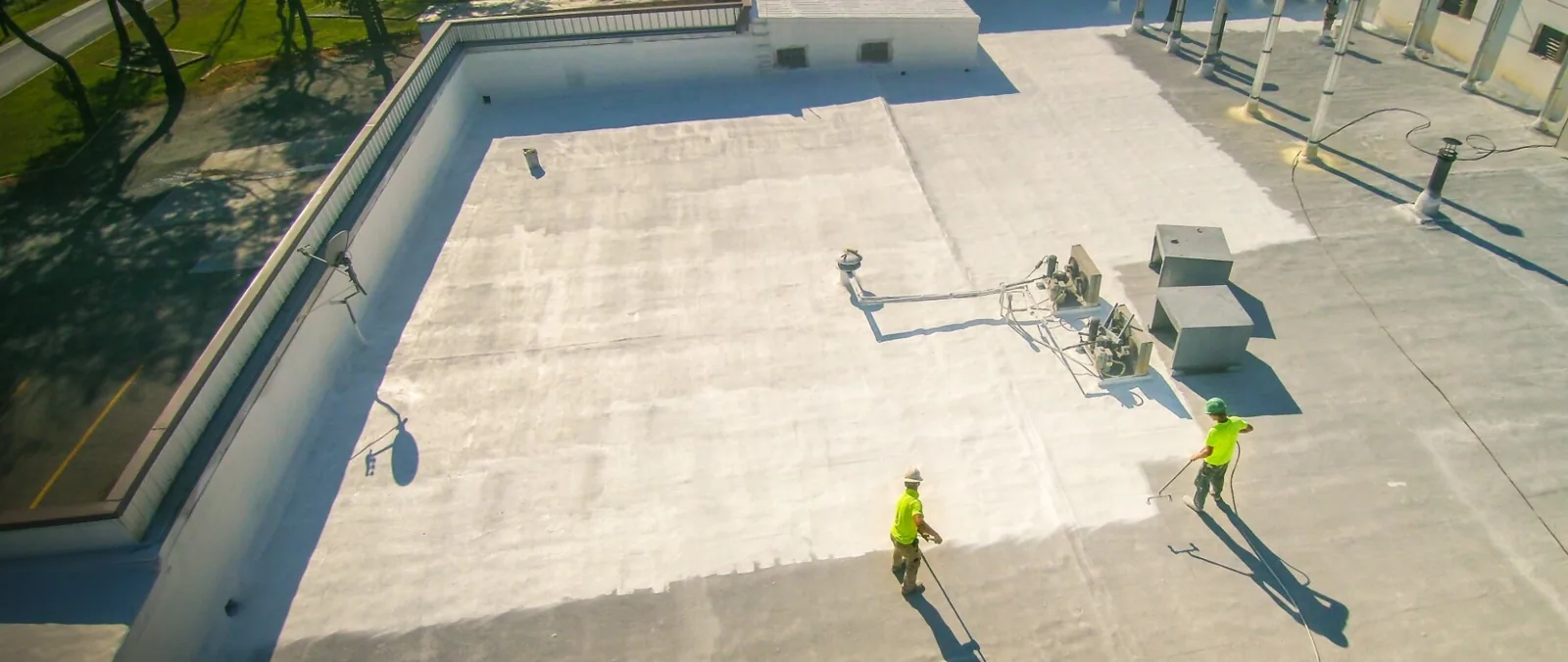
A localized seam split can often be repaired when the surrounding membrane remains sound. We clean and prepare the area, make the patch, and inspect the finished bond. If moisture or repeated failures show a wider pattern, we mark a test boundary before expanding the scope. A repair plan separates immediate water control from longer-term work.
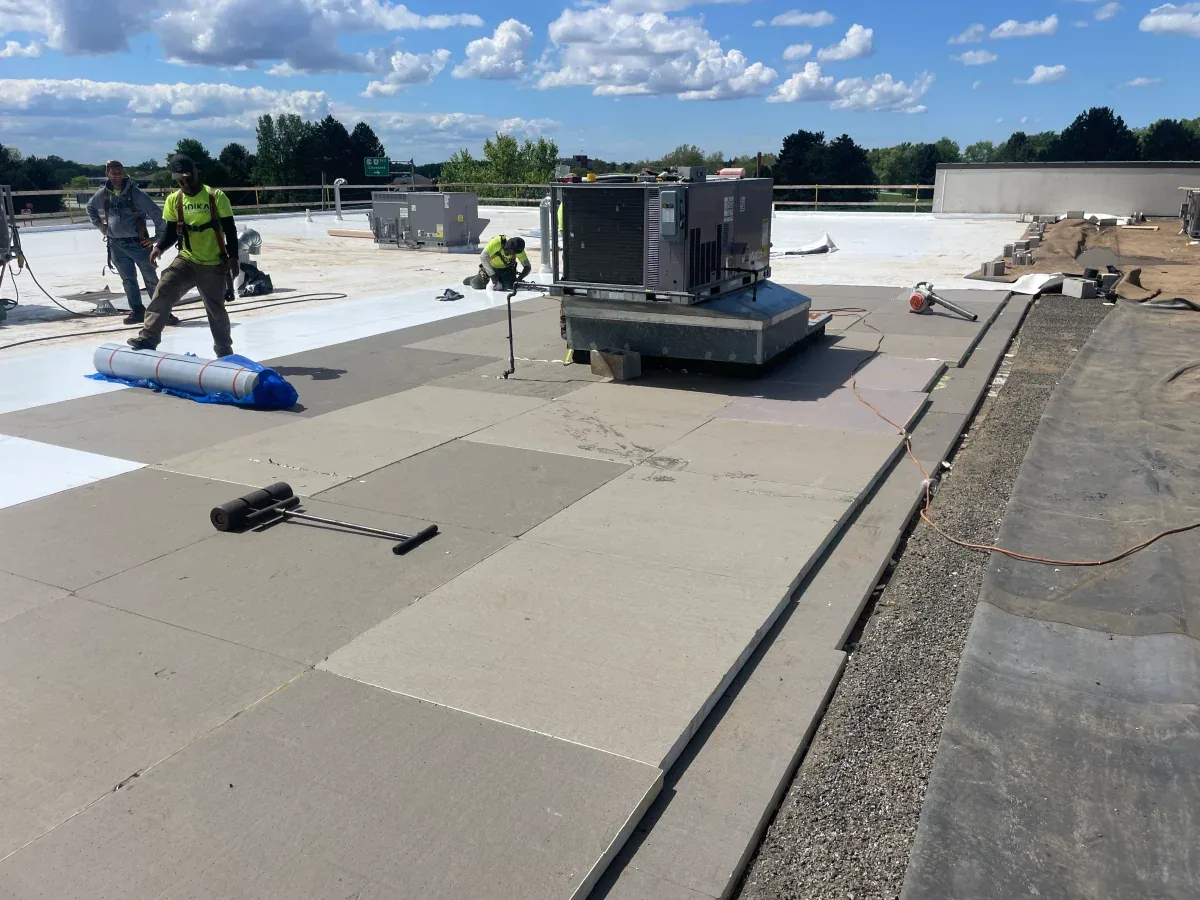
A recover may fit a dry, stable assembly with sound attachment and adequate drainage. We check wet insulation, deck condition, flashing height, and details that will be covered. If those conditions do not support another layer, removal and replacement may be needed. A recover assessment records the checks and preparation before installation.
The repair detail depends on the installed assembly. We confirm whether a roof uses an adhered sheet, a mechanically attached membrane, or formed metal panels, then match the seam and curb work to that system. An EPDM membrane repair follows its lap, while standing-seam metal work must preserve panel movement.
For an existing roof, we compare the installed detail with the planned repair. We check the insulation transition, attachment at the edge, drain connection, and any curb that will be reused. The field record gives the owner a clear decision point before a larger section is opened.A roof map records where we inspected, what we found, and where the work boundary ends. Photos show the close detail and its relation to drains, curbs, walls, and edges. The owner can see which repair is ready and which question still needs access or testing.
For work at an available business site, current construction documents establish the intended assembly and project phase. The field walk checks the installed condition and finds any difference that affects attachment or flashing. We note a hold point before the crew covers a detail another trade must complete.
Preventive maintenance can revisit drains, seams, flashing, and earlier repairs. The visit record tracks completed items and what remains open. A maintenance plan gives facility staff a practical roof history, but it does not replace a prompt response to a new leak or storm concern.
For longer-term tracking, roof condition reports keep photos, map references, and repair notes attached to each Hutto property. A shared portfolio review can compare needs while preserving separate site records for Innovation Business Park and The Co-Op District.
At completion, we check the repaired detail, nearby seam, and included flashing. We remove loose debris and record any item left at a hold point. The handoff states what the crew finished and what the next trade must complete before the roof is closed.
For a replacement, the final record can include substrate repairs, insulation changes, membrane attachment, drains, and transition details. A roof asset record can keep those findings with the inspection date and building map for future review.
For a Hutto inspection, share the facility contact, roof access conditions, and the detail causing concern. We will record what the crew can reach and the next test or repair. Call any hour when an active leak threatens operations, including on a holiday.
No. Planned use does not identify the membrane, drainage, or attachment. We inspect the roof and access.
We check the bowl, ring, membrane connection, nearby seams, and flow path.
Yes. We coordinate loading, crew access, staging, and the dry-in sequence with the site contact.
Moisture, attachment, drainage, substrate, and flashing height determine whether the existing assembly can be covered.
No. We inspect for punctures, impact, open seams, and displaced details.