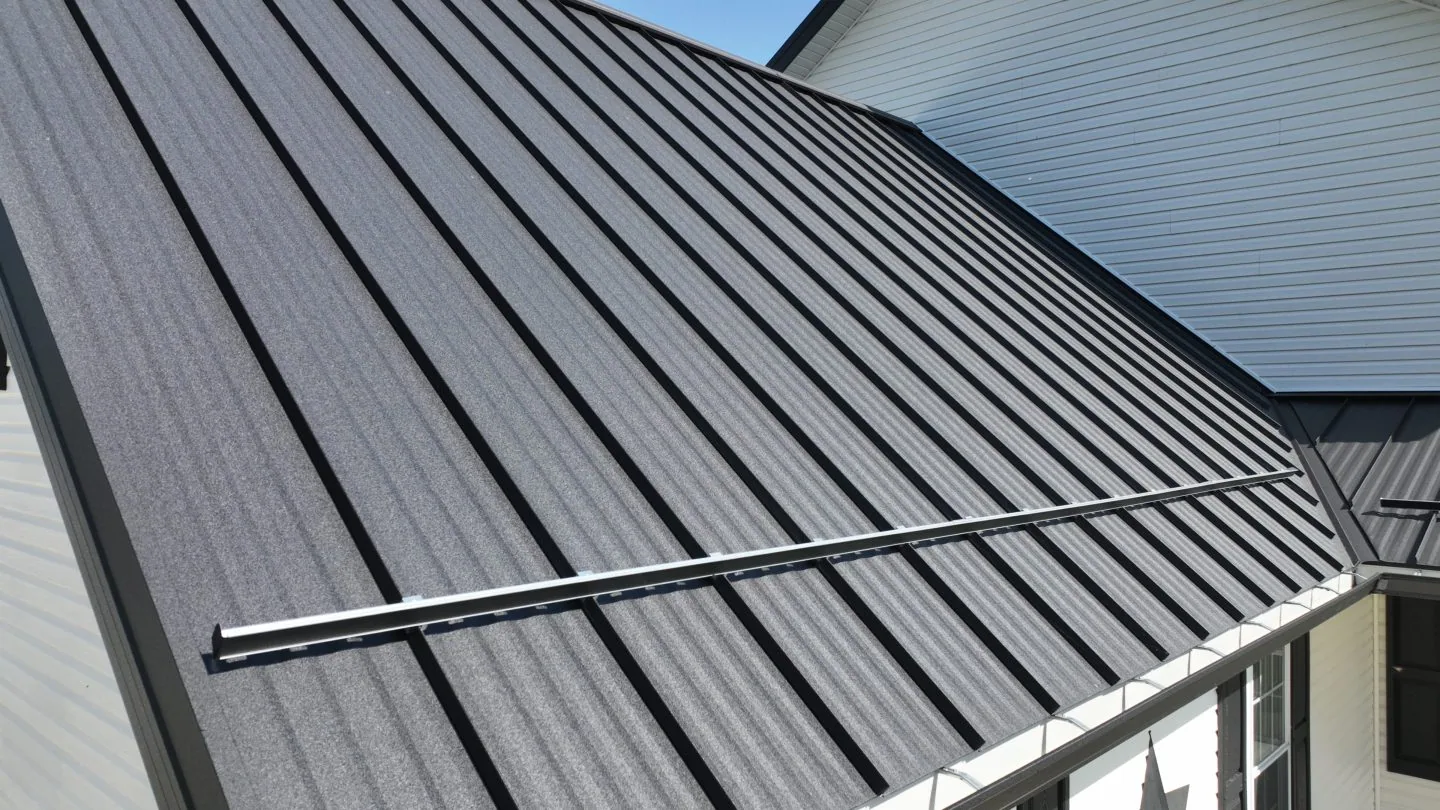
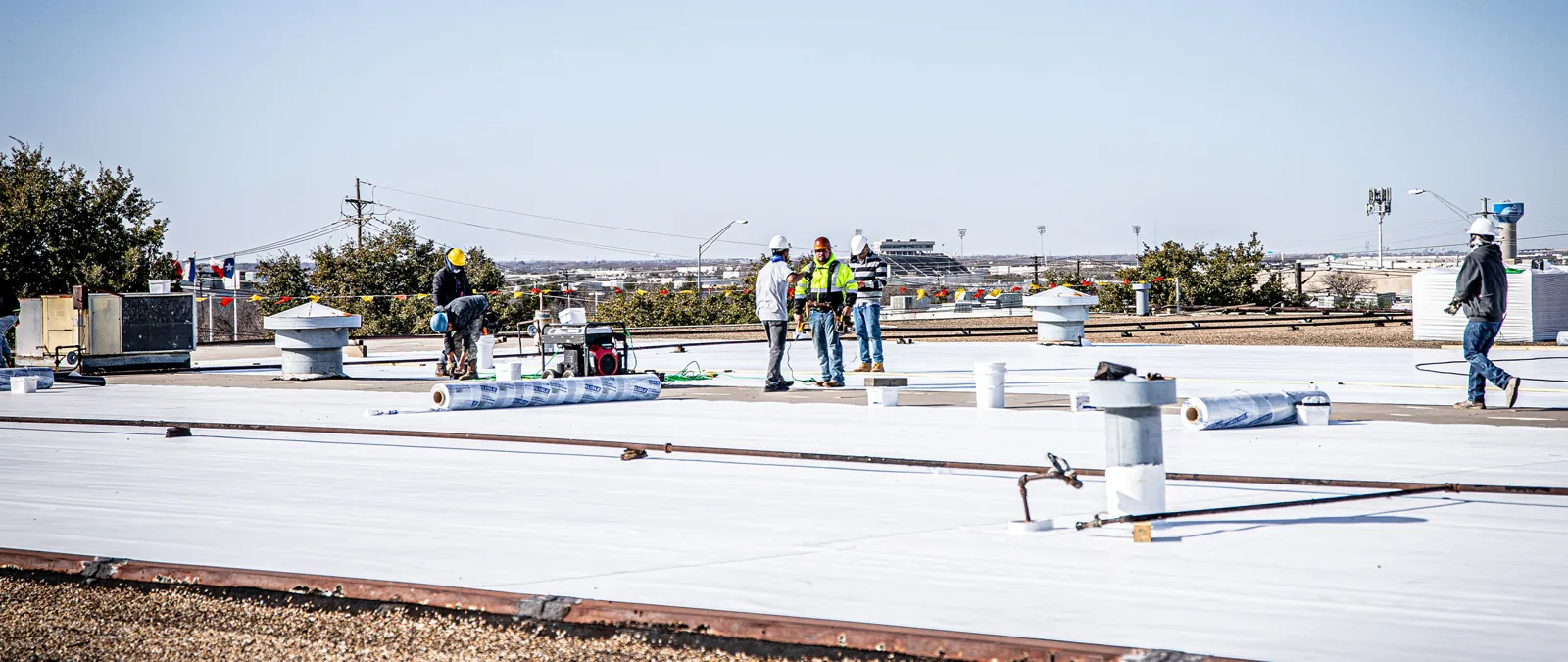
A standing seam panel can move under heat while its clip remains fixed. We inspect the seam, clip line, and perimeter before tightening or replacing a detail. The roof map marks each panel run and penetration. That record keeps a repair from locking a moving seam in place.
Georgetown station data shows hot summer conditions, including recent readings above 100 degrees Fahrenheit. Daily expansion and contraction make panel movement a practical inspection point. We check the system as installed, then compare the condition with its panel length, clips, and attachment. The detail, not the material name, sets the repair path.
Standing seam panels connect with raised joints and concealed clips. Some systems use fixed clips; others allow movement along the panel. We identify the panel profile and clip arrangement where records or exposed details make that possible. A seam that is forced, distorted, or pinched can transfer stress to fasteners and flashing.
We look for oil canning, displaced seams, loose clips, corrosion, and gaps at transitions. Oil canning can be an appearance condition rather than a leak, so we check its location and movement before writing a repair. Penetrations and curbs need compatible flashing that does not obstruct the panel's travel. A curb and support review can coordinate those interfaces.
The roof edge deserves the same attention. Metal panels may terminate at coping, gutters, eaves, or rake edges, each with a different water path. We check fastening, sealant, and closure details together.
Scratches, cut edges, and trapped debris can expose metal to corrosion. We note coating loss, rust lines, and fastener condition, then determine whether the affected area is isolated. A new sealant bead does not restore a failed panel or correct trapped moisture. The repair should account for the metal, coating, and water path.
Storm inspections around Round Rock look for panel dents, loosened fasteners, shifted closures, and edge damage, then record each condition by roof zone. Hail may leave dents or coating damage; wind may lift closures or stress edges. We photograph observed impacts and separate them from corrosion and maintenance wear. The roof walk sets the repair boundary.
Georgetown's commercial and industrial development extends along I-35 and SH 130. Berry Creek Business Park has multiple industrial buildings near those routes. A roof in that setting still needs individual inspection of panel lengths, attachment, drainage, and equipment. A hail review can record the visible condition by elevation and roof section.
Water can enter where a panel meets a curb, wall, skylight, ridge, or valley. We inspect the flashing, closure, and fastener pattern before applying sealant. Sealant ages and moves; it cannot replace a missing or incorrectly formed metal detail. We trace water from the entry point toward the interior report and identify what remains unverified.
Panel laps and end details require a compatible repair. A fastener replacement must fit the panel and substrate. If a panel is damaged, we check whether the seam can be opened and reset without affecting adjacent runs. For a limited defect, repair work can restore the detail. Broad corrosion or failing attachments may require replacement planning.
Where active water enters during a storm, protect the interior and note the roof access limit. A leak investigation follows the water path instead of sealing the first visible joint. If the opening needs immediate protection, emergency response is available day or night, including holidays. Permanent metal work waits until the panel and flashing can be safely reviewed.
Standing seam metal can be renewed by panel replacement or, in some cases, by an engineered retrofit over the existing roof. The correct option depends on deck, framing, corrosion, attachment, insulation, and height changes at edges and penetrations. We do not assume the metal is suitable for another layer because the surface looks continuous.
An engineered metal retrofit may address exposed-fastener panels or a broader assembly, subject to design and attachment requirements. A TPO assembly remains a separate single-ply option when project criteria permit. We document the existing panel profile, purlins or deck where visible, and areas that need structural review.
FM 971 connects the I-35 and SH 130 sides of Georgetown and serves commercial development alongside homes, schools, and a regional park. Delivery planning can use that route context. The work plan still depends on building access, lift placement, active operations, and the approved engineering details. Each transition needs a field check before material is ordered. We also record clip travel and panel clearance at fixed points so the installer can confirm movement after fastening.
Before panels arrive, we confirm lengths, staging, crane access, and how old material will leave the roof. The sequence accounts for weather, open edges, and interior protection. We remove the planned area, inspect framing or deck, and install under the approved details. Clips, seams, closures, and flashings are checked before the next run proceeds.
Heat and wind both affect long metal panels. We coordinate delivery and handling so material does not drag across a finished coating or block access routes. On occupied buildings, we plan over loading bays, customer entries, and equipment service areas. A phased roof sequence can define which section stays protected each shift.
At day end, we secure loose material and verify that the current edge sheds water. If weather interrupts installation, the crew closes the boundary and records the remaining work. Later maintenance can check fasteners, sealant, coating, and drainage as the metal moves through seasonal temperature changes.
Closeout notes the panel profile, repaired runs, replacement areas, clip or fastener details, and exclusions. Photos identify each transition and the point where the crew stopped. We record coating repairs and any corrosion left for separate review. The property contact can use that map when arranging future roof access.
For commercial areas around FM 971 and Williams Drive, label the building and roof zones separately. Georgetown planning identifies commercial, office, civic, and mixed-use categories along Williams Drive. Before setting a repair boundary, we inspect the panel assembly installed at the property.
Send the roof plan, panel details if available, leak locations, and access window. We can inspect the seams and set a repair, retrofit, or replacement boundary. Active leaks can be reported around the clock, weekends and holidays included. The final handoff shows which panel runs were completed and where follow-up remains.
Metal expands and contracts with temperature. The clip and seam arrangement must allow the movement intended by the system design without pulling on flashings or fasteners.
We first identify the entry point and panel detail. Sealant may be part of a compatible repair, but it cannot replace a missing closure or correct an incorrectly formed transition.
Not by themselves. We inspect coating, seams, attachment, and water entry, then document cosmetic marks separately from functional damage.
A retrofit requires review of structure, attachment, heights, insulation, and transitions. We identify the assembly and design questions before setting that scope.
Record the panel runs, clips or fasteners addressed, repaired flashings, coating corrections, and remaining conditions. Photos should make each roof zone easy to locate.