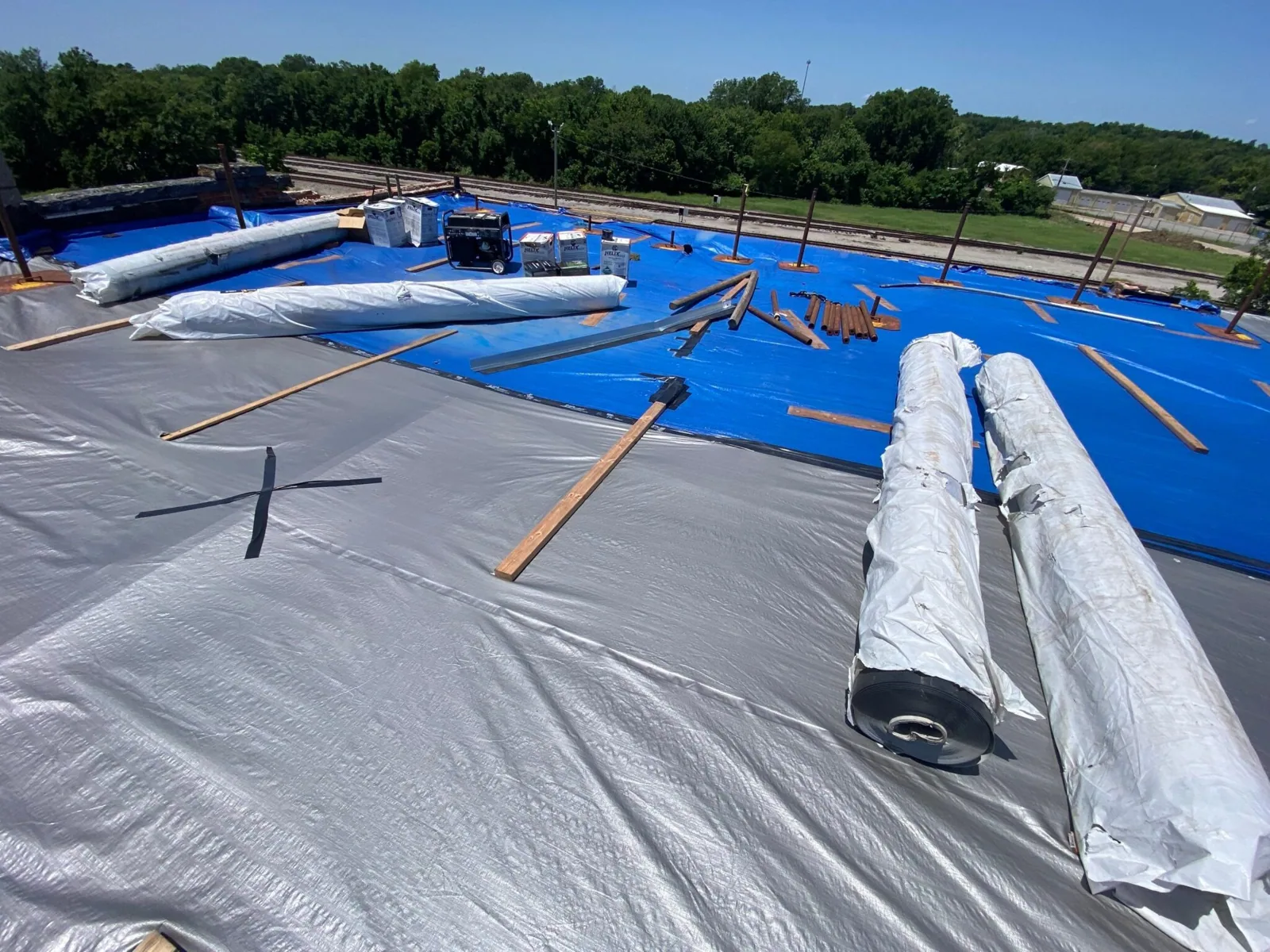
A displaced edge metal section after a storm calls for a documented first inspection. We photograph the transition, check nearby seams and drains, and mark the area on a roof map. The work boundary separates visible conditions from concealed layers. A hold point protects the owner from approving removal before the evidence is reviewed.
In March 2022, a tornado path crossed Williamson County from near Round Rock toward Granger. The date helps set inspection timing; the roof walk establishes conditions at the building. We document punctures, lifted edges, displaced components, and signs of water entry where observed.
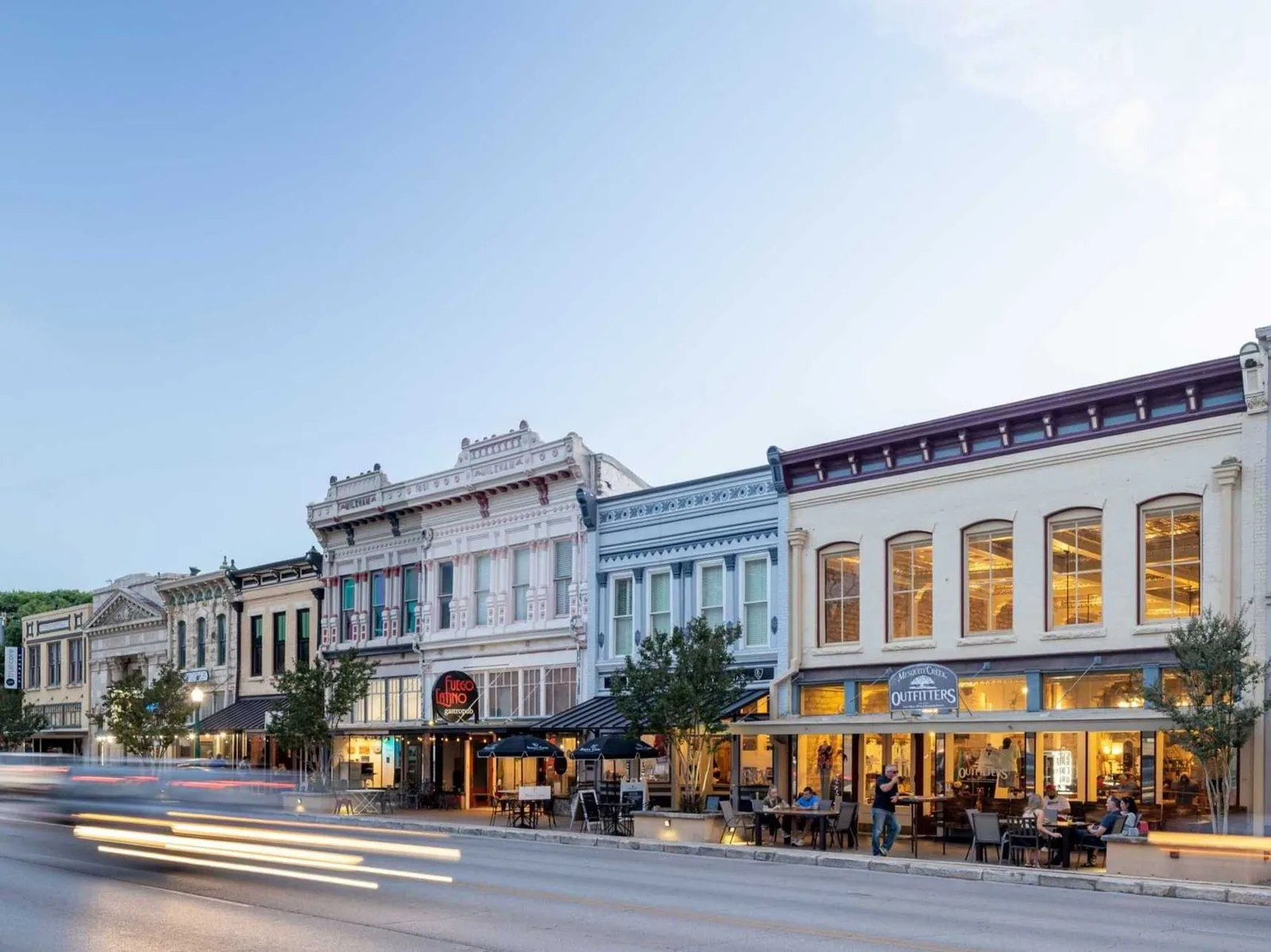
Georgetown's 40-block downtown district around the courthouse square includes civic, residential, and commercial uses. A recovery visit in Downtown Georgetown may require careful access coordination around surrounding activity. The job still begins with a roof inspection and a condition record tied to the building.
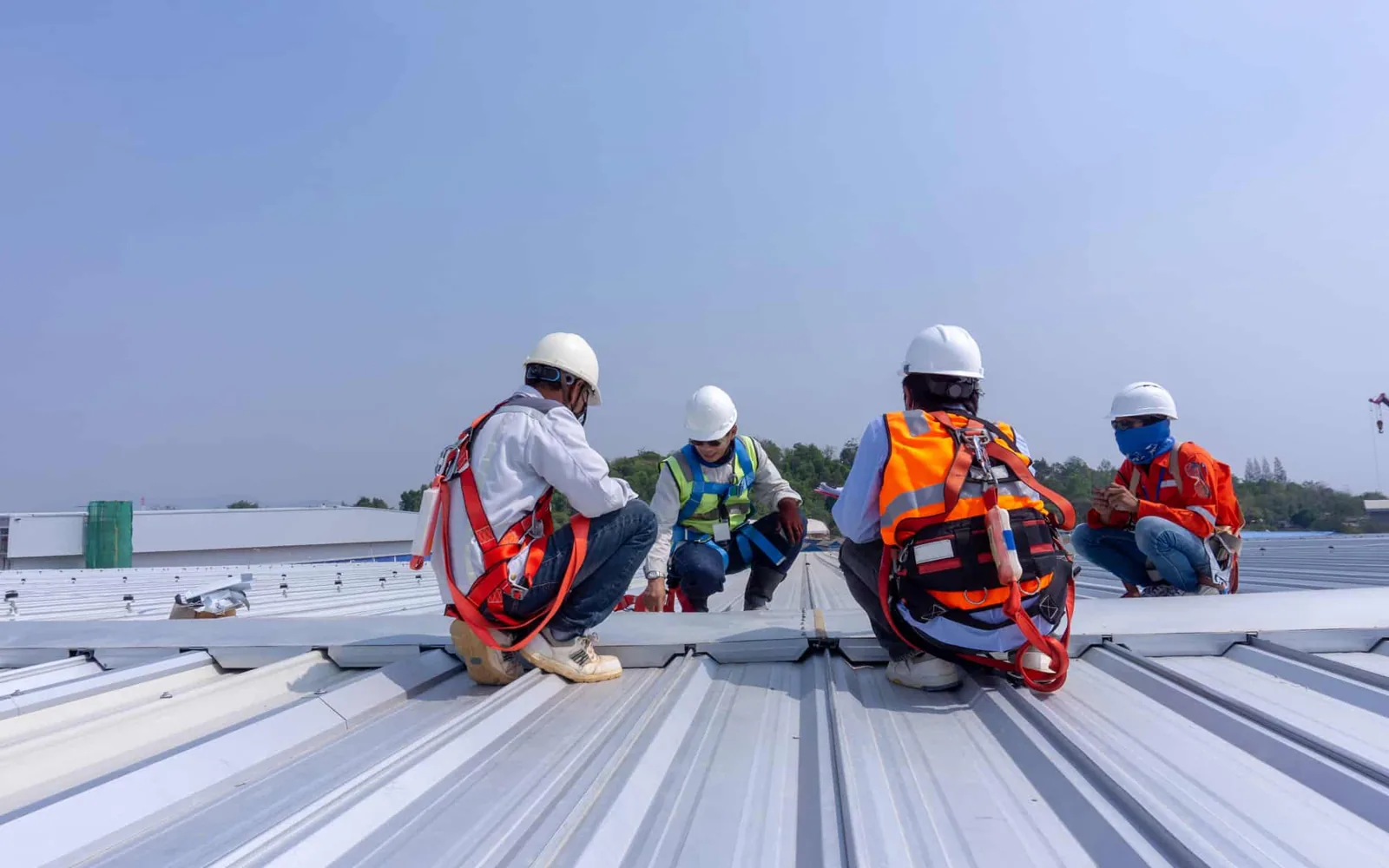
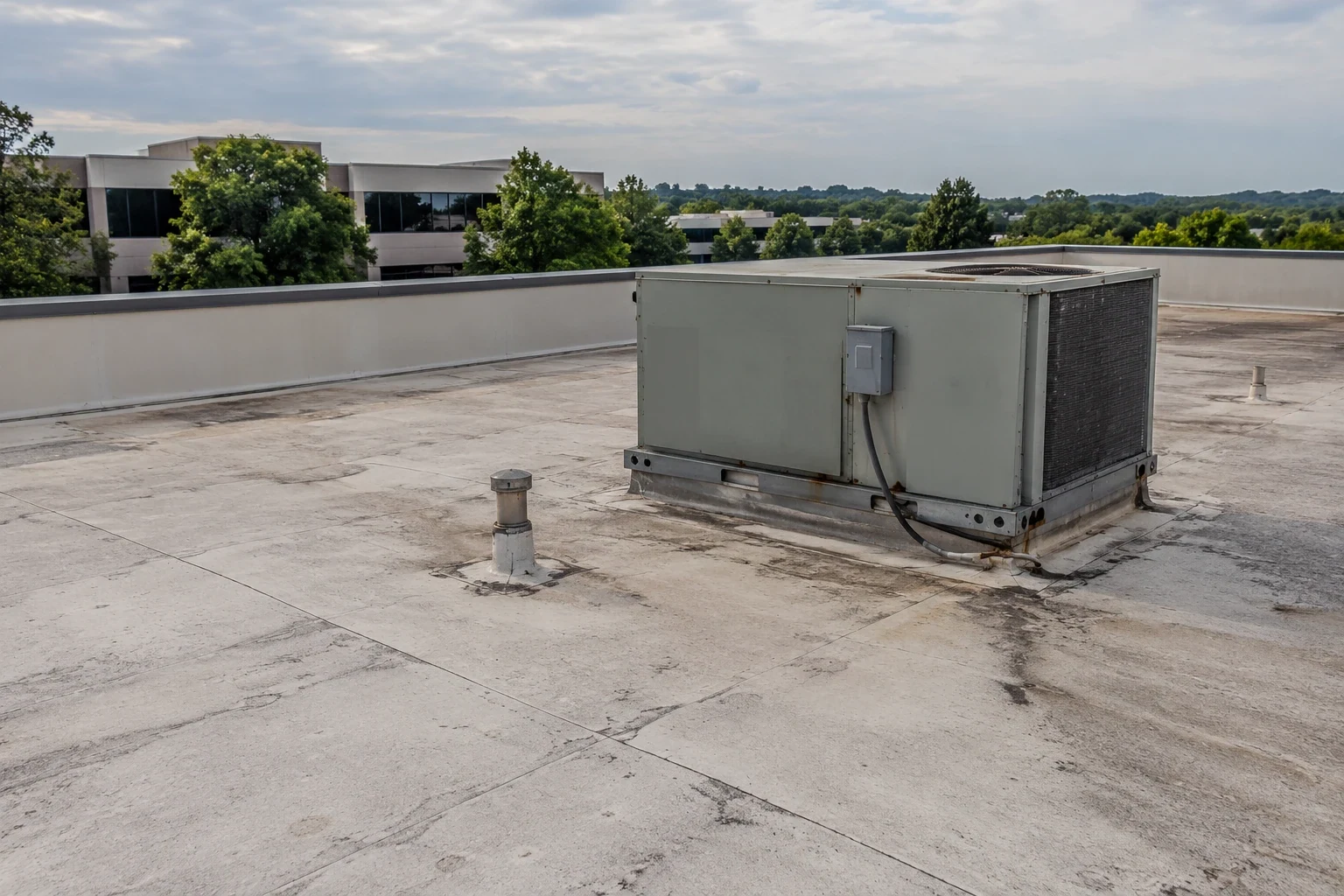
We document the reported event date, affected building, roof zones inspected, access limits, and weather conditions during the visit. Dated photos show wide views and close detail. The report separates observed damage from pre-existing wear, prior repairs, and conditions that could not be confirmed. A clear record helps the owner, adjuster, and restoration team discuss the same locations.
Regional hail and wind reports can help select inspection timing. They do not assign cause to an individual opening. We avoid labeling a condition as storm damage unless the physical evidence supports that conclusion. The roof map points each photo to a location and records whether the area was dry, wet, open, or temporarily protected.
If a leak threatens occupied space, temporary stabilization may be appropriate while the claim or repair scope is reviewed. An emergency roof repair should state the covered area, attachment method, expected duration, and follow-up inspection. It does not replace a permanent repair or determine claim coverage.
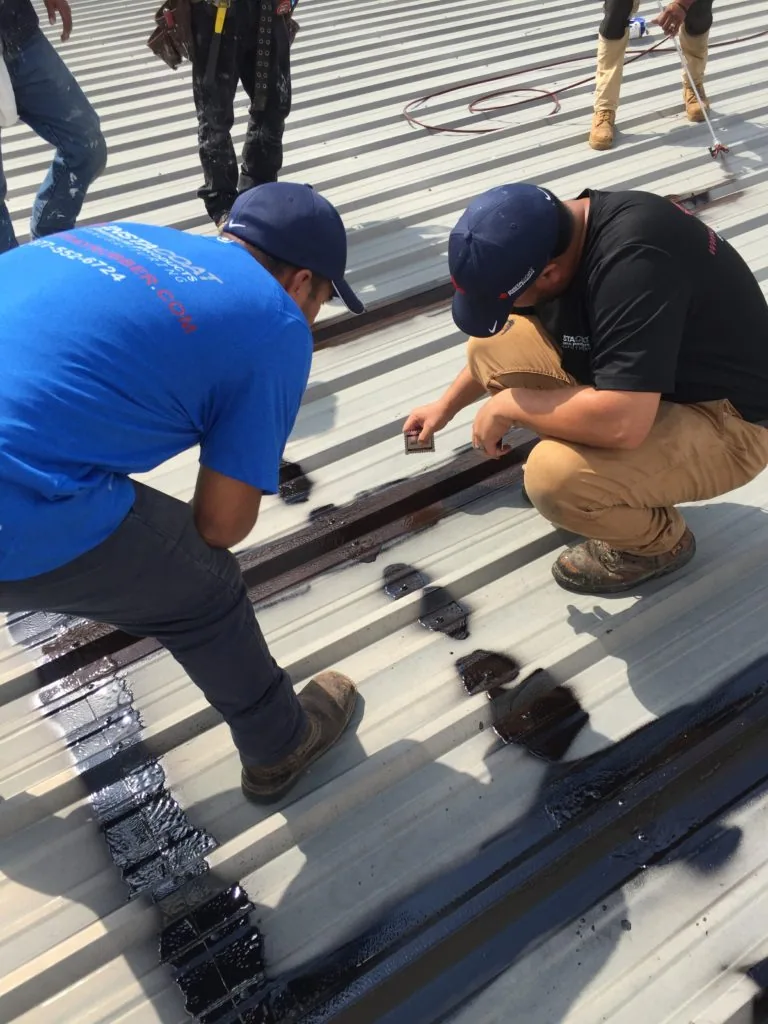
We trace reported leaks through seams, drains, curbs, wall transitions, and previous repair areas. Surface punctures, open laps, displaced metal, and impact marks receive separate notes. A ceiling stain can show where water appeared inside, but not necessarily where it entered. Findings should identify the roof path observed and the uncertainty that remains.
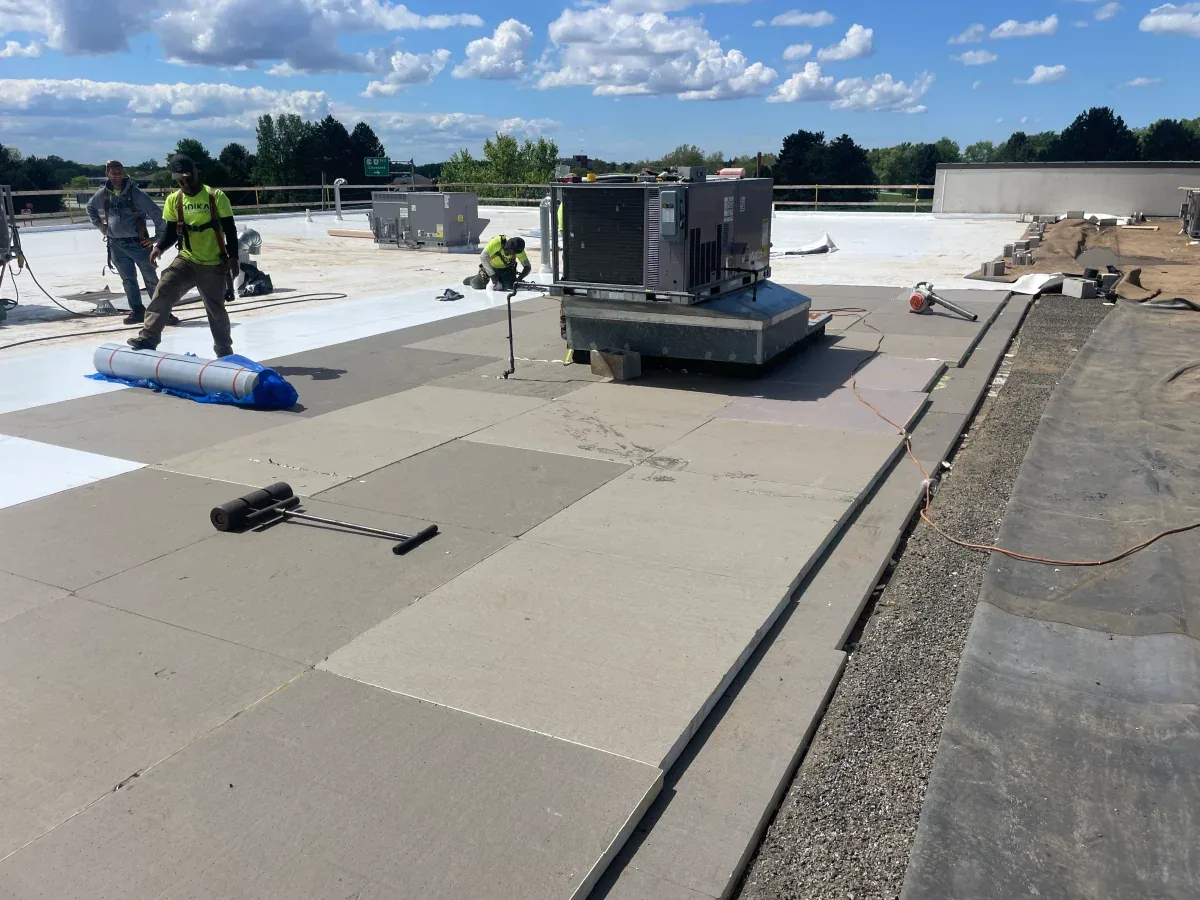
When moisture beneath the membrane is suspected, a test opening can verify layers at a selected point. We agree on the test boundary and temporary dry-in before cutting. If the assembly differs from expectations, the crew stops and presents photos and measurements. Additional removal waits for the owner's approval and any required claim or design review.
Georgetown station data show summer highs commonly in the 90s and some recent readings above 100°F. Heat can affect inspection timing and safe handling. The field record notes weather conditions and any limits they create. A roof condition report can preserve dated observations for restoration and future maintenance.
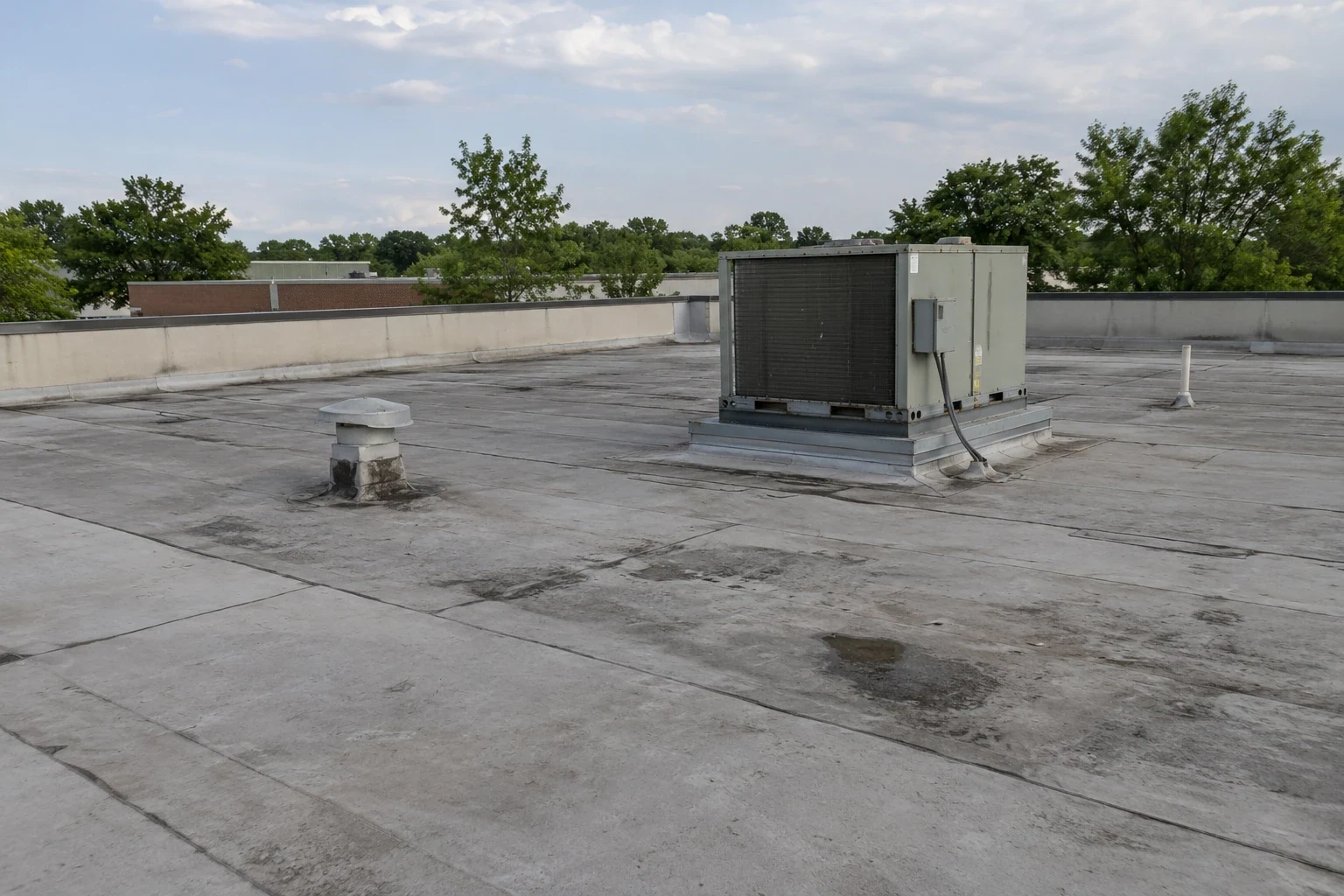
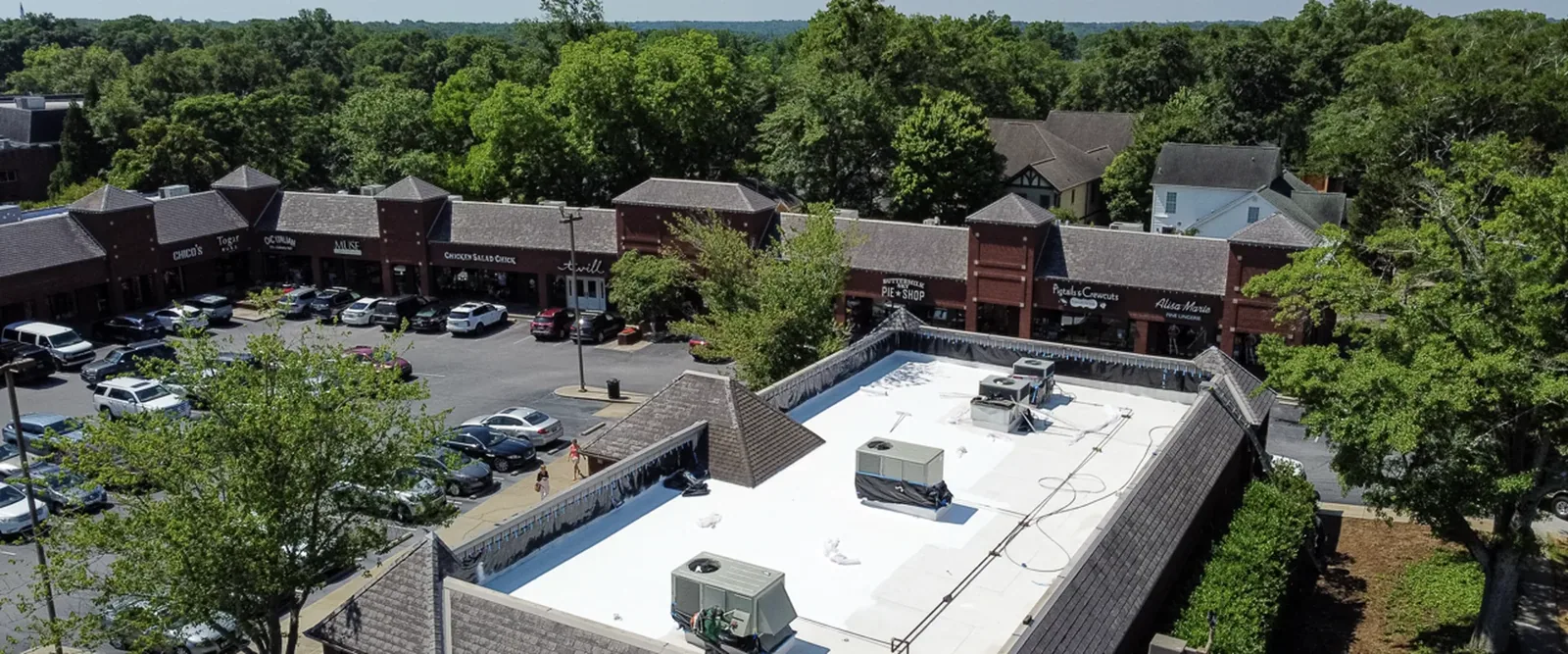
When the report includes several roof areas, we keep each location distinct. A broad overview shows the field and perimeter; close photographs show the specific seam, flashing, or edge. Measurements identify the approximate repair quantity. That pairing helps the project team review a proposed scope without treating one photograph as proof of every condition across the building.
A repair estimate identifies quantities, materials, access, staging, interior protection, and daily tie-ins. It separates emergency stabilization from permanent work. Each line item should connect to a roof-map location or photo. If an allowance covers concealed damage, its limit and review point need to be explicit. That lets the owner understand what is included before a crew opens the assembly.
Repair, recover, and replacement are different options. We compare them against the confirmed condition, remaining assembly, and project requirements. A repair scope may address localized damage, while a replacement proposal describes broader removal and installation limits. Insurance coverage and payment decisions belong to the policyholder and carrier.
Permit requirements can affect restoration details after the claim scope is assembled. The design professional confirms which existing-building and energy provisions apply to the proposed work. We provide roof conditions and assembly details for that review. Coverage remains a separate decision by the policyholder and carrier.
Roofing can coordinate with mitigation teams, interior contractors, mechanical trades, and adjusters. We identify which party handles water extraction, ceiling removal, equipment protection, and roof repair. The sequence states when the roof becomes weather-tight and who verifies the tie-in. A change in interior scope does not automatically change the roofing boundary.
For a business that must remain open, access routes and occupied areas need a plan. We mark staging, debris movement, and any temporary closure. The work log records each shift's start and stop point. If weather or an unexpected condition interrupts the crew, the owner receives the status and protection method before the site is left.
A property manager's work record can coordinate multiple occupants, while a public facility handoff may include additional procurement documentation. The roof photos, scope, and approvals remain tied to the specific building and event.
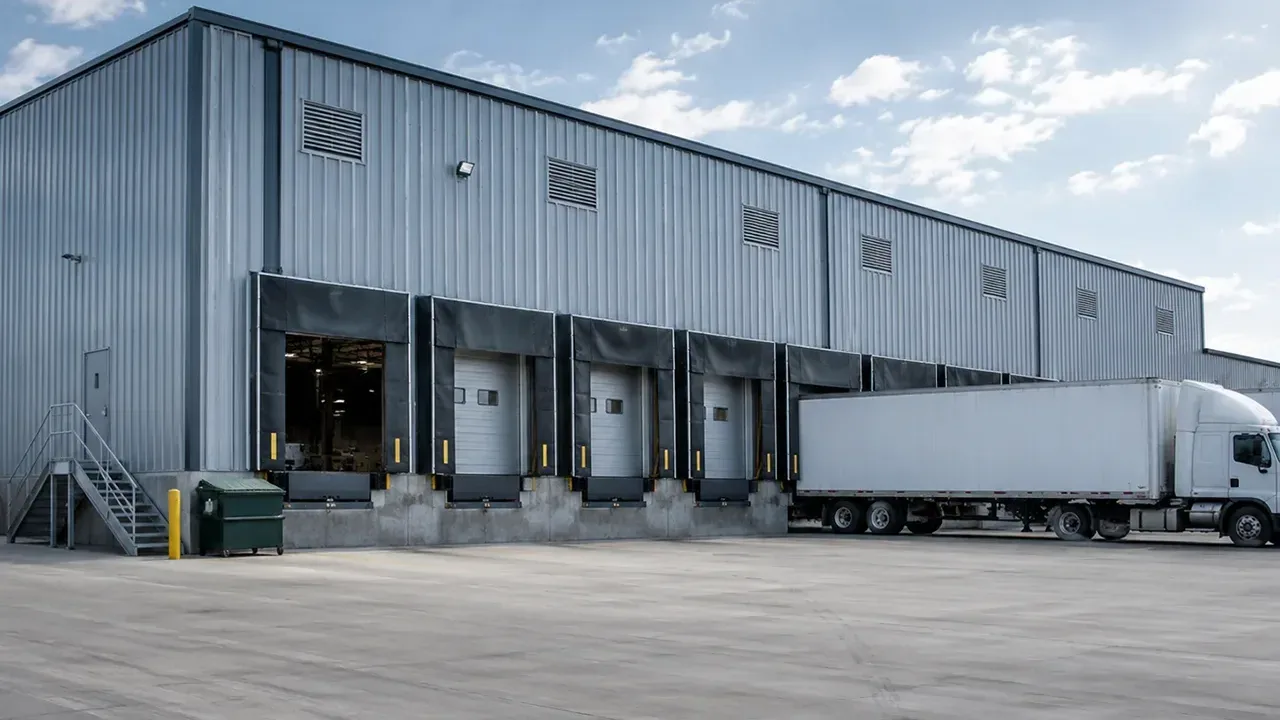
Georgetown's development includes NorthPark35 and Georgetown Logistics Park, named in city industrial planning. Those broad areas may have active construction and access changes. The inspection report records conditions at the property rather than attributing damage based on its address or neighboring development.
Round Rock and Georgetown are linked by regional improvements such as the Mays Street extension near Westinghouse Road. A Round Rock inspection uses the same evidence standard. The crew verifies access with the property contact and maps observed conditions. We tie each claim item to a dated roof-zone photo and the condition observed at that location.
When water management is part of the loss, a drain and scupper review can identify blocked outlets or damaged details as separate findings. That helps the owner understand whether the proposed work addresses the reported damage, a maintenance condition, or both.
We provide dated photos, a marked roof map, scope limits, materials used, and the final tie-in record. Any concealed conditions and approved changes remain attached to the corresponding location. The closeout identifies areas not opened and questions that remain. The owner can share a consistent record with the adjuster, restoration contractor, and maintenance team.
Before the visit, share the event date, reported area, access contact, interior impact, and any temporary protection already installed. We confirm safe access and the inspection boundary. If an emergency measure is needed first, the limits and follow-up requirement are stated clearly.
The final handoff identifies who accepted the completed work and who received the photos. It does not assign insurance coverage or replace the carrier's determination. It gives the parties a clear account of the observed roof condition and work completed.
It can establish regional event timing, but the property inspection must document actual damage. We map visible conditions and keep uncertain or inaccessible areas separate.
No. We document roof conditions and prepare a roofing scope. Coverage decisions are made under the policy by the carrier and policyholder.
Provide dated photos, a marked roof map, observed quantities, access limits, and notes that distinguish damage from wear or prior repairs. Each image should point to a clear location.
When conditions call for it, we can define a temporary protection limit and follow-up inspection. The measure stabilizes exposure while permanent work is evaluated.
Work stops at the agreed hold point. We secure the opening, document the exposed layers, and submit a proposed change for the owner's review before expanding removal.