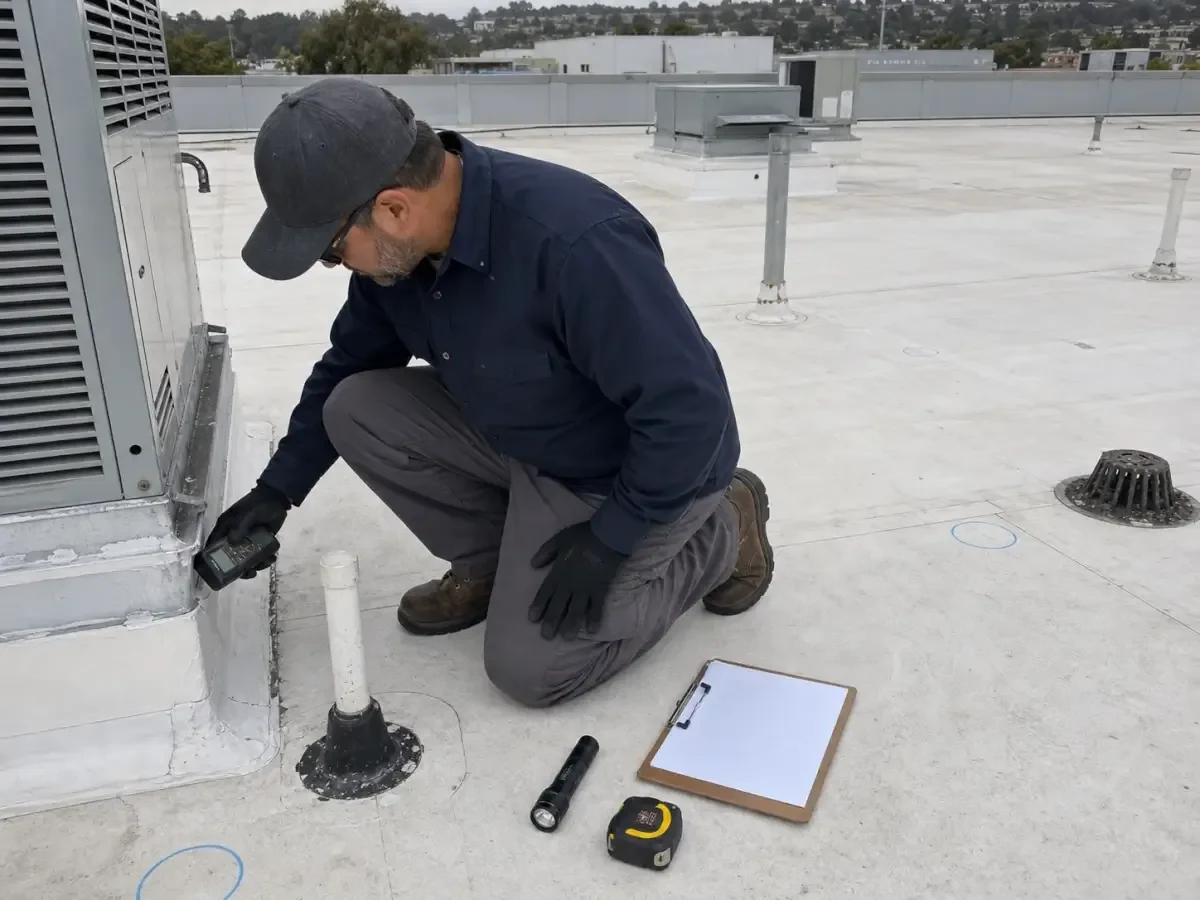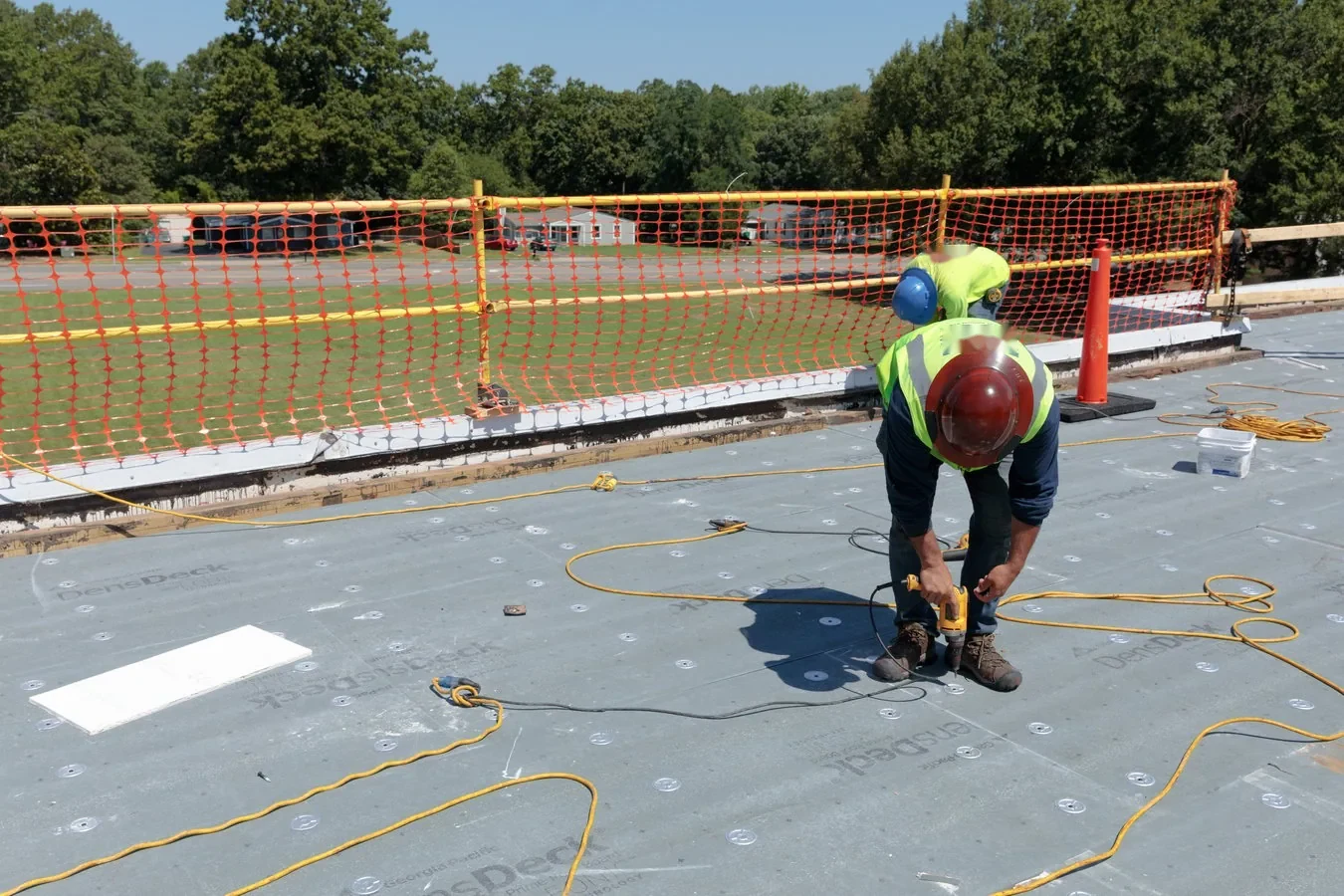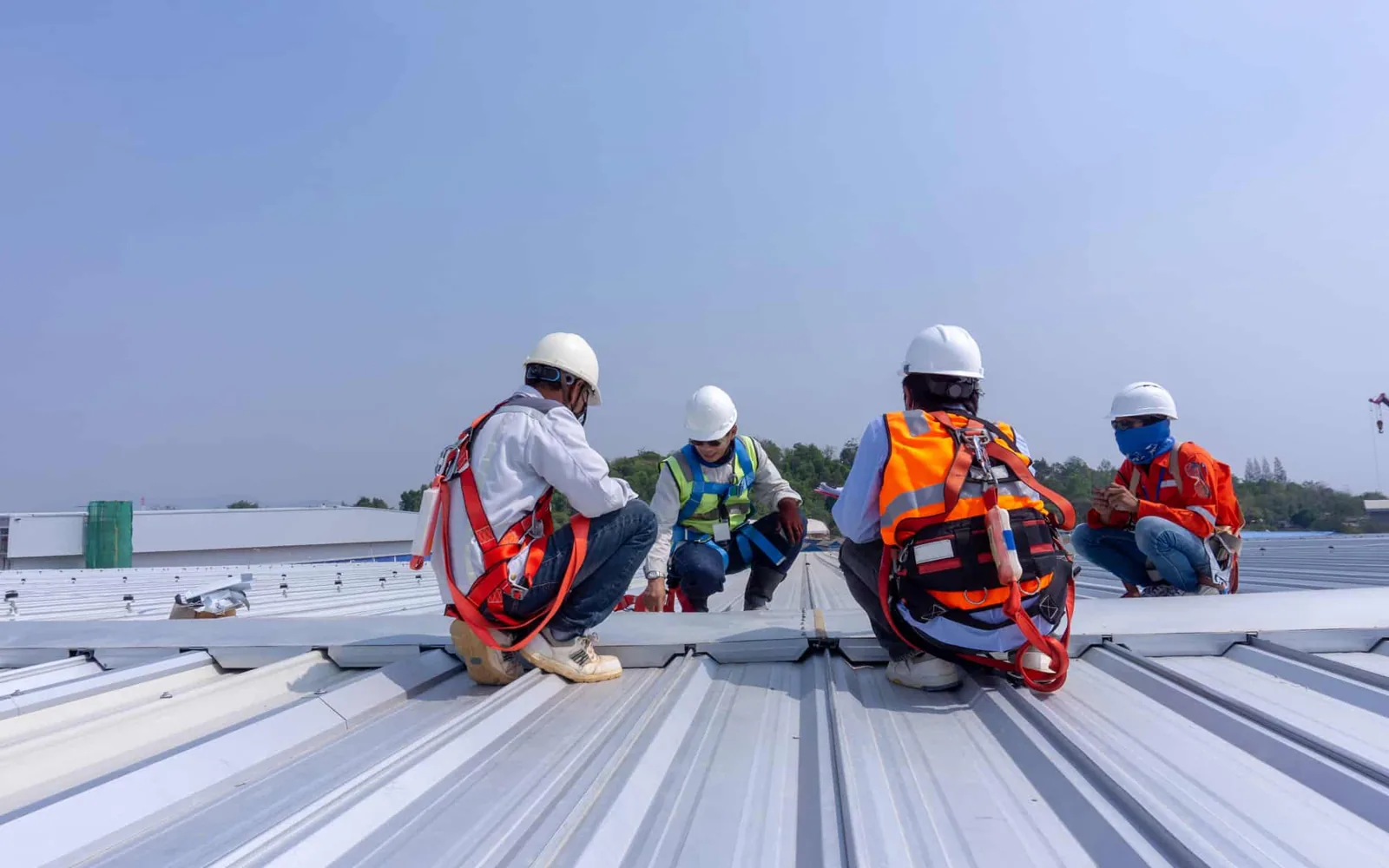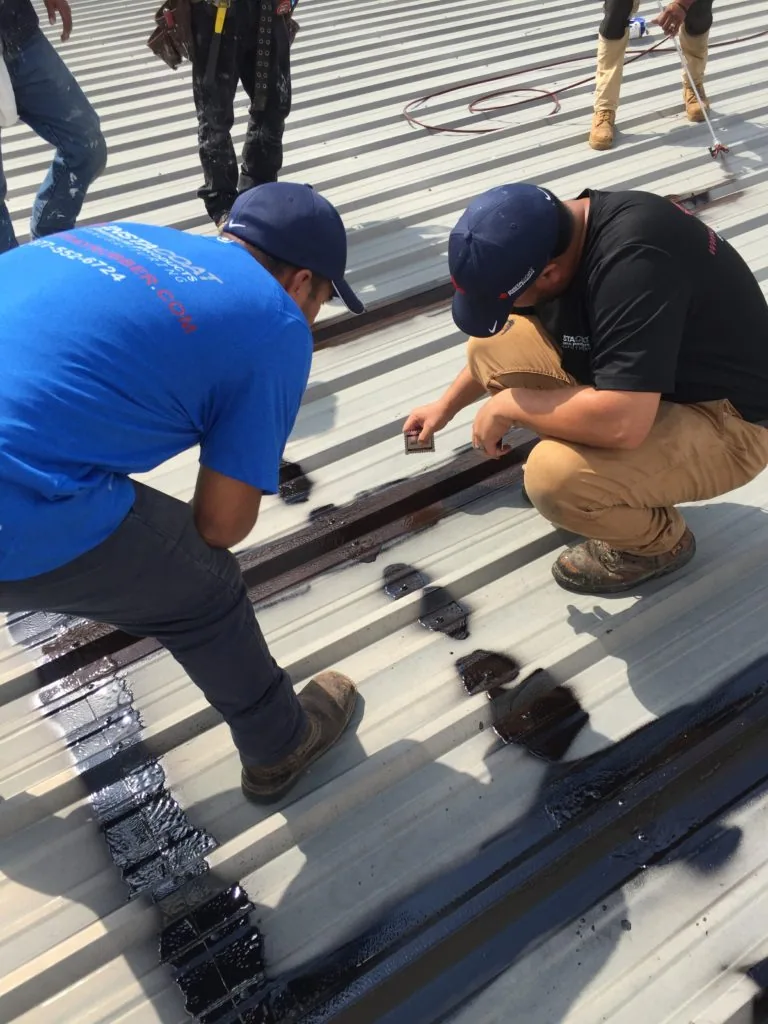
A patch near a drain can change a buyer's repair allowance. We inspect the patch edge, outlet, and nearby seam first. The roof map records what we reached and where a test may be needed. A due-diligence roof survey ties that observation to the asset under review.
Georgetown's industrial pipeline names NorthPark35 and Georgetown Logistics Park, with utility extensions intended to support additional industrial buildings. A buyer may be evaluating a new or changing commercial property in that setting. The development context does not establish roof type, age, or condition. We inspect the actual building before describing its risks.
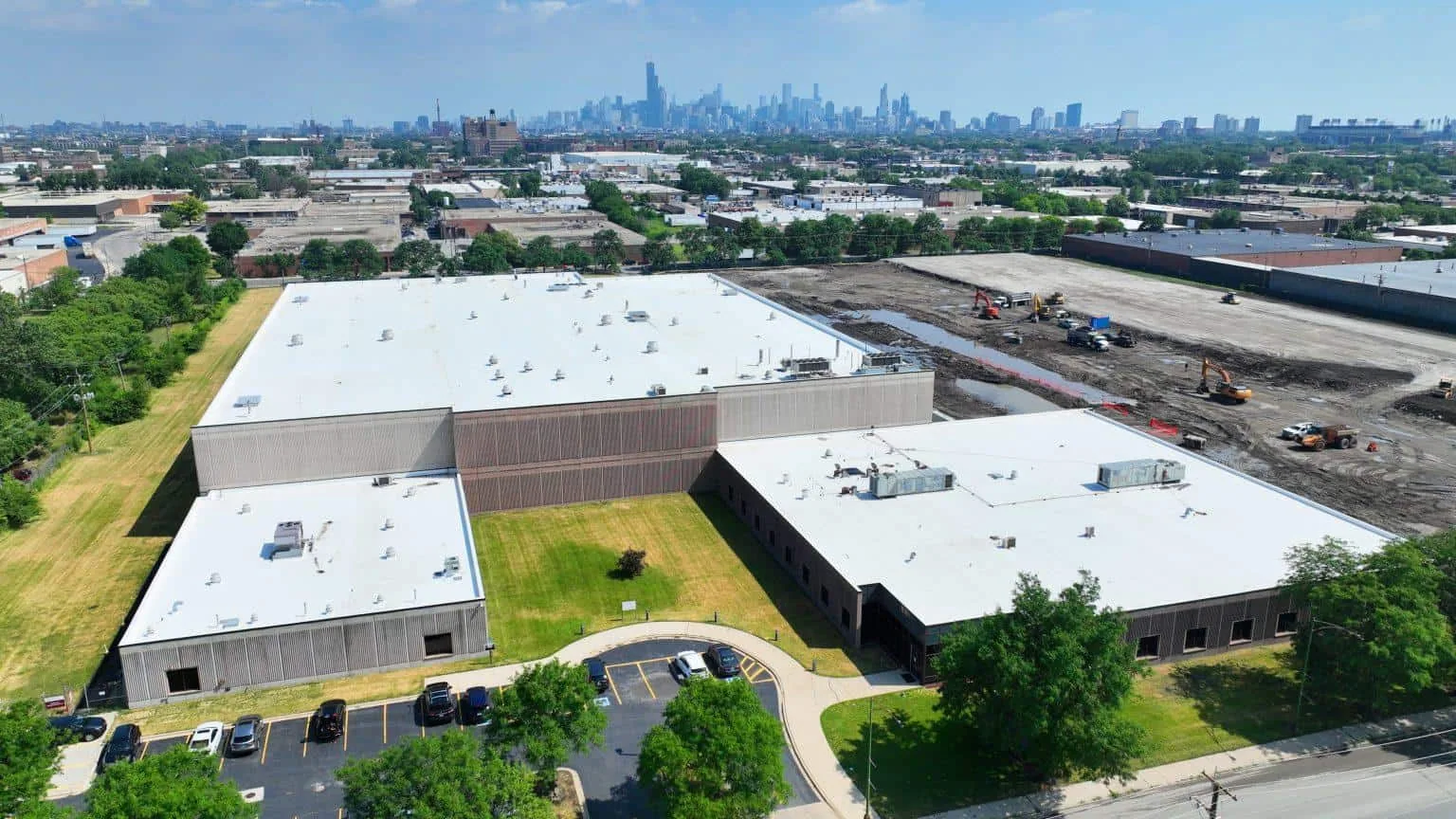
Near the I-35 and SH 130 junction, Berry Creek Business Park is a multi-structure industrial address. Each asset needs its own map and findings. A location summary cannot tell a lender or buyer whether a roof has wet insulation, open seams, or an adequate attachment. The survey states what was visible and what remains unresolved.
Before the roof walk, we confirm which buildings and zones are included, what records are available, and how access will work. The survey can include visible membrane, metal edges, drains, curbs, prior repairs, and accessible interior leak areas. It does not include destructive testing unless that work is agreed separately.
We review plans, maintenance logs, leak tickets, and prior repair records when supplied. Documents guide the walk but do not replace field observation. If the stated system differs from what is visible, we record the difference and ask for confirmation. If the roof hatch is locked or a zone cannot be reached, the report identifies that limit.
A condition report can present photographs and locations in a format the transaction team can review. It should identify the inspection date, weather, access route, and any area omitted. A buyer can then decide whether added testing or access is needed before closing.
Transaction schedules can leave little time for a second visit. We confirm the building contact, escort rules, roof hatch, and any tenant restrictions before setting the survey date. If a lift or interior access is required, that need is identified early. A missed zone stays listed as incomplete, even when the report must reach the buyer by a fixed date.
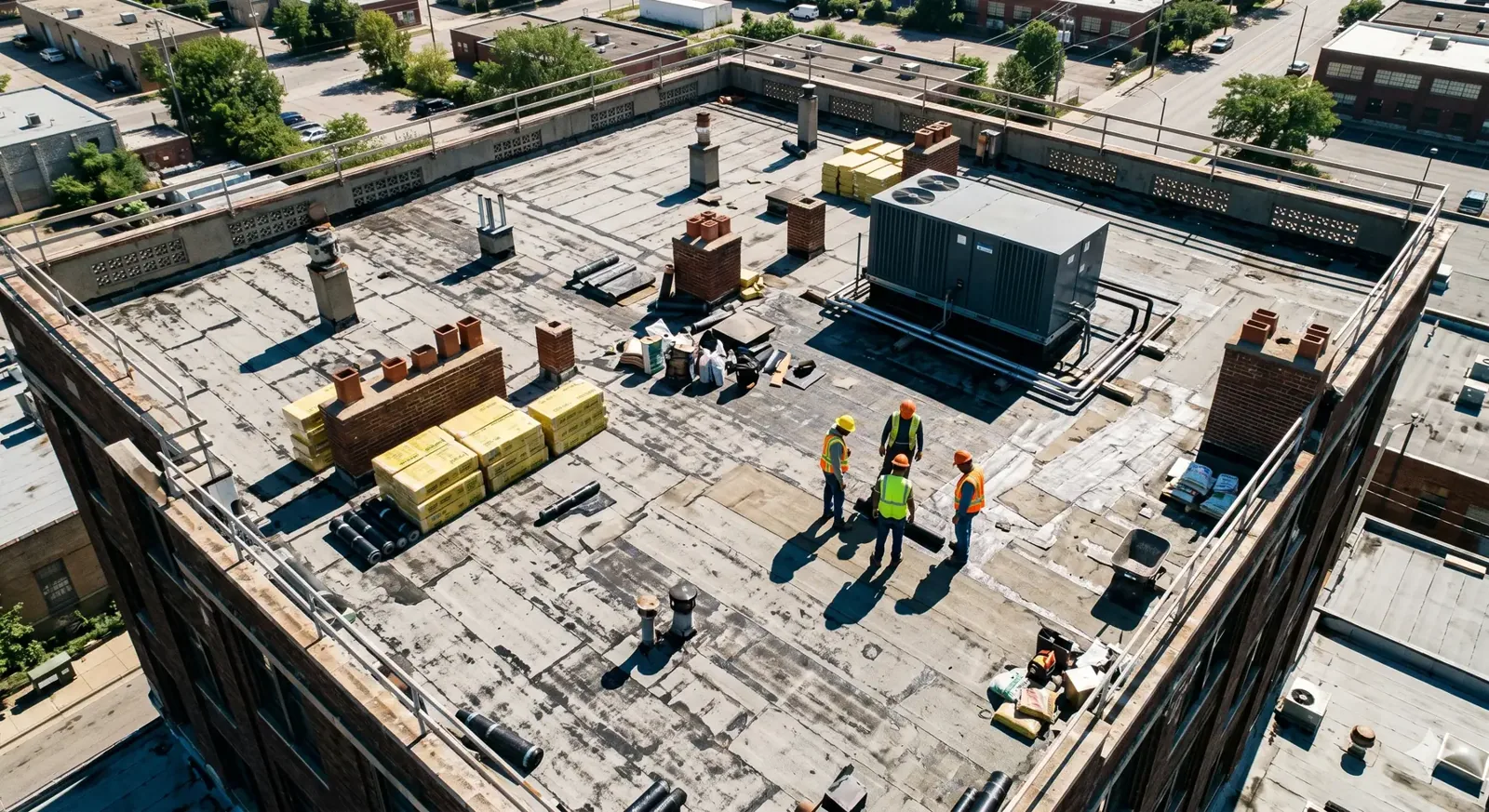
We check field seams, penetrations, curbs, parapets, edge metal, drains, and earlier patches. Each item receives a location and condition description. A sound-looking surface does not prove the layers beneath it are dry. A stained ceiling does not pinpoint an entry detail. The survey keeps observations separate from conclusions that require testing.
Georgetown's summer afternoons commonly enter the 90s, with recent local highs above 100°F. That can affect surface readings and safe access during the survey. We note the conditions and any timing limits. The file gives the transaction team a date-specific view rather than a statement about year-round performance.
Following hail or wind, we record actual impact marks, lifted edges, displaced pieces, and water entry where found. The March 2022 severe-weather path extended from the Round Rock area across Williamson County toward Granger. It informs post-storm inspection timing, not the condition of the roof being acquired.
Moisture suspected below the membrane may need infrared review or a test opening. These steps answer different questions. A survey can note a possible anomaly, while a test cut can expose layers at one location. We describe the method, area, and limits so the buyer does not treat a sample as a complete roof scan.
A moisture survey can identify areas for follow-up when conditions support that method. A test opening requires authorization, temporary dry-in, and a clear restoration detail. Any concealed condition becomes a hold point. Additional removal waits until the owner approves scope, cost, and schedule.
Roof framing, attachment capacity, and hidden deck conditions may require a separate structural or engineering review. A visual roof survey does not substitute for that work. We mark what was observed and identify the question that needs another discipline.
A buyer may need to compare immediate repairs, deferred maintenance, a test allowance, or a larger replacement study. We state the observed area and what each next step would confirm. A recommendation does not promise that hidden damage is absent. The report identifies the remaining uncertainty and where it sits on the map.
For each option, we identify the visible work area, the assembly that would be opened, and the access required to complete it. The owner can separate an observed repair from a contingency for concealed conditions. We avoid a single lump description when separate areas have different findings or levels of confirmation.
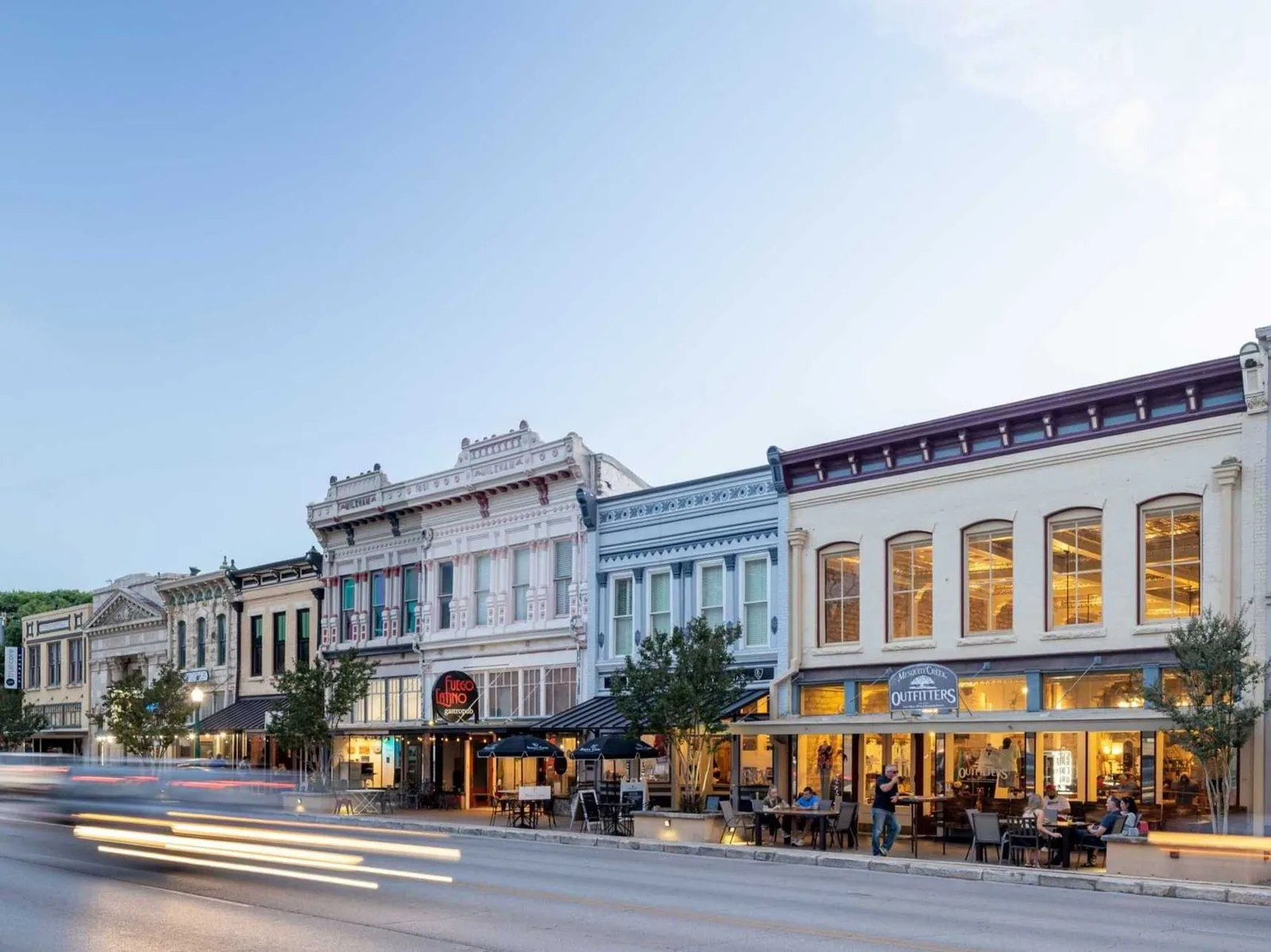
Downtown Georgetown spans about 40 courthouse-centered blocks with commercial, civic, county, and residential uses. Buildings in that area may have exterior review or access considerations. A Downtown Georgetown survey can note observed roof interfaces and access limits. It does not replace separate review for protected exterior changes.
A capital plan can translate verified findings into a repair or replacement sequence. The transaction team can compare timing and cost drivers such as access, tenant windows, staging, equipment coordination, and daily dry-in. Unknown age or system information stays open until documents or testing confirm it.
We deliver a roof map, dated photos, area inspected, observed conditions, access limits, and follow-up items. Each photograph points to a roof zone. Any test area, temporary cover, or inaccessible section receives its own status. The closeout can be stored with the property file after the transaction. We list the governing access contact and approved service window.
A roof asset record can carry the findings into ownership. A capital review can use the same map when prioritizing work. That continuity matters only if the asset identity and date remain clear. We keep the survey findings tied to the inspected building.
If the buyer orders follow-up work, the diligence report provides a baseline for comparison. The repair crew can locate the original test area, review the earlier images, and note whether the condition changed. New field findings remain separate from the transaction observations. That distinction supports accurate budgeting after the sale.
Send the property list, transaction deadline, available roof plans, repair history, access contact, and any specific concern. We confirm the roof zones to inspect and the areas requiring additional authorization. The survey then gives the buyer a clear basis for follow-up without replacing legal, structural, or insurance review.
It records accessible conditions on the inspection date, with photos, roof zones, access limits, and recommended follow-up. It does not establish hidden conditions that were not tested.
A visual survey cannot reliably assign a service-life number. We document condition, repair history when available, and factors that may require testing or design review.
Not through visual inspection alone. Infrared review or an authorized test opening may help locate and verify concealed moisture at defined areas.
We note the missing information and inspect accessible conditions. Unknown system details, dates, or repairs remain open until documents or further testing confirm them.
Yes. We keep a separate map and findings for every building, even when the transaction covers a group of nearby assets.