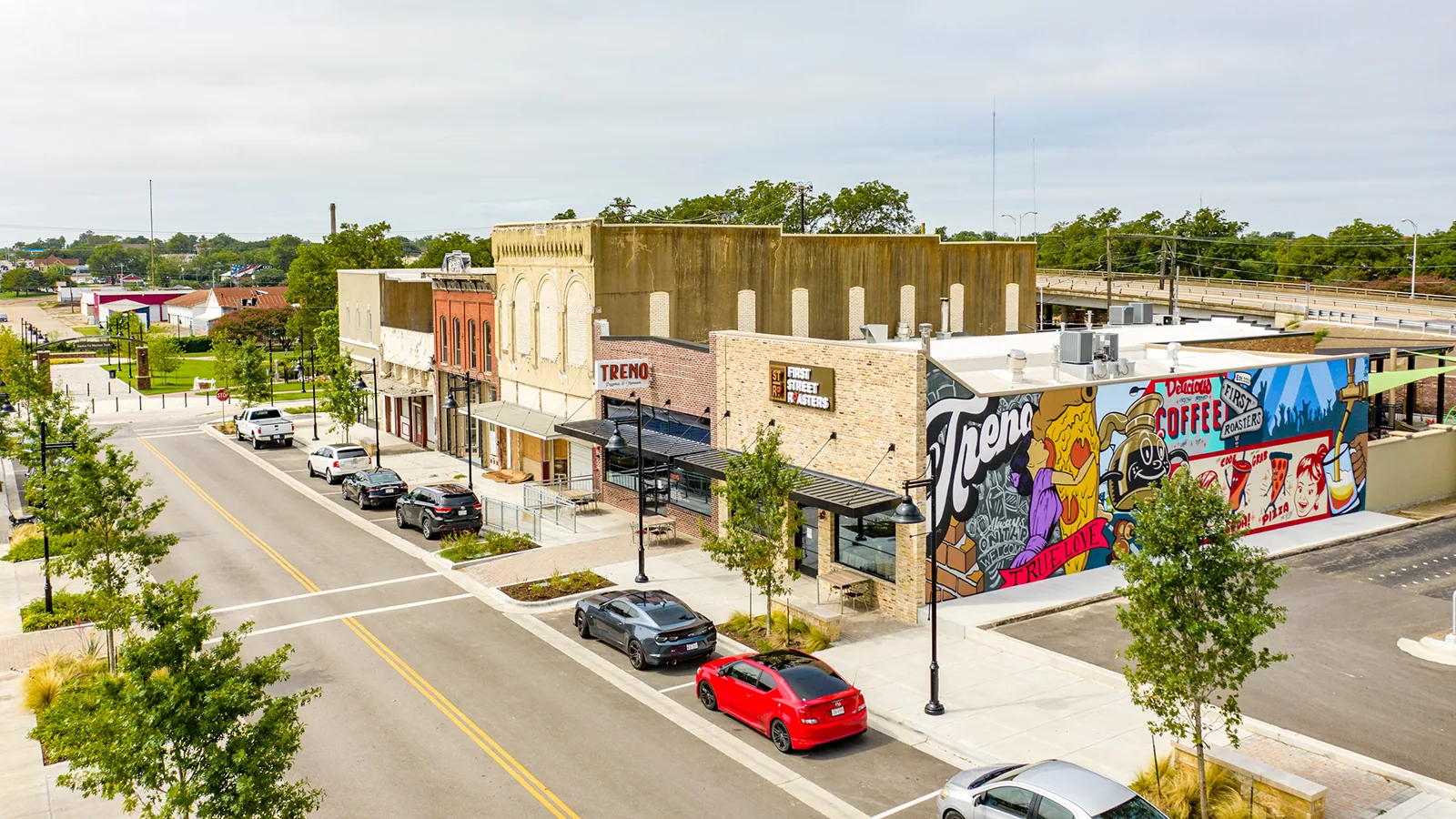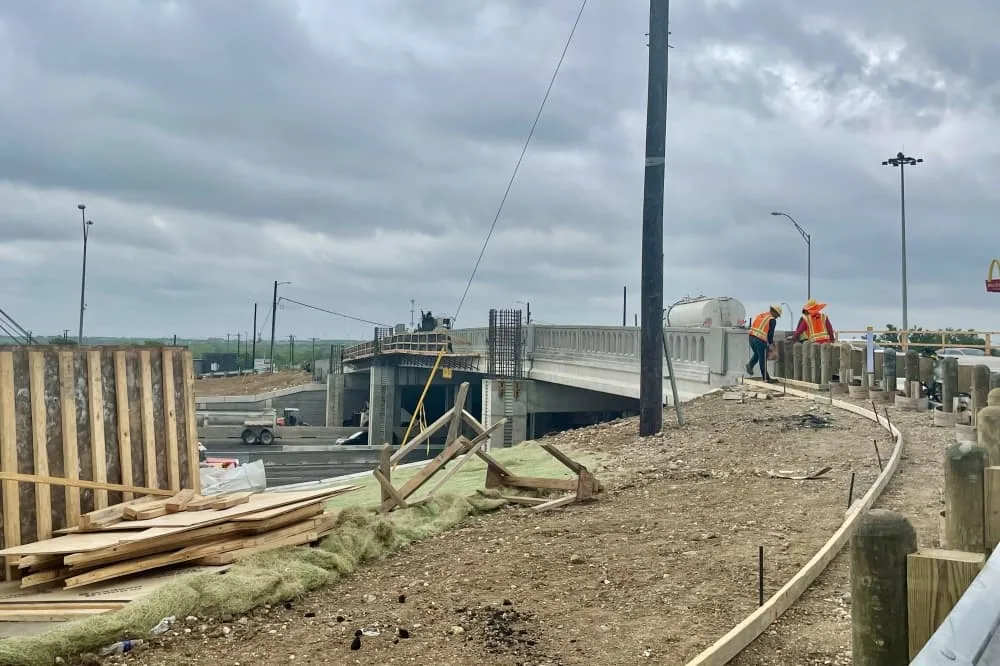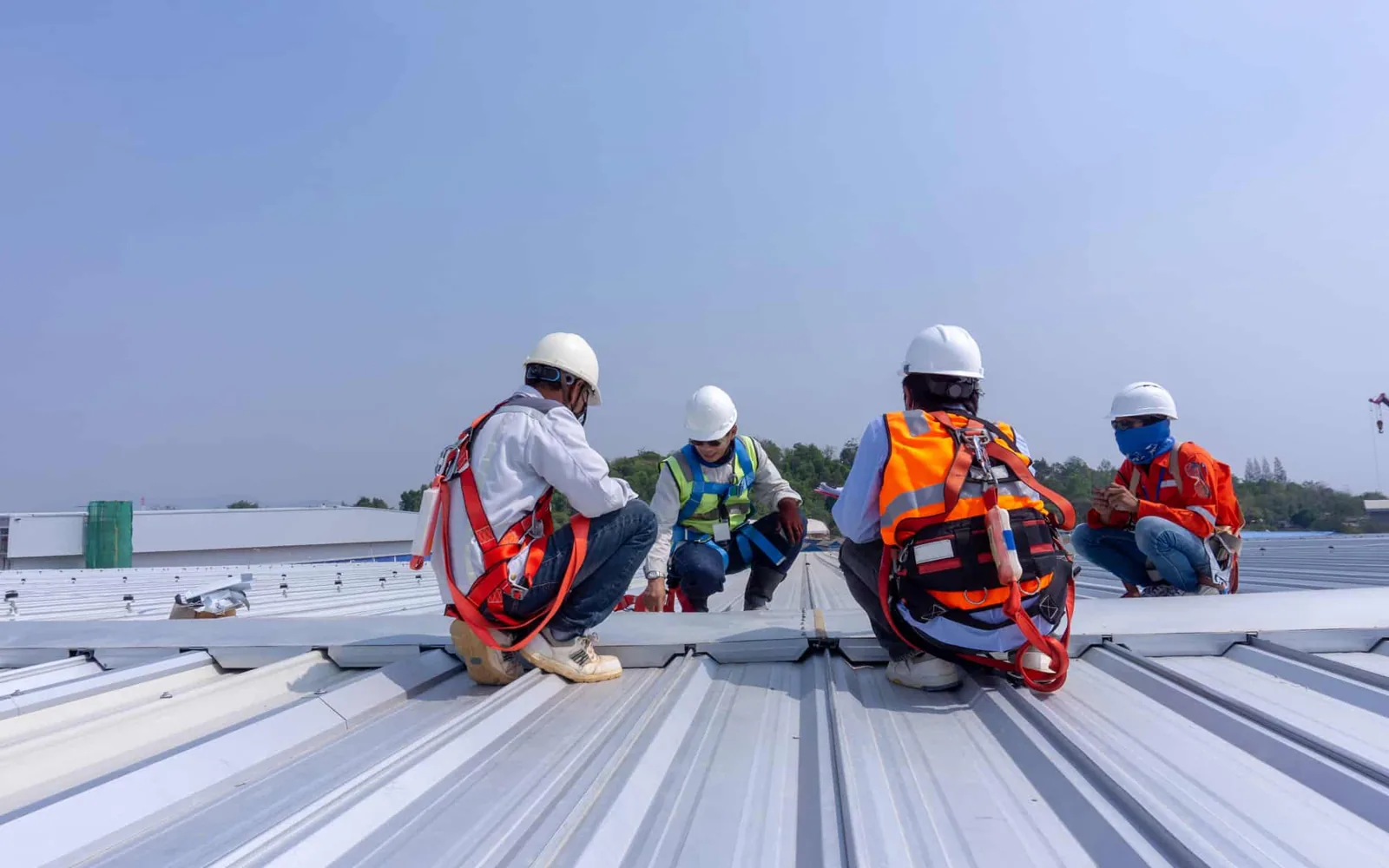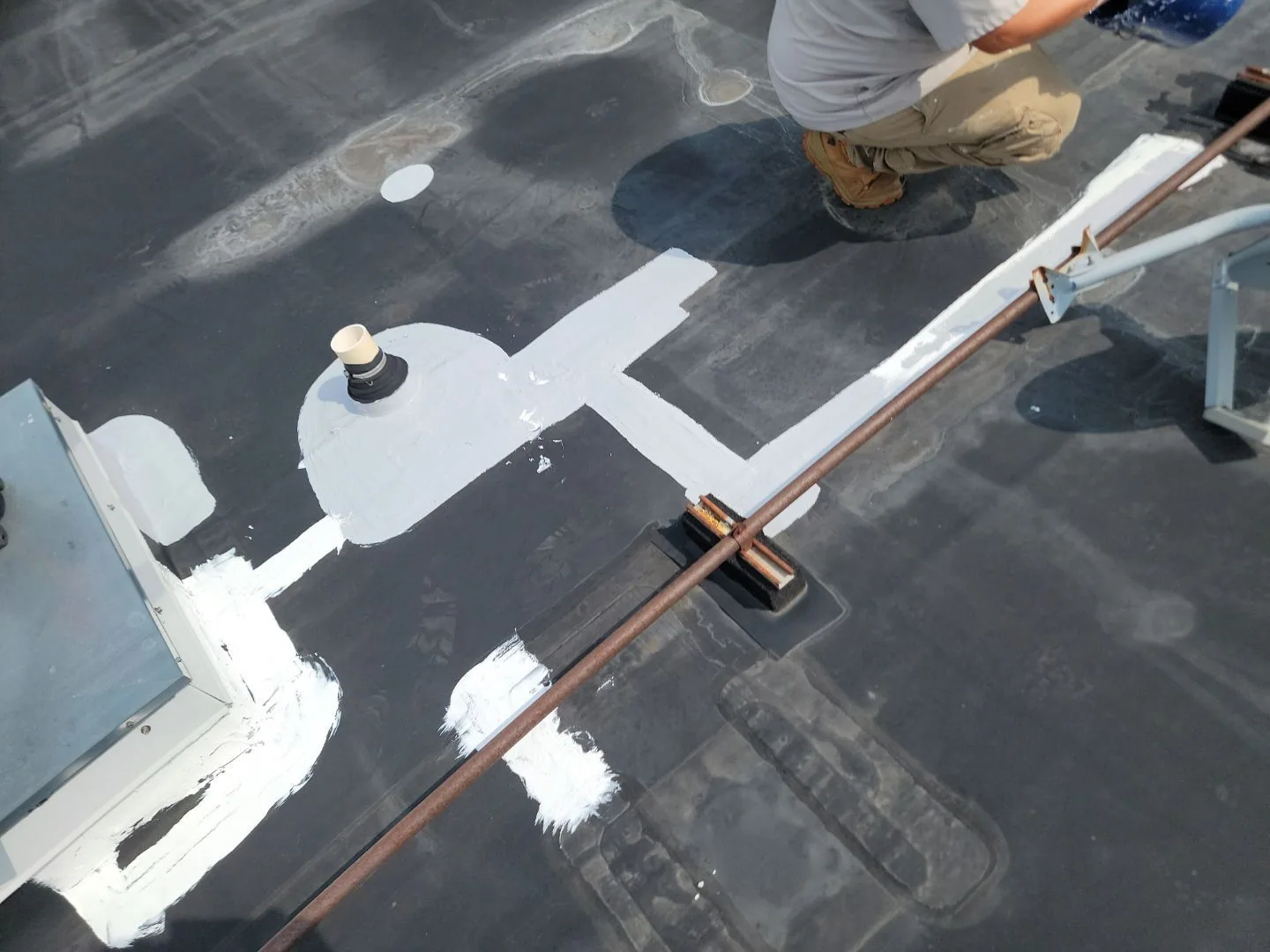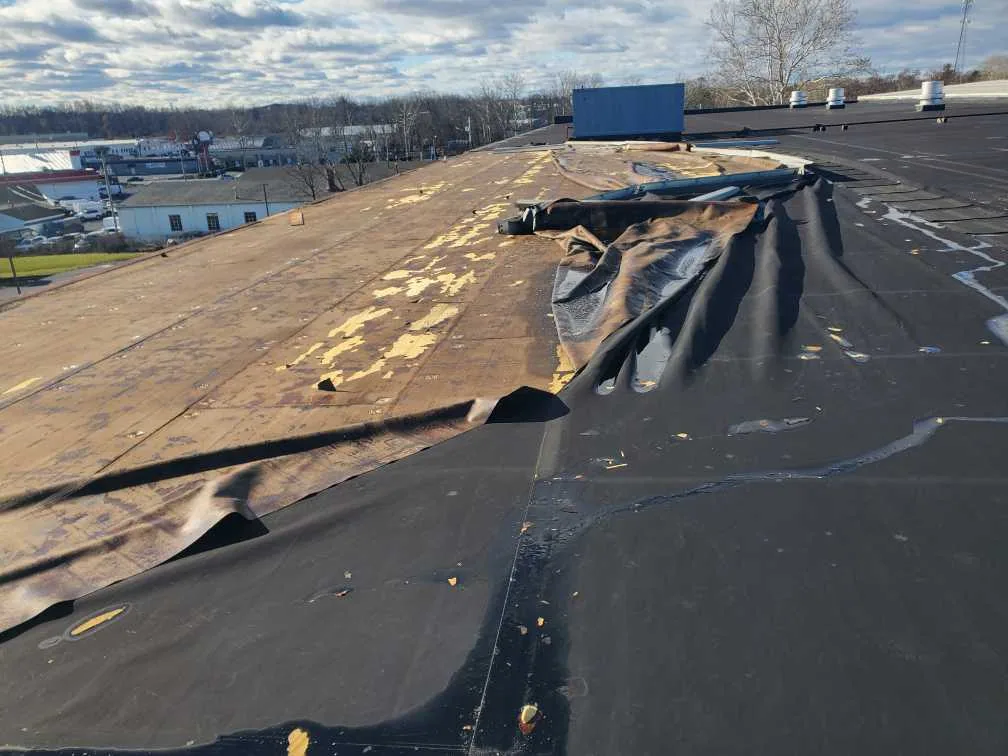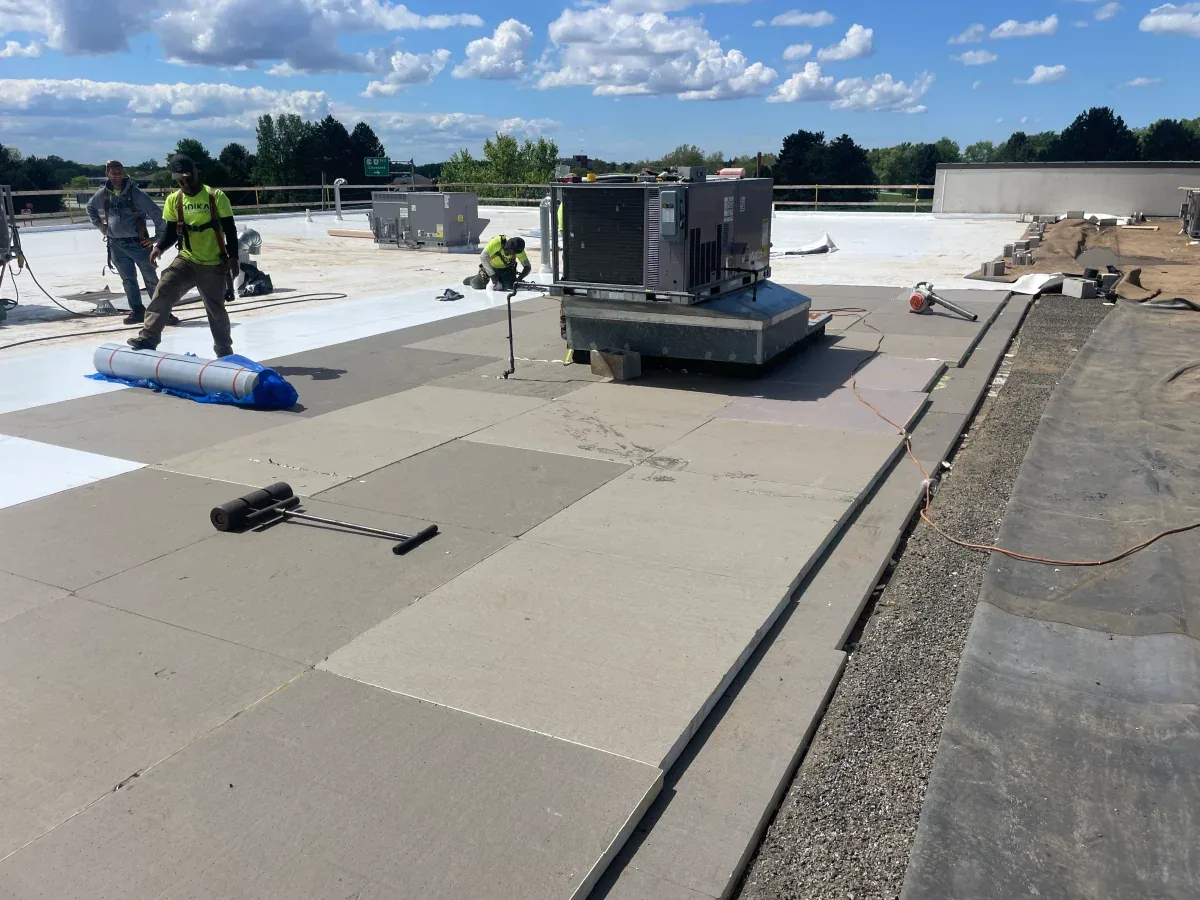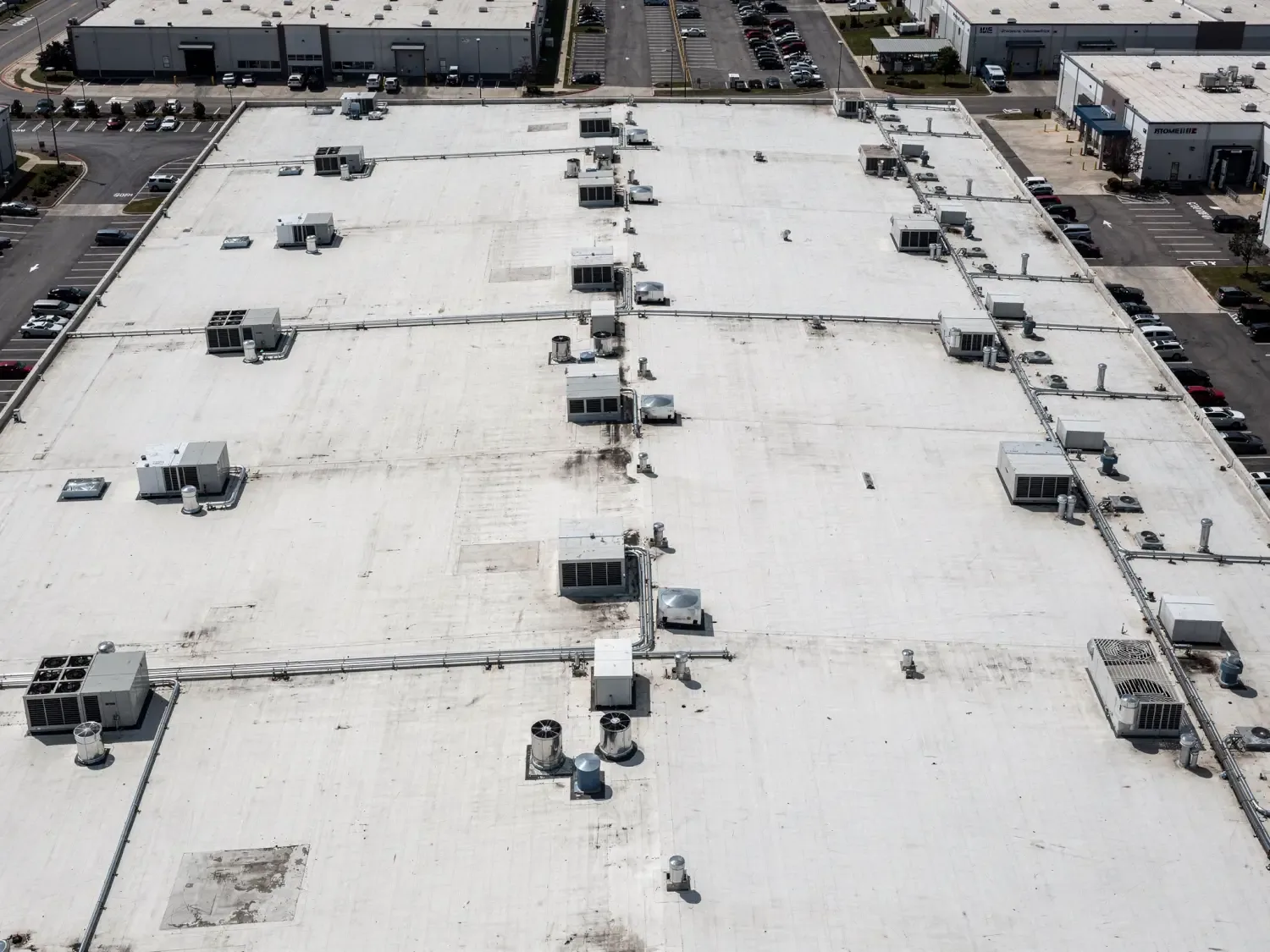
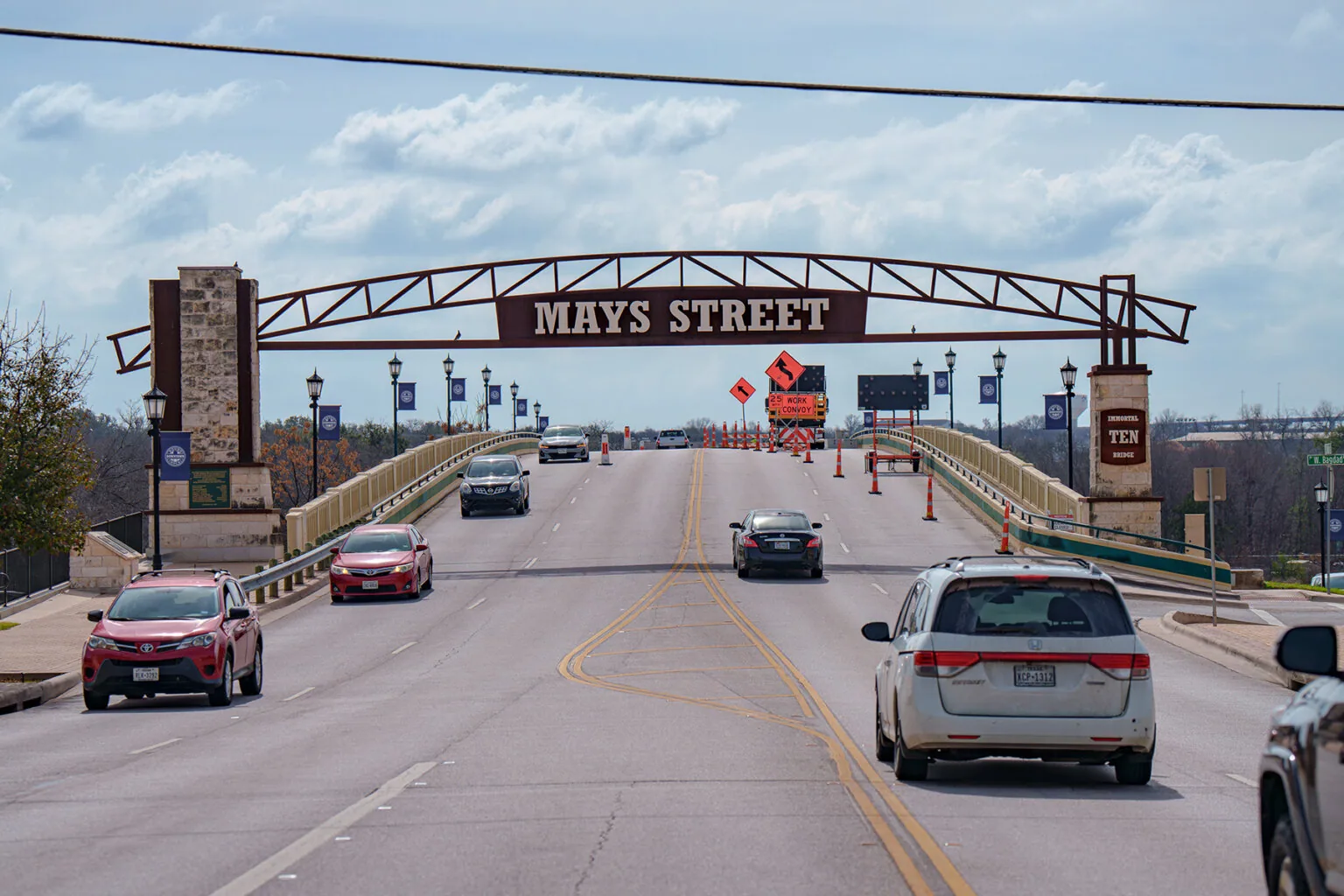
A split lap or loose curb flashing along Mays Street needs a field check before the repair quantity is set. We inspect the membrane, trace the water path, and mark the roof zone. North Mays Street links Old Settlers Boulevard and University Boulevard; its southern extension reaches Westinghouse Road in southeast Georgetown.
That connection helps crews and property teams coordinate visits on both sides of the city boundary. We confirm the building's roof construction, reported damage, delivery window, and access rules during the inspection. A commercial roof inspection gives the first condition record.
Mays Street creates a cross-city connection, but each property has a different roof entry, staging point, and operating schedule. Confirm the gate, hatch or ladder, loading area, site contact, and any escort requirement before the crew arrives. The property contact confirms entry and staging details for the private building.
At an occupied commercial building, plan the crew path around customer entrances, deliveries, and equipment service. If the work requires a lift, agree on its location and work hours with the general contractor. Keep materials away from drains, fire access, and clear roof routes. Mark restricted zones on the roof map before opening a membrane.
For a second property near Westinghouse Road, we confirm its gate, staging point, and roof-entry route separately. The Westinghouse Road corridor has its own work boundary and access plan.
Start at the reported interior leak, then inspect the roof above and uphill. Water can travel along a seam, curb, deck, or insulation joint before it appears inside. We check membrane laps, penetrations, edge metal, drains, wall transitions, and prior patches that connect to the likely path. The map distinguishes a confirmed defect from an untested route.
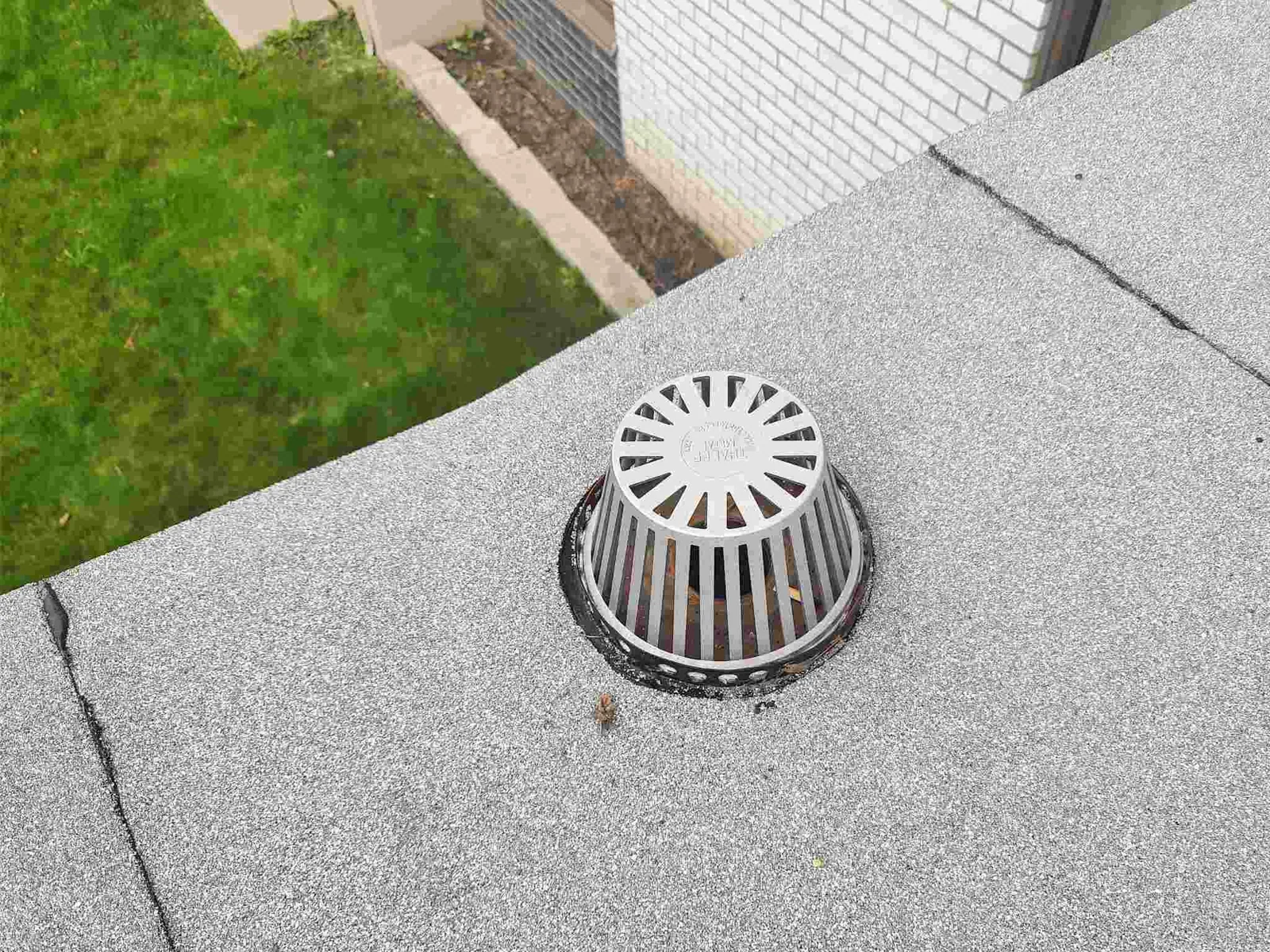
Identify low-slope membrane and metal roof details separately. A membrane seam may need surface preparation and a compatible patch. A metal lap may need fastener or closure work. At a drain, check the outlet, ring, strainer, surrounding membrane, and slope. The drain inspection records those parts so a maintenance cleanout is not confused with a roof repair.
Before recommending work, we identify the assembly from available submittals, exposed roof edges, and prior repair records. We compare those records with visible seams, attachment, and transitions during the roof walk.
If the roof system is not clear, check available submittals, exposed edges, and prior repair notes. A controlled test opening may be required. Agree on the location and dry-in before cutting. If the field differs from the planned stack-up, stop at the hold point and show the finding to the project contact.
When a property manager schedules buildings in both cities, each crew visit needs a named contact, roof plan, assembly record, and repair quantity. That keeps material and access decisions tied to the right property.
For active tenants, plan work around deliveries, foot traffic, noise limits, and any sensitive equipment. If a leak threatens interior stock or operations, the first task may be temporary water control. Confirm who can authorize interior covering, a test opening, or a schedule change. The general contractor receives a defined boundary and daily handoff.
Round Rock’s commercial economy includes technology, manufacturing, healthcare, retail, education, and hospitality. Georgetown also has advanced manufacturing, aerospace, retail, entertainment, and restaurant activity. We ask how each building operates and verify its access plan with the owner before setting work hours.
A leak repair visit can start with the affected roof zone and interior report. If the path remains uncertain, note what access or testing would resolve it. Do not close over an unknown condition just to preserve a schedule. Secure the opening and hold for review.
Georgetown station highs tend to reach the 90s during summer; some recent dates topped 100°F. Along Mays Street, we measure the roof surface and confirm product limits before setting a work window. Surface conditions still need a roof-level check before material preparation or membrane welding. Heat affects safe access, work duration, and the time available to complete a sound tie-in.
After a spring storm, the roof walk checks punctures, opened laps, shifted edge metal, and loose flashing. We tie each observation to its roof zone, not to an event date. A storm roof assessment keeps observed conditions separate from event history.
Before opening the roof, confirm forecast, materials, access, and a dry-in plan. If conditions shift, stop at a secure seam or edge and protect the exposed area. The closeout says whether the correction is permanent or temporary, and which zone needs another visit. A later crew should not have to guess where the tie-in stopped.
A localized seam or flashing failure may support a small repair if the adjacent membrane and substrate are stable. Repeated leaks, widespread wet material, poor attachment, or deck movement can require broader work. The report ties the repair area to the confirmed defect and identifies any test still needed to set a sound boundary.
A repair proposal separates membrane work from access, protection, and interior coordination. Recover or coating work requires checks of moisture, attachment, drainage, existing layers, and edge height. A surface treatment cannot fix a wet or unstable base. We document a test area before recommending those paths.
For a larger project, a replacement review considers tear-off, insulation, drains, curbs, penetrations, and daily dry-in. The project team confirms applicable permit and design requirements. We define the roofing work so each tie-in is clear.
Cost and timing depend on system type, access, repair area, materials, weather, test openings, and how much roof can be safely opened per shift. If concealed layers change the scope, stop at the hold point and obtain approval before extending work.
Closeout marks the roof zone, material, repair detail, photos, and test result. Label any membrane still under interim protection as incomplete and show its edge on the map. If another trade owns equipment changes, mark the interface and coordination contact. A map makes the repaired line visible for a later visit.
For a building in Round Rock, a Round Rock roof inspection uses its own system records and access rules. The Georgetown side of the route also includes the Westinghouse Road corridor. A Georgetown service area has its own property contacts and roof records.
To schedule Mays Street work, identify the building entrance, roof access point, and the side of the city connection involved. The site lead clears the travel path and names any tenant window before staging begins. If water is entering now, emergency response is available nights, weekends, and holidays. The handoff records what was stopped, what was protected, and what remains to close.
It covers the broader cross-city corridor connecting Old Settlers Boulevard, University Boulevard, and Westinghouse Road. We confirm each property location and access plan before scheduling.
No. We review the building’s records and inspect exposed details. We select repair materials only after identifying the installed membrane or metal assembly.
Yes. Visits can be scheduled together when access allows. Each building keeps a separate roof map, contact, repair quantity, and closeout record.
We compare the interior report with seams, curbs, drains, and transitions. If the evidence is incomplete, we identify the access or test needed before expanding the repair.
We stop at a defined tie-in, secure the opening, and record temporary protection separately from permanent repair. The next step is noted for the return crew.