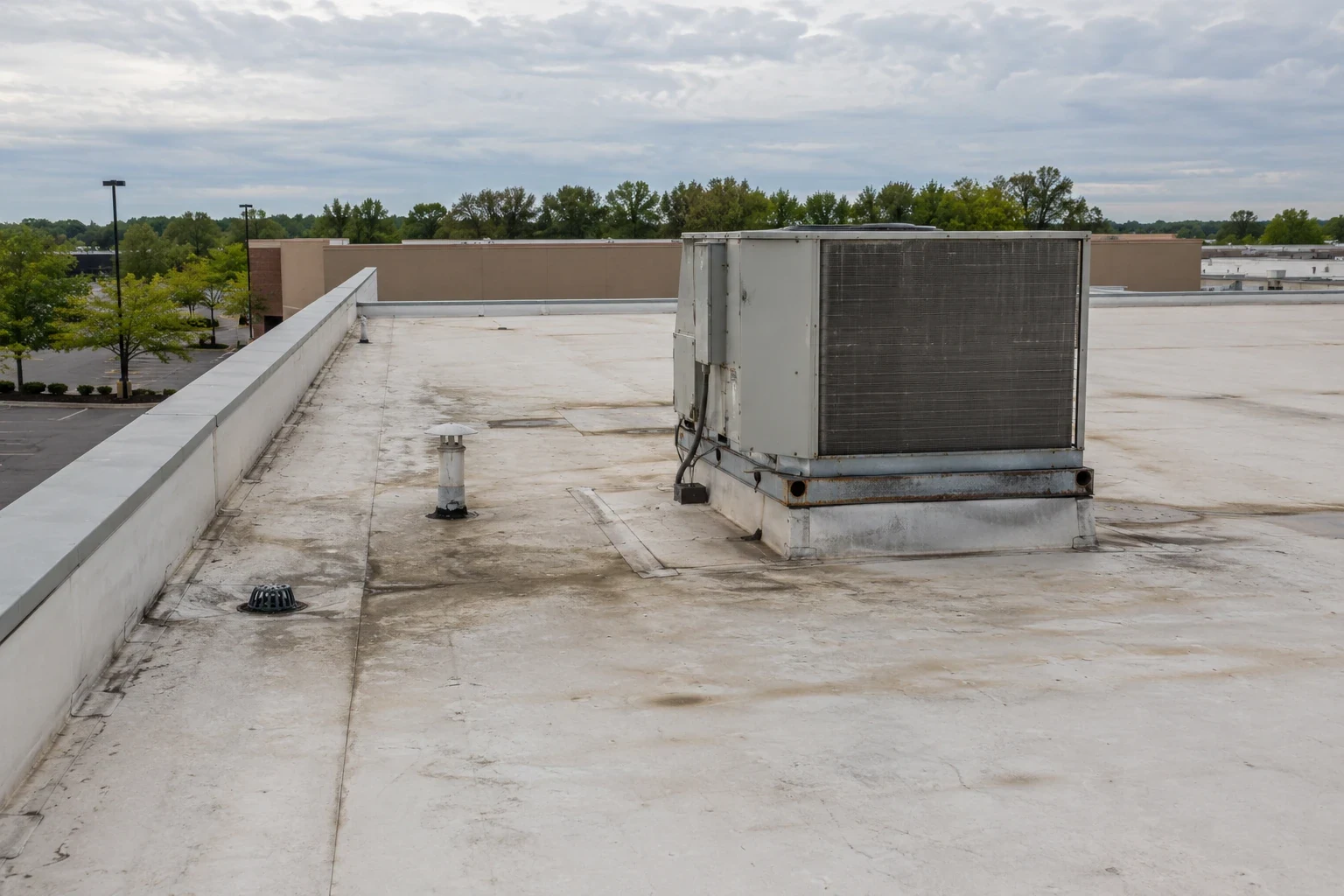
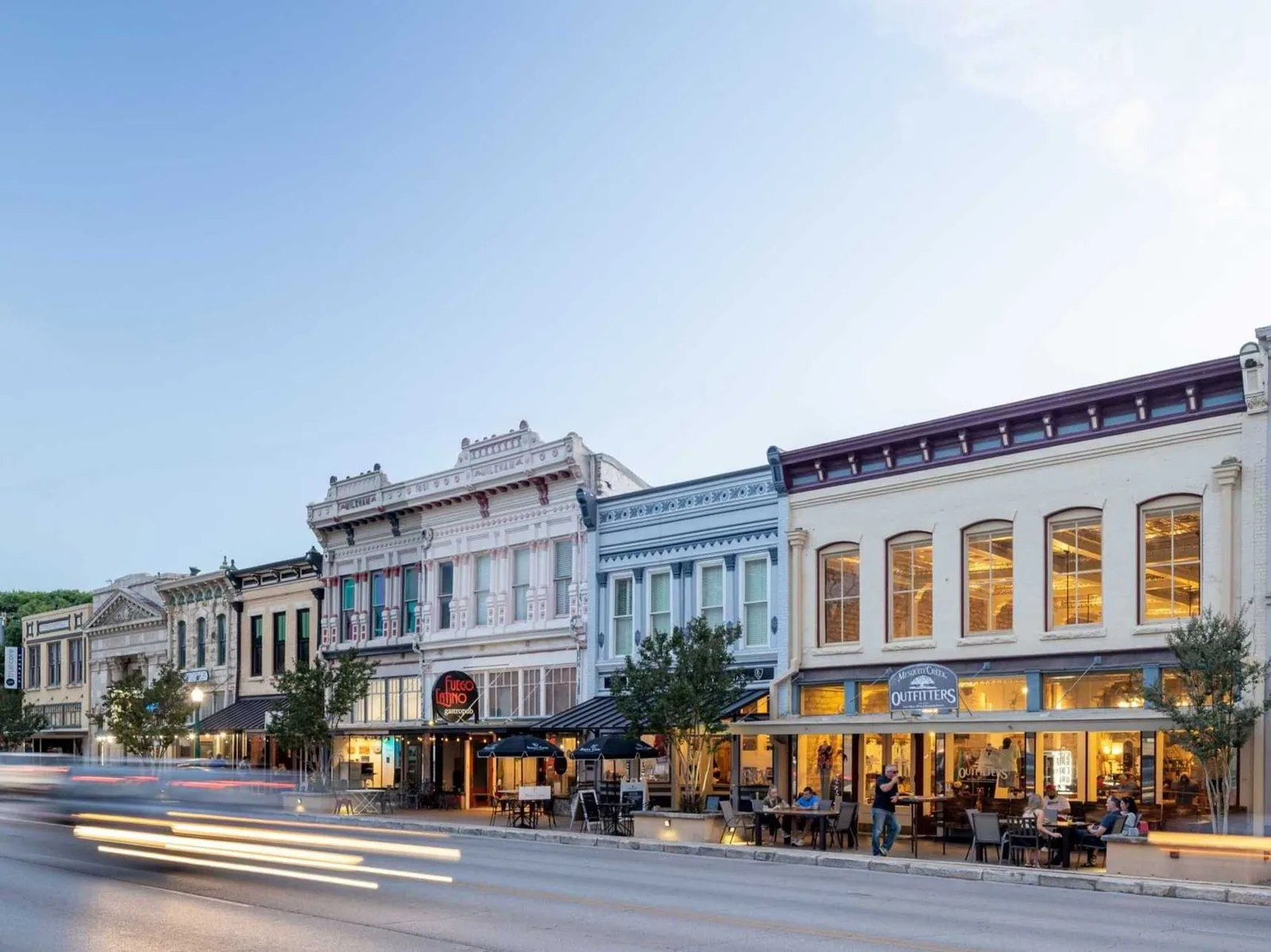
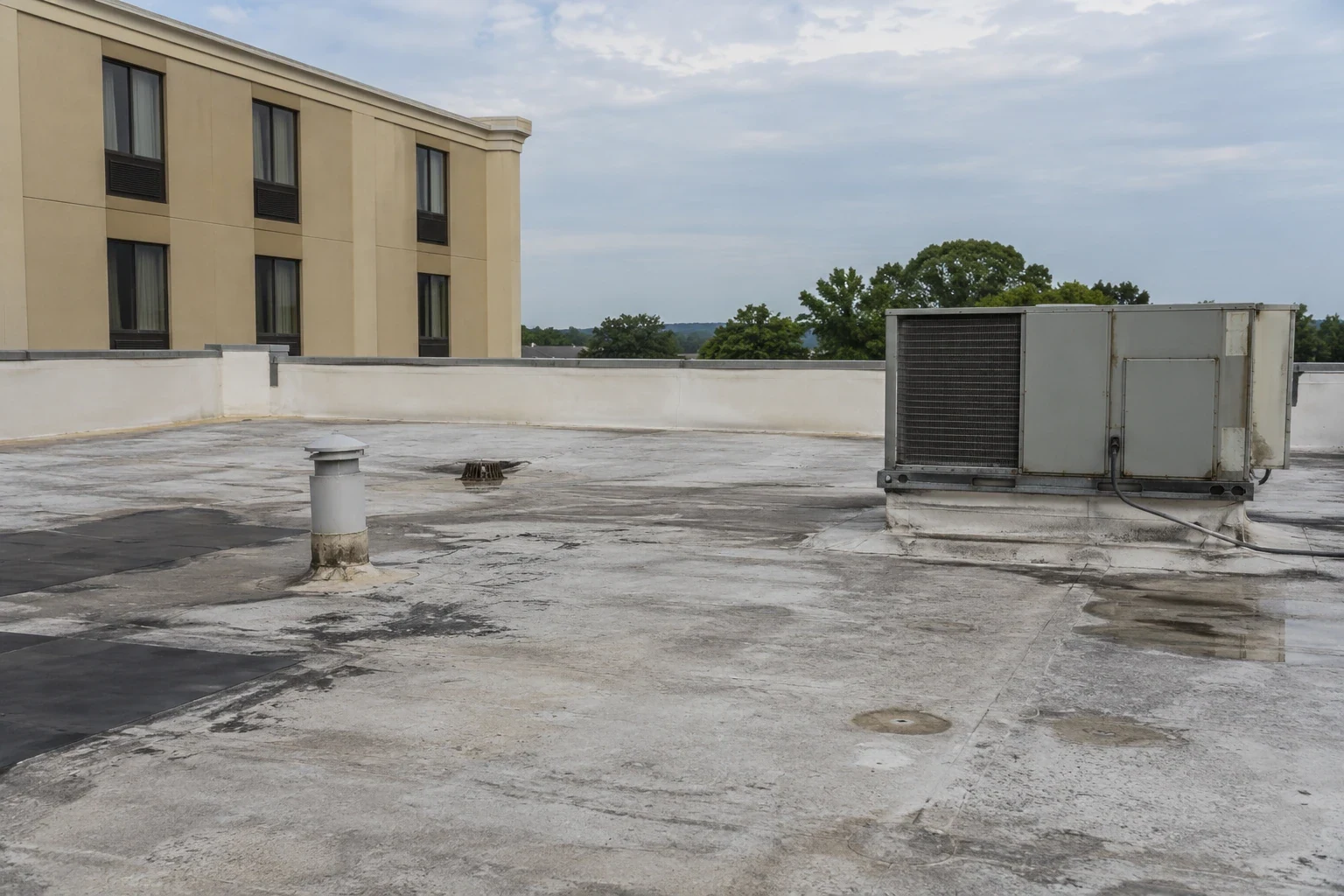
A cracked flashing corner beside a kitchen exhaust curb can stop at the curb or run into the field seam. We inspect both details before setting the repair limit. Restaurant work must also keep food preparation, deliveries, and customer routes in the plan. Georgetown economic activity includes restaurant and retail prospects, while its historic downtown mixes business with civic and residential uses. That local pattern informs access planning. It does not define the operating hours of one kitchen.
We confirm the leak area, exhaust schedule, rooftop service access, and rooms below. Then we mark the roof zone and the work boundary the restaurant can support. A patch that blocks a technician route or leaves an open transition creates another problem. Each trade needs a clear handoff before the membrane closes.
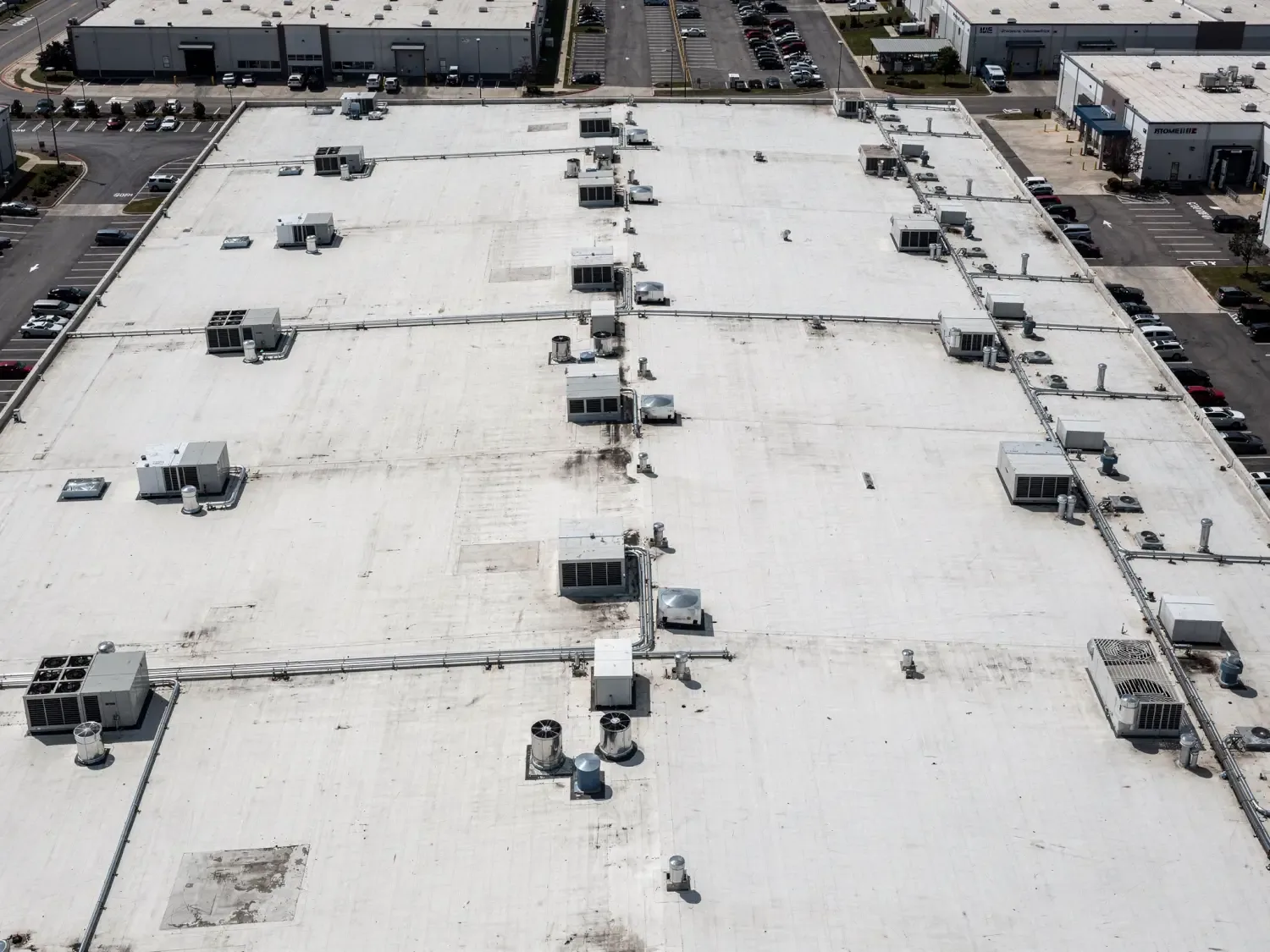
Kitchen exhaust carries grease and heat above the roof. We inspect the curb, flashing corners, support, and membrane for residue, separation, or service damage. The condition at the curb is recorded separately from the exhaust fan or duct. If the equipment needs adjustment or cleaning, that work belongs to the responsible mechanical or kitchen service contractor before the roofing tie-in is completed.
Water can enter at a split seam, loose boot, conduit support, or wall transition beside the kitchen. We start from the interior report, then follow the likely path across the roof and toward the drains. Photos record the feature and roof zone. A ceiling mark does not set the removal line. If the cause is uncertain, we identify a test area and state what result would change the scope.
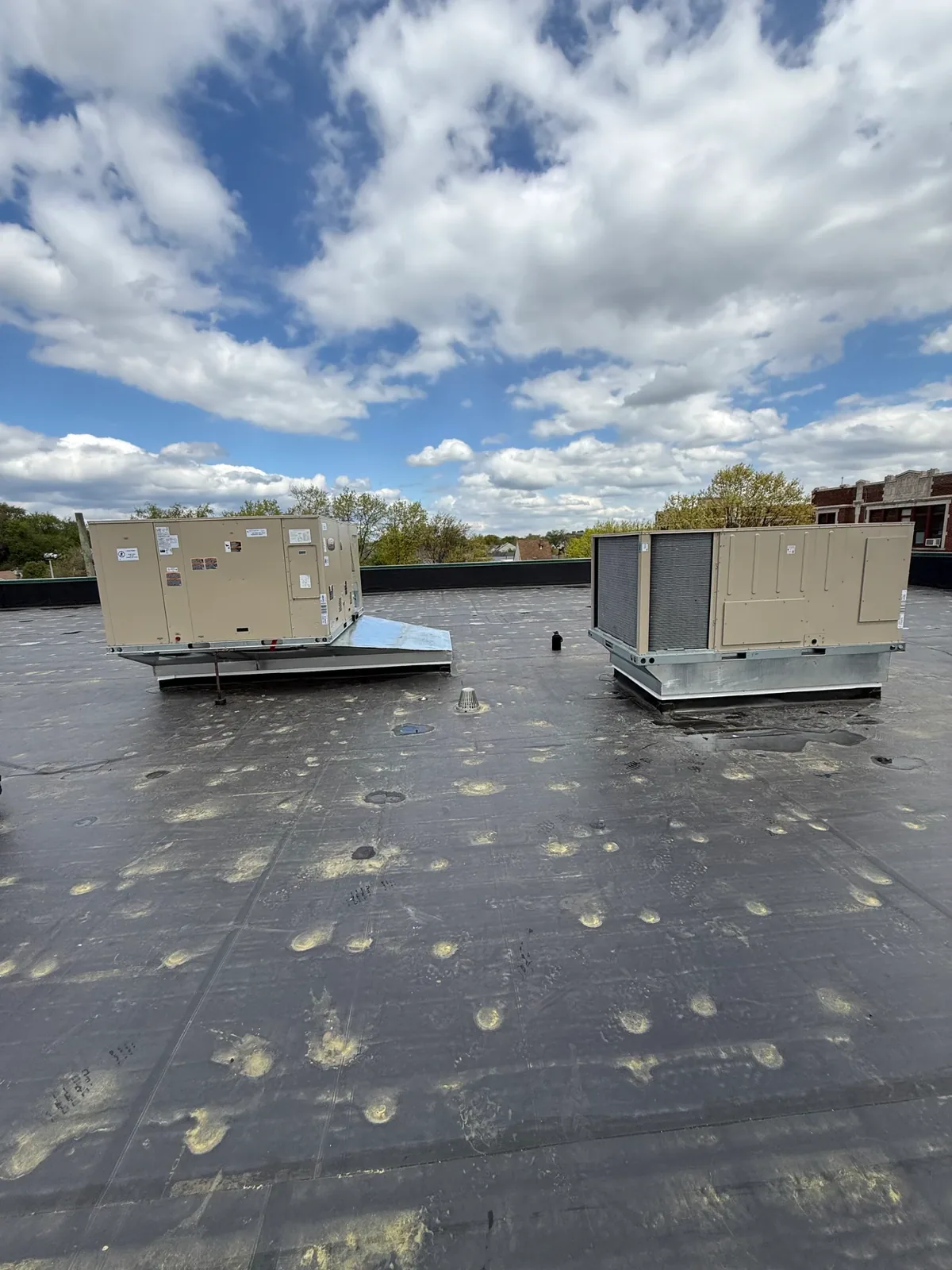
Restaurant roofs may have multiple units and later tenant improvements. We compare accessible roof records with installed curbs, piping, signs, and service routes. Each penetration gets a condition note. If a new fan or duct is planned, we coordinate the opening and flashing sequence before it reaches the roof. A curb and support review can keep equipment work from being mistaken for a membrane repair.
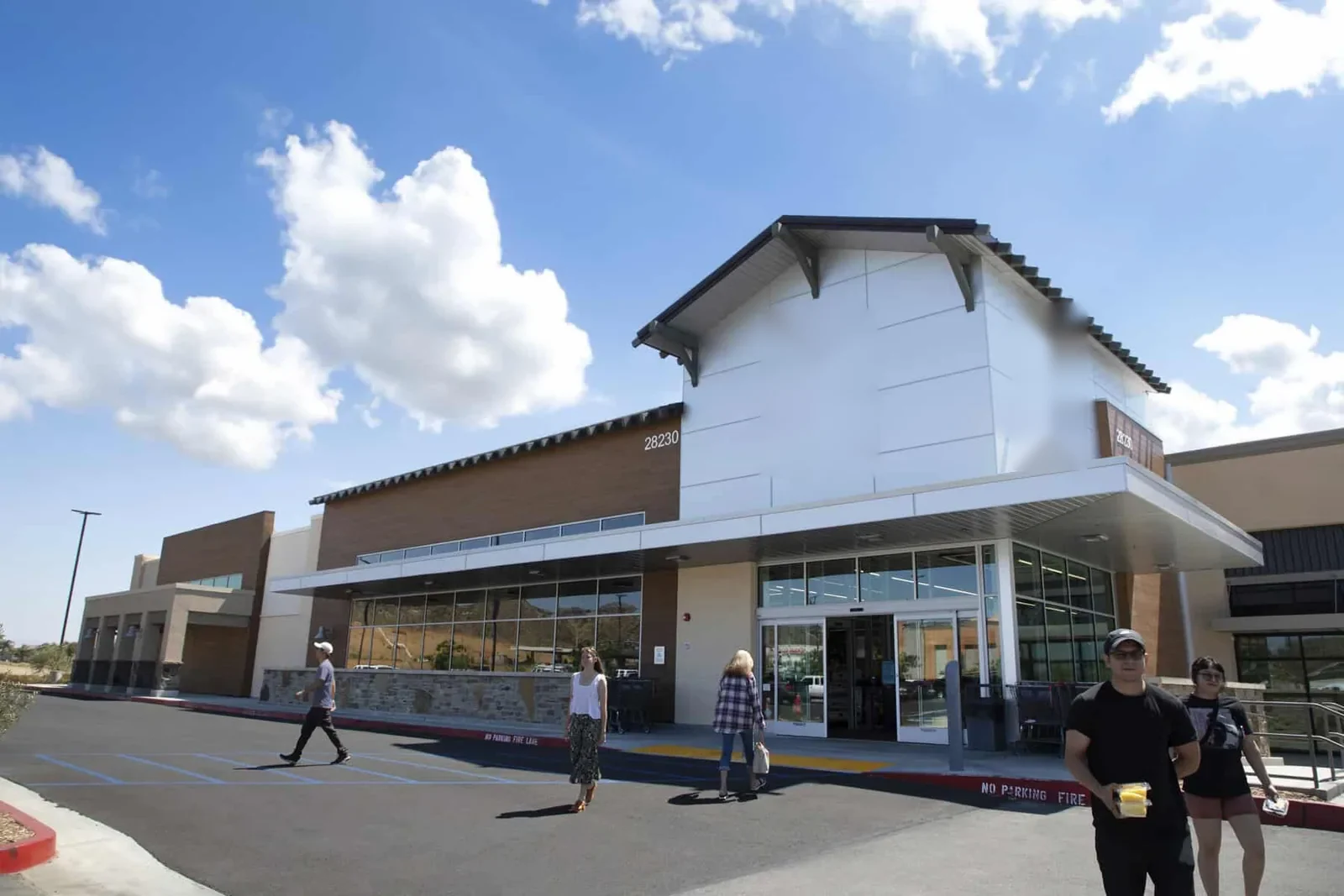
Material staging, lift placement, and debris removal should not cut across food deliveries or guest entrances without approval. We walk the ground route with the restaurant manager and general contractor. The plan names the delivery window, employee entrance, dumpster location, and any area that needs a barrier. If an exterior patio or shared walkway sits below the work zone, we define a safe alternate route before the roof opens.
Kitchen timing can be tighter than the building's general work window. We ask when exhaust can be off, when deliveries arrive, and whether food preparation continues in adjacent rooms. Roof work may be phased so a section over the kitchen can be repaired during a lower-volume period. We set a dry-in point that leaves no exposed insulation or unprotected curb at the end of that shift.
Downtown Georgetown is a courthouse-centered commercial district with business, civic, county, and residential activity. Round Rock's economy includes hospitality, retail, technology, and health-care employers. These different commercial settings can affect traffic and delivery planning, but the restaurant contact sets its actual access rules. A Downtown Georgetown service route is one local reference for staging and pedestrian coordination.
Georgetown summer temperatures often climb into the 90s, and recent days have gone beyond 100 degrees Fahrenheit. The kitchen exhaust area can add heat at the roof surface, so we check actual conditions and installation requirements before choosing how much membrane to expose. A short work zone can keep the tie-in secure while cooking, delivery, and customer schedules continue below.
Hail inspection fits a roof check after severe weather. Hail affects the Austin forecast area, and tornado activity is a risk in Williamson County. After an event reported at the property, we inspect the exhaust curb, perimeter metal, seams, skylights, supports, and nearby drains. We photograph what changed and separate it from older sealant or maintenance patches. The kitchen manager receives a roof-zone description that can be matched to the report from inside.
Rain can interrupt a shift between surface preparation and final tie-in. Before starting, the crew identifies its protected stop point and keeps drainage open. If the weather changes, the restaurant gets a clear account of what was covered and what needs a return visit. Emergency protection can address active water entry overnight or during a weekend service period, while the permanent scope follows the confirmed detail.
A single curb corner or seam split can be repaired when nearby material remains stable. We prepare the surface, restore the flashing or weld, and check the tie-in before releasing the area below. If moisture spreads past the visible failure or repeated repairs reopen, we set a test hold point. The owner sees what is confirmed and what remains concealed before the scope grows.
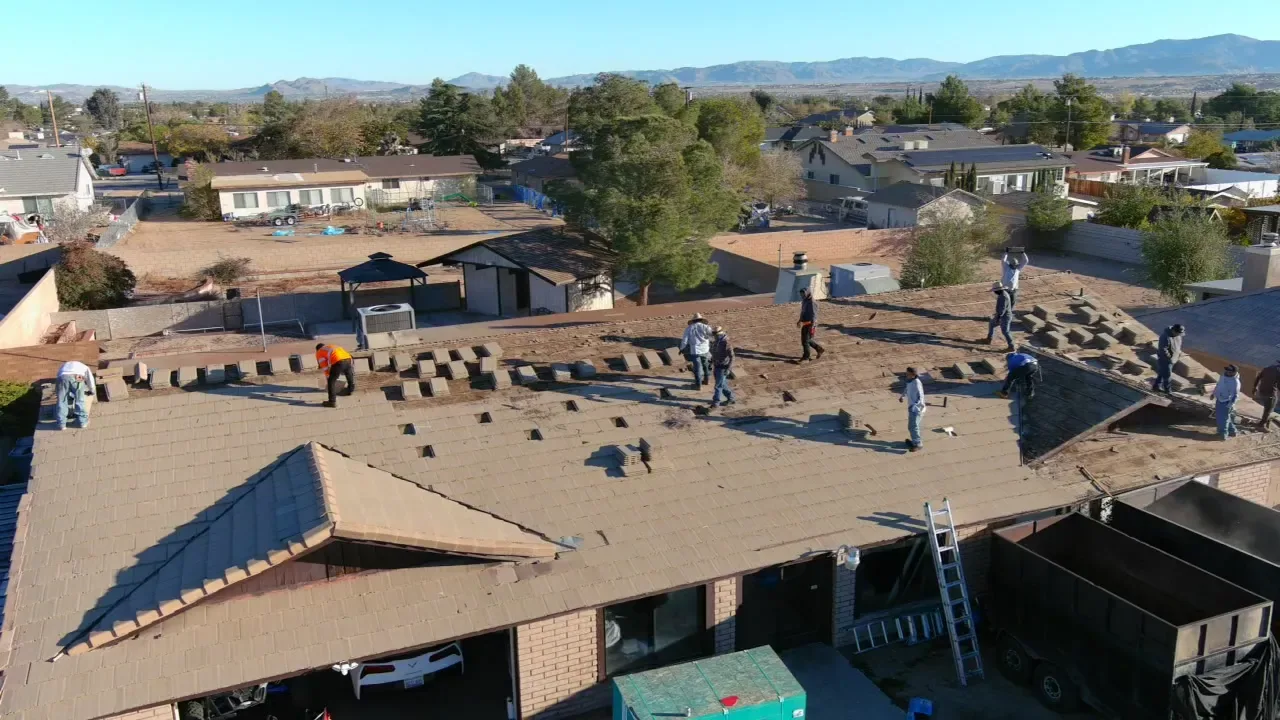
Coating or recovery can be considered only after the existing roof is inspected for moisture, attachment, surface compatibility, and drainage. A new layer does not correct a weak curb or wet insulation underneath. For tear-off, the replacement plan lists insulation, cover board, edge details, penetrations, disposal, and dry-in by section. For existing-building restaurant work, Georgetown applies its locally adopted 2021 IEBC. The issued permit and approved detail govern the assembly.
Restaurant exhaust and grease lines carry distinct costs and handoffs. We identify cleaning or equipment work separately from roof preparation and flashing. A nearby grocery building may need refrigeration transitions, while a hotel roof adds guest-room protection and event timing. The roof system and condition still determine each property's repair method.
Before mobilization, the superintendent confirms the roof opening, equipment contact, access route, delivery window, and interior protection. Each trade knows which curb or penetration it owns. We inspect the completed tie-in before covering it, photograph the detail, and record the zone. If a fan or duct changes, that work must reach a hold point before the roofing crew seals the assembly.
The closeout file lists completed seams, flashing, drain work, photos, materials, excluded areas, and any test still pending. It should also show when the roof was opened and how the temporary boundary was handled. The restaurant manager can then compare a later ceiling report with the right detail instead of reopening a general search across the property.
Send the roof plan, leak location, kitchen and exhaust schedule, access rules, and general-contractor contact. We can inspect the roof, define immediate protection, and stage the work around active service. A clear work boundary lets the restaurant plan its room and delivery operations while the roof trade completes the tie-in and transfers the area back.
That depends on the roof zone, exhaust status, interior protection, and delivery route. We set any temporary closure with the restaurant contact and define a daily dry-in point before work starts.
We inspect and repair the roof flashing and membrane tie-in. The mechanical or kitchen-equipment contractor handles fan, duct, and controls work, with a roofing hold point before the curb is closed.
The restaurant protects food and equipment below while we locate and stabilize the roof opening. We record the affected room and keep temporary protection separate from the permanent repair scope.
Often, if roof access, equipment shutdown, noise, weather, and dry-in fit the available window. We confirm deliveries and employee access before setting the sequence.
We provide the roof-zone reference, repair photos, materials, work boundary, and any open inspection or mechanical item. The file should show what is complete before the next trade or shift uses the area.