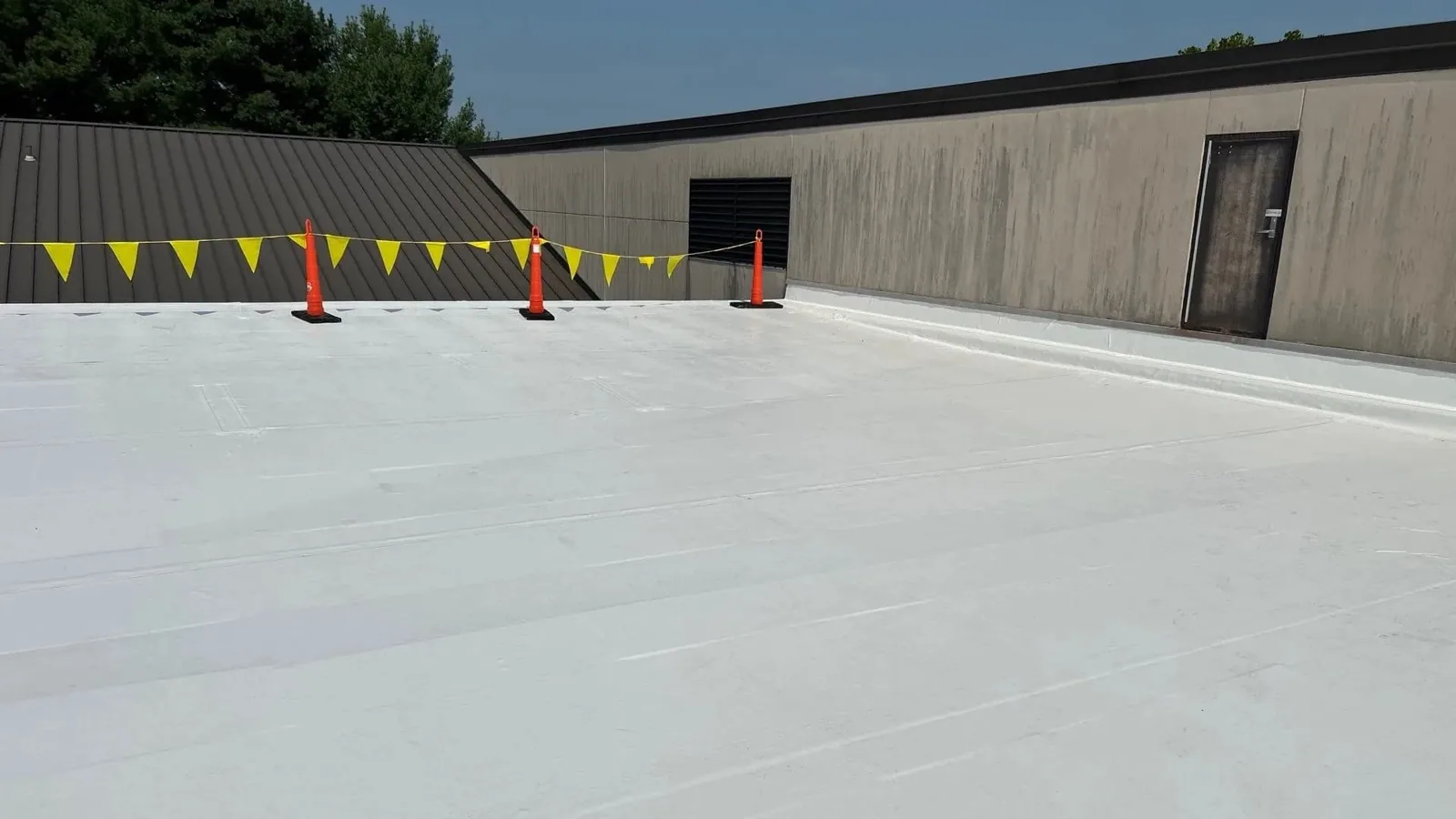
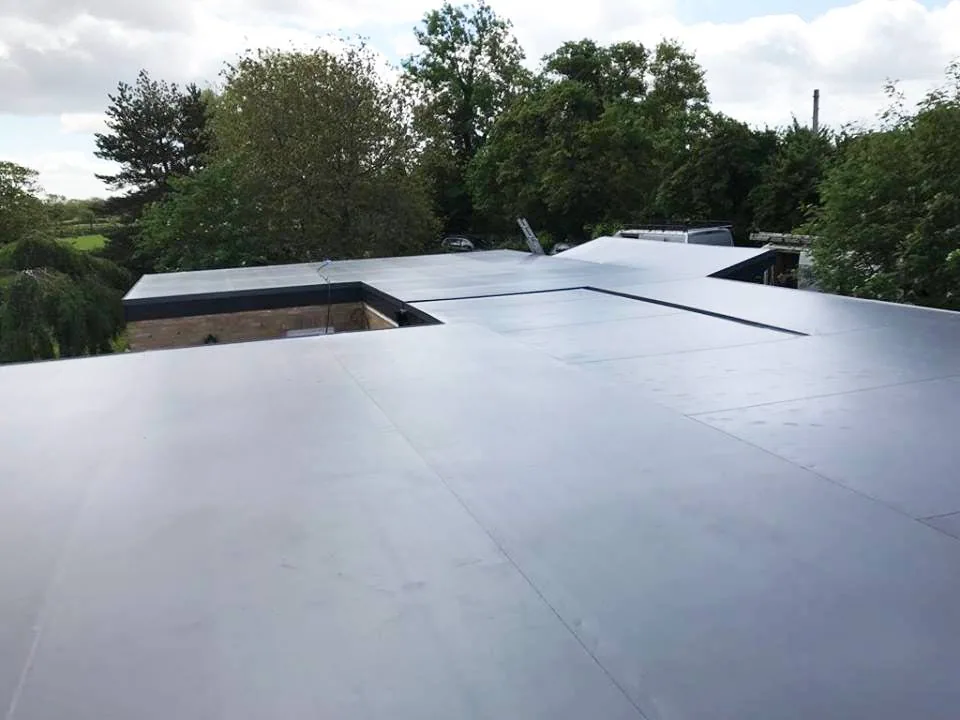
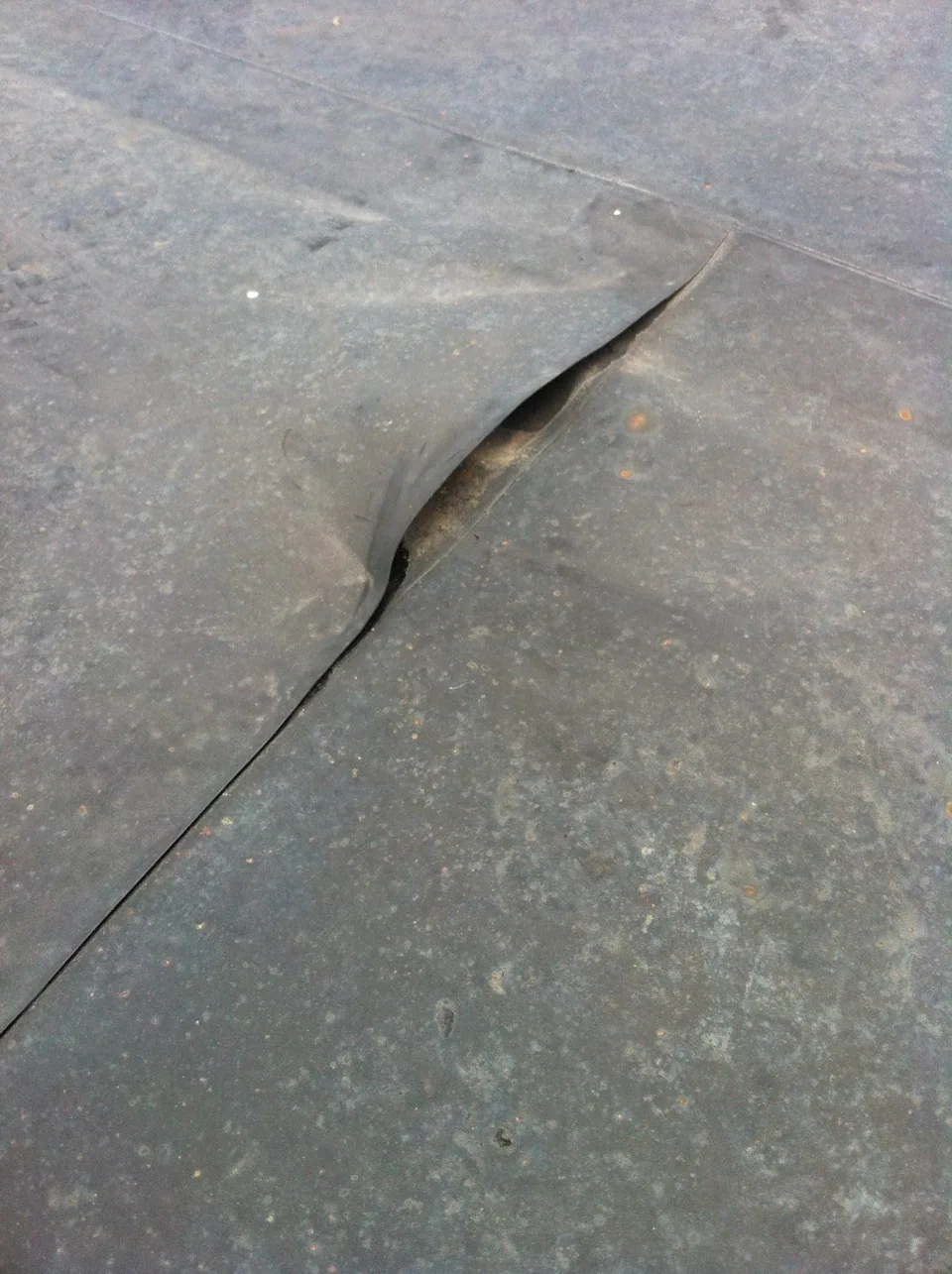
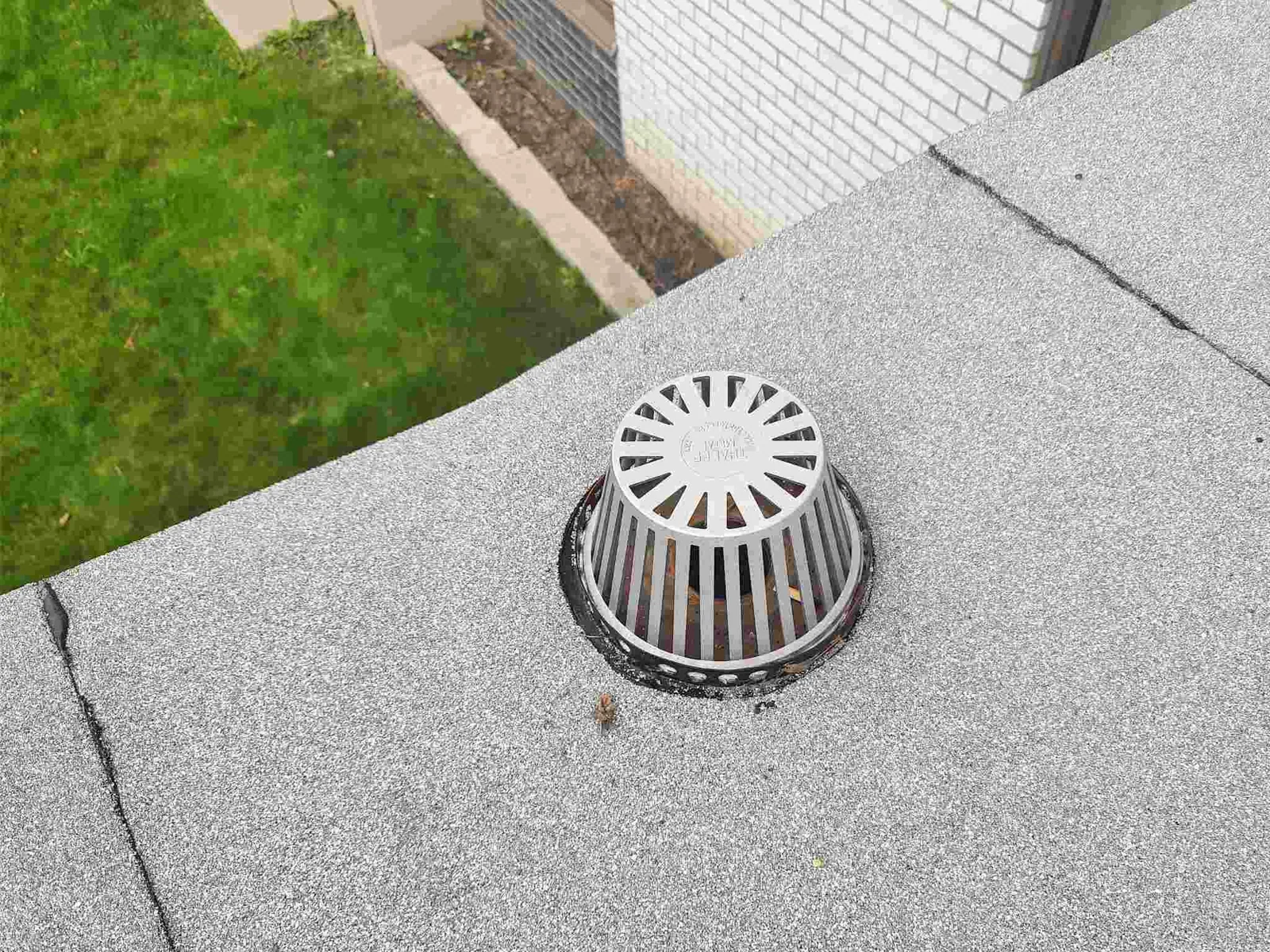
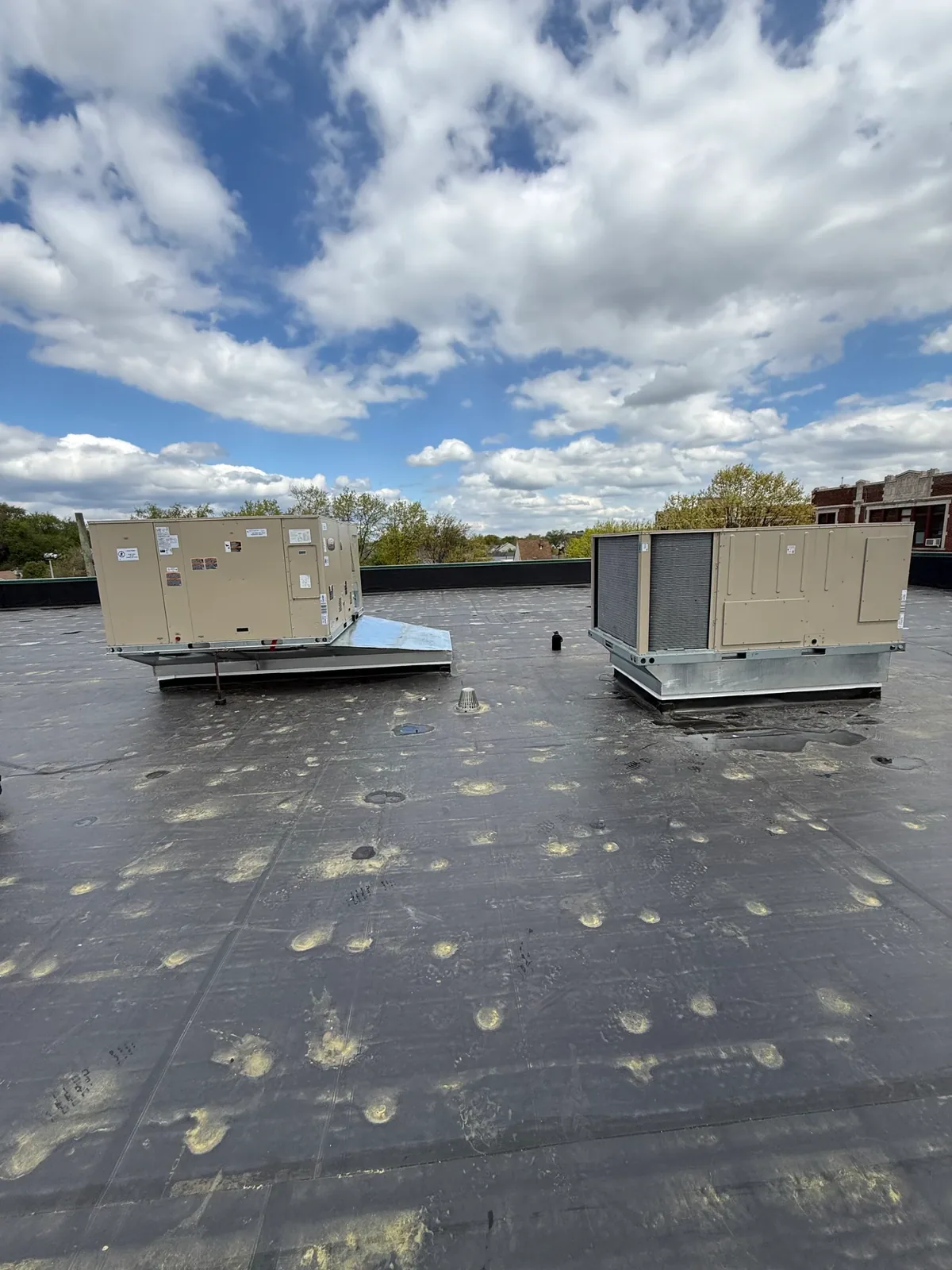
A wrinkle at the drain bowl can trap water and hide a weak tie-in. We clear the immediate area, trace the membrane into the bowl, and check the surrounding seam before choosing a repair. Versico offers commercial EPDM, TPO, and PVC single-ply systems. The actual assembly, not the name on an old work order, sets the field method.
Round Rock’s Mays Street extension meets Georgetown near Westinghouse Road and improves access to southeast Georgetown commercial development. That connection helps coordinate deliveries, but the roof map must identify each building separately. NorthPark35 and Georgetown Logistics Park add a distinct industrial setting elsewhere in the market. Georgetown's summer heat also affects inspection and weld timing. A membrane inspection starts at the detail that is failing.
Versico’s commercial line includes EPDM, TPO, and PVC membranes. Those materials have different seam approaches, flashing components, and repair materials. We review submittals, closeout files, visible markings, fastener patterns, and field details before putting a product name in the scope. If the records are incomplete, we state what is confirmed and what needs a test area.
Look at the perimeter and penetrations as carefully as the field. Mechanically attached sheets, adhered assemblies, and ballasted systems can place different demands on edge and corner details. A roof plan should show membrane type where known, attachment clues, insulation transitions, drain locations, curbs, and previous patches. Each unknown gets a note and a verification step rather than a guessed label.
A repair on one building does not establish the system on another. Berry Creek includes several industrial buildings, while NorthPark35 serves a separate cluster in Georgetown’s I-35 growth area. A Berry Creek Business Park inspection still needs a building-specific system record. We keep system names and maintenance history with the correct roof map. That protects the next crew from carrying an earlier assumption into a different assembly.
When a repair crosses a mixed assembly, distinguish Johns Manville membrane details from a Sika Sarnafil PVC system before choosing the tie-in. Confirm the specified product and existing layers at the building.
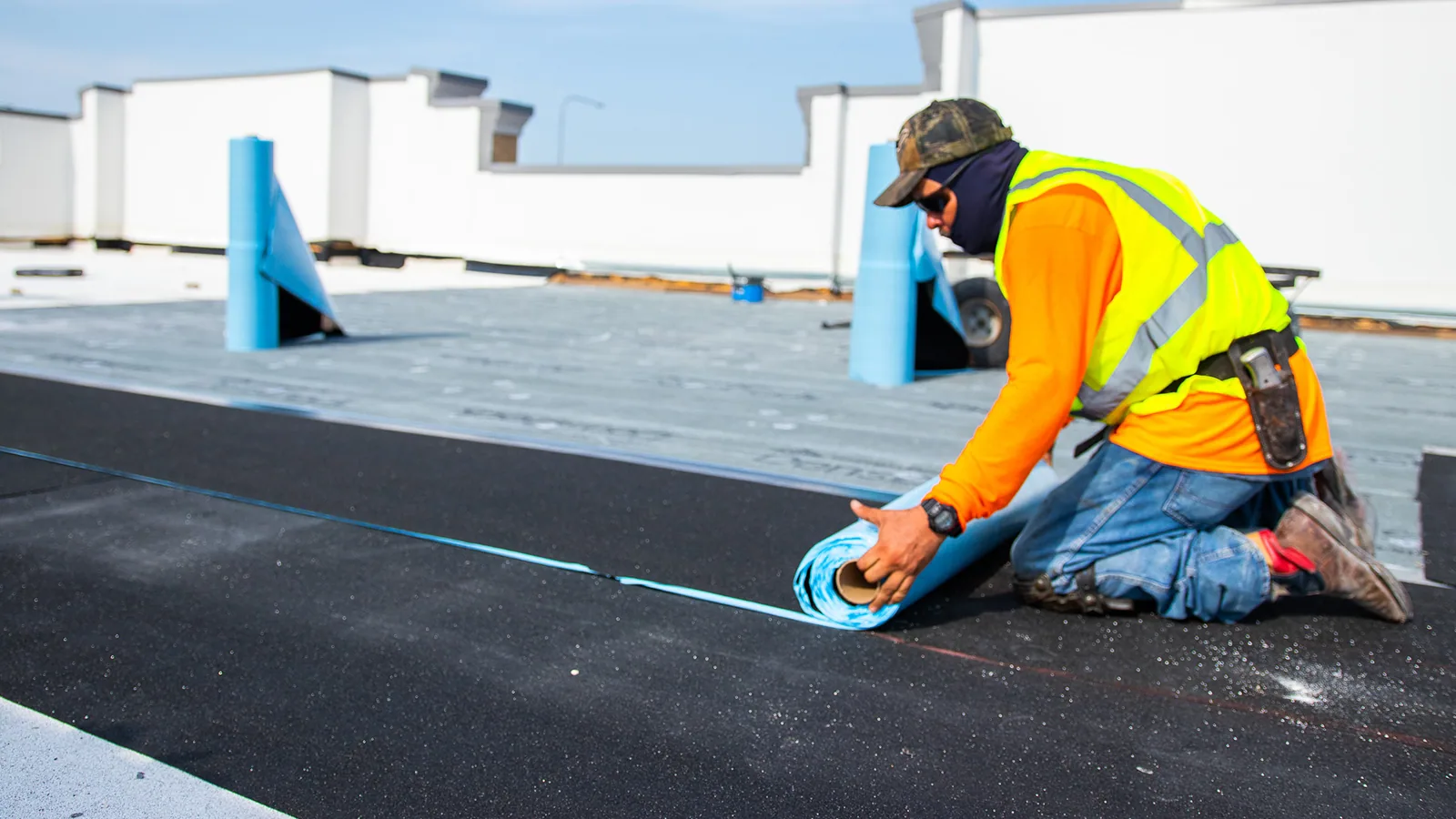
A repair starts with a clean landing area. We remove incompatible debris, check for moisture, and examine the sheet beyond the visible split. For thermoplastic membranes, the test weld confirms whether the surface will accept a sound bond. For EPDM, the preparation and seam materials differ. We record the method and verify the finished detail before closing the work area.
If a lap has dirt, oxidation, adhesive residue, or previous coating, do not weld across it and hope the seam holds. The crew can clean and test a small area first. If the membrane continues to peel or the substrate is soft, stop at the hold point and expand the investigation only with approval. The seam repair scope states the limit reached.
Drains deserve their own sequence. Check the bowl, clamping ring, strainer, slope into the outlet, and surrounding membrane. Debris removal may restore flow without correcting a loose flange or membrane split. Georgetown’s heat and severe-storm exposure make the drain and seam checks part of the same inspection. A drain and scupper inspection maps the assembly instead of treating every pond as the same problem.
At equipment curbs, inspect corners, counterflashing, and the path where wires or piping enter. A curb detail review separates membrane work from mechanical support or equipment changes. The general contractor can then assign each trade a defined boundary.
Georgetown summers commonly reach the 90s, with recent days above 100°F. Heat affects roof access, surface preparation, and the period available to complete a tie-in. We plan staging and crew movement before unloading materials. If the surface or work window is unsuitable, the closeout records the stop and protection left in place.
Central Texas has hail and tornado exposure. After severe weather, we inspect the specific roof for current movement, openings, or impact. We document what the crew sees: puncture, dent, open lap, displaced edge, damaged flashing, or water path. A commercial roof inspection can separate confirmed conditions from reports that need follow-up.
The city’s 2021 IEBC adoption informs repair and alteration reviews for existing buildings. The project scope and local review determine which provisions apply. A roof repair note should describe the actual assembly, opening, and repair detail; it should not stand in for project design or code review.
For a wider moisture question, a targeted moisture survey may help select test locations. An infrared image is an indicator for field confirmation, not a declaration that every warm area is wet. We label readings, conditions, and openings so the owner can follow the evidence.
A localized patch may be enough if the adjacent membrane is stable, the insulation is dry, and a reliable tie-in can be completed. Repeated seam openings, broad surface cracking, loose attachment, or wet layers can change the decision. We mark the observed area separately from any concealed condition that still needs testing.
A repair proposal breaks out membrane correction, access, protection, interior coordination, and any test opening. Where a larger part of the assembly is failing, a replacement evaluation considers tear-off, recover limits, drainage, edge details, and occupied-building sequencing. We state which finding supports each option.
Roof coatings or overlays require a separate compatibility check. Adhesion, trapped moisture, drainage, edge restraint, and product limitations can rule out a surface treatment. The restoration review starts with the existing layers and a test area, not a promise that coating will solve every leak.
When repair work proceeds, the crew protects the opening and completes a tie-in that can be inspected. Photos show before and after conditions. Any area not reached stays outside the completed boundary. That distinction helps the general contractor plan follow-on work without overstating what the roof walk covered.
Before work starts, confirm hatch or ladder access, lift location, staging, occupied zones, and the general-contractor contact. Mark drains, equipment, edges, previous repairs, and the proposed work area. If deliveries arrive near I-35 or SH 130, coordinate the route with property operations rather than blocking tenant or freight circulation.
At the first opening, verify the layer stack and condition of insulation and deck. If the assembly differs from the planned scope, stop, photograph the condition, and set a hold point. Do not close over unknown wet material. Record temporary dry-in and permanent repair as separate activities in the Diligence Notes.
A roof condition report can retain dated photos, test locations, and access limits. For multiple properties, multi-site roof planning can schedule visits without merging their system records. The handoff identifies what was completed, what remains open, and which contact owns the next decision.
Send the building name, roof plan, known membrane, reported issue, and preferred access window. We confirm the first route and the inspection boundary. If a test cut or trade coordination is needed, that becomes an explicit hold point before mobilization.
Not by itself. Versico offers EPDM, TPO, and PVC products. We check the roof documents and visible assembly before selecting a compatible repair method.
We prepare a test area, make a test weld, let it cool, and probe it. The result and repair limit go in the field record.
Often the outlet or surrounding detail can be corrected locally, provided the membrane and substrate are sound. We inspect the bowl, ring, slope, and nearby seams first.
It records visible conditions at the property. Weather alerts can guide inspection timing; the roof walk shows which conditions are present at the property.
Keep the roof zone, material, test result, dated photos, completed boundary, and open items together. That lets the next crew return to the same point.