A wet line above the service-bay door sets the first check. We inspect the curb, wall transition, and membrane above the bay, then compare the roof zone with the interior report. The showroom, parts counter, and vehicle lanes each have a different access boundary. We record the first work area before a lift or material delivery enters the lot.
Georgetown's Williams Drive plan includes highway commercial, office, civic, and mixed-use development. Nearby NorthPark35 supports industrial and logistics activity. Those settings create different arrival and staging needs. We inspect the dealership’s assembly and confirm its gate route, operating hours, and staging space with the site contact.
Customer parking, new-vehicle display rows, service write-up lanes, and parts deliveries compete for the same pavement. We agree on the lift footprint, material drop, and dumpster placement before mobilization. The plan preserves fire access, customer entrances, and the path between service bays and the lot. If a vehicle route must shift, the manager gets the revised boundary before the work begins.
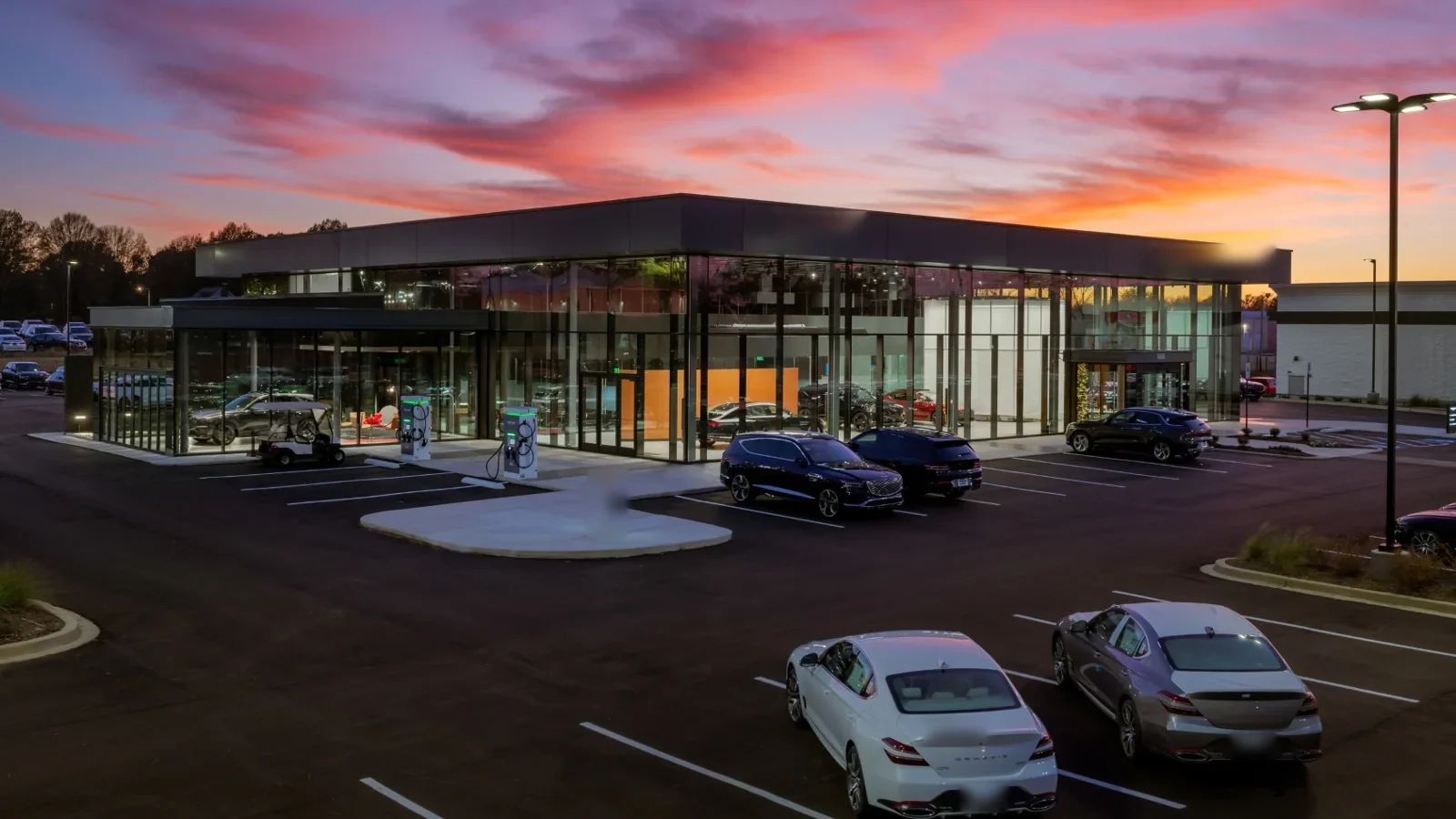
Dealerships often have separate showroom and service roofs. We map each zone and identify where a work area could affect staff or customers below. A service department may need an early shift or a limited bay closure while a curb or skylight is repaired. The facility contact sets the operating window. A phased occupied-building sequence can move the work without treating the whole dealership as unavailable.
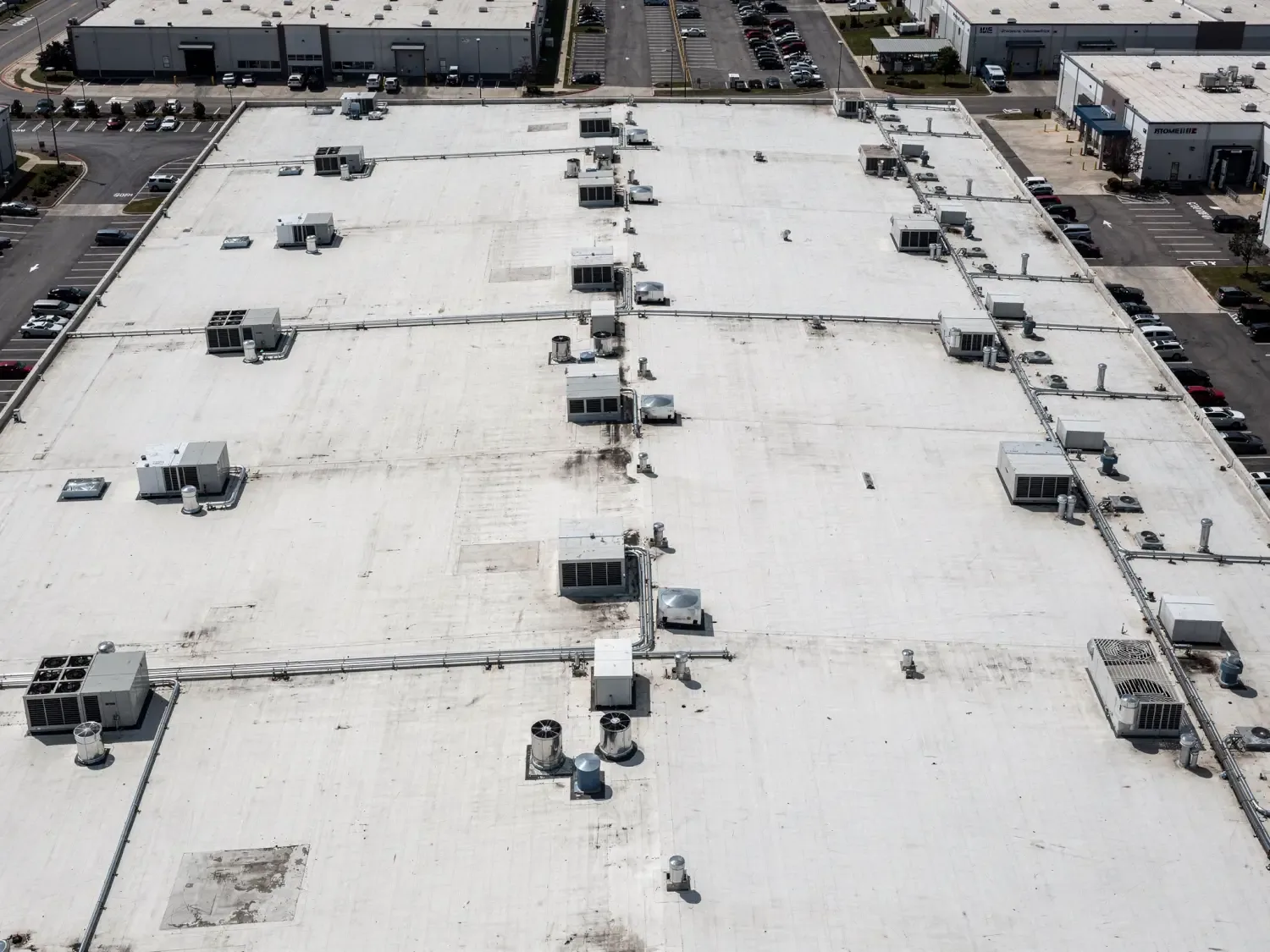
Trade access matters at rooftop units and exhaust systems. We identify which equipment belongs to the roofer and which requires the HVAC contractor. Conduit, support rails, and refrigerant lines remain protected. We do not lift or disconnect equipment without written site direction. The roof map records each curb so a later service call can reach the correct section.
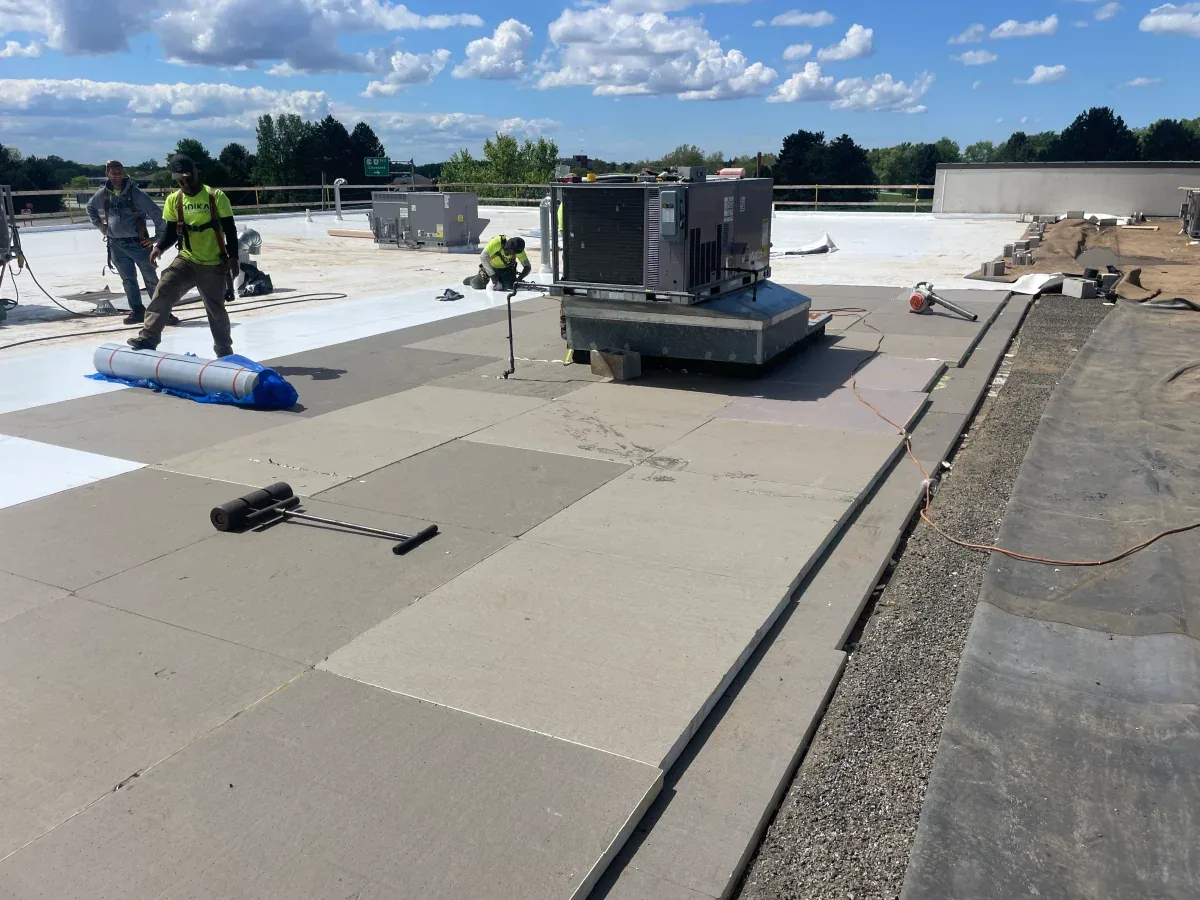
We identify the system before selecting repair materials. Single-ply roofs need checks at field seams, end laps, terminations, and penetrations. Modified-bitumen assemblies require a look at lap adhesion, surfacing, and flashing transitions. Metal roofs need attention at panel seams, fasteners, sealants, and perimeter conditions. A dealership may have more than one assembly if the service wing and showroom were built or reworked at different times. A showroom roof can join a lower service bay through a height change that needs separate flashing checks.
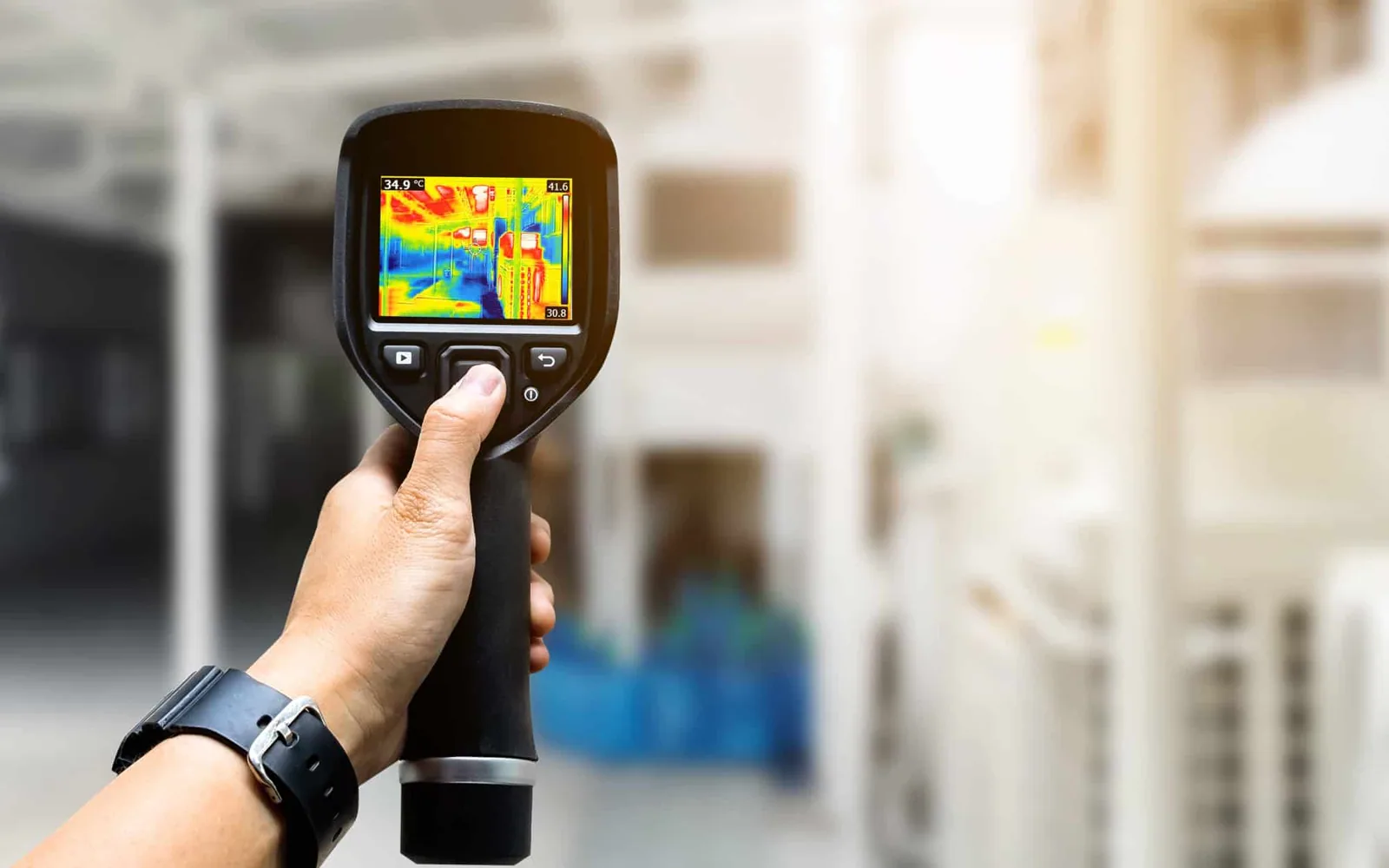
Water at a service counter can travel from a distant seam, a wall, or a curb. We compare the interior location with the roof above and trace likely paths. We check drains and scuppers for debris and ponding evidence, then distinguish maintenance needs from a defect. If moisture below the membrane would change the repair boundary, we mark a test area before removal. A targeted moisture survey can help prioritize confirmation.
Glass showrooms and service bays need careful separation from roofing debris. We check the work area for skylights, fragile panels, and exposed vehicle inventory. Protection and overhead controls are written into the sequence. If the necessary ground exclusion cannot be maintained, we move the task to a safer window instead of working over an active lane.
Georgetown's summer station readings commonly reach the 90s, with recent highs above 100 degrees Fahrenheit. Heat affects roof access, crew hours, and membrane work. We set a daily area limit and keep a secure dry-in point. The surface condition and product instructions control the work window; a calendar date alone does not.
Round Rock and Granger mark opposite portions of a tornado path that crossed Williamson County in 2022. Jarrell's separate F5 tornado dates to 1997. Those events do not prove damage at a dealership. After a reported storm, we inspect edge metal, seams, curbs, signs, rooftop units, and drainage. Hail dents on a unit or metal panel are recorded separately from a membrane opening.
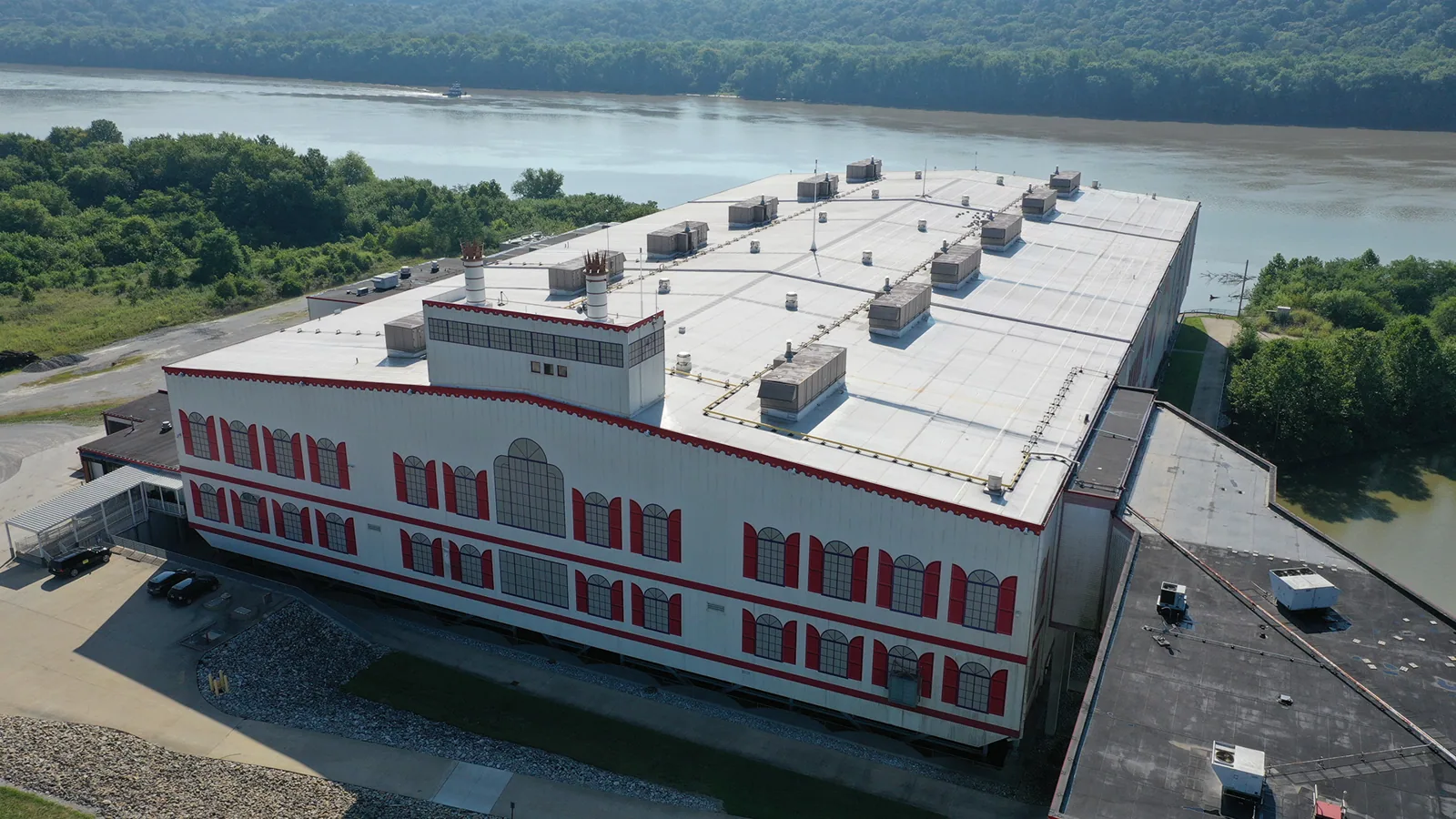
A warehouse roof can map displaced edges or loosened attachment; the final repair quantity comes from the roof itself. We photograph each finding, compare it with visible aging and old patches, and note any area that needs testing. The report can support an insurance discussion without assigning a cause that the field evidence does not establish.
A single failed curb flashing can remain a local repair if the surrounding membrane and substrate are sound. Repeated openings, widespread moisture, or loose attachment across multiple zones may require a broader correction. We state what is confirmed, what is assumed, and where testing is still needed. A commercial repair scope keeps the approved limit visible to the dealership manager and general contractor.
Recover is an option only after attachment, wet insulation, edge height, drainage, and existing layers are reviewed. Tear-off may be needed to reach damaged insulation or deck. A replacement evaluation compares the assembly choices and their effects on showroom, service, and vehicle operations. We list material, disposal, staging, and protection requirements so the site can plan closures and access.
Cost and duration depend on roof height, system type, removal depth, deck conditions, lift reach, and how much vehicle circulation can be reserved. Work at a high parapet or constrained service drive may require additional protection or a different sequence. If concealed damage changes quantity, we stop at a hold point and show the condition before adding scope. No unit is assumed wet without evidence.
Before a repair, we compare the roof report with any service-bay work orders and recent interior observations. A ceiling tile replacement alone does not close the roof question. We check whether the condition recurs after rain, whether nearby equipment drains toward the area, and whether a prior patch changed the water path. That sequence keeps the repair tied to a current field finding.
Each shift ends with the roof edge secured, debris removed, and the ground route checked with the site contact. The daily handoff identifies completed zones, remaining work, and any area that stays restricted. We confirm that no loose material or protection remains in customer or delivery paths. The final record includes dated photos, materials, repair locations, and any item needing a follow-up check.
Dealerships along Williams Drive may face different delivery patterns from facilities nearer NorthPark35. We use those area references for arrival planning, then set staging from the actual lot layout. The manager supplies the operating calendar, roof plan, known leak locations, and responsible contact before the work date.
A follow-up roof inspection can verify repairs and update the roof map. The record names what was inspected and what remained inaccessible. That gives the service manager a clear handoff for maintenance without confusing the showroom roof with the service wing.
The work can often be phased, but the service drive, lift location, noise, and overhead protection set the practical window. We coordinate a roof zone and ground route with the manager before mobilization.
We agree on the overhead work boundary and move or protect vehicles outside it before material handling. The site contact controls inventory movement; our sequence keeps lifts, debris, and loading clear of the display route.
No. We document current roof conditions, photos, and repair quantities. An insurer or adjuster makes coverage decisions. We keep observed damage separate from wear and unverified assumptions.
Water can travel along a deck or transition before it appears indoors. We map the reported location, inspect connected roof zones, and test when the entry point remains uncertain.
Send the roof plan, operating calendar, service-lane restrictions, reported leak areas, and site contact. We use those details to plan access, staging, and dry-in points.